1. She Was Born an Austrian Archduchess
The woman who would become the famous French queen was actually born Maria Antonia Josepha Johanna in Vienna, Austria, in 1755. She was the 15th and youngest child of the powerful Empress Maria Theresa and Holy Roman Emperor Francis I. Growing up in the Habsburg court, she enjoyed a relatively relaxed childhood compared to the rigid, highly formalized life she would later endure in France.
2. She Met Mozart as a Child
When Maria Antonia was just seven years old, a young musical prodigy named Wolfgang Amadeus Mozart visited the Schönbrunn Palace in Vienna to perform for the imperial family. According to popular legend and biographies of the composer, the young Mozart slipped on the polished floor, and Maria Antonia helped him to his feet. In return, the confident young musician supposedly proposed marriage to her on the spot.
3. She Was a 14-Year-Old Bride
To cement a fragile peace treaty between the historic enemies of Austria and France, Maria Antonia was used as a political pawn. In 1770, at the age of 14, she was married by proxy to Louis-Auguste, the 15-year-old heir to the French throne. Upon crossing the border into France, she was stripped of her Austrian clothing, dressed in French fashion, and formally renamed Marie Antoinette.
4. It Took Seven Years to Consummate the Marriage
The young royal couple’s marriage got off to an incredibly rocky start. Due to Louis’s severe shyness and possible physiological issues, the marriage remained unconsummated for seven agonizing years. This delay caused international gossip and extreme distress for Marie Antoinette, whose primary political duty was to produce a male heir for the Bourbon dynasty. They eventually had four children together.
5. Her Morning Routine Was a Crowded Spectacle
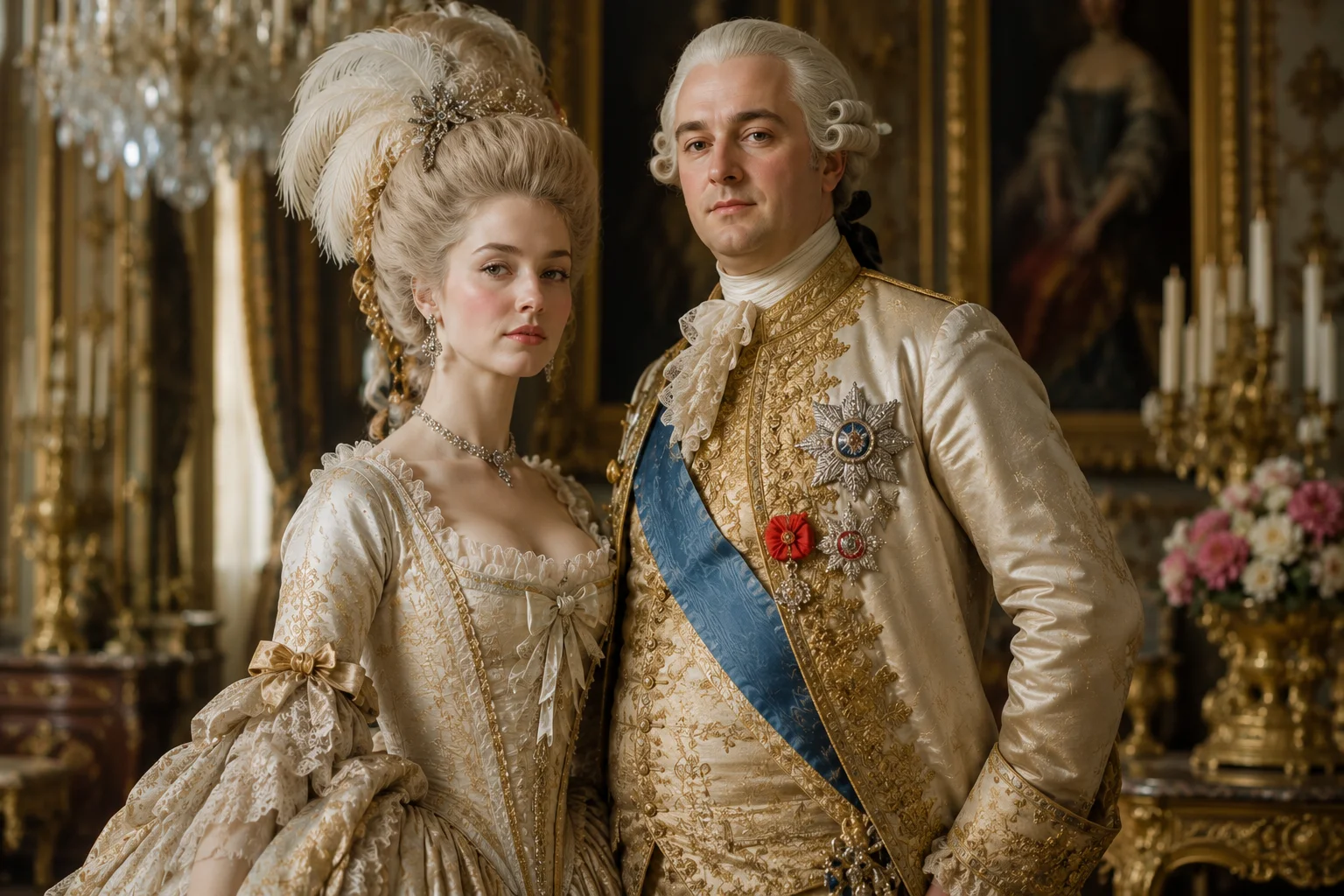
At the Palace of Versailles, privacy essentially did not exist. The queen was subjected to a rigid daily ritual known as the toilette. Every morning, she had to be dressed in front of dozens of courtiers. Strict rules dictated who was allowed to hand the queen her garments, based entirely on their aristocratic rank. Marie Antoinette deeply despised this exhausting lack of privacy.
6. She Never Said “Let Them Eat Cake”
The most famous quote attributed to Marie Antoinette is entirely a myth. When told the starving French peasants had no bread, she allegedly responded, “Let them eat cake” (or brioche). In reality, this phrase was written by the philosopher Jean-Jacques Rousseau in his autobiography when Marie Antoinette was only nine years old and still living in Austria. Her political enemies later attached the quote to her to highlight her supposed callousness.
7. She Popularized the Gravity-Defying “Pouf”
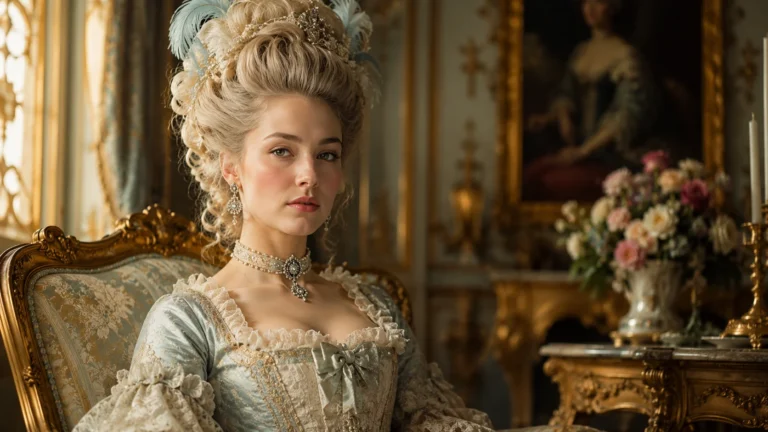
Before the revolution, Marie Antoinette was Europe’s ultimate fashion icon. Working with her stylist, Léonard Autié, she popularized the pouf—a towering hairstyle that used wire, cloth, and excessive amounts of hair powder to reach up to three feet in height. These elaborate updos were often decorated to reflect current events, most famously featuring a miniature model of a French naval ship to celebrate a military victory.
8. She Built a Fake Peasant Village
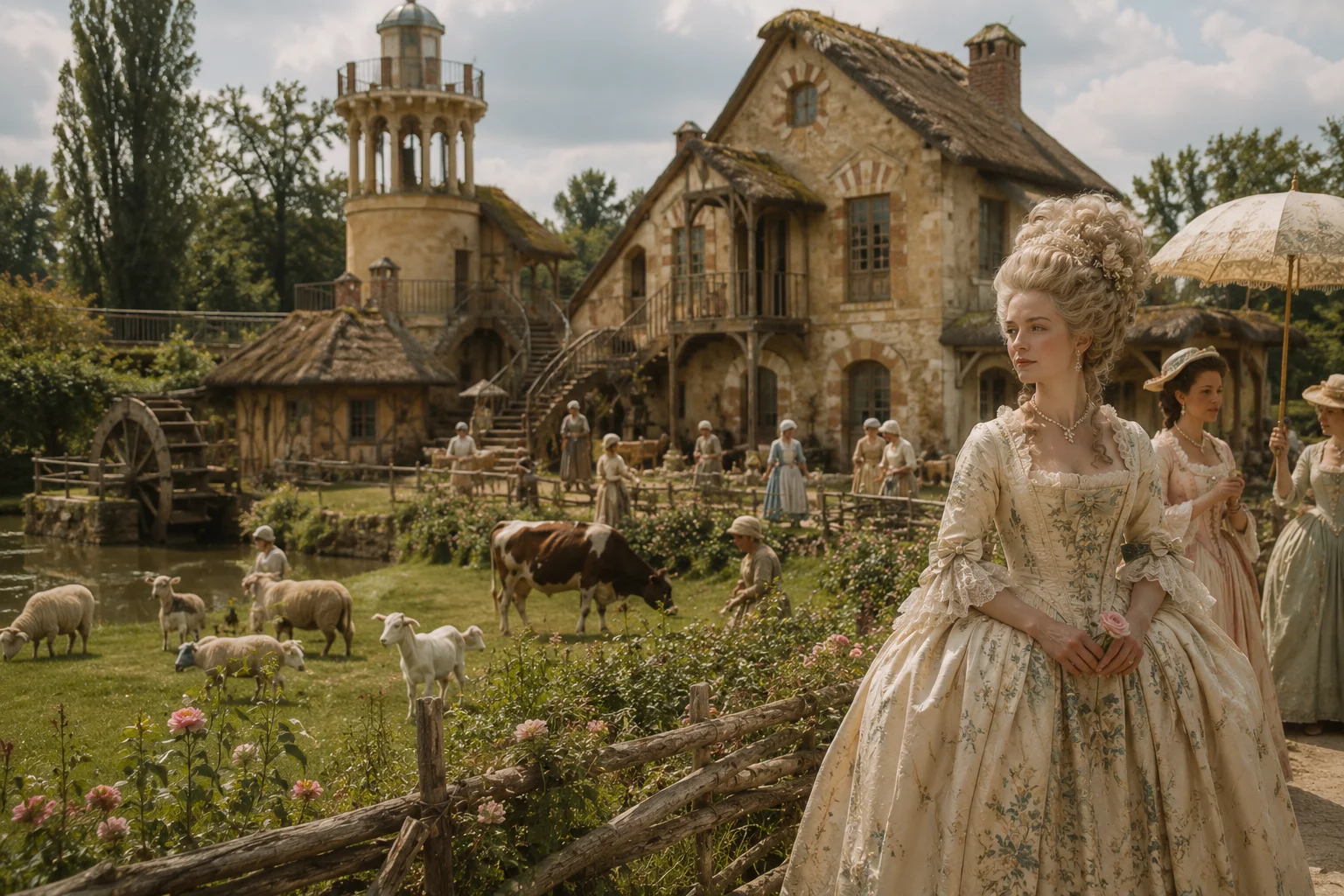
Seeking an escape from the suffocating etiquette of Versailles, the queen commissioned the Hameau de la Reine (The Queen’s Hamlet) on the palace grounds. It was a rustic, idealized replica of a French farming village, complete with a functioning dairy, a water mill, and farm animals. While she used it as a private retreat for her closest friends, the public viewed it as a mocking insult to the actual peasants suffering from brutal poverty.
9. She Advocated for the Smallpox Vaccine
Despite her reputation for frivolity, Marie Antoinette was highly progressive regarding medicine. Smallpox was a deadly plague in the 18th century, having already killed Louis XV. Against the heavy skepticism of the French medical establishment and the Catholic Church, the queen strongly advocated for early inoculation techniques and successfully had her own children inoculated, setting a powerful public health example.
10. She Was the Victim of a Massive Diamond Heist
The “Affair of the Diamond Necklace” severely damaged the queen’s already fragile reputation in 1785. A con artist named the Comtesse de La Motte forged letters from Marie Antoinette to trick a wealthy cardinal into buying a spectacularly expensive diamond necklace on the queen’s behalf. The con artist stole the necklace, and although Marie Antoinette was completely innocent and had no knowledge of the plot, the French public blamed her for the extravagant theft.
11. She Kept Decoded Secret Letters
Marie Antoinette maintained a famously close, emotionally intense relationship with Axel von Fersen, a handsome Swedish diplomat and soldier. The two exchanged highly coded letters for years, even during her imprisonment. Modern technology utilizing X-ray fluorescence has revealed the redacted, heavily scribbled-out lines in these historical documents, revealing deep declarations of love between the queen and the count.
12. Her Escape Attempt Was Foiled by a Heavy Coach
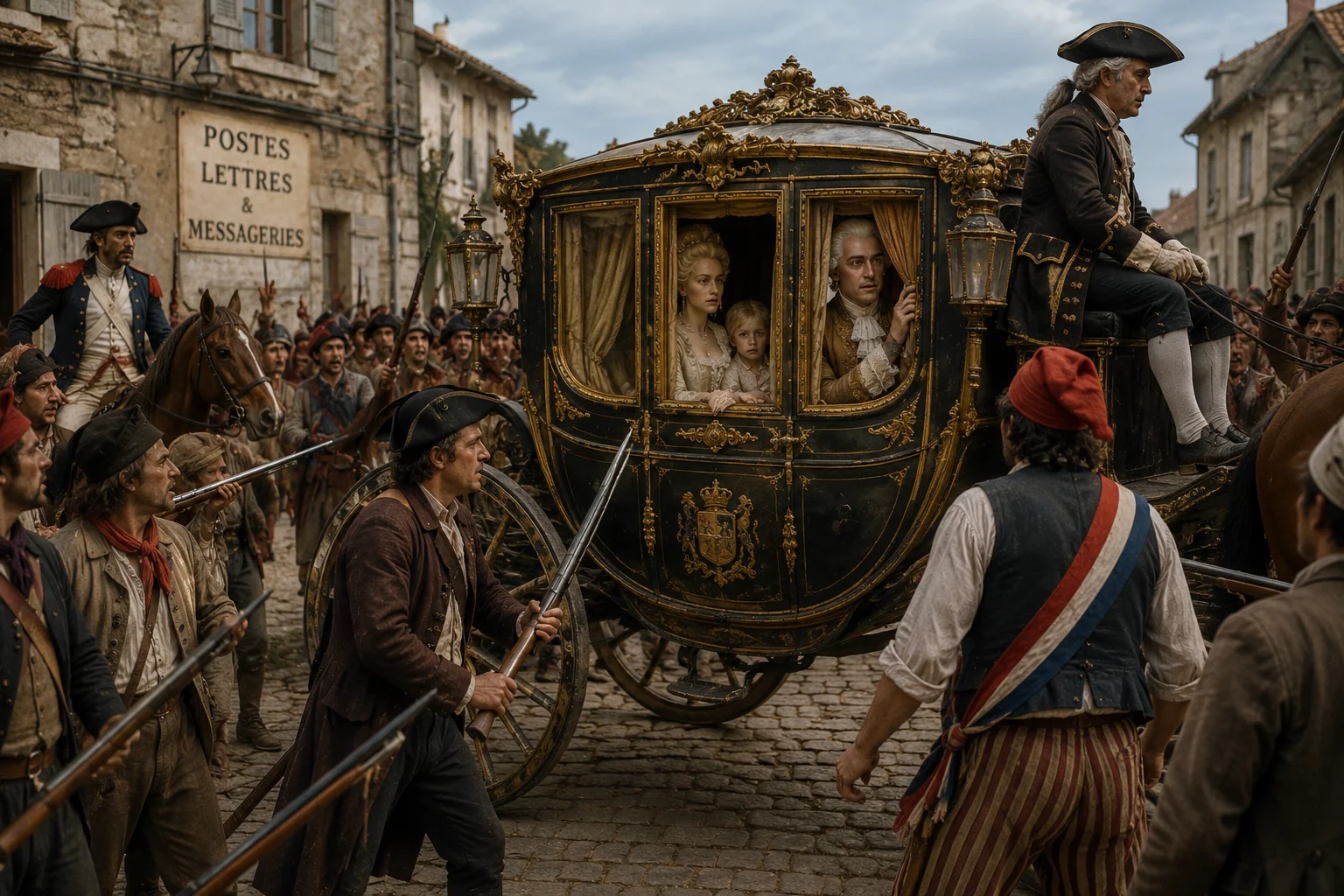
In June 1791, the royal family attempted to flee revolutionary Paris to seek refuge near the Austrian border in an event known as the Flight to Varennes. However, the escape failed largely because they traveled in a massive, opulent, and slow-moving custom carriage rather than splitting up into faster, less conspicuous vehicles. They were recognized by a local postmaster, arrested, and hauled back to Paris as traitors.
13. Her Hair Supposedly Turned White Overnight
While awaiting her trial and eventual execution in the dark, damp cells of the Conciergerie prison, the stress severely took its toll on the 37-year-old queen. According to observers at the time, her hair suddenly turned completely white. Today, the medical condition where extreme stress causes sudden hair whitening is formally known in the dermatological community as “Marie Antoinette syndrome” (canities subita).
14. Her Last Words Were an Apology
On October 16, 1793, Marie Antoinette was driven to the guillotine in an open cart, enduring the jeers of the angry crowds with remarkable dignity. As she was climbing the wooden steps to the scaffold, she accidentally stepped on the foot of her executioner, Henri Sanson. Her polite, final words were, “Pardon me, sir. I did not do it on purpose.”
15. Her Remains Were Eventually Moved
Following her execution, Marie Antoinette’s body was unceremoniously dumped into an unmarked mass grave in the Madeleine Cemetery, covered with quicklime. Decades later, after the monarchy was briefly restored in 1815, Louis XVIII ordered the remains of Louis XVI and Marie Antoinette to be exhumed. Their bones were transported and formally entombed in the Basilica of Saint-Denis, the traditional resting place of French royalty.