The Gentle Giants: 15 Fascinating Facts About Gorillas
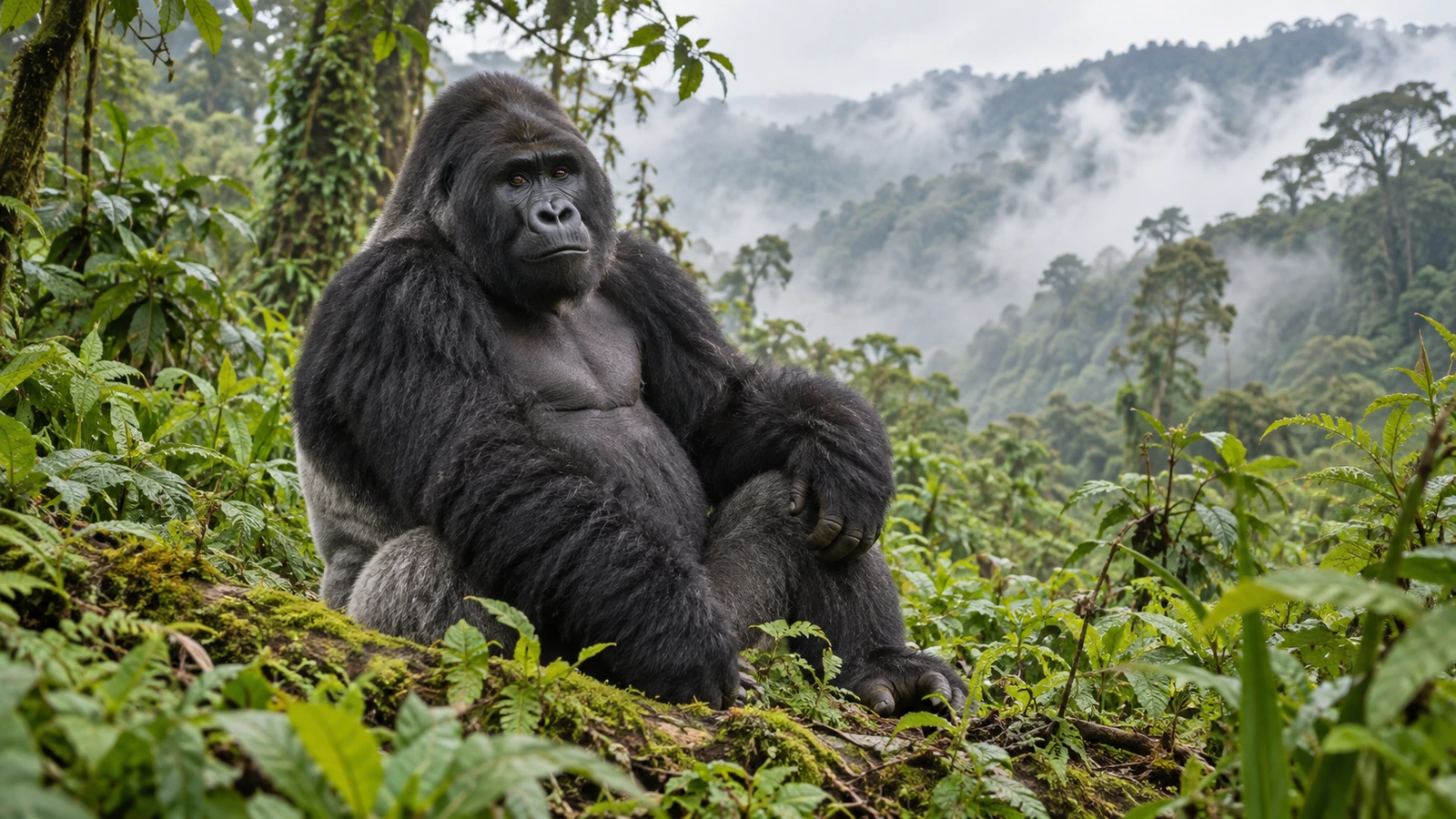
Gorillas are among our closest living biological relatives, sharing remarkably complex social structures, deep emotional lives, and impressive cognitive abilities. As the world's largest living primates, these majestic animals combine extraordinary physical strength with surprisingly gentle, plant-focused lifestyles. From building fresh beds every evening to communicating through song and sign language, their daily lives are full of surprises. Discover the incredible world of these peaceful forest giants through fifteen fascinating facts.
1. Gorillas Have Unique Noseprints Just Like Human Fingerprints
Every individual gorilla possesses a distinct pattern of wrinkles and ridges surrounding its nostrils, known as a noseprint. Unlike many wild animals that require invasive physical tagging, ear notches, or microchips, gorillas can be reliably identified by researchers through high-resolution photography of their faces. These facial features remain consistent throughout a gorilla's entire lifespan, allowing conservationists to track individuals from infancy to old age without causing distress. This non-invasive tracking method has revolutionized long-term demographic studies in dense African rainforests. It also enables park rangers to monitor vulnerable populations and detect missing troop members quickly.
2. Shared DNA Makes Gorillas Highly Susceptible to Human Illnesses
Gorillas share approximately 98.3 percent of their genetic material with humans, placing them alongside chimpanzees as our closest living biological relatives. However, this tight genetic proximity comes with a severe ecological downside: gorillas are acutely vulnerable to human respiratory pathogens. A simple common cold, influenza virus, or coronavirus that causes mild discomfort in humans can rapidly prove fatal to a gorilla troop. Because their immune systems have not evolved alongside human pathogens, entire troops can succumb to viral outbreaks transmitted by researchers or eco-tourists. To prevent catastrophic population declines, national parks strictly enforce minimum viewing distances and mandatory face mask protocols.
3. They Build Fresh Sleeping Beds Every Single Night
Every evening as dusk approaches, every adult and subadult gorilla constructs a brand-new nest to sleep in. Using surrounding branches, vines, and broad leaves, they meticulously weave a cushioned platform either on the forest floor or high in sturdy trees. Adult males, weighing up to 400 pounds, typically build heavy ground nests, while lighter females and juveniles often sleep in elevated branches for safety. Infants share their mothers' nests until they reach about three or four years of age, at which point they construct their own small beds. Building a fresh nest every night helps prevent parasites like fleas and ticks from colonizing their sleeping quarters, while also keeping them hidden from nocturnal predators.
4. Gorillas Sing and Hum Contentedly While Eating
Mealtime for a gorilla is not merely about sustenance; it is a musical, social occasion filled with vocal chatter. Field researchers have documented that gorillas produce distinct low-frequency humming and short, rhythmic singing sounds while consuming their favorite vegetation. This vocalization is not random; dominant silverbacks sing the loudest and longest to signal to the rest of the troop that good food is present and safety is maintained. Interestingly, gorillas rarely sing when eating mundane foliage, reserving their musical performances for highly prized delicacies like fresh celery, bark, or ripened fruit. This behavior demonstrates how deeply social dynamics and emotional satisfaction are intertwined in primate foraging activities.
5. Specialized Knuckle-Walking Protects Their Delicate Fingers
Gorillas belong to a select group of quadrupedal primates that practice a specialized terrestrial gait known as knuckle-walking. Instead of placing their flat palms or fingertips on the ground, they curl their fingers inward and rest their immense body weight on their middle knuckles. This unique structural adaptation protects their long, dexterous fingers from wear, sharp rocks, and thorns while traversing rough jungle terrain. Over time, the skin on the back of their knuckles develops thick, calloused pads that act like built-in shock absorbers. This locomotory style keeps their hands flexible enough to pluck tiny seeds, manipulate tools, and groom family members with extreme precision.
6. A Silverback Gorilla Is Up to Eight Times Stronger Than a Human
An adult male silverback gorilla is an absolute powerhouse of dense muscle and robust bone structure. Biologists estimate that a mature silverback possesses roughly four to eight times the physical strength of an elite human powerlifter. Driven by immense upper-body muscle mass, a silverback can effortlessly bend solid iron bars, crush thick bamboo stalks, or deliver a blow capable of repelling large predators. Their incredible power stems from high concentrations of fast-twitch muscle fibers combined with short, highly mechanical limb leverage. Despite this terrifying physical capacity, gorillas are surprisingly peaceful animals that rarely use their full strength except in defense of their family unit.
 African Wildlife
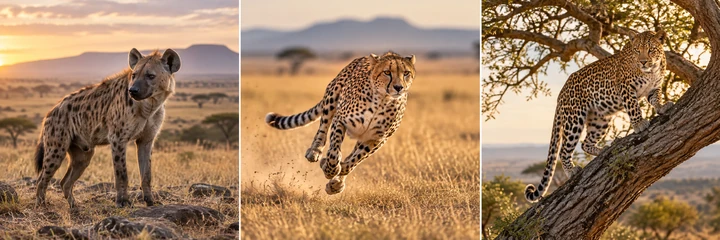
Venture beyond the safari stereotypes and discover the astonishing biological adaptations, fierce rivalries, and complex societies of Africa's most iconic wildlife. From venom-proof mustelids to deep-rumbling giants, explore the hidden lives of the continent's most remarkable survivors.
See All Facts
African Wildlife
Venture beyond the safari stereotypes and discover the astonishing biological adaptations, fierce rivalries, and complex societies of Africa's most iconic wildlife. From venom-proof mustelids to deep-rumbling giants, explore the hidden lives of the continent's most remarkable survivors.
See All Facts
7. Their Massive Bodies Are Fuelled Entirely by Plants
Maintaining a body mass that often exceeds 400 pounds requires an enormous daily intake of nutrients. A fully grown silverback consumes up to 40 to 45 pounds of fibrous vegetation every single day, spending up to half of its waking hours actively chewing. Their herbivorous diet consists mostly of bamboo shoots, stems, leaves, roots, and wild fruits, which are rich in moisture but relatively low in calories. To digest such vast quantities of fibrous plant matter, gorillas possess an enlarged, specialized hindgut filled with symbiotic bacteria that break down cellulose into usable energy. Because their food is so bulky and water-heavy, gorillas rarely need to drink directly from rivers or streams, absorbing nearly all their required moisture straight from the plants they consume.
8. Silver Hair Signals Sexual Maturity and Absolute Authority
When male gorillas reach approximately 12 years of age, the dark hair across their lower back turns a distinct saddle-shaped silvery-grey. This physical transition marks the biological rite of passage from a juvenile "blackback" to a fully mature "silverback." The silverback acts as the undisputed leader, protector, and decision-maker for the entire family troop, dictating when to forage, rest, and travel. He is responsible for defending the group against rival males, poachers, and natural predators, often placing himself directly in harm's way. Younger subordinate males must demonstrate absolute deference to the silverback's authority if they wish to remain within the safety of the troop.
9. They Have 32 Teeth and Massive Display Canines
Like adult humans, gorillas possess exactly 32 teeth, complete with incisors, premolars, and molars designed for grinding tough plant matter. However, male gorillas feature formidable, dagger-like canine teeth that can grow up to two inches long. Contrary to common misconceptions, these fearsome sharp canines are not used for capturing or eating flesh, as gorillas are strictly herbivorous in the wild. Instead, these massive teeth function primarily as visual weapons during dominance displays and as crucial tools for defending the troop against threats. They are also useful for tearing through the tough, fibrous outer bark of trees and giant bamboo stalks.
10. Gorilla Pregnancy Lasts Eight and a Half Months
Female gorillas experience a gestation period remarkably similar to humans, lasting approximately eight and a half months. They typically give birth to a single infant weighing around four pounds, which is surprisingly light given the enormous size of the adult parents. Newborn gorillas are entirely helpless and rely on constant physical contact, clinging tightly to their mother's chest fur for the first few months of life. As the infant grows, it rides on its mother's back, continuing to nurse for three to four years before fully weaning. Because female gorillas invest so many years into raising each individual offspring, they only give birth once every four to five years, making population recovery extremely slow.
11. Gorillas Display Grief, Laughter, and Complex Emotions
Decades of field research have demonstrated that gorillas possess rich emotional lives capable of empathy, joy, and deep sorrow. Young gorillas frequently engage in play wrestling, chasing games, and mutual tickling, emitting distinct pant-like vocalizations that scientists recognize as laughter. Conversely, when a member of a troop dies, the remaining group members often display signs of profound grief and mourning. They may sit silently around the corpse for days, gently touching or grooming the deceased, and exhibiting depressed behavior such as reduced eating. This emotional depth highlights the intricate social bonds that hold gorilla troops together as tight-knit family units.
12. Leopards Are Their Only Natural Non-Human Predator
Due to their colossal size and formidable physical strength, adult gorillas have virtually no natural predators in the African jungle, with one notable exception. The African leopard is the only non-human predator capable of hunting gorillas, often targeting vulnerable infants or ambushing solitary night-nesting individuals. However, taking down a fully grown silverback is an extraordinarily risky gamble for a big cat. A threatened silverback will let out chest-thumping roars, charge aggressively, and fight to the death to defend his family members from an attack. In many documented encounters, the sheer ferocity and weight of a silverback force the big cat to retreat before a lethal confrontation occurs.
13. Gorilla Troops Collapse or Disperse If the Leader Dies
A gorilla family unit, known as a troop or band, generally ranges from 5 to 30 individuals held together by the central authority of the dominant male. If the leading silverback dies from old age, illness, or poaching, the social structure of the entire troop collapses overnight. Female troop members must quickly decide whether to join an existing neighbor group, integrate with a solitary silverback, or form a new troop altogether. Unprotected females and infants face severe risks, as outside silverbacks seeking dominance may attempt infanticide to bring the females back into estrus. This complex social dependency underscores how critical a healthy silverback is to the survival of his descendants.
14. Gorillas Can Master Human Sign Language and Symbolic Concepts
Perhaps the most famous testament to gorilla intelligence was Koko, a Western Lowland gorilla who became world-renowned for learning American Sign Language. Under the tutelage of psychologist Dr. Penny Patterson, Koko learned over 1,000 individual signs and understood more than 2,000 words of spoken English. She demonstrated a remarkable ability to express complex thoughts, invent original compound words, and even joke or express sadness. Koko famously asked for a pet kitten, named it "All Ball," and visibly grieved when the kitten was tragically killed by a car. While some scientists debate the linguistic precision of her signing, Koko's life proved beyond doubt that gorillas possess deep cognitive self-awareness and emotional depth.
15. Science Recognizes Two Distinct Species and Four Subspecies
While many people view gorillas as a single uniform animal, scientists divide them into two distinct species: the Western gorilla and the Eastern gorilla. Each species is further divided into two subspecies, including the famous Mountain gorilla and Western Lowland gorilla. Separated by hundreds of miles of the Congo Basin, these species have adapted to unique habitats ranging from dense lowland swamps to misty, high-altitude volcanic slopes. Western gorillas generally have shorter, brownish hair and prominent brows, while Mountain gorillas possess long, thick black coats that protect them from freezing mountain temperatures. Tragically, all four subspecies are currently listed as Endangered or Critically Endangered on the IUCN Red List due to habitat destruction, poaching, and disease.
Sources & References
This AI-assisted post was rigorously curated and fact-checked for accuracy by:
 Martin Roháček
How fun was this article? 🤔
Tap a star to rate it
🧠 Quiz: How closely were you paying attention?
10 questions — all answers are in the article above!
Enjoyed these facts? There's more! 💌
Fresh fun facts in your inbox. No spam, ever.