1. The Name Comes From Their Alarm Call
When a dik-dik is startled by a predator, it runs in a zigzag pattern and breathes out rapidly through its nose. This makes a sharp, whistling sound that sounds like “dik-dik” or “zik-zik.” Locals and early explorers heard this distinct alarm call and decided to name the animal after the sound it makes.
2. Built-in Air Conditioning
Their funny, long snouts are actually an advanced cooling system. Blood pumps into the snout, and the moisture in the air cools the blood before it circulates back to the rest of the body. This smart feature helps them survive in desert temperatures reaching 104°F (40°C) without overheating.
3. They Never Need to Drink Water
Because their cooling system is so efficient and their kidneys are specialized, dik-diks lose very little moisture. As a result, they get all the water they need just from eating leaves, shoots, berries, and fruits. A wild dik-dik can go its entire life without taking a drink from a puddle or stream.
4. Females Are Bigger Than Males
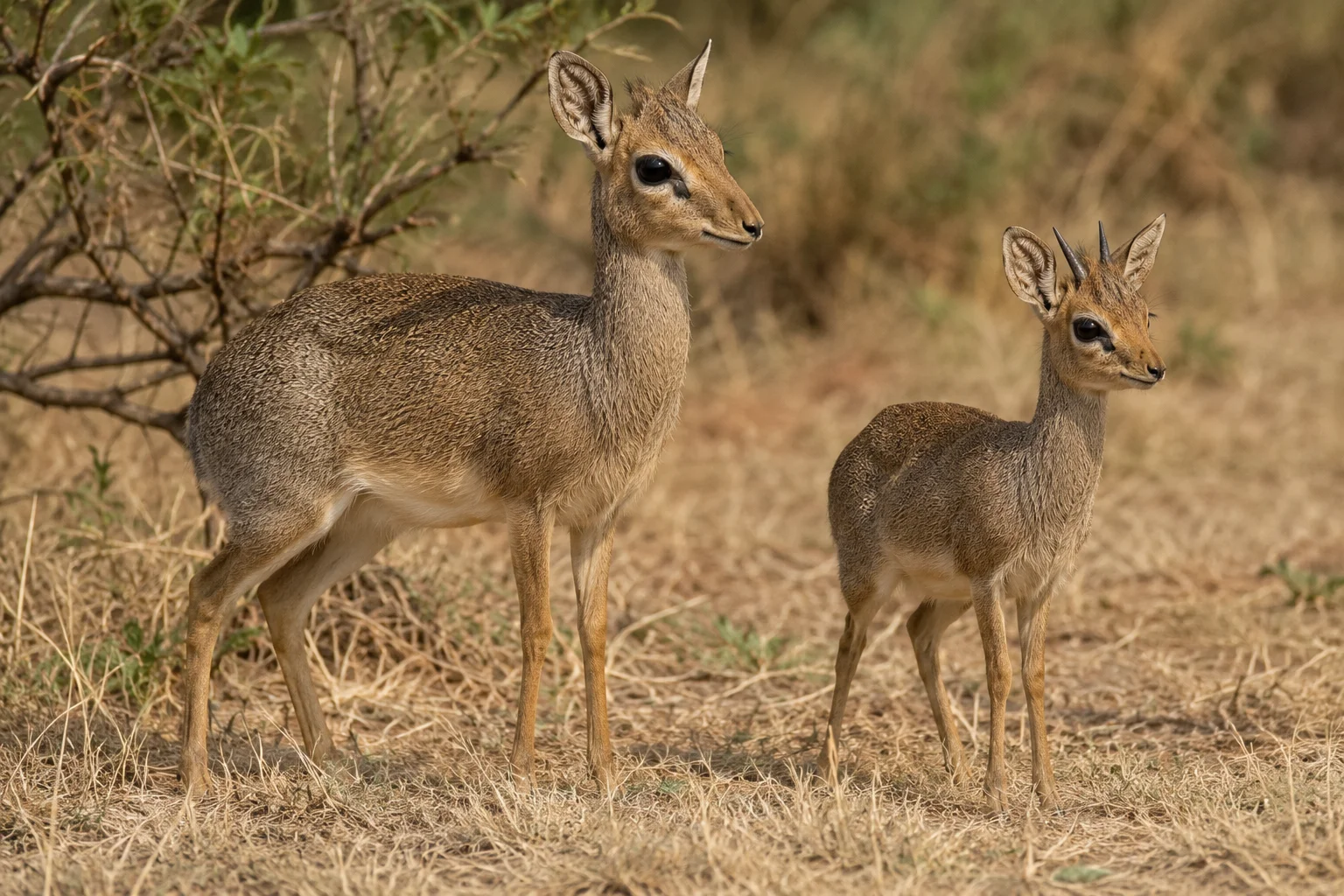
In the animal world, especially among hoofed mammals, males are usually the larger sex. Dik-diks break this rule. The females are noticeably larger and heavier than the males. Males also grow small horns, but females do not.
5. They Mate for Life
While many antelopes form large, wandering herds, dik-diks prefer a quiet family life. They are strictly monogamous, meaning they mate for life and live together in pairs. You will rarely see a dik-dik wandering far away from its chosen partner.
6. They Use Tears to Mark Territory
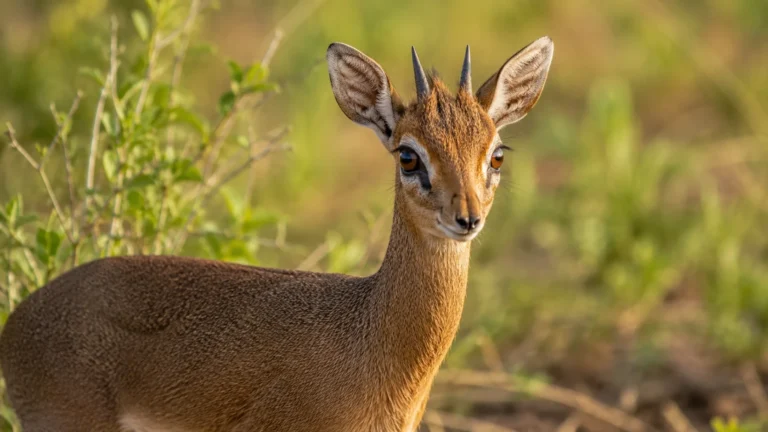
The black spots in the corners of their large eyes are actually scent glands, called preorbital glands. The dik-dik will carefully rub these glands on twigs and tall grass to leave a dark, sticky scent mark. This lets other animals know that the territory is already taken.
7. They Are Very Small
If you spot a dik-dik in the wild, you might mistake it for a baby antelope. Fully grown adults only weigh between 6 and 13 pounds. They stand just over a foot tall at the shoulder, making them roughly the size of a medium house cat.
8. They Hide Instead of Running
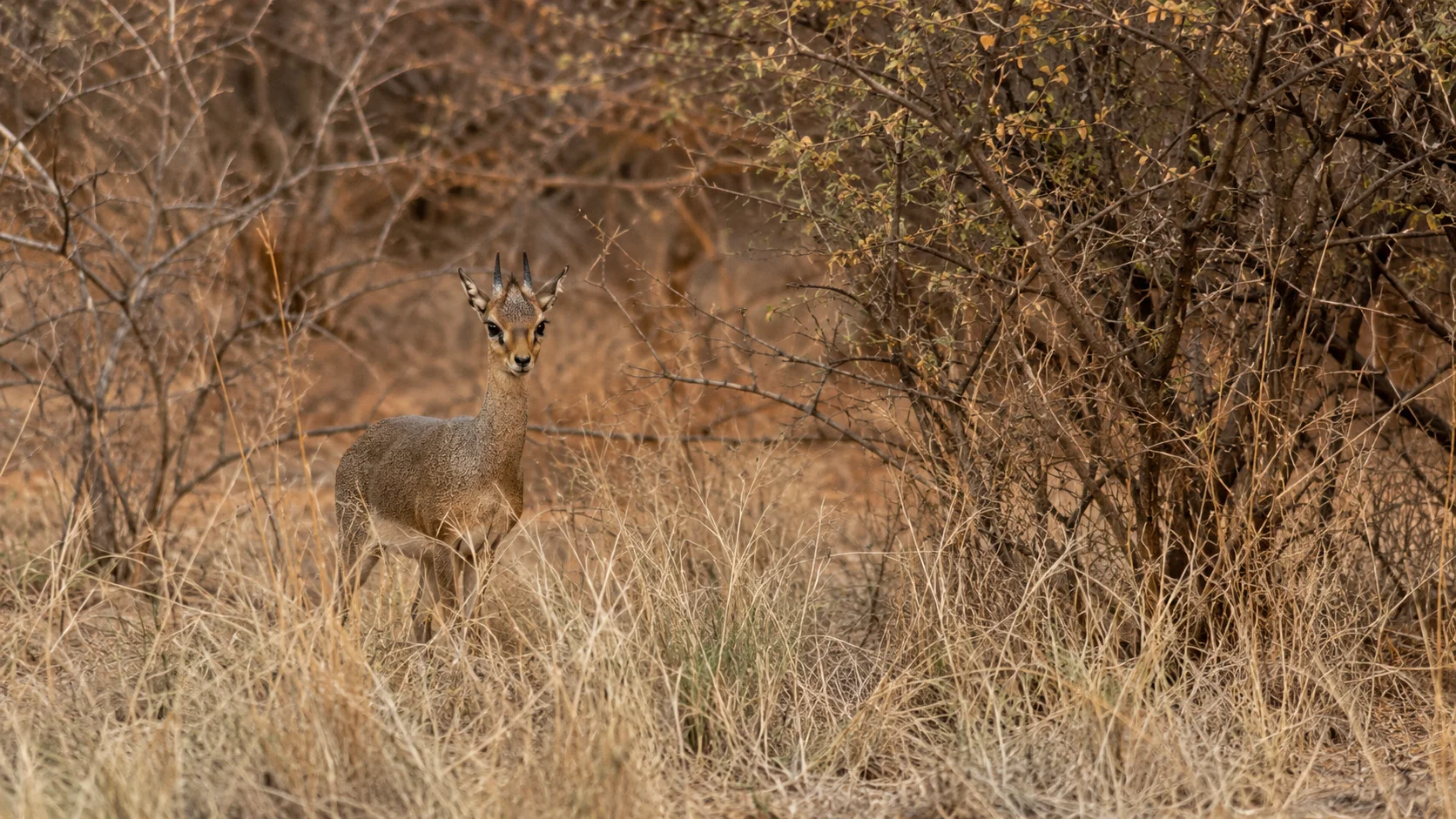
When predators like leopards or eagles approach, the dik-dik does not rely on running long distances to escape. Instead, they freeze and use their gray and brown coats to blend into the brush. If the predator gets too close, they will sprint into thick bushes to hide.
9. They Eat Constantly
Because they are so small, dik-diks have a fast metabolism. This means they digest food quickly and need a steady supply of energy. A dik-dik actually has to eat more food per pound of its body weight than much larger mammals, like cows or elephants.
10. They Use Bathroom Borders
To keep other dik-diks out of their space, the mated pairs mark the exact borders of their territory using shared dung piles, also known as latrines. Both the male and female will use these specific spots to create a clear scent boundary around their home.
11. They Avoid Tall Grass
Because they are so short, dik-diks stick to areas with low brush and thorny scrub. If the grass grows too high after a rainy season, it blocks their view of predators. When this happens, the pair will pack up and move to a new area with shorter plants.
12. Their Horns Are Often Hidden
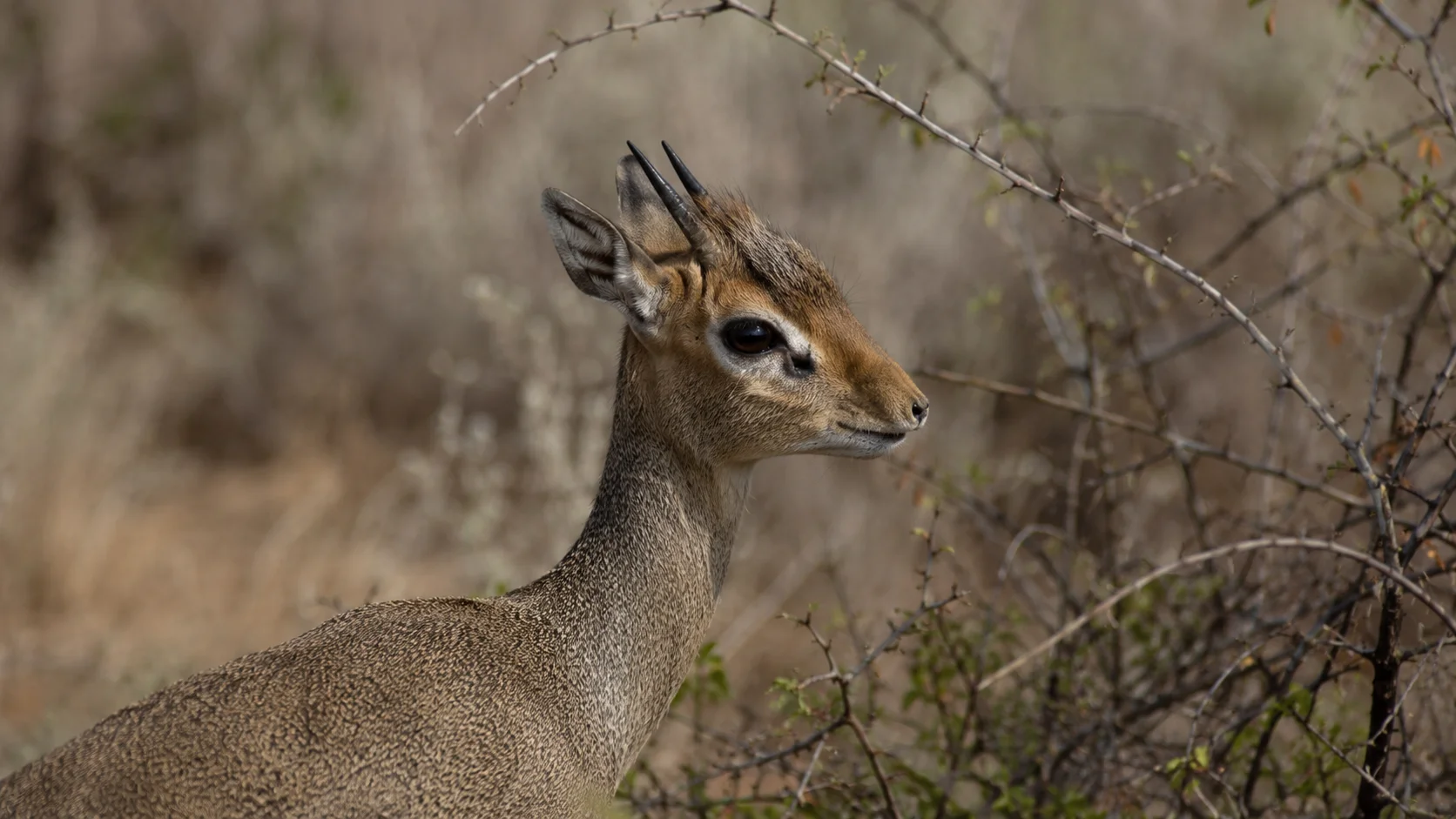
The male dik-dik has short, ringed horns that point backward. However, these horns are only a few inches long and are often covered by a soft tuft of hair that grows right on their forehead, making them hard to see from a distance.
13. They Sleep During Hot Days
To save water and avoid the harsh African sun, dik-diks are mostly nocturnal and crepuscular. This means they are most active at dawn, dusk, and during the night. They spend the hottest parts of the day resting safely in the shade.
14. One Hide Equals One Glove
Sadly, humans are a major threat to dik-diks. Poachers hunt them for their small bones, which are used to make traditional jewelry. Hunters also trap them for their skins, which are turned into suede. Because the animal is so small, it takes one entire dik-dik hide to make just a single suede glove.
15. They Adapt Well to Human Farming
Unlike many wild animals that lose their homes to human farming, dik-diks can adapt surprisingly well. When cattle or goats overgraze a field, thick scrub and weeds grow back in their place. Dik-diks thrive in these messy, overgrown areas, allowing them to live safely near rural farms.