The Indomitable Warrior: 15 Fascinating Facts About Harriet Tubman
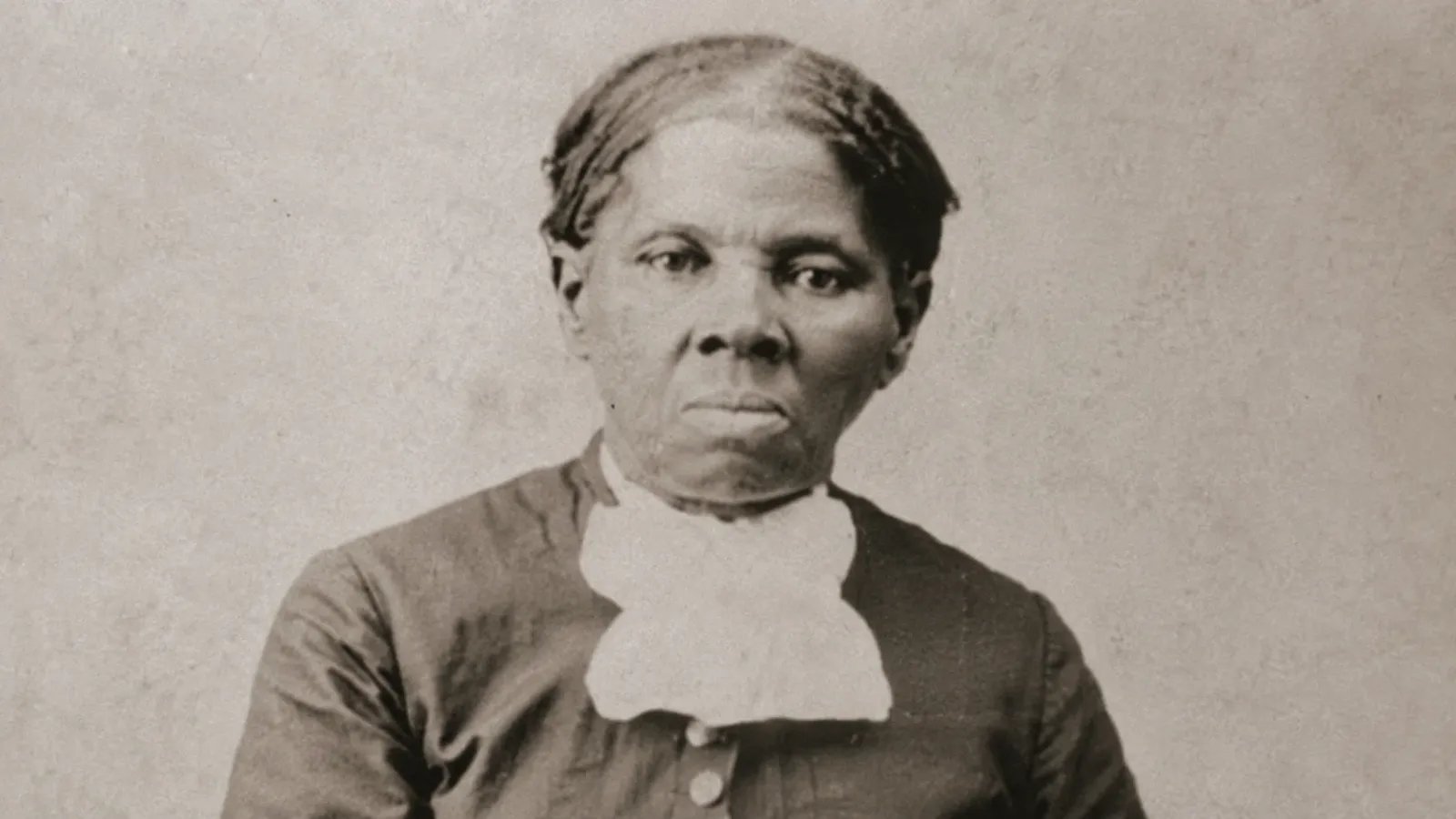
Harriet Tubman is often reduced to a simple conductor on the Underground Railroad, but this myth ignores her fierce reality. She was a brilliant military strategist, a Union spy, and a lifelong suffragist. Beyond the legends, discover the complex, astonishing truths about an unstoppable American warrior who fought on multiple fronts to secure true liberty.
1. Harriet Tubman was the first woman to lead a major military operation in the United States.
During the Civil War, Tubman served as a key adviser and commander for the Union Army. In June 1863, she guided Colonel James Montgomery and his troops up the Combahee River in South Carolina. Using intelligence she had gathered from her own covert scout ring, her precise navigation allowed Union gunboats to bypass Confederate torpedoes. The raid destroyed vital Confederate supply lines and liberated more than seven hundred enslaved people in a single night.
2. She suffered from severe temporal lobe epilepsy caused by a traumatic childhood head injury.
When Tubman was a teenager, an overseer threw a heavy iron weight at another enslaved person, but it struck Tubman in the head instead. This massive skull fracture left her with lifelong side effects, including sudden narcoleptic spells, intense headaches, and vivid hallucinations. Rather than viewing these visions as a deficit, Tubman, who was deeply devout, interpreted them as direct messages from God, using them to guide her rescue missions with unshakable confidence.
3. Her birth name was not Harriet, but Araminta Ross.
Born into slavery in Dorchester County, Maryland, she was affectionately called Minty by her family. She did not adopt the name Harriet until around the time she married a free Black man named John Tubman in 1844. It is widely believed she changed her first name to Harriet to honor her mother, Harriet Greene, signaling a transition into adulthood and her eventual self-emancipation.
4. Tubman never lost a single passenger during her time conducting the Underground Railroad.
Over the course of roughly a decade, Tubman made approximately thirteen separate missions back into slave territory, personally escorting about seventy people to freedom. She achieved this perfect success rate through meticulous planning and extreme caution. She preferred to travel during the winter when nights were longest, often leaving on Saturdays so that runaway notices could not be printed in newspapers until Monday morning.
5. She carried a revolver on her rescue missions to protect against slave catchers and to threaten hesitant escapees.
Tubman was famously armed with a pistol during her journeys. While the weapon provided necessary defense against aggressive dogs and bounty hunters, it served an equally grim psychological purpose. If a fleeing passenger lost their nerve and wanted to turn back, Tubman would draw her weapon and threaten to shoot them, knowing that a captured escapee would be tortured into revealing the secrets of the Underground Railroad.
6. Tubman used the exact calls of owls to signal to enslaved people that it was safe to come out of hiding.
Navigating the treacherous wilderness of Maryland at night required stealth communication. Tubman mimicked the hoot of the barred owl, a species native to the region, to alert hiding fugitives. Because the sound was a natural part of the nocturnal environment, it did not arouse the suspicion of slave patrols. Her deep knowledge of the local ecology was just as vital to her success as her navigational skills.
 Human Rights Icons and Moral Leaders
Explore the complex realities of history's most renowned human rights icons and moral leaders. From strategic militants to quiet rebels, discover the astonishing sacrifices, fierce defiance, and brilliant tactics that drove these revolutionary figures to reshape our world.
See All Facts
Human Rights Icons and Moral Leaders
Explore the complex realities of history's most renowned human rights icons and moral leaders. From strategic militants to quiet rebels, discover the astonishing sacrifices, fierce defiance, and brilliant tactics that drove these revolutionary figures to reshape our world.
See All Facts
7. She underwent brain surgery without anesthesia to alleviate her lifelong seizures.
In the late 1890s, the lingering effects of her childhood head injury became overwhelmingly painful, causing chronic insomnia and severe headaches. Tubman sought treatment at Massachusetts General Hospital, where a surgeon agreed to operate on her brain to relieve the pressure. Refusing general anesthesia, she instead chose to bite down on a bullet during the procedure, a pain-management tactic she had seen soldiers use during the Civil War.
8. The bounty for her capture never reached the mythical sum of forty thousand dollars.
A popular historical myth claims there was a staggering forty-thousand-dollar reward for Tubman's capture, which would be equivalent to over a million dollars today. In reality, the only documented bounty ever posted for her was a one-hundred-dollar reward offered by her former enslaver, Eliza Brodess, shortly after Tubman initially escaped. The inflated figure was likely a post-war exaggeration designed to emphasize her notoriety and success.
9. Tubman actively conspired with John Brown to plan the infamous raid on Harpers Ferry.
Tubman met the radical abolitionist John Brown in 1858 and became deeply involved in his plans to initiate an armed slave revolt. Brown respected her military mind so much that he referred to her as General Tubman. She used her networks to recruit formerly enslaved people in Canada to join Brown's militia. Tubman only missed the actual raid in 1859 due to illness, an absence that likely saved her from being captured and executed alongside Brown.
10. She operated a covert spy ring for the Union Army in South Carolina.
Before leading the Combahee River Raid, Tubman established a sophisticated espionage network under the direction of the Union Secretary of War. She recruited formerly enslaved people to act as scouts, mapping the deeply forested and swampy terrain of South Carolina. Because these local Black citizens were largely ignored or deemed invisible by Confederate officers, they were able to gather highly accurate intelligence regarding enemy encampments and torpedo placements.
11. Tubman struggled with extreme poverty for most of her life despite her heroic military service.
Despite her invaluable contributions as a nurse, scout, and spy, the United States government repeatedly denied Tubman a military pension for decades. She supported herself by selling homegrown produce, taking in boarders, and relying on donations from wealthy abolitionist friends. It was not until 1899, over thirty years after the Civil War ended, that Congress finally granted her a pension of twenty dollars a month, and only because she was the widow of a Union veteran, not for her own service.
12. She purchased a home in New York from a prominent US Senator before the Civil War even began.
In 1859, a time when the Dred Scott decision stated that Black Americans were not citizens and could not legally own property in many places, Tubman purchased a piece of land in Auburn, New York. The seller was William H. Seward, a vocal abolitionist who would later become Abraham Lincoln's Secretary of State. This property became a permanent haven for her family and a safe house for friends in need.
13. Tubman established a pioneering nursing home for elderly and indigent Black citizens.
Long before modern social welfare programs existed, Tubman was deeply concerned about the well-being of formerly enslaved people who had grown too old or sick to work. In 1903, she donated a portion of her own land in Auburn to the African Methodist Episcopal Zion Church. This land was used to establish the Harriet Tubman Home for the Aged, a facility where she herself would eventually be cared for until her death in 1913.
14. She utilized sophisticated medicinal botany to cure soldiers of dysentery during the Civil War.
Tubman was a highly skilled herbalist, a talent she acquired from her mother and her time surviving in the wild. While serving in Florida and South Carolina, she noticed Union soldiers dying rapidly from dysentery and other camp diseases. Tubman foraged local roots, herbs, and water lilies, brewing them into bitter medicinal teas that effectively cured the soldiers' ailments when traditional army medical supplies failed.
15. She was buried with full military honors in recognition of her service to the United States Army.
When Harriet Tubman passed away from pneumonia at the age of ninety-one, her monumental contributions to the nation were finally acknowledged by the military establishment. She was laid to rest at Fort Hill Cemetery in Auburn, New York, receiving a burial with full military honors. It was a fitting final tribute for a woman who had spent her entire life waging a relentless war for human freedom.
Sources & References
This AI-assisted post was rigorously curated and fact-checked for accuracy by:
 Martin Roháček
How fun was this article? 🤔
Tap a star to rate it
🧠 Quiz: How closely were you paying attention?
10 questions — all answers are in the article above!
Enjoyed these facts? There's more! 💌
Fresh fun facts in your inbox. No spam, ever.