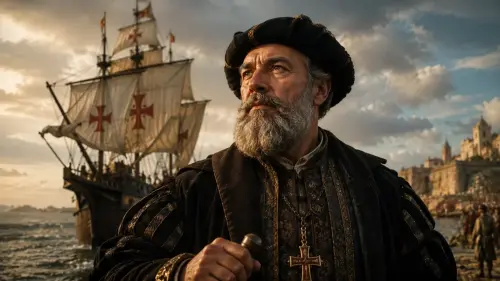
The Ruthless Conquistador: 15 Fascinating Facts About Hernán Cortés
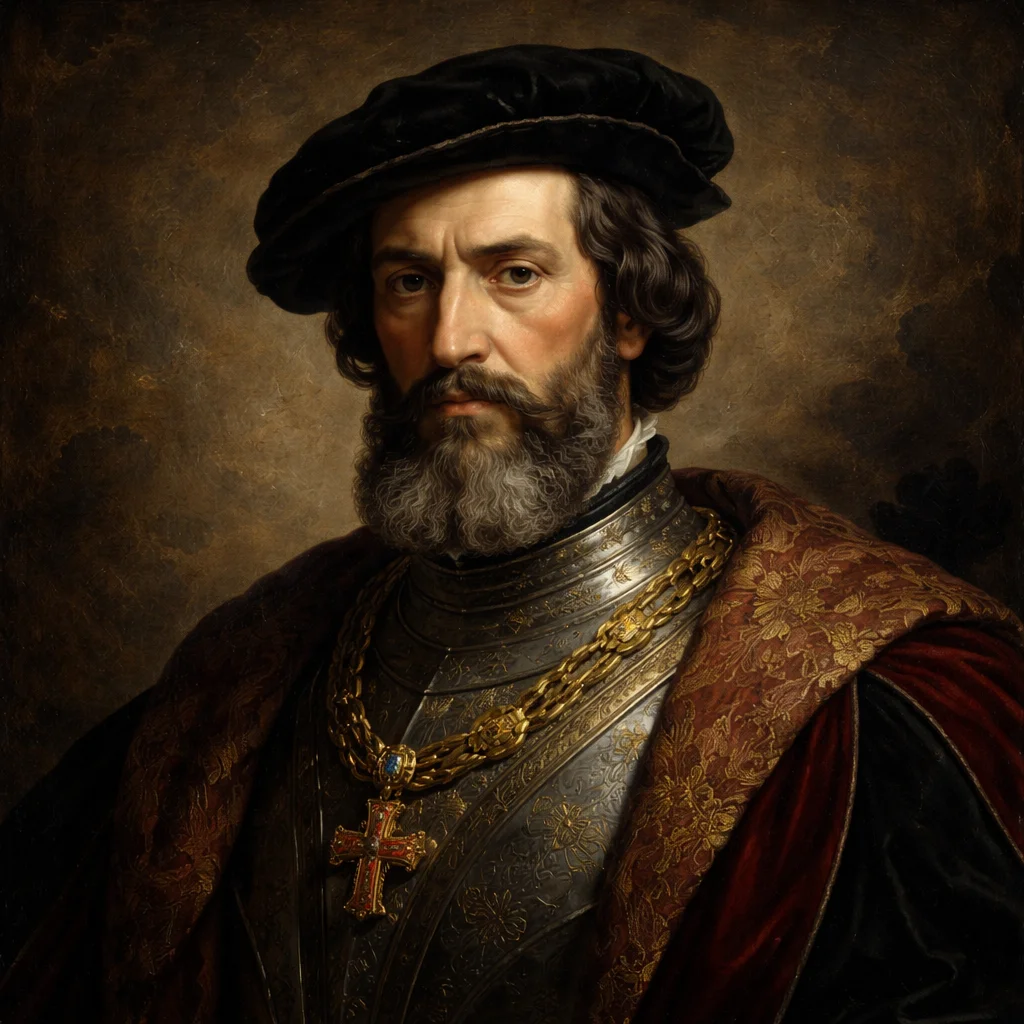
Hernán Cortés remains one of history’s most contentious figures, a Spanish conquistador whose audacious military campaign destroyed the Aztec Empire and altered the trajectory of the Americas forever. Driven by relentless ambition, wealth, and strategic brilliance, Cortés orchestrated the fall of Tenochtitlán through shifting local alliances, sheer brutality, and unwitting biological warfare. Yet behind the mythology of swift victory lies a complex narrative of illegal mutinies, scuttled fleets, tragic betrayals, and endless legal battles. Here are 15 fascinating facts about Hernán Cortés and his dramatic, bloody conquest of Mexico.
1. He Launched His Legendary Conquest as an Illegal Mutineer
Before Hernán Cortés ever set foot on the Mexican mainland, his entire expedition was officially cancelled by Diego Velázquez de Cuéllar, the Governor of Cuba. Fearing that his ambitious subordinate would claim all glory and wealth for himself, Velázquez revoked Cortés's command at the last minute. Cortés blatantly ignored the governor's direct orders, quickly boarding his fleet and setting sail under cover of night in February 1519. This brazen act made Cortés a traitor and a mutineer under Spanish legal authority from the very start of his campaign. To legitimize his treason, he sent glowing reports alongside vast quantities of confiscated Aztec gold directly to King Charles V to buy royal forgiveness.
2. He Scuttled His Own Ships Rather Than Burning Them
Popular legend frequently claims that Hernán Cortés dramatically burned his entire fleet upon arriving on the coast of Mexico to prevent retreat. In reality, Cortés ordered his men to strip the vessels of rigging, sails, and iron before drilling holes in the hulls to scuttle them. Sinking the ships allowed him to salvage invaluable metal hardware, ropes, and timber that were later reused to build tactical brigantines for the siege of Tenochtitlán. By physically submerging his fleet in full view of his men, he extinguished any lingering hopes of mutiny or returning to Cuba. This ruthless psychological maneuver forced his frightened soldiers to march inland with no alternative but victory or death.
3. He Was a University Dropout Who Studied Law
Long before acquiring fame as a ruthless military commander, Hernán Cortés was groomed for a peaceful white-collar career by his parents. At age fourteen, he was sent from his hometown of Medellín to study law at the prestigious University of Salamanca. However, Cortés quickly grew bored with academic life and Latin grammar, dropping out after just two years. Despite leaving his formal education behind, his brief legal training provided him with vital knowledge of bureaucracy and statutory loopholes. Throughout his conquest, Cortés cleverly used his legal acumen to write meticulous letters justifying his mutinous actions and claiming absolute authority over newly occupied territories.
4. His Most Effective Weapon Was an Enslaved Indigenous Woman
Cortés’s grand strategic success relied heavily on an enslaved Nahua woman named Malintzin, known to the Spanish as Doña Marina or La Malinche. Gifted to the Spaniards alongside nineteen other women after a military victory in Tabasco, she spoke both Mayan and Nahuatl fluently. Working alongside a shipwrecked Spanish priest who spoke Mayan, she quickly created an indispensable translation chain for Cortés. Beyond basic translation, La Malinche understood complex Mesoamerican political rivalries, enabling Cortés to forge key alliances with tribes eager to overthrow Aztec dominance. Today, her legacy in Mexico remains intensely controversial, standing simultaneously as a founding mother of the mestizo nation and a symbol of betrayal.
5. He Was Related to the Conquistador Who Conquered the Incas
Hernán Cortés was not the only member of his extended family to dismantle a massive American empire. He was the second cousin of Francisco Pizarro, the infamous conquistador who later orchestrated the bloody conquest of the Inca Empire in Peru. Both men hailed from the dry, impoverished region of Extremadura in southwestern Spain, an area that produced an extraordinary number of ambitious explorers. The lack of economic opportunity in Extremadura drove young men like Cortés and Pizarro to seek fame, nobility, and wealth across the Atlantic Ocean. Together, these two distant relatives brought down the two largest and most sophisticated empires in the Western Hemisphere within a single generation.
6. He Barely Escaped Total Annihilation During the "Night of Sorrows"
On the rainy night of June 30, 1520, the Aztec populace of Tenochtitlán staged a violent uprising against the occupying Spanish forces. Trapped within the island city, Cortés ordered a desperate nocturnal retreat across narrow causeways under relentless attack by Aztec warriors in canoes. Hundreds of Spanish soldiers drowned in the surrounding lake because they refused to discard the heavy gold loot stashed inside their armor. Dubbed La Noche Triste (The Night of Sorrows), the chaotic battle resulted in the loss of nearly two-thirds of Cortés's forces and most of his artillery. Cortés himself barely managed to escape alive, and tradition holds that he wept bitterly beneath a massive ahuehuete tree watching the remnants of his army retreat.
7. Smallpox Did Far More Damage to the Aztecs Than Spanish Weapons
While Spanish steel, gunpowder, and cavalry proved deadly, biological warfare ultimately secured the fall of the Aztec Empire. During the Spanish retreat from Tenochtitlán, an infected African slave carrying the smallpox virus arrived with Spanish reinforcements, triggering a catastrophic outbreak. The Indigenous populations of Mesoamerica had no natural immunity to European diseases, causing the virus to sweep rapidly through the dense imperial capital. Smallpox decimated up to forty percent of the city's inhabitants within months, killing agricultural laborers, elite warriors, and the emperor Cuitláhuac himself. By the time Cortés launched his final naval siege on Tenochtitlán in 1521, he faced a starving, disease-stricken population unable to mount an effective defense.
8. He Tortured and Eventually Hanged the Final Aztec Emperor
Following the fall of Tenochtitlán, the last Aztec emperor, Cuauhtémoc, surrendered to Cortés in a desperate effort to spare his surviving people. Although Cortés initially promised fair treatment to the royal prisoner, his greed quickly overcame his sense of chivalry. Disappointed by the amount of gold recovered from the ruined city, Cortés ordered Cuauhtémoc’s feet to be soaked in oil and burned over hot coals to force him to reveal hidden treasure. Years later, in 1525, during an exhausting expedition to the jungles of Honduras, Cortés grew paranoid about a rumored Indigenous conspiracy. Without a formal trial, Cortés ordered Cuauhtémoc hanged from a tree, an execution that shocked even many of his own officers.
9. His First Wife Died Under Extremely Mysterious Circumstances
In 1522, after cementing control over central Mexico, Cortés was reunited with his Cuban wife, Catalina Suárez Marcayda. Catalina arrived at his lavish palace in Coyoacán, but her presence was reportedly an unwelcome political embarrassment to the ambitious leader. Just months after her arrival, following an intense argument at a dinner party, Catalina died suddenly in her bedroom overnight. Her body exhibited strange marks on her neck, leading rumors to circulate that Cortés had strangled her because she was childless and hindered his noble marriage ambitions. Though her family formally accused him of murder and demanded an official investigation, Cortés utilized his immense political clout to ensure he never faced trial.
10. He Helped Popularize Chocolate as a Sweet Luxury in Europe
When Cortés encountered the Aztec elite, he was introduced to xocolatl, a bitter, spiced liquid made from crushed cacao beans. Aztec rulers, including Montezuma II, drank the frothy beverage for energy and considered cacao beans valuable enough to serve as official currency. Recognizing its economic potential, Cortés shipped cacao beans back to Spain in the 1520s along with instructions on how to prepare the brew. Spanish aristocrats modified the traditional recipe by serving it hot and mixing in sugar, cinnamon, and vanilla to offset its natural bitterness. This adapted drink rapidly became an exclusive, highly sought-after luxury item among royal courts throughout Western Europe.
11. He Led an Expedition to Baja California and Believed It Was an Island
Driven by endless ambition and rumors of mythical lands rich in gold and pearls, Cortés funded exploratory voyages along Mexico’s Pacific coast. In 1535, he personally led an expedition north and landed on the eastern shore of the Baja California peninsula. Believing he had discovered a massive mythical island described in contemporary Spanish romance novels, he named the region California. His attempt to establish a permanent colony failed miserably due to harsh desert terrain, supply shortages, and hostile local inhabitants. Nevertheless, his miscalculation persisted for centuries, causing European cartographers to depict California as an island well into the 18th century.
12. He Had a Child With the Daughter of Emperor Montezuma II
Following the conquest of Tenochtitlán, Cortés took Montezuma II's prominent daughter, Tecuichpoch (baptized as Isabel Moctezuma), into his personal household. Despite Isabel being married off to Spanish noblemen, Cortés fathered an illegitimate child with her around 1528. The resulting daughter, named Leonor Cortés y Moctezuma, carried the combined bloodlines of the Spanish conqueror and the Aztec imperial household. Immediately after her birth, Cortés took the newborn girl away from her mother and placed her in the care of a trusted supporter. Although he initially separated them, Cortés later formally recognized Leonor in his legal will, granting her a substantial financial inheritance.
13. He Reportedly Confronted King Charles V by Jumping Onto His Carriage
Despite handing an immense empire over to Spain, Cortés constantly felt unappreciated and sidelined by the Spanish Crown. King Charles V stripped Cortés of his governorship in Mexico, fearing that the powerful conquistador might attempt to break away and declare himself king. According to a famous historical anecdote, an enraged Cortés approached the king's royal carriage in Spain to demand attention after being repeatedly ignored at court. When Charles V coldly asked who this bold intruder was, Cortés allegedly delivered a dramatic, arrogant retort. He told the monarch he was "a man who has given you more provinces than your ancestors left you cities."
14. His Remains Were Moved Eight Times and Hidden Behind a Secret Wall
Hernán Cortés died in Spain in 1547, but his final wish was to be buried on Mexican soil in a monastery he founded. Over the next four centuries, his mortal remains underwent an astounding journey, being disinterred, transported, and reburied eight separate times across two continents. Following Mexico’s independence from Spain in 1821, anti-Spanish sentiment surged, threatening the destruction or desecration of the conqueror’s tomb. To protect his bones, loyalists secretly removed his body and hid it inside a sealed wall within the Church of Jesús Nazareno in Mexico City. His remains lay forgotten behind the secret wall for over a century until they were rediscovered by historians in 1946.
15. He Died in Spain Broke, Bitter, and Tangled in Endless Litigation
Despite sending millions in gold to Europe and carving out vast domains, Cortés did not live out his final years in opulent comfort. He spent his twilight years burdened with massive personal debt incurred from financing failed maritime expeditions to the Pacific Ocean. Furthermore, he was trapped in endless legal battles in Spain, defending himself against accusations of corruption, embezzlement, and murder. Severely ill with dysentery and blocked from returning to Mexico by royal decree, he died near Seville in 1547 at the age of 62. The man who had conquered one of the greatest empires in world history passed away bitter, alienated, and stripped of political power.
Sources & References
This AI-assisted post was rigorously curated and fact-checked for accuracy by:
 Martin Roháček
How fun was this article? 🤔
Tap a star to rate it
🧠 Quiz: How closely were you paying attention?
10 questions — all answers are in the article above!
Enjoyed these facts? There's more! 💌
Fresh fun facts in your inbox. No spam, ever.