
The Untouchable Alpine Icon: 15 Fascinating Facts About Jean-Claude Killy
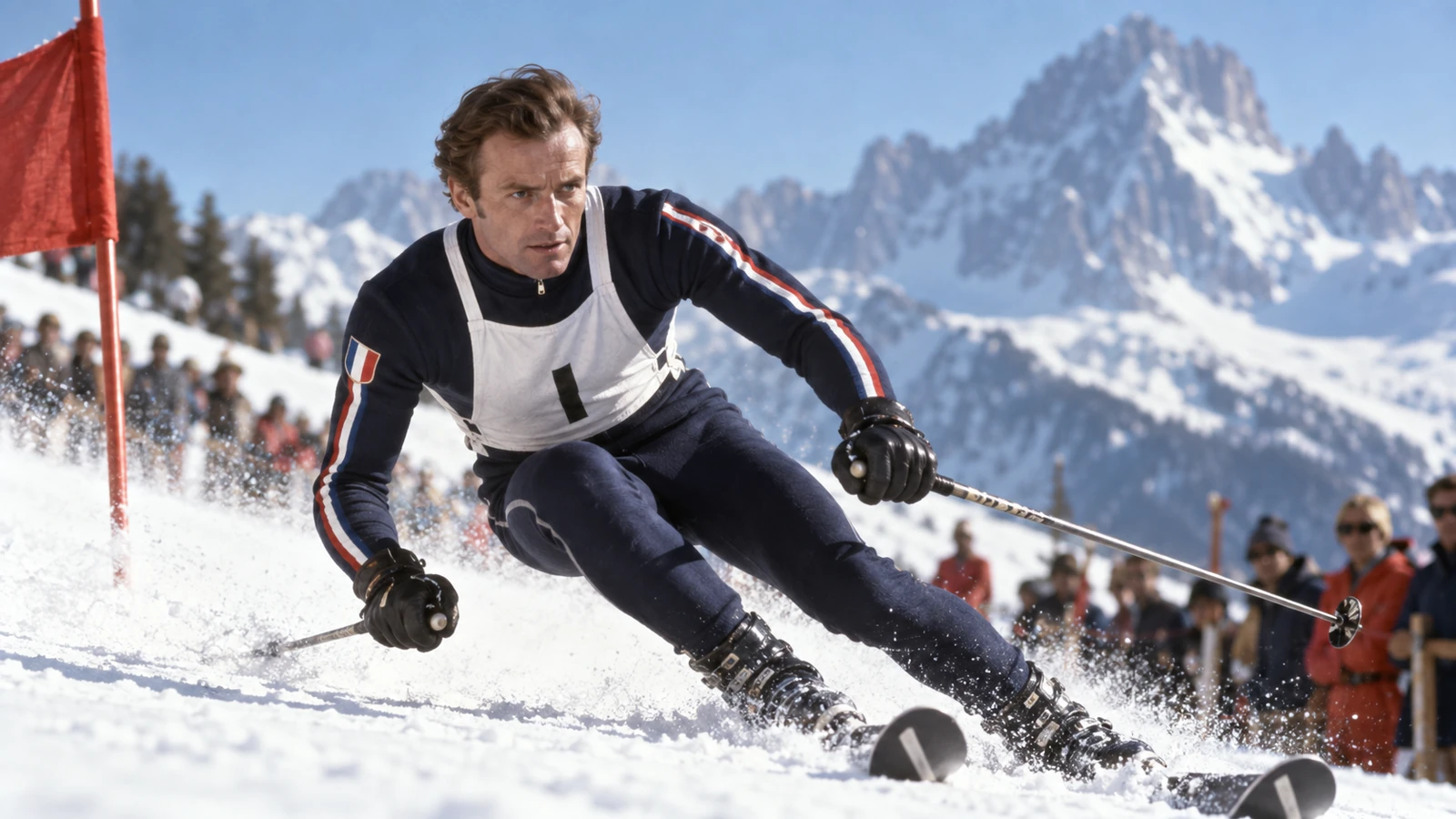
Jean-Claude Killy stands as one of the most dominant and enigmatic figures in the history of alpine skiing. Bursting onto the international stage in the late 1960s, the French sensation captivated global audiences with his aggressive technique, fearless speed, and suave charisma. He achieved immortality at the 1968 Winter Olympics in Grenoble by completing a historic sweep of all three alpine gold medals—a feat accomplished by only one other male skier in history. Beyond his Olympic triumphs, Killy revolutionized the mechanics of ski racing, mastered sports marketing, and helped direct the future of the Olympic Games. Here are 15 fascinating facts about the life, career, and enduring legacy of Jean-Claude Killy.
1. Raised in Val d'Isère After World War II
Jean-Claude Killy was born in Saint-Cloud, near Paris, in 1943, but his life changed dramatically when his family relocated to Val d'Isère in the French Alps shortly after World War II. His father, a former Spitfire pilot, opened a ski shop in the remote mountain town, exposing young Killy to the slopes at just three years old. Living in an alpine haven allowed him to spend virtually every winter day on skis, developing a natural fluidity and balance that set him apart early on. By age 16, he had dropped out of school to dedicate himself entirely to competitive skiing. This total immersion in mountain life laid the foundation for one of the most remarkable careers in winter sports history.
2. Overcoming Tuberculosis and Military Interruptions
Before achieving global fame, Killy faced a severe health setback that nearly destroyed his athletic dreams. In December 1961, at age 18, he made the French national team, but his progress was halted when he was drafted for French military service during the Algerian War. While serving in North Africa, Killy contracted tuberculosis and jaundice, illnesses that drained his strength and sidelined him from high-level competition for over a year. Doctors doubted whether he would ever regain the lung capacity necessary for elite alpine endurance. Showing remarkable resilience, Killy endured months of recovery before rebuilding his physical conditioning to return to the world stage stronger than before.
3. Dominating the Inaugural 1967 World Cup Season
When the International Ski Federation launched the inaugural Alpine Skiing World Cup circuit during the 1966–67 season, Killy put on a display of dominance that remains legendary. He won 12 out of the 17 individual races held that season, including a clean sweep of all five downhill events. His unbelievable consistency across all disciplines secured him the very first overall World Cup title by an overwhelming margin. Killy demonstrated that he was not merely a specialist in one discipline, but a complete master of alpine speed and technical precision. His performance that year set a benchmark for competitive ski racing that took decades for future athletes to equal.
4. Revolutionizing Ski Starts with the "Cat Start" Technique
Killy was an innovator who changed how alpine ski racers launched themselves out of the starting gate. Prior to Killy, racers used a relatively passive exit, stepping over the bar and building speed gradually on the upper slope. Killy developed an explosive, aggressive technique where he threw his torso over the starting wand while driving forcefully off his poles, propelling his body forward into a low, aerodynamic dive. This slingshot maneuver, often called the "cat start," gave him a fraction-of-a-second advantage before his skis even touched the steep gradient. Ski racers around the world quickly analyzed and copied his start, transforming it into the standard modern starting technique.
5. Completing the Historic Olympic Triple Crown in 1968
At the 1968 Winter Olympics in Grenoble, France, Killy achieved the ultimate hat-trick by winning gold in all three alpine skiing events: Downhill, Giant Slalom, and Slalom. He became only the second male skier in Olympic history to accomplish this sweep, following Austria's Toni Sailer in 1956. Winning all three gold medals on home soil made Killy an instant national hero and an international superstar. The achievement required astounding mental fortitude under immense pressure from the French public and media. His triple gold sweep remains one of the most iconic individual performances in the history of the Olympic Winter Games.
6. The Enshrouded Fog Controversy of the 1968 Slalom
Killy's third gold medal in the 1968 Grenoble slalom was sealed under one of the most controversial incidents in Olympic history. Austrian rival Karl Schranz posted a faster aggregate time than Killy during his second run, but race officials disqualified Schranz for missing gates. Schranz claimed a mysterious person dressed in black had stepped across the fog-drenched course, forcing him to stop and request a rerun. After hours of intense deliberation and heated protests from the Austrian delegation, officials ruled that Schranz had missed the gates before encountering any obstruction. The original disqualification stood, confirming Killy as the gold medalist amidst dramatic international debate.
7. Defending the World Cup Title Before Sudden Retirement
In 1968, Killy successfully defended his overall World Cup title, proving his inaugural championship victory was no fluke. Despite being at the absolute zenith of his physical powers and fame, Killy shocked the sports world by retiring from international amateur competition that same year at just 24 years old. Under strict amateur regulations of the era, athletes were forbidden from earning money directly from sponsorships or professional ski events. Killy recognized that his global profile offered unprecedented commercial opportunities that he could not pursue while remaining an Olympic amateur. By stepping away while holding every major title, he preserved a nearly immaculate competitive record.
8. Mastering the Fearful Hahnenkamm in Kitzbühel
Among all classic alpine venues, Austria's Streif course at Kitzbühel is universally regarded as the most dangerous and prestigious downhill track in the world. Killy conquered the dreaded Hahnenkamm by winning the downhill event in 1967, proving his nerve on one of skiing's steepest and most treacherous layouts. He also claimed victory in the combined classification at Kitzbühel, cementing his reputation as a fearless technician who thrived on terrifying speeds. The Kitzbühel Ski Club later honored his achievements on their mountain by granting him the title "Legend of the World Cup Era." Winning on the Streif was a vital prerequisite for any skier aspiring to true legendary status.
9. Conquering America's Professional Ski Tour
After retiring from amateur competition, Killy headed across the Atlantic to compete on the fledgling U.S. Professional Ski Tour in the early 1970s. Head-to-head dual slalom racing on the pro circuit required a completely different tactical mindset than traditional World Cup time-trial formats. Killy quickly adapted to the high-stakes pro environment, capturing the overall U.S. Pro Skiing championship title during the 1972–73 season. His participation brought massive media attention and corporate sponsorship to the American professional circuit. Killy demonstrated that his winning drive remained sharp even after years away from standard international competition.
10. Hollywood Acting and the Movie "Snow Job"
Killy's dashing looks and international charisma made him an appealing figure for Hollywood producers looking to capitalize on winter sports culture. In 1972, he starred as the lead actor in the action-heist film Snow Job, directed by George Englund and co-starring Italian actress Danièle Gaubert, whom Killy later married. The plot featured Killy playing a ski instructor who plans an elaborate heist of an alpine bank during peak winter season. While the movie received mixed reviews from film critics, it showcased spectacular high-speed stunt skiing performed by Killy himself on the slopes of Italy's Dolomites.
11. Becoming a Global Commercial Icon and Rolex Ambassador
Following his retirement, Killy transformed his name into a lucrative international luxury brand, endorsing major global companies. He entered into a prominent endorsement partnership with Rolex, becoming one of the luxury watchmaker's most recognizable brand ambassadors for over forty years. Vintage watch collectors even nicknamed a rare series of Rolex Datocompax chronographs (Reference 6036 and 6236) the "Jean-Claude Killy" Rolex. He also designed his own successful line of technical sportswear and represented brands like Chevrolet, Moët & Chandon, and Head Skis. Killy set the modern template for how elite athletes could transition into long-term commercial pop-culture figures.
12. Co-Organizing the 1992 Albertville Winter Olympics
Decades after his own Olympic triumphs, Killy returned to the Olympic movement in an administrative capacity to bring the Games back to his home region. He served as the Co-President of the Organizing Committee for the 1992 Winter Olympics in Albertville, France, alongside French politician Michel Barnier. Killy spent years spearheading infrastructure planning, venue construction, and financial management across the Savoy region. His leadership ensured the successful execution of the Games, which modernized the region's transport network and boosted local winter tourism. The Albertville Games highlighted Killy's ability to navigate complex political and business environments beyond sports.
13. Decades of Leadership in the International Olympic Committee
Killy's executive talents earned him election to the International Olympic Committee (IOC) in 1995, where he became one of its most influential members. The IOC tapped him to chair the Coordination Commissions for both the 2006 Winter Olympics in Turin, Italy, and the 2014 Winter Olympics in Sochi, Russia. In these roles, Killy oversaw preparations, budget monitoring, and facility compliance, earning respect for his pragmatic and firm management style. He served as an active IOC member for nearly two decades before resigning in 2014, after which he was named an Honorary IOC Member.
14. The Creation of "Espace Killy" Ski Realm
Killy's legacy is physically carved into the French Alps through the naming of one of the world's grandest interconnected ski domains. The joint skiing area connecting the resorts of Val d'Isère and Tignes was officially designated as "Espace Killy" in honor of his achievements and lifelong connection to the area. Spanning over 300 kilometers of marked ski runs and vast off-piste terrain, Espace Killy became a premier global destination for ski enthusiasts. Although rebranding efforts in recent years have shifted marketing toward "Val d'Isère-Tignes," the domain remains universally recognized by skiers worldwide under Killy's legendary name.
15. France's Highest Honors and Lasting Legacy
For his outstanding contributions to sports and the international standing of France, Killy has received the nation's highest civilian decorations. He was awarded the Grand Cross of the National Order of Merit and elevated to the rank of Grand Officer of the Legion of Honor. In 2000, he was named French Sportsman of the Century by leading French sports daily L'Équipe, underlining his supreme status in national culture. Today, Killy remains an enduring symbol of grace, speed, and competitive perfection in alpine skiing history. His influence shaped modern winter sports technique, Olympic organization, and athletic sponsorship models.
Sources & References
This AI-assisted post was rigorously curated and fact-checked for accuracy by:
 Martin Roháček
How fun was this article? 🤔
Tap a star to rate it
🧠 Quiz: How closely were you paying attention?
10 questions — all answers are in the article above!
Enjoyed these facts? There's more! 💌
Fresh fun facts in your inbox. No spam, ever.