The Electric Maverick: 15 Fascinating Facts About Jimi Hendrix
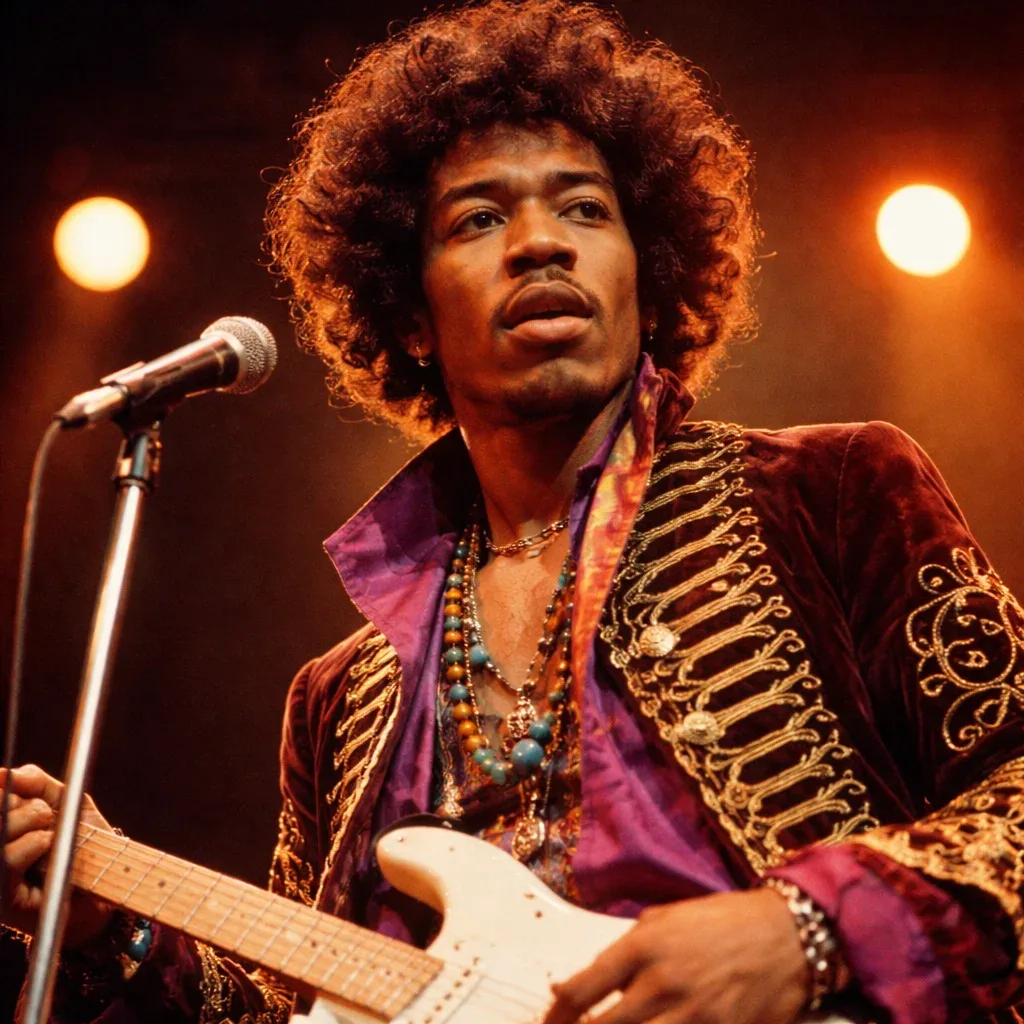
Jimi Hendrix transformed the electric guitar from a traditional rhythm accompaniment into an infinite vehicle for sonic art, forever altering the trajectory of rock music. Beyond his legendary Woodstock performance and fiery stage antics lie surprising stories of military service, mob kidnappings, and unique musical synesthesia. Discover 15 fascinating facts about the life, genius, and enduring legacy of rock music's ultimate guitar icon.
1. He Enlisted in the Army to Avoid Prison Time
Before becoming a counterculture icon, a young Jimi Hendrix faced a stark choice between prison and military enlistment after being caught riding in stolen cars twice in Seattle. Choosing the military, he enlisted in the U.S. Army in May 1961 and was assigned to the prestigious 101st Airborne Division as a paratrooper. Although he completed his jump training and earned his Screaming Eagles patch, his commanding officers quickly noted his total lack of focus and obsession with his guitar. He regularly missed bed checks, fell asleep on duty, and spent every spare moment playing his instrument in the barracks. After completing 26 parachute jumps, he was granted an honorable discharge in 1962, officially due to an ankle injury sustained during a jump, though his supervisors were eager to let him go.
2. He Was Fired by Little Richard for Stealing the Spotlight
In the early 1960s, Hendrix honed his skills as a sideman on the Chitlin' Circuit under the stage name Maurice James, playing behind legendary acts like Sam Cooke and the Isley Brothers. In 1964, he joined the backing band for the flamboyant rock 'n' roll pioneer Little Richard, known as The Upsetters. However, the clash between Little Richard’s oversized stage persona and Hendrix’s natural flair proved too much for the headliner. Hendrix frequently showed up late for the tour bus, wore flashier outfits than allowed, and played wild, attention-grabbing guitar solos during performances. Little Richard’s brother, who served as the tour manager, eventually fired Hendrix in 1965, reportedly declaring that the young guitarist was simply stealing too much spotlight from the main star.
3. He Played Left-Handed on Upside-Down Guitars
Jimi Hendrix was naturally left-handed, but during his childhood, his father tried to force him to play right-handed, believing left-handedness was a sign of the devil. To satisfy his father, Hendrix learned to play right-handed whenever his dad was watching, but flipped the guitar over when he was alone. When he began playing professionally, he bought standard right-handed Fender Stratocasters, turned them upside down, and restrung them in reverse order so the low E string remained at the top. This unusual setup placed the guitar's control knobs, pickup selector, and whammy bar at the top of the body rather than the bottom, allowing him to manipulate tone and bend pitch with his elbow while strumming. The flipped orientation also altered the slant of the bridge pickup, unintentionally giving his instrument a unique, bass-heavy acoustic tone that defined his signature sound.
4. He Could Not Read Traditional Musical Notation
Despite being widely regarded as one of the most brilliant instrumentalists in modern music history, Hendrix never learned how to read or write standard sheet music. Instead, he developed an entirely visual and emotional system for conceiving sound, often describing chord progressions and guitar tones in terms of vivid colors. He used phrases like "play it purple" or "make it sound like velvet" when directing his bandmates during recording sessions. His acute ear allowed him to memorize complex arrangements instantly, relying on instinct, improvisation, and dynamic feel rather than written notes. This self-taught approach liberated him from traditional structural constraints, enabling him to explore groundbreaking soundscapes and feedback textures that conventional musical education might have discouraged.
5. He Opened for The Monkees to Hostile Teen Audiences
In mid-1967, Hendrix’s manager arranged an ill-conceived American tour booking where the Jimi Hendrix Experience served as the opening act for the squeaky-clean pop group The Monkees. The Monkees were huge fans of Hendrix, but their audience consisted almost entirely of screaming pre-teen girls who were bewildered and terrified by Hendrix’s loud, sexually charged psychedelic blues. During their 12 joint performance dates, young fans routinely booed the trio, chanting "We want Davy!" while Hendrix played his intense guitar solos. Recognizing the disastrous mismatch, Hendrix dropped off the tour after a show in Forest Hills, New York, by dramatically flipping off the audience and walking off stage. His management publicly claimed he had been dropped by the Daughters of the American Revolution for being "too erotic," generating massive publicity for his upcoming solo dates.
6. He Learned Sgt. Pepper in Two Days and Played It for The Beatles
On June 1, 1967, The Beatles released their revolutionary album Sgt. Pepper's Lonely Hearts Club Band, an event that instantly reshaped popular music. Just 48 hours later, Hendrix took the stage at the Saville Theatre in London and opened his set with a blistering, heavy-rock rendition of the album's title track. Unbeknownst to the crowd, both Paul McCartney and George Harrison were sitting in the audience that evening to watch him perform. McCartney was stunned by the performance, later calling it one of the greatest honors of his musical career and praising Hendrix's ability to learn and arrange the complex track in such a short window. The gesture cemented Hendrix's standing among British rock royalty and demonstrated his unmatched musical ear and agility.
7. His Iconic Guitar-Burning Ritual Was a Spontaneously Planned Sacrifice
At the Monterey Pop Festival in June 1967, Hendrix delivered a performance that fundamentally changed the trajectory of rock performance art. Knowing he needed to outdo The Who, who had smashed their gear earlier in the evening, Hendrix closed his set with an explosive performance of "Wild Thing." At the climax of the song, he knelt over his 1965 Fiesta Red Fender Stratocaster, doused it with lighter fluid, set it ablaze, and smashed it against the stage before throwing the wreckage into the crowd. He later described the act as a ritualistic sacrifice, explaining that you sacrifice the things you love most. The striking photo of Hendrix kneeling before his burning guitar became one of the most iconic photographs in music history.
8. He Lived Next Door to Composer George Frideric Handel
In 1968, Hendrix moved into a top-floor flat at 23 Brook Street in the Mayfair district of London, a place he affectionately called his first real home. Unbeknownst to him when he moved in, the German-born Baroque composer George Frideric Handel had lived right next door at 25 Brook Street for over 30 years in the 18th century, composing classics like Messiah there. Upon learning of this remarkable historical coincidence, Hendrix bought several classical records of Handel's music, including his Water Music, to listen to in his apartment. Today, both adjacent properties have been restored and merged into the Handel & Hendrix in London museum, celebrating two musical revolutionaries separated by two centuries. It remains the only museum in the world dedicated to two radically different musicians who shared a common wall.
9. He Was Briefly Kidnapped by New York Mobsters
In September 1969, Hendrix experienced a terrifying real-life thriller when he was abducted outside a Manhattan night club by a group of low-level mobsters. The kidnappers held the legendary guitarist hostage in an upstate safe house for two days, demanding that his manager, Michael Jeffery, give up Hendrix’s recording contract as ransom. Unfazed by the threat, Jeffery used his own underworld connections to locate the house and send a rival enforcement crew to free Hendrix without paying a single dollar. Some rock historians suspect that Jeffery actually staged the entire kidnapping himself to intimidate Hendrix and bind the musician closer to his management control. Regardless of who engineered the plot, Hendrix emerged completely unharmed and returned to the studio shortly thereafter.
10. His Birth Name Was Changed by His Father
Jimi Hendrix was born on November 27, 1942, in Seattle, Washington, while his father, James Allen "Al" Hendrix, was serving in the U.S. Army during World War II. His mother, Lucille Jeter, named the newborn infant Johnny Allen Hendrix shortly after his birth. When Al returned home from military service three years later, he found his marriage in disarray and decided to rename his three-year-old son. In 1946, he legally changed the boy's name to James Marshall Hendrix in honor of his brother Leon Marshall Hendrix. Years later, when Chas Chandler discovered the guitarist in New York in 1966, he suggested altering "Jimmy" to the distinctive spelling "Jimi" to make it more memorable for his upcoming UK debut.
11. He Was the Highest-Paid Performer at Woodstock
When organizers were booking acts for the legendary 1969 Woodstock Music & Art Fair, Hendrix was the most sought-after headliner in the world. To secure his appearance, promoters paid him an unprecedented $18,000—more than double the fee of any other artist on the lineup and equivalent to over $140,000 today. Because the festival ran drastically behind schedule due to torrential rain and chaotic logistics, Hendrix didn't take the stage until 9:00 AM on Monday morning. By the time he performed, the massive crowd of 400,000 had thinned out to roughly 30,000 exhausted festival-goers. Despite the diminished crowd, his soaring, radical rendition of "The Star-Spangled Banner" became the defining anthem of the counterculture movement.
12. He Was Heavily Inspired by Science Fiction Novels
Long before he became a rock star, Hendrix was an avid reader of classic science fiction literature, filling notebooks with futuristic concepts and surreal space narratives. His hit song "Purple Haze" was directly inspired by Philip José Farmer's 1957 sci-fi novel Night of Light, which features a world where atmospheric hazy lights distort human perception. Another track, "Third Stone from the Sun," features spoken-word narration from the perspective of an alien scout surveying planet Earth and deeming it unfit for contact. Hendrix often envisioned his music as "space church," believing that sound could travel through cosmic dimensions to expand human consciousness. His fascination with outer space profoundly shaped both his surreal lyricism and his pioneering use of psychedelic audio effects.
13. He Learned His Showman Guitar Tricks in Tennessee
Hendrix’s signature stage tricks, including playing the guitar behind his head, between his legs, and with his teeth, were not original creations but traditions borrowed from Southern blues performers. While living and playing around Clarksville and Nashville, Tennessee, in 1962, Hendrix watched local bluesmen like Alphonso "Lord" Miller perform wild acrobatic feats on stage. Realizing that flashiness was necessary to hold crowd attention in tough Southern clubs, Hendrix spent grueling hours practicing guitar acrobatics until he could play flawlessly without looking. When he arrived in London years later, these theatrical techniques completely dazzled British audiences who had never seen such physical command over an electric instrument. Playing with his teeth ultimately became his most famous visual trademark, though it frequently damaged his tooth enamel.
14. He Built His Own State-of-the-Art Recording Studio
Frustrated by the astronomical costs and rigid time constraints of commercial recording studios, Hendrix decided to build his own dream studio in New York City’s Greenwich Village. Designed by renowned architect John Storyk, Electric Lady Studios featured curved walls, soft ambient lighting, and state-of-the-art mixing equipment custom-tailored for Hendrix’s expansive sonic experiments. The construction project faced massive delays, financial troubles, and unexpected underground flooding from an ancient creek running beneath the building. Despite these setbacks, Electric Lady Studios officially opened its doors in August 1970, giving Hendrix a creative haven of his own. Tragically, Hendrix spent only a few weeks recording in the facility before departing for Europe, where he died shortly thereafter.
15. His Final Full Concert Was Plagued by Rain and Bikers in Germany
Jimi Hendrix gave his final full-length concert performance on September 6, 1970, at the Open Air Love & Peace Festival on the island of Fehmarn in West Germany. The festival was plagued by terrible weather, delayed schedules, and violent clashes between security forces and an unruly German motorcycle gang known as the Hells Angels. Hendrix was scheduled to perform the previous night, but heavy rain forced his set to be postponed until Sunday morning, making the crowd cold, irritable, and hostile. Despite being greeted with loud jeers and boos, Hendrix delivered a fiery set that eventually won over the damp audience, concluding with "Voodoo Child." Just twelve days later, on September 18, 1970, Hendrix tragically died in London at age 27, becoming an eternal founding member of the tragic "27 Club."
Sources & References
This AI-assisted post was rigorously curated and fact-checked for accuracy by:
 Martin Roháček
How fun was this article? 🤔
Tap a star to rate it
🧠 Quiz: How closely were you paying attention?
10 questions — all answers are in the article above!
Enjoyed these facts? There's more! 💌
Fresh fun facts in your inbox. No spam, ever.