The Iron Autocrat: 15 Fascinating Facts About Joseph Stalin
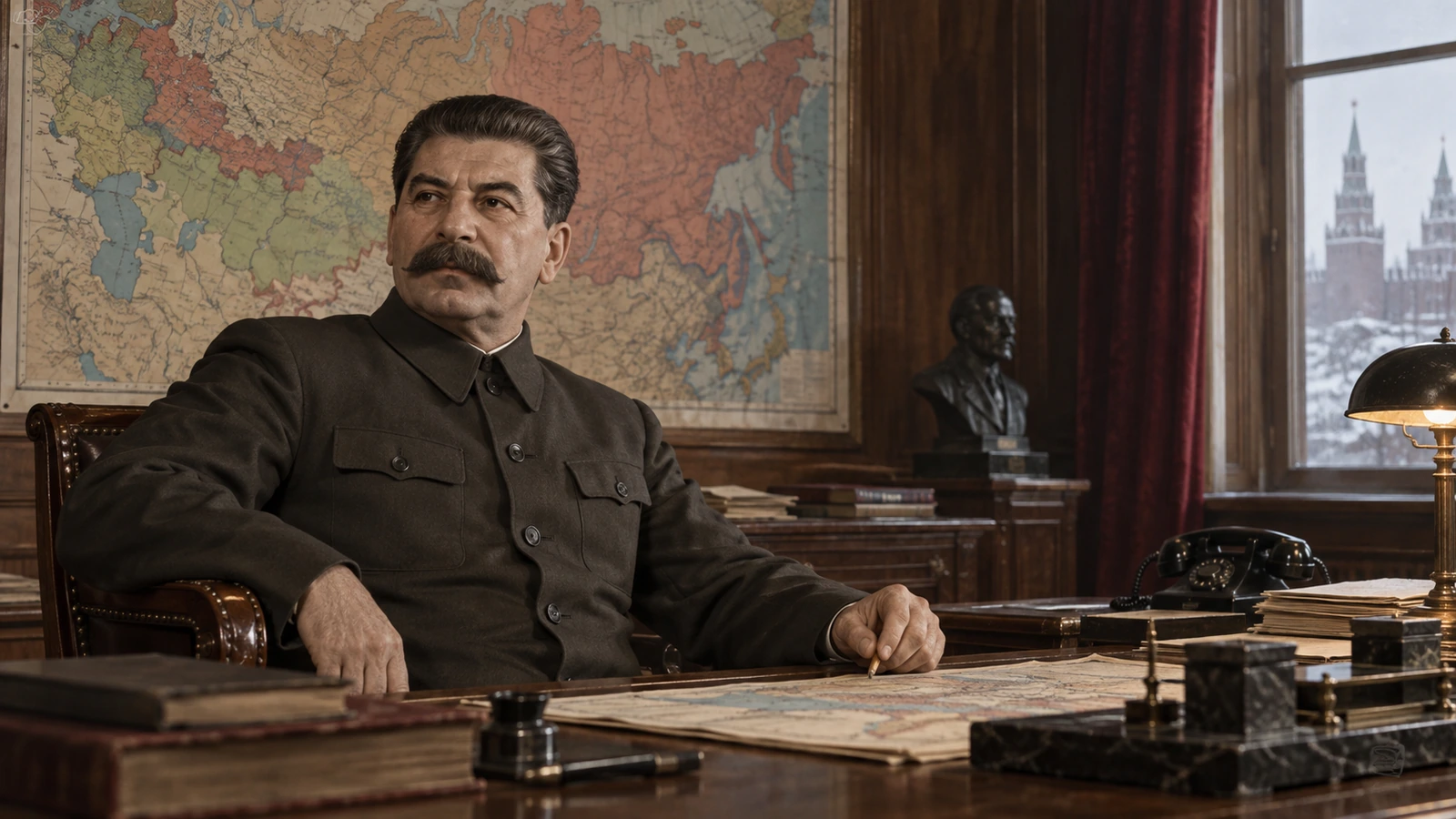
Joseph Stalin remains one of the most enigmatic and destructive figures of the 20th century, ruling the Soviet Union with absolute authority for nearly three decades. Yet behind the terrifying apparatus of totalitarian state control lies a complex and often contradictory life story. Before becoming the absolute dictator of the USSR, Stalin was a published romantic poet, a seminary student, and a bank robber operating under revolutionary aliases. From his secret obsession with Hollywood Westerns to the tragic family dynamics and extreme paranoia that marked his final hours, these 15 facts reveal the obscure, surprising, and brutal realities of the man who called himself the "Man of Steel."
1. He Trained to Be a Priest and Was a Published Romantic Poet
Before becoming a hardened Marxist revolutionary, Ioseb Jughashvili was a devout student enrolled at the Tiflis Theological Seminary in Georgia. His mother, Ekaterine, harbored deep hopes that her son would join the Eastern Orthodox priesthood. During his teenage years in the 1890s, Stalin displayed a genuine literary talent, writing romantic poetry under the pen name "Soselo." His verse was published in respected Georgian periodicals and acclaimed by prominent cultural figures, eventually becoming part of regional school curricula. However, his exposure to forbidden socialist literature led to his expulsion from the seminary in 1899, setting him on a drastically different path.
2. He Masterminded a Violent 1907 Bank Heist to Fund Bolsheviks
To finance the revolutionary activities of Vladimir Lenin and the Bolshevik party, Stalin orchestrated the infamous 1907 Tiflis bank robbery. Operating under the revolutionary alias "Koba," he helped plan an ambush on an armed stagecoach carrying state funds through Yerevan Square. The attack involved grenades and heavy gunfire, leaving around 40 people dead and dozens wounded amidst public panic. The gang escaped with roughly 340,000 rubles, equivalent to millions of dollars today. Though international authorities chased the stolen banknotes across Europe, the violent heist cemented Stalin's reputation as a ruthless and efficient operative.
3. "Stalin" Was a Nom de Guerre Meaning "Man of Steel"
Born Ioseb Besarionis dze Jughashvili, the future dictator adopted numerous pseudonyms during his years as an underground revolutionary to evade the Tsarist secret police. Around 1912, he settled on the name "Stalin," which derives from the Russian word for steel (stal) combined with the common name suffix -in. The name was chosen to sound distinctly Russian, tough, and resonant with Bolshevik industrial ideals. It also echoed the pseudonym of his mentor Lenin, creating a strong political brand. Throughout his life, however, close Georgian friends and early allies continued to address him by his original nickname, Koba.
4. He Was Nominated for the Nobel Peace Prize Twice
Despite presiding over brutal political purges, forced labor camps, and widespread state terror, Stalin was twice nominated for the Nobel Peace Prize. He received nominations in 1945 and 1948 for his decisive leadership during World War II and his efforts in establishing the postwar world order. Norwegian politicians and foreign observers submitted his name to recognize the Red Army's pivotal role in defeating Nazi Germany. Ultimately, the Nobel Committee did not award him the prize in either year, but the nominations highlight the complex diplomatic landscape following the global conflict.
5. He Was Self-Conscious About His Height and Used Hidden Platform Shoes
In Soviet state art, posters, and propaganda newsreels, Stalin was consistently portrayed as a towering, majestic figure. In reality, he stood only about 5 feet 5 inches (165 cm) tall, making him noticeably shorter than international peers like Winston Churchill or Franklin D. Roosevelt. To project physical dominance, Stalin routinely wore specially manufactured boots featuring hidden platform heels. Photographers were strictly instructed to shoot him from low angles or position him standing on elevated platforms relative to those around him. Anyone who distributed unapproved images revealing his true stature faced severe state retaliation.
6. Childhood Illness and Accidents Left Him Severely Disfigured
Stalin suffered two major physical setbacks during his childhood in Gori, Georgia, that left lasting marks on his body. At age seven, he contracted smallpox, which left his face deeply pockmarked for the rest of his life. A few years later, he was struck by a horse-drawn carriage, causing severe damage to his left arm. The limb healed improperly, leaving it permanently shortened, stiff, and weakened. In public, he went to great lengths to conceal these flaws, frequently tucking his left hand into his coat pocket and insisting that official portraits airbrush away his facial scars.
 Wars and Conflicts of the 20th Century
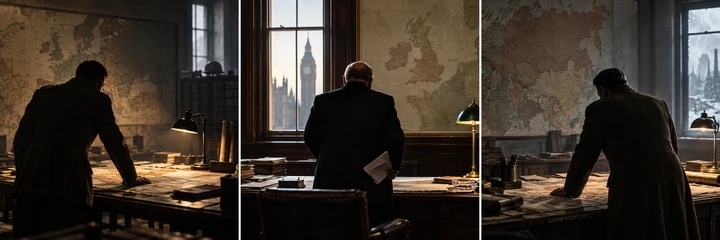
Explore the hidden realities of 20th-century warfare and geopolitical conflicts. From world-altering military campaigns and covert intelligence operations to the eccentricities of ruthless dictators, uncover the surprising truths behind the events that shaped the modern world.
See All Facts
Wars and Conflicts of the 20th Century
Explore the hidden realities of 20th-century warfare and geopolitical conflicts. From world-altering military campaigns and covert intelligence operations to the eccentricities of ruthless dictators, uncover the surprising truths behind the events that shaped the modern world.
See All Facts
7. He Refused to Save His Own Son From a Nazi Prisoner-of-War Camp
Stalin's cold detachment extended directly to his personal family life during wartime. In 1941, his eldest son, Yakov Dzhugashvili, an artillery officer in the Red Army, was captured by German forces during the Battle of Smolensk. Recognizing Yakov's identity, the Germans offered to exchange him for Field Marshal Friedrich Paulus, who had surrendered at Stalingrad. Stalin famously rejected the trade, reportedly stating, "I will not trade a Marshal for a Lieutenant." Yakov ultimately died in the Sachsenhausen concentration camp in 1943, likely by throwing himself against an electrified fence after hearing of his father's refusal.
8. He Was Obsessed With Hollywood Westerns and John Wayne
Despite his fierce ideological hostility toward American capitalism, Stalin was an avid consumer of Western cinema. He maintained a private projection room inside the Kremlin and hosted mandatory late-night film screenings for his inner circle. His favorite genre was the classic Hollywood Western, and he was particularly fond of films starring John Wayne and directed by John Ford. Guests at these screenings, including high-ranking officials like Nikita Khrushchev, were forced to watch movie after movie into the early morning hours while drinking heavily. Unbeknownst to many, Stalin even instructed Soviet directors to emulate American cinematic techniques.
9. He Was Not Ethnically Russian and Spoke With a Thick Georgian Accent
Although he became the absolute ruler of the Russian empire's successor state, Stalin was ethnically Georgian and grew up speaking Georgian as his native language. He did not begin learning Russian until he was eight years old, and he retained a pronounced Georgian accent throughout his entire life. This linguistic trait made him self-conscious during public speeches, contributing to his preference for concise, carefully rehearsed addresses. Later actors portraying Stalin in historical dramas have often had to train extensively with vocal coaches to replicate his distinct non-Russian cadence and pitch.
10. He Spearheaded the "Vanishing Commissar" Airbrushing Era
Under Stalin's rule, the Soviet state pioneered systematic photographic alteration to rewrite history in real time. Whenever a high-ranking official fell victim to one of his bloody political purges, Soviet censors immediately removed the individual from official photographs, archive footage, and textbooks. The most famous example involved Nikolai Yezhov, the head of the secret police who directed the Great Purge before being executed himself; his image was completely airbrushed out of a famous photograph alongside Stalin by the Moscow Canal. This widespread practice led historians to dub the erased officials "vanishing commissars."
11. State Media Covered Up the Suicide of His Second Wife
Stalin's second wife, Nadezhda Alliluyeva, died under tragic and mysterious circumstances in November 1932. Following a tense public argument with Stalin during a dinner celebrating the 15th anniversary of the October Revolution, she retired to her room and shot herself with a pistol. Devastated and furious, Stalin ordered a complete cover-up to prevent any public political scandal. Official state newspapers reported that she had died suddenly from acute appendicitis or a severe illness, keeping the true cause of death hidden from the Soviet public for decades.
12. He Used Heavy Alcohol and Late-Night Banquets to Break His Allies
Stalin weaponized social gatherings at his dacha in Kuntsevo to maintain absolute psychological control over his subordinates. He hosted sprawling, multi-course banquets that began late at night and ran until dawn, forcing top officials like Lavrentiy Beria and Vyacheslav Molotov to drink immense quantities of alcohol. Stalin preferred a semi-sweet Georgian red wine named Khvanchkara, though he often diluted his own glass with water while encouraging others to become thoroughly intoxicated. By lowering his guests' inhibitions, he monitored their candid remarks, tested their loyalty, and kept them in a constant state of fear.
13. Paranoia Delayed Medical Care as He Lay Dying on the Kremlin Floor
Stalin's pervasive paranoia directly contributed to the circumstances of his own death in March 1953. Having previously imprisoned or purged many of his top personal physicians in the fictitious "Doctors' Plot," he strictly forbade his guards from disturbing him in his quarters without explicit orders. On March 1, after suffering a massive hemorrhagic stroke, Stalin lay helpless on the floor for over twelve hours. His terrified security guards were too afraid of execution to break into the room, delaying vital medical intervention until it was far too late to save his life.
14. His 1953 Funeral Sparked a Deadly Stampede in Moscow
Following Stalin's death on March 5, 1953, the Soviet government arranged a massive state funeral in Moscow, placing his embalmed body on display in the House of Unions. Hundreds of thousands of Soviet citizens flooded the streets of the capital, desperate to catch a final glimpse of the fallen leader. The immense, chaotic crowds quickly overwhelmed militia barricades in Trubnaya Square, leading to a catastrophic stampede. Tragic overcrowding and poor crowd control resulted in hundreds of people being crushed or trampled to death, though exact figures were suppressed by Soviet authorities.
15. He Personally Acted as the Soviet Union's Chief Film Censor and Editor
Beyond managing geopolitics and the Soviet economy, Stalin took an active hand in controlling cultural output, operating as the nation's supreme film critic. Every Soviet motion picture produced during his reign had to be screened and personally approved by Stalin before public release. He frequently ordered directors to rewrite scripts, re-shoot major scenes, or alter character arcs to conform to his political vision. Directors lived in constant terror of his late-night screening room feedback, as a single negative critique from Stalin could end a filmmaker's career or send them to a Gulag labor camp.
Sources & References
This AI-assisted post was rigorously curated and fact-checked for accuracy by:
 Martin Roháček
How fun was this article? 🤔
Tap a star to rate it
🧠 Quiz: How closely were you paying attention?
10 questions — all answers are in the article above!
Enjoyed these facts? There's more! 💌
Fresh fun facts in your inbox. No spam, ever.