
The Enigmatic Primates: 15 Fascinating Facts About Lemurs
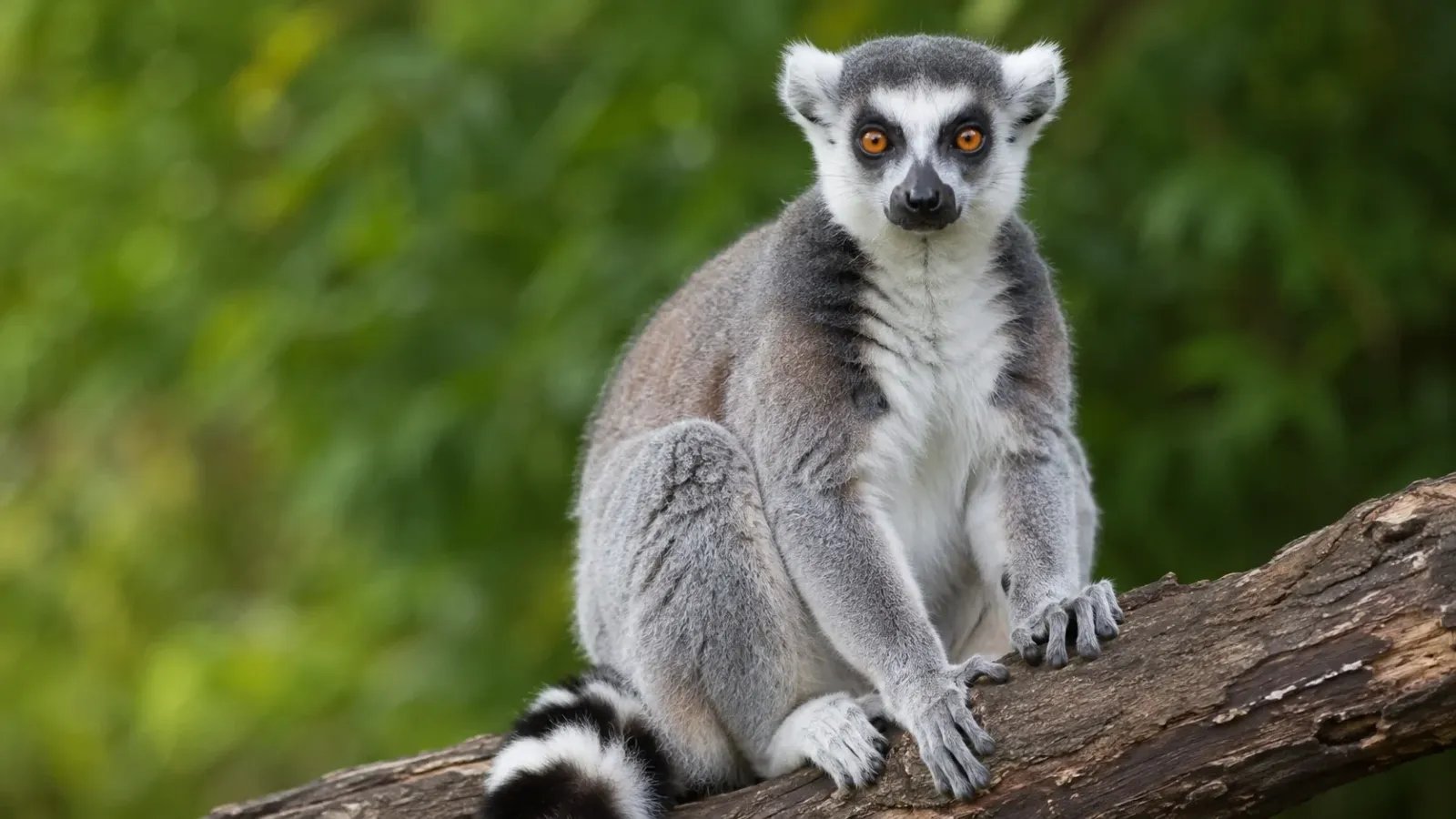
Forget the dancing cartoon characters; lemurs are true evolutionary marvels. Often mistaken for primitive monkey ancestors, they actually share a distant common lineage and evolved in total isolation. Prepare to discover fierce female-dominated societies, bizarre hibernation tactics, and mind-bending adaptations that redefine primate biology.
1. Lemurs rafted across the ocean to Madagascar millions of years ago on massive mats of vegetation.
Instead of walking across land bridges, the ancestors of modern lemurs survived a perilous oceanic journey from mainland Africa around 60 million years ago. Trapped on large rafts of tangled trees and debris blown out to sea by powerful storms, these early primates drifted hundreds of miles to Madagascar, where the lack of large predators allowed them to thrive and rapidly diversify.
2. Female lemurs are the undisputed rulers of their social groups.
In a rare departure from the patriarchal structures seen in most other primate species, many lemurs exhibit strict female dominance. The females dictate group movements, command the highest sleeping spots in the canopy, and enforce their priority access to food by physically displacing males, often snatching fruit right out of their hands without facing any retaliation.
3. The fat-tailed dwarf lemur is the only primate known to fully hibernate.
During Madagascar's dry winter season, food and water become critically scarce. To survive, the fat-tailed dwarf lemur enters a state of deep torpor for up to seven months, surviving solely on dense fat reserves stored in its tail. During this time, its heart rate drops from a rapid 300 beats per minute to as few as eight, and its brain activity nearly ceases entirely.
4. Indri lemurs communicate across the forest canopy using haunting, whale-like songs.
The indri, one of the largest living lemur species, does not rely on simple grunts or shrieks to communicate. Instead, family groups harmonize in complex, loud, and eerily beautiful songs that can be heard up to two miles away. These vocalizations establish territorial boundaries and share vital information about the group's composition, functioning much like the complex choruses of marine mammals.
5. Some lemur species self-medicate by rubbing toxic millipedes all over their bodies.
Red-fronted brown lemurs have been observed gently biting toxic millipedes to provoke them into secreting defensive chemicals like benzoquinones and cyanide. The lemurs then aggressively rub the oozing arthropods through their fur. This bizarre behavior acts as a powerful natural insect repellent and helps clear their gastrointestinal tracts of dangerous parasites.
6. Lemurs possess a specialized grooming claw and a built-in toothcomb for extreme hygiene.
Unlike humans and apes, which have flat nails on all digits, most lemurs retain a specialized, elongated claw on their second toe specifically used for scratching hard-to-reach places. Complementing this, their lower incisors and canine teeth project outward and are closely fused together to form a literal comb, allowing them to meticulously groom their fur and the fur of their peers.
7. The aye-aye uses a skeletal middle finger and biological sonar to hunt for hidden insects.
This nocturnal and unusual-looking lemur practices percussive foraging, tapping rapidly on tree trunks with a highly elongated, spindly middle finger. It listens for the hollow echoes of wood-boring grub tunnels using oversized ears, then gnaws through the dense bark with rodent-like teeth before fishing out its meal with that specialized, highly flexible digit.
8. Ring-tailed lemurs settle their territorial disputes through intense stink fights.
Male ring-tailed lemurs possess scent glands on their wrists and chests that produce a pungent, foul-smelling secretion. When competing for dominance or female attention, males drag their tails through these glands to saturate their fur, then wave their tails aggressively at rivals while wafting the stench in their direction. The lemur who stands his ground the longest wins the duel.
9. The word lemur translates to ghosts or spirits of the dead in ancient Roman mythology.
When early European explorers first encountered these unusual creatures in the jungles of Madagascar, their large, reflective eyes and haunting nighttime vocalizations deeply frightened the sailors. Consequently, they named them after the lemures, which were the restless, wandering spirits of the dead in ancient Roman religion, a moniker that perfectly suited their nocturnal and elusive nature.
10. Extinct giant lemurs once roamed Madagascar and grew as large as silverback gorillas.
Long before modern humans arrived on the island, Madagascar was home to several species of megafaunal lemurs, the most famous being Archaeoindris. This massive, slow-moving primate weighed up to 350 pounds and lived a lifestyle similar to that of a ground sloth. Tragically, a combination of climate shifts and early human hunting drove these gentle giants to extinction about a thousand years ago.
11. Lemurs cannot see the color red due to their specialized, primitive vision.
While humans and many monkeys have trichromatic vision, allowing a full spectrum of color perception, lemurs are largely dichromatic. This means their eyes only possess receptors for blue and green light, rendering them completely red-green colorblind. This visual adaptation emphasizes motion and low-light contrast, which is highly beneficial for spotting predators in the dense, shadowy forest undergrowth.
12. Blue-eyed black lemurs are among the only primates besides humans to possess blue eyes.
True blue eyes are an incredibly rare trait in the animal kingdom, but the blue-eyed black lemur exhibits them consistently. Unlike humans, whose eye color varies widely within populations, every individual of this critically endangered lemur species is born with striking, ice-blue eyes, creating a sharp and beautiful contrast against the stark black fur of the males and the reddish-brown coats of the females.
13. Bamboo lemurs consume daily doses of cyanide that would easily kill a human.
The diet of the golden bamboo lemur consists almost entirely of giant bamboo shoots, which are heavily laced with natural cyanide. An individual lemur consumes roughly twelve times the lethal dose of this highly toxic compound every single day without suffering any ill effects. Scientists are still studying their unique metabolic pathways to understand exactly how they manage to neutralize the poison.
14. A unique reflective layer in their eyes grants lemurs exceptional night vision.
Many lemur species possess a tapetum lucidum, a specialized layer of tissue situated behind the retina that acts like a biological mirror. This layer reflects visible light back through the eye, giving photoreceptors a second chance to absorb it. This anatomical feature creates the glowing eyeshine seen in flashlights at night and allows lemurs to navigate and hunt in near-total darkness.
15. Lemurs are currently the most endangered group of mammals on the planet.
Despite their incredible evolutionary success in isolation, roughly 98 percent of all lemur species are presently facing extinction. Widespread deforestation for agriculture and illegal logging has decimated their natural habitats across Madagascar. Coupled with the devastating impacts of climate change and poaching, these unique primates require urgent, aggressive conservation efforts to survive the coming decades.
Sources & References
This AI-assisted post was rigorously curated and fact-checked for accuracy by:
 Martin Roháček
How fun was this article? 🤔
Tap a star to rate it
Enjoyed these facts? There's more! 💌
Fresh fun facts in your inbox. No spam, ever.