1. He Was an Illegitimate Child
Leonardo was born in the Tuscan hill-town of Vinci out of wedlock. His father, Ser Piero, was a wealthy legal notary, and his mother, Caterina, was a local peasant. Because of his illegitimate status, Leonardo was barred from inheriting his father’s profession or attending formal Latin schools, which inadvertently freed him to pursue an unconventional education focused on observation and art.
2. He Wrote in “Mirror Script”
Leonardo famously filled thousands of notebook pages with his observations, theories, and inventions, but he wrote almost entirely in reverse. As a left-handed writer, he wrote from right to left across the page, meaning his text can only be read easily when held up to a mirror. Historians debate whether this was to keep his ideas secret or simply to prevent his hand from smudging the wet ink.
3. He Quickly Surpassed His Master
As a teenager, Leonardo was apprenticed to the renowned Florentine sculptor and painter Andrea del Verrocchio. According to the 16th-century biographer Giorgio Vasari, when the young Leonardo painted an angel in Verrocchio’s Baptism of Christ, his work was so vastly superior that Verrocchio allegedly put down his brush and vowed never to paint again.
4. Fewer Than 20 of His Paintings Survive
Despite his monumental reputation as the pinnacle of European painting, Leonardo was a notorious perfectionist who rarely finished his commissions. Today, fewer than 20 completed paintings are universally attributed to him. Much of his legacy instead rests upon his 2,500 surviving intricate drawings and notebook pages.
5. He Dissected Corpses in Secret
To achieve absolute anatomical perfection in his art, Leonardo needed to understand what lay beneath the skin. He secured permission to dissect human corpses at hospitals in Florence, Milan, and Rome, carefully drawing the muscular, vascular, and skeletal systems. His anatomical drawings were so precise that modern medical professionals still marvel at their accuracy.
6. He Mastered the “Sfumato” Technique
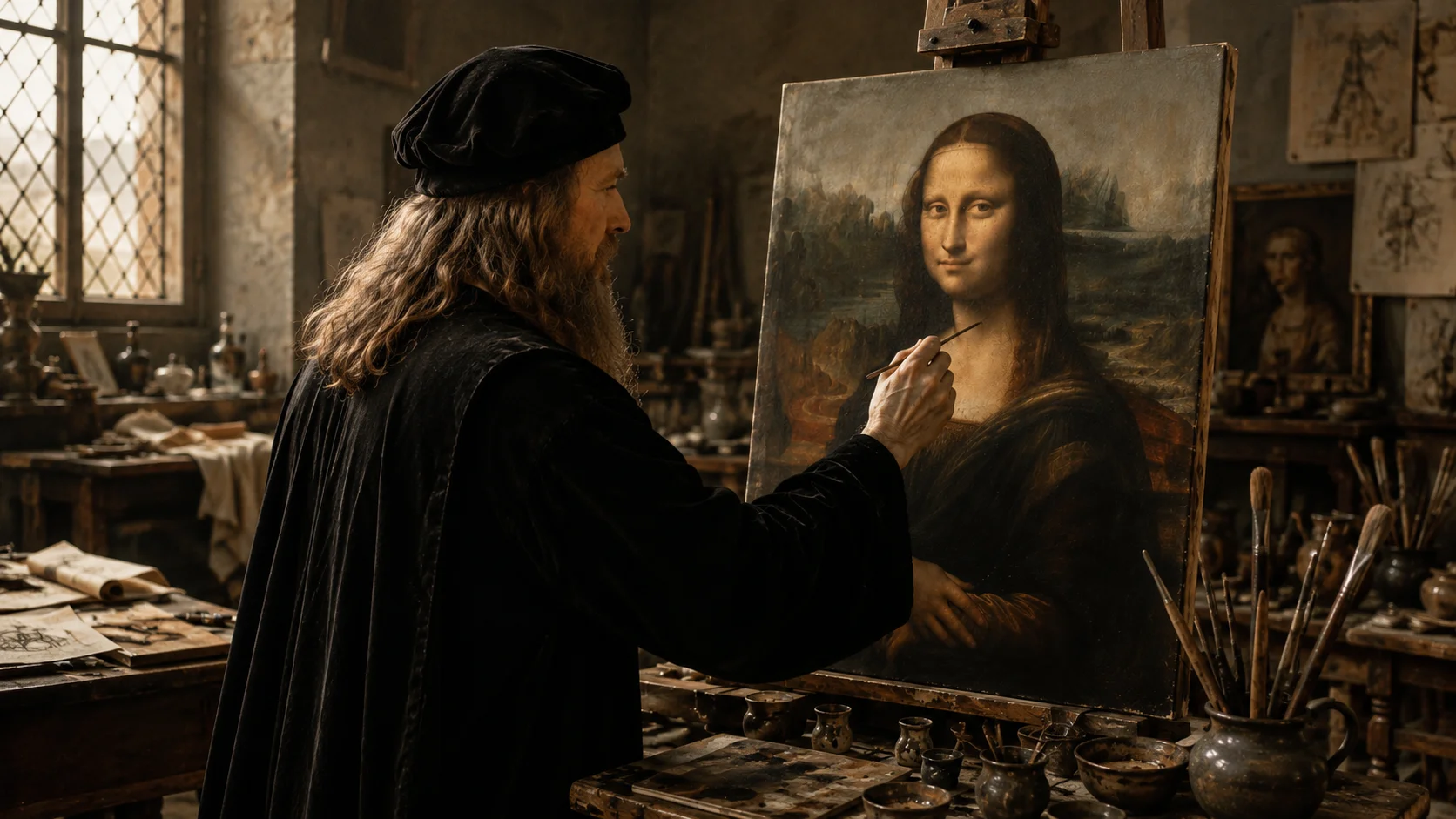
Leonardo revolutionized painting by developing sfumato (from the Italian word for “evaporate like smoke”). Rather than using harsh, mathematical outlines to define shapes, he applied microscopic layers of translucent oil glazes to create imperceptible transitions between light and dark. This blurring of edges gave his figures a breathtakingly realistic, three-dimensional quality.
7. His Masterpiece Began Decaying Immediately
When commissioned to paint The Last Supper on the refectory wall of Santa Maria delle Grazie in Milan, Leonardo rejected the fast-drying, traditional wet-plaster fresco method. Instead, he experimented by applying tempera and oil paint to dry plaster so he could work slowly and make revisions. The experiment failed catastrophically; the paint began flaking off the wall during his own lifetime.
8. He Pitched Himself as a Military Engineer
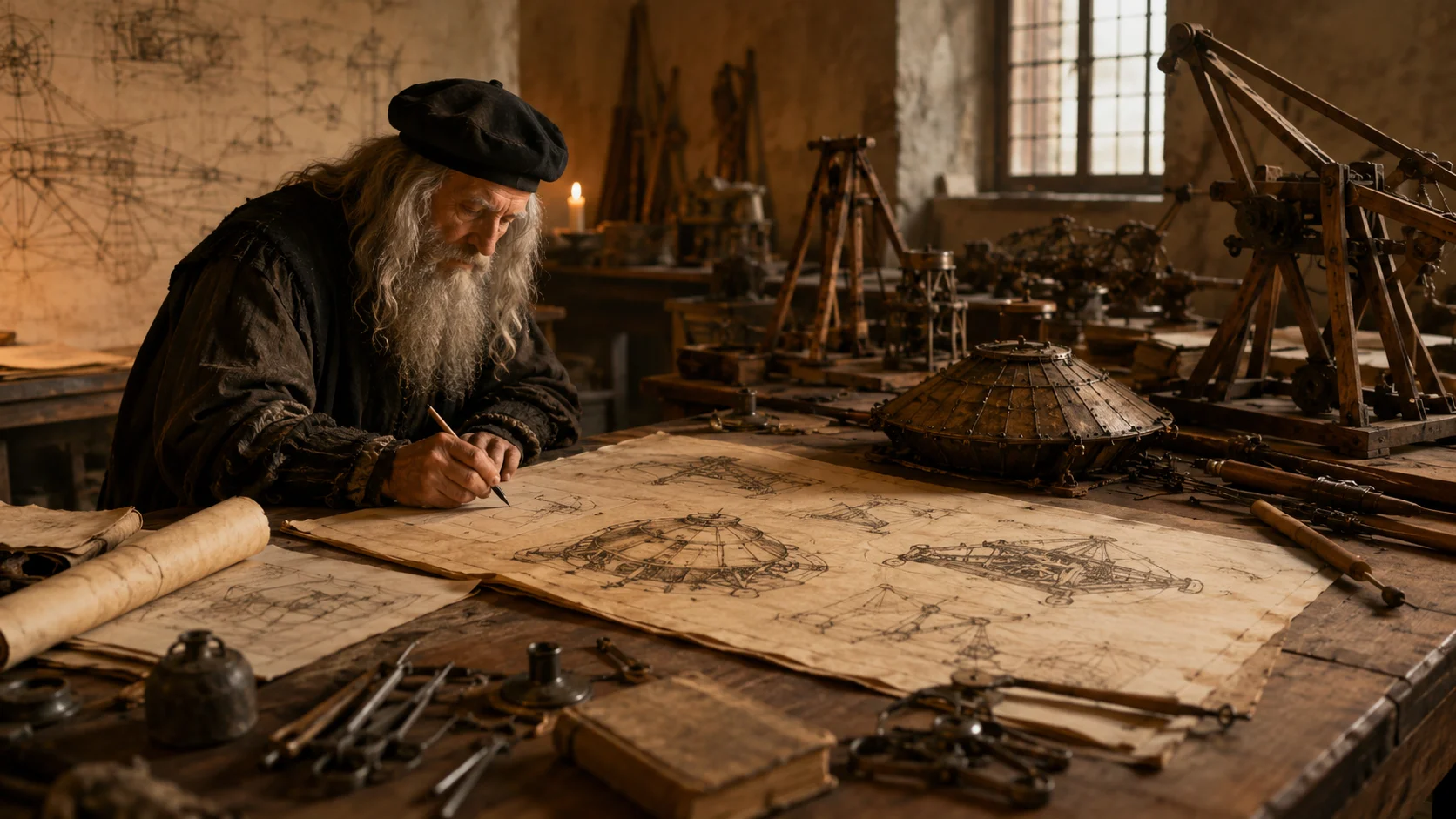
When Leonardo moved to Milan in 1482 to work for the Duke, Ludovico Sforza, he wrote a famous cover letter pitching his services. Instead of highlighting his artistic genius, he heavily marketed himself as a military engineer, boasting that he could design portable bridges, armored vehicles (an early tank concept), giant crossbows, and devastating siege weapons.
9. He Invented Flying Machines
Leonardo was obsessed with the mechanics of avian flight and deeply desired to put humans in the sky. He spent years observing birds and bats, translating their anatomy into designs for human-powered flying machines, known as ornithopters. He even designed an “aerial screw,” which is widely considered the conceptual ancestor of the modern helicopter.
10. He Pioneered Aerial Perspective
Before Leonardo, landscape backgrounds in paintings often looked flat. Through his intense observation of the natural world, Leonardo realized that the atmosphere scatters light, meaning objects further away appear less distinct and more blue. He coined the term “aerial perspective” and applied it to paintings like The Virgin of the Rocks, tricking the eye into perceiving vast distance.
11. He Bought Caged Birds to Set Them Free
Leonardo had a profound reverence for all living creatures. According to contemporary accounts, he would frequently walk through the markets of Florence, purchase caged birds from vendors, and immediately release them into the air. Due to his deep respect for animal life, many historians believe Leonardo adhered to a strict vegetarian diet.
12. He Was a Gifted Musician
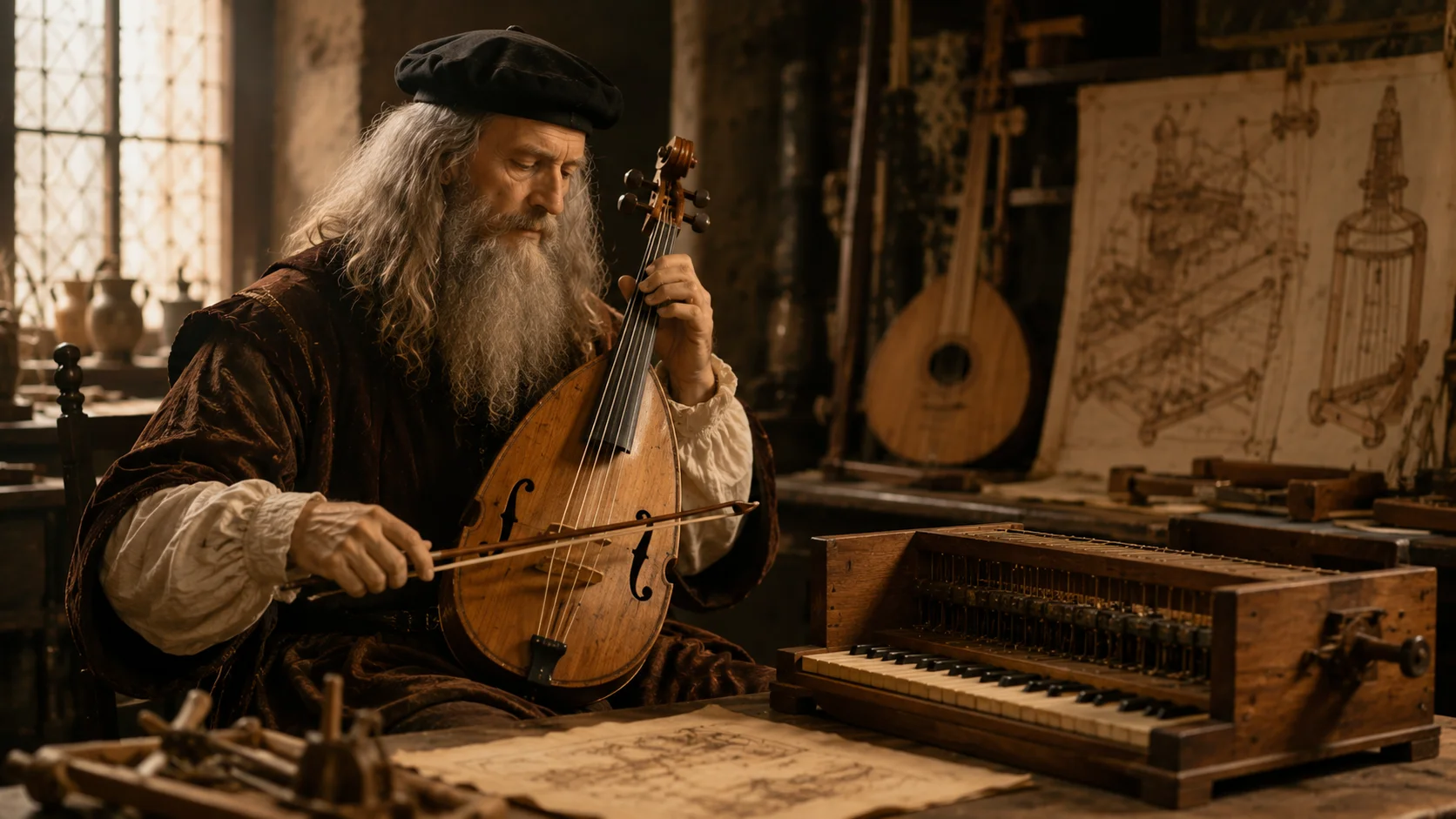
While remembered for his visual arts and science, Leonardo was also an accomplished musician. He was known to play the lira da braccio (a bowed string instrument) beautifully and often sang while he played. He even combined his musical talent with his engineering skills to design new instruments, such as the viola organista, a keyboard instrument that bowed strings like a violin.
13. He Had a Bitter Rivalry with Michelangelo
Florence in the early 1500s was home to both Leonardo and the younger, fiery Michelangelo, and the two geniuses despised each other. They were famously pitted against one another when the Florentine government commissioned them to paint massive, opposing battle murals in the Palazzo Vecchio. Characteristically, neither artist finished their respective mural.
14. He Never Finished the Giant Horse
The Duke of Milan commissioned Leonardo to create the largest equestrian statue in the world to honor his father. Leonardo spent 12 years painstakingly studying horse anatomy and building a massive, 24-foot clay model. However, before it could be cast in bronze, the French invaded Milan in 1499. The bronze was repurposed to make cannons, and French archers used Leonardo’s clay horse for target practice, destroying it.
15. He Died Under the Protection of the French King
In his final years, Leonardo accepted the invitation of King Francis I of France to become the “first painter, engineer, and architect” to the king. He lived comfortably at the Château du Clos Lucé until his death in 1519 at age 67. A famous (though likely apocryphal) legend claims that the great artist passed away while being cradled in the arms of the grieving French king.