The Ghostly Prowler: 15 Fascinating Facts About Lynxes
Deep within the frost-draped forests of the Northern Hemisphere dwells one of nature's most magnificent and elusive predators: the lynx. Renowned for their oversized snowshoe paws, tufted ears, and piercing vision, these wild cats are masterfully adapted to cold, rugged landscapes. From their ancient Greek namesakes to miraculous modern conservation triumphs, discover the extraordinary traits that make lynxes true masters of survival. Here are 15 fascinating facts about these secretive woodland felines.
1. Named After the Ancient Greek Word for Brightness
The word "lynx" traces its roots back to the ancient Greek word lügx, which derives from an Indo-European root meaning light or brightness. This moniker was bestowed because of the feline's extraordinary, highly reflective eyes that seem to glow like burning embers in the dark. A specialized layer of tissue behind their retinas, known as the tapetum lucidum, reflects visible light back through photoreceptors to grant them exceptional night vision. Ancient mythology even held that the lynx possessed supernatural sight capable of seeing through solid walls and wooden doors. Today, science confirms that while they cannot peer through obstacles, their nocturnal sight is roughly six times sharper than that of a human.
2. Their Signature Ear Tufts Function Like Sonic Radar
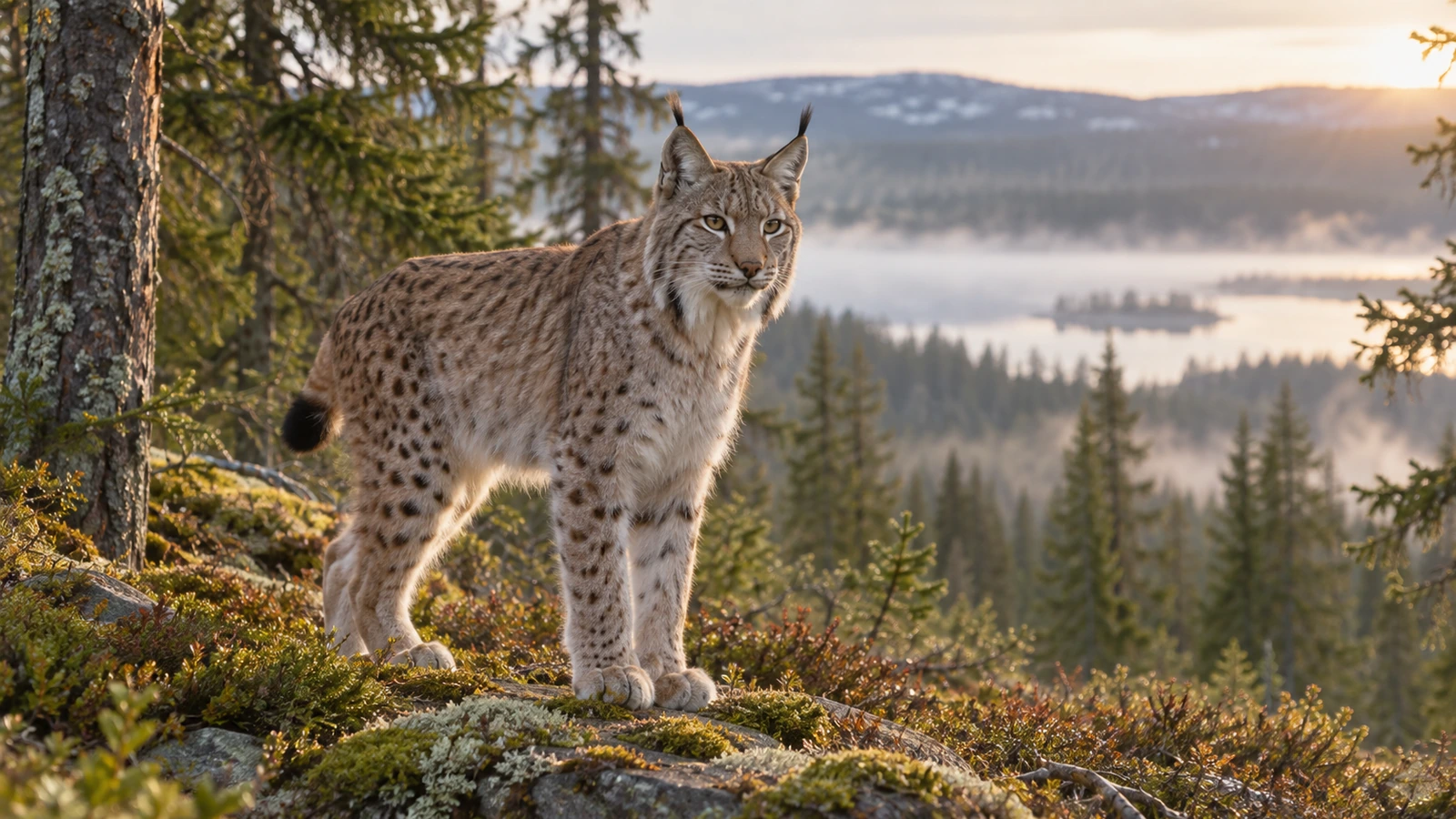
The iconic black tufts of hair sprouting from the tips of a lynx's ears are far more than stylish anatomical decorations. Wildlife biologists believe these delicate, brush-like tufts act like natural hearing aids, funneling subtle acoustic vibrations directly down into the ear canal. Experiments suggest that if these ear tufts are trimmed or damaged, the lynx's ability to pinpoint distant sounds drops significantly. Coupled with wide, independently movable ears, these tufts allow the predator to locate tiny prey moving beneath dense snow or leaf litter. They also play a subtle role in communication between individuals, signaling mood and intent through subtle ear twitches.
3. Natural Snowshoes Allow Them to Glide Over Winter Powder
Lynxes possess disproportionately massive paws that act as built-in snowshoes, enabling them to navigate deep winter snowdrifts effortlessly. Their wide paws can spread open to distribute body weight across a larger surface area, preventing them from sinking into soft powder. In cold regions, dense fur grows between their toes and toe pads during the winter, offering both insulation against freezing temperatures and extra traction on slick ice. This anatomical advantage allows them to move swiftly and quietly while hunting prey that struggles to move through deep drifts. While heavy prey animals like deer flounder in winter snow, the lynx glides across the crust with remarkable agility.
4. Sight So Sharp They Can Spot a Mouse from 250 Feet Away
The expression "lynx-eyed" has been used since antiquity to describe someone with incredibly keen vision, and modern science fully backs up the phrase. A lynx can easily spot a small moving mouse or rustling vole from over 250 feet away, even against a cluttered forest background. Their eyes feature a high density of rod cells, making them acutely sensitive to subtle movements in extremely low light. While their vision excels at motion detection, their keen depth perception allows them to judge precise leaping distances through dense woodland brush. This legendary visual acuity gives them a decisive edge when scanning vast snowy landscapes for camouflaged prey.
5. Four Distinct Species Rule the Northern Hemisphere
The genus Lynx is comprised of four distinct living species distributed across North America, Europe, and Asia. These species include the Canada lynx, the Eurasian lynx, the Iberian lynx, and the bobcat. While all four share signature physical traits like stubby tails and ear tufts, they have adapted to wildly different habitats ranging from boreal forests to Mediterranean shrublands. The bobcat is the smallest and most adaptable of the group, ranging down into swampy and desert environments across North America. Meanwhile, its cold-weather relatives remain tightly restricted to northern or high-altitude ecosystems where heavy winter snowfall dominates.
6. The Eurasian Lynx Is a True Heavyweight Apex Predator
While North American lynxes are relatively compact cats, the Eurasian lynx is a formidable predator that dwarfs its distant cousins. Adult male Eurasian lynxes can weigh up to 66 pounds and stand over two feet tall at the shoulder. Unlike smaller lynx species that subsist mostly on rabbits and rodents, the Eurasian lynx regularly hunts medium-sized ungulates like roe deer, chamois, and young reindeer. They are capable of bringing down prey up to four times their own body weight through stealthy ambushes and powerful neck bites. Despite their impressive size, they remain notoriously elusive and rarely cross paths with humans in the wild.
 Big Cats and Apex Predators
Fourteen hunters that dominate the land: silent big cats, a pack of highly social canids, an armor-skinned mustelid that shrugs off cobra venom, and two bears built on opposite survival strategies.
See All Facts
Big Cats and Apex Predators
Fourteen hunters that dominate the land: silent big cats, a pack of highly social canids, an armor-skinned mustelid that shrugs off cobra venom, and two bears built on opposite survival strategies.
See All Facts
7. The Iberian Lynx Survived One of the Greatest Conservation Comebacks
At the start of the 21st century, the Iberian lynx was widely recognized as the most endangered wild cat species on the planet. Decades of habitat fragmentation, poaching, and a dramatic collapse in local European rabbit populations brought the wild population down to fewer than 100 individuals by 2002. Intensive captive-breeding programs, habitat restoration, and rabbit reintroductions across Spain and Portugal staged a miraculous turnaround. By 2024, conservation organizations officially reclassified the Iberian lynx from Endangered to Vulnerable as wild numbers climbed past 2,000 individuals. This remarkable revival stands as one of the single greatest achievements in modern wildlife conservation history.
8. Canada Lynx Populations Are Intimately Tied to Snowshoe Hares
The ecological destiny of the Canada lynx is bound directly to a single prey species: the snowshoe hare. Snowshoe hares make up anywhere from 60 to 90 percent of the Canada lynx's total daily diet in the wild. As a result, both species experience iconic, synchronized ten-year population cycles where lynx numbers rise and fall in direct response to hare availability. When hare populations crash due to disease or overgrazing, female lynxes produce smaller litters or skip breeding entirely. During peak hare years, lynx densities skyrocket, showcasing one of the classic textbook examples of predator-prey dynamics in nature.
9. Their Stubby Tails Serve a Unique Anatomical Purpose
Unlike long-tailed big cats like leopards or cougars, lynxes possess uniquely short, stubby tails that measure only four to eight inches long. A long tail is a liability in freezing boreal habitats because it exposes a large surface area to frostbite and drains vital body heat. The short tail is tipped with a distinctive mark—a solid black tip on true lynxes, or banded black stripes on bobcats. This stubby appendage still aids slightly in balance during tight acrobatic turns while stalking prey through rough terrain. It also serves as a visual signal during social interactions between mother lynxes and their growing kittens.
10. They Are Exceptional Swimmers and Capable Anglers
While domestic cats are notorious for avoiding water, wild lynxes are confident and strong swimmers. They routinely cross wide, freezing rivers and deep mountain lakes in search of new hunting territories or potential mates. During warm summer months, lynxes will even wade into shallow waters to hunt fish, scooping out trout and salmon with quick swipes of their sharp claws. Waterways also offer relief from biting summer insects and provide natural highways through dense, impenetrable forest growth. Their water-repellent guard hairs help keep their underfur dry and warm even after taking a deep dive.
11. They Can Leap Over Ten Feet in the Air to Snatch Birds
When ambushing small game on the ground is not an option, a hungry lynx can showcase stunning athletic acrobatics. Powered by extremely muscular back legs that are longer than their front legs, lynxes can spring vertically up to ten feet into the air. This powerful leap allows them to intercept flying birds, such as grouse or pheasants, directly out of mid-air as the birds take flight. Their strong hindquarters also enable sudden explosive bursts of speed across short distances, ideal for short-distance stalking. However, because their lungs are relatively small, lynxes rely on quick pounces rather than long, high-speed chases.
12. Natural Refrigeration: They Bury Leftovers in the Snow
Because hunting requires a huge investment of energy, a lynx rarely lets a fresh kill go to waste. When a lynx kills prey that is too large to consume in a single sitting, it buries the carcass beneath snow, soil, or fallen pine needles. This caching behavior creates a natural freezer that keeps the meat fresh and delays decomposition during cold weather. The hidden meal is protected from flying scavengers like ravens and ground competitors such as foxes or coyotes. The lynx will return to its hidden cache over several days, feeding until every usable piece of meat has been consumed.
13. Their Dramatic Facial Ruff Acts as an Acoustic Dish
One of the most striking physical traits of the lynx is the luxurious facial ruff, or beard-like flare of fur, framing its jawline. While this thick ring of hair provides essential insulation against howling Arctic winds, scientists believe it also serves a secondary sensory role. Much like the facial disc of an owl, the thick ruff can act like a parabolic dish that catches ambient woodland sounds and funnels them directly toward the ears. This acoustic funneling allows the cat to pick up high-frequency rustles of rodents scuttling under deep leaf litter. Additionally, the facial ruff visually enhances their head size, giving them a more intimidating profile against potential rivals.
14. They Maintain Vast, Unbroken Home Ranges
Lynxes are solitary, highly secretive creatures that require expansive tracts of undisturbed forest to survive and thrive. A single adult male lynx may maintain a territory covering anywhere from 20 to over 100 square miles, depending on local prey availability. They aggressively mark their home range boundaries using deep claw marks on tree trunks, urine spraying, and scent rubbing from glands on their cheeks. Males actively defend their territories against rival males, though their territories often overlap with those of several resident females. Because of their huge spatial requirements, habitat fragmentation from roads and logging poses a major threat to wild populations.
15. They Undergo Dramatic Seasonal Coat Transformations
To endure extreme climate variations throughout the year, lynxes undergo a dramatic bi-annual molting process. In autumn, they grow an exceptionally dense, woolly winter coat featuring thick underfur and long guard hairs that trap warm body air. This winter pelt is typically silver-gray or pale tawny-brown, providing flawless camouflage against snow-covered landscapes and frost-draped forests. As summer approaches, the cat sheds this heavy winter coat in favor of a much shorter, thinner, and reddish-brown summer pelt. This lighter coat allows them to shed heat during warm months while blending into sunlit forest floors and rocky outcrops.
Sources & References
This AI-assisted post was rigorously curated and fact-checked for accuracy by:
 Martin Roháček
How fun was this article? 🤔
Tap a star to rate it
🧠 Quiz: How closely were you paying attention?
10 questions — all answers are in the article above!
Enjoyed these facts? There's more! 💌
Fresh fun facts in your inbox. No spam, ever.