1. The Name Translates to Black Ear
The most iconic and instantly recognizable physical feature of the caracal is its dramatically long, black-tufted ears. The very name of the species is a direct linguistic nod to this unique biological trait. It originates from the Turkish word karakulak, which literally translates to black ear. These striking dark tassels can grow up to two inches long and stand out sharply against their tawny, sandy-colored coats.
2. Built Like an Organic Spring
If you look closely at the physical anatomy of a caracal, you will quickly notice that its body proportions are highly unusual for a feline. Their hind legs are disproportionately long and possess massive, densely packed muscle fibers. These specialized rear legs are essentially biological coiled springs. This incredible rear-wheel-drive anatomy is completely responsible for their explosive acceleration and legendary jumping capabilities.
3. They Can Leap Ten Feet Vertically
Thanks to those massively muscled hind legs, the caracal holds the absolute record for vertical leaping among all small cat species. From a complete, dead standstill, a fully grown caracal can launch its entire body up to ten feet straight into the air. This terrifyingly athletic feat allows them to successfully ambush birds that believe they are flying safely completely out of striking distance.
4. The Heaviest of the Small Cats
In the scientific classification of felines, cats are generally divided into the big cat and small cat lineages. While they lack the massive bulk of a lion or leopard, the caracal is officially the heaviest, fastest, and absolutely most formidable of all the small cats natively living in Africa. A large, healthy adult male can weigh up to forty-four pounds, making them incredibly robust and powerful for their category.
5. Often Mistaken for a Lynx
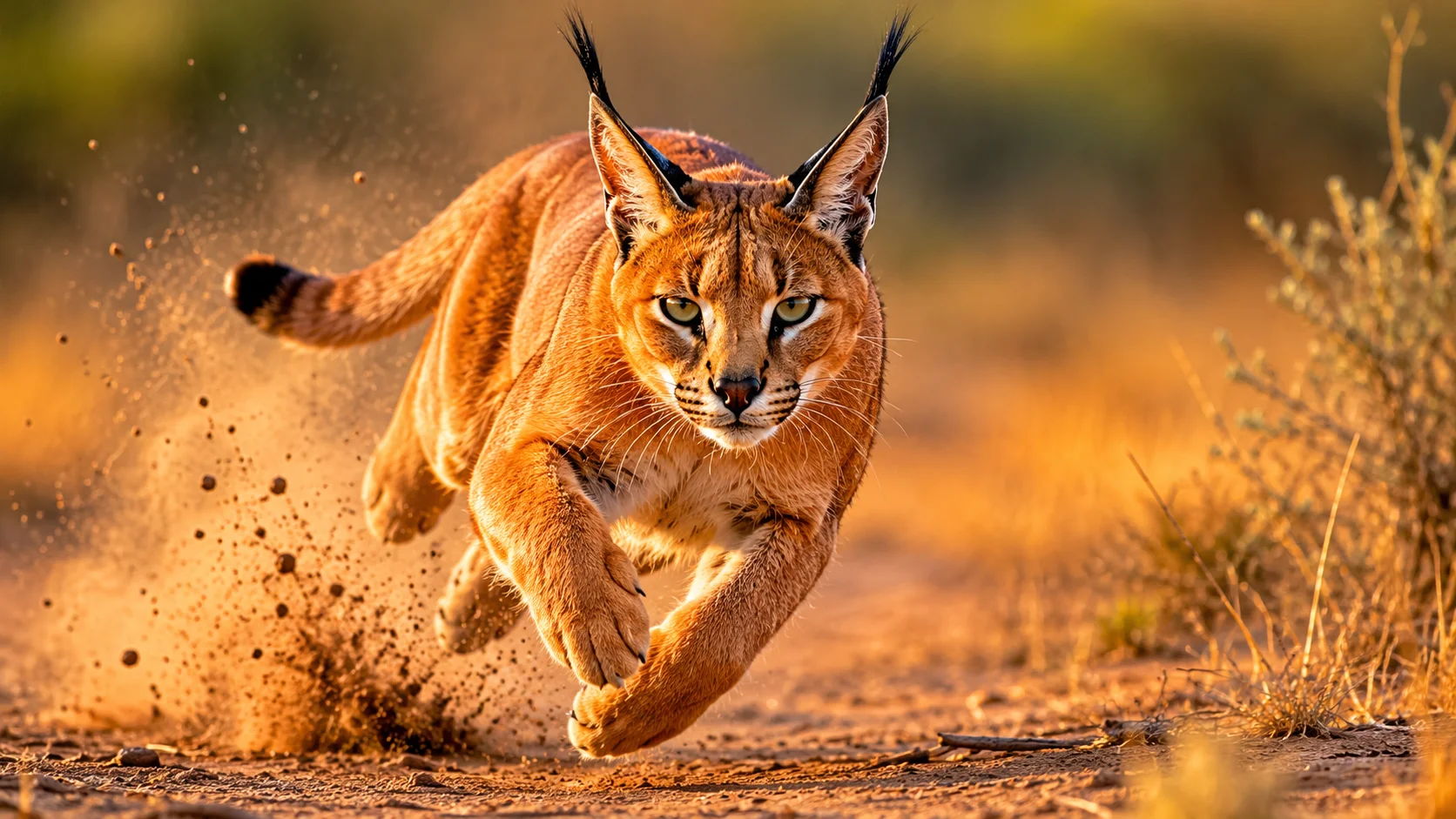
Because of their iconic black ear tufts and completely solid, unspotted coats, caracals are frequently and incorrectly referred to as the desert lynx. While they do share some minor visual similarities, they are actually completely genetically distinct from the true lynx family. Unlike a chunky, thick-coated lynx, the caracal possesses a much slimmer, highly streamlined body and significantly longer legs built entirely for sprinting through hot climates.
6. Scent Glands Between Their Toes
Territorial marking is absolutely vital for solitary predators traversing massive home ranges. The caracal utilizes a highly efficient, dual-purpose method for leaving messages for rival cats. They possess specialized scent glands located completely hidden between the toes on their paws. When they aggressively scratch the bark of a tree to sharpen their claws, they simultaneously leave deep, highly visible scratch marks and a potent, invisible chemical scent trail.
7. They Repurpose Aardvark Burrows
When a pregnant female caracal is preparing to give birth to her highly vulnerable kittens, she does not construct her own physical nest from scratch. Instead, she is a brilliant opportunist. Mothers will frequently seek out and completely take over massive underground burrows that have been recently abandoned by other digging mammals, specifically targeting the deep, highly protective tunnels originally excavated by porcupines or aardvarks.
8. They Can Snatch Multiple Birds at Once
Their ability to leap high into the air is not just a parlor trick; it is a highly refined hunting strategy. When a flock of low-flying birds like guinea fowl or pigeons takes off, a caracal will violently launch itself directly into the center of the flock. Their reflexes are so incredibly sharp that they are frequently documented swatting and snatching two or even three separate birds out of the air before their feet ever touch the ground.

9. Stashing Prey Like a Leopard
While it is an incredibly common behavior for massive leopards to drag their heavy kills high into tree branches to avoid scavengers, the caracal is one of the only small cats to regularly practice this exact same behavior. Because they frequently share their territory with massive, highly aggressive scavengers like hyenas and lions, a caracal will actively climb trees with its prey clamped in its jaws, safely stashing the meat in the high canopy for a later meal.
10. They Can Survive Without Drinking Water
Caracals are masterfully adapted to survive in the incredibly harsh, baking climates of arid steppes, dry woodlands, and semi-deserts across Africa and the Middle East. One of their most brilliant survival mechanisms is their absolute lack of reliance on standing water. A wild caracal can survive for immensely long periods without taking a single drink, extracting almost all of the vital moisture their body requires directly from the blood and tissue of their prey.
11. Historically Used as Royal Hunting Cats
Because of their incredible agility, breathtaking speed, and high intelligence, caracals have a long history of interacting with human royalty. For hundreds of years in ancient India and Persia, they were actively tamed and heavily utilized to hunt game birds for sport. Wealthy owners would frequently hold massive arena contests to see whose highly trained caracal could successfully swat down the most pigeons in a single, explosive leap.
12. They Make a Bizarre Wah-Wah Sound
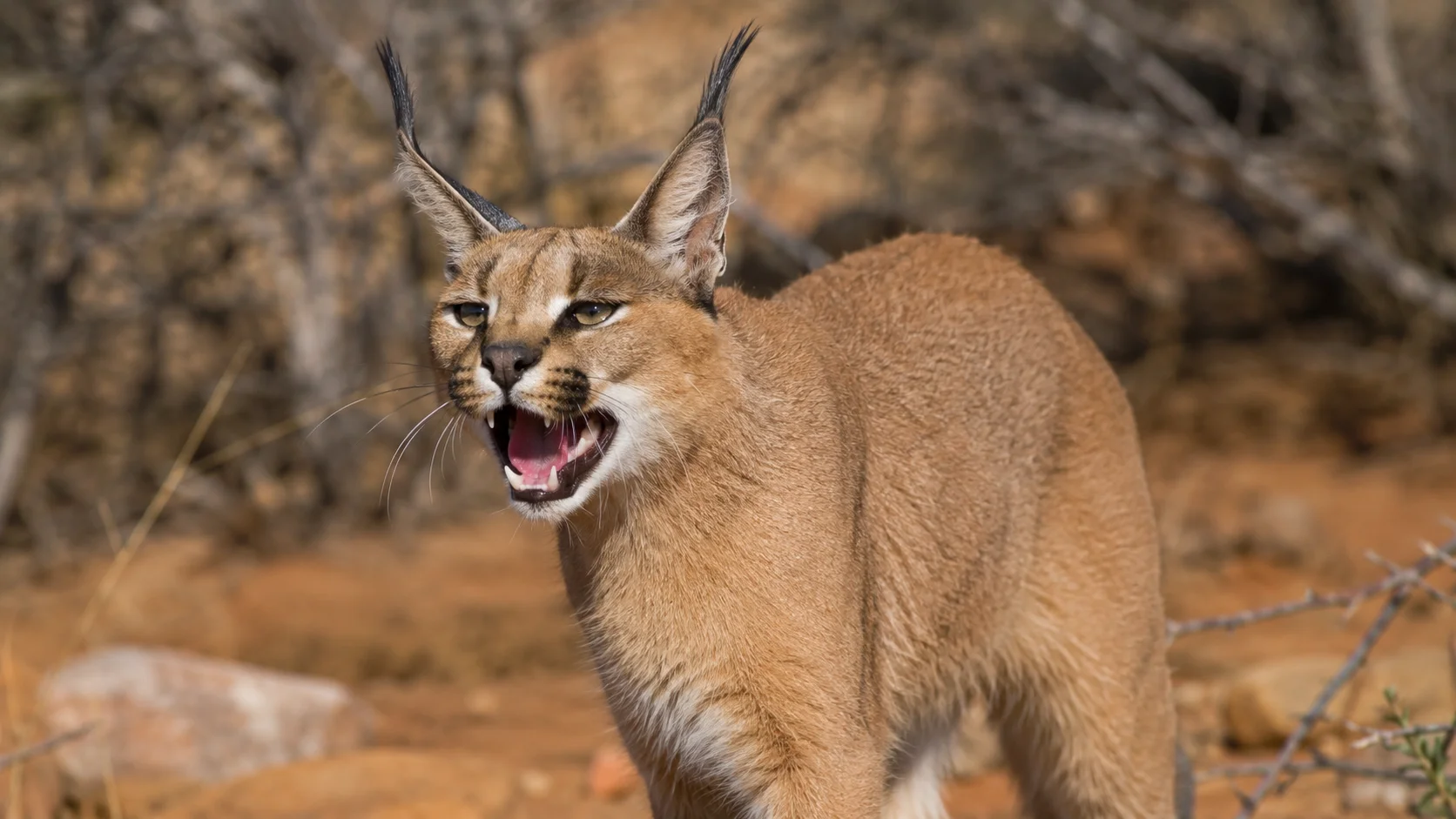
While they are perfectly capable of hissing, purring, and growling like most typical felines, caracals possess a highly unique, deeply unexpected vocalization in their acoustic repertoire. When they are feeling highly uneasy, anxious, or cautiously warning off a potential threat, they will actively produce a distinct, repetitive wah-wah sound that completely surprises anyone expecting a standard feline meow.
13. Thriving as Urban Apex Predators
As human cities aggressively expand into wild habitats, most predators quickly die out or flee. However, caracals have proven to be incredibly adaptable. In Cape Town, South Africa, a massive population of wild caracals has completely adapted to living on the urban fringes. Because larger predators like leopards were eradicated from the peninsula over a century ago, the highly adaptable caracal has essentially become the absolute apex predator of the city outskirts.
14. Males Maintain Massive Territories
Despite their relatively modest physical size, male caracals require huge amounts of land to support their highly active hunting lifestyle. They are intensely territorial and fiercely solitary. Depending heavily on the specific climate and the availability of prey, a single male caracal living in an arid Asian environment can actively maintain and violently defend a massive home range covering over three hundred square kilometers.
15. A Taste for Penguins
The adaptable diet of the caracal sometimes leads to catastrophic interactions with endangered wildlife. In Cape Town, the urban caracals quickly learned that local African penguin colonies provided a massive, completely defenseless buffet. In one incredibly highly documented case, a single young male caracal evaded local wildlife authorities for nearly a year, quietly sneaking into the protected coastal sanctuary and hunting an estimated two hundred and sixty endangered penguins before moving on.