1. The Only Males in the World That Give Birth
In a biological phenomenon completely unique in the entire animal kingdom, it is the male seahorse that experiences pregnancy and gives birth to live young. The female deposits thousands of unfertilized eggs directly into a specialized brood pouch located on the male’s abdomen. The male fertilizes the eggs internally and safely incubates them for several weeks, carefully regulating the water salinity and temperature. When the embryos are fully developed, the exhausted father experiences intense muscular contractions to expel hundreds of tiny, fully independent miniature seahorses into the ocean.
2. They Are Exceptionally Terrible Swimmers
Despite spending their entire lives completely submerged in the ocean, seahorses are officially classified as some of the worst swimmers on the planet. They propel themselves forward using a tiny, nearly invisible dorsal fin on their back that flutters an astonishing fifty times per second. Because this propulsion method is incredibly inefficient, they are easily exhausted by even the mildest ocean currents. During severe tropical storms or rough seas, many seahorses simply die of extreme exhaustion because they cannot physically fight against the relentless movement of the turbulent water.
3. Prehensile Tails Function Like Anchors
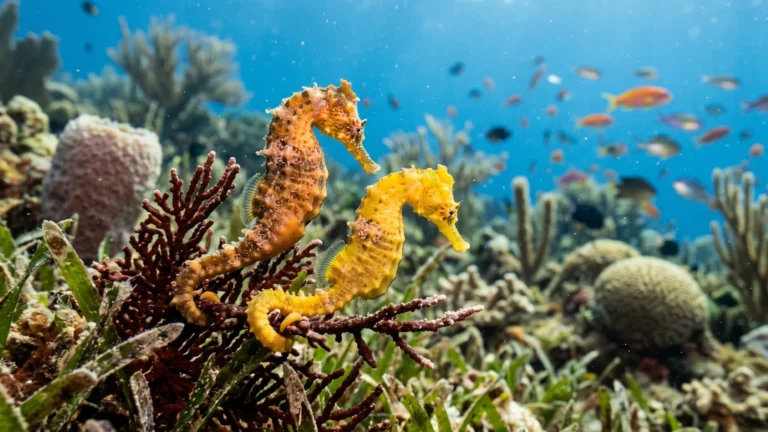
To survive their inherent inability to swim against strong ocean currents, seahorses have evolved a highly specialized appendage typically found on tree-dwelling mammals. They possess a long, muscular, prehensile tail that functions exactly like the tail of a spider monkey or a chameleon. When the water gets rough or they want to rest, they tightly wrap this flexible tail around sturdy blades of seagrass, mangrove roots, or branching coral. This biological anchor keeps them safely tethered in one spot, allowing them to patiently wait for microscopic food to drift past their faces.
4. They Have No Stomachs or Teeth
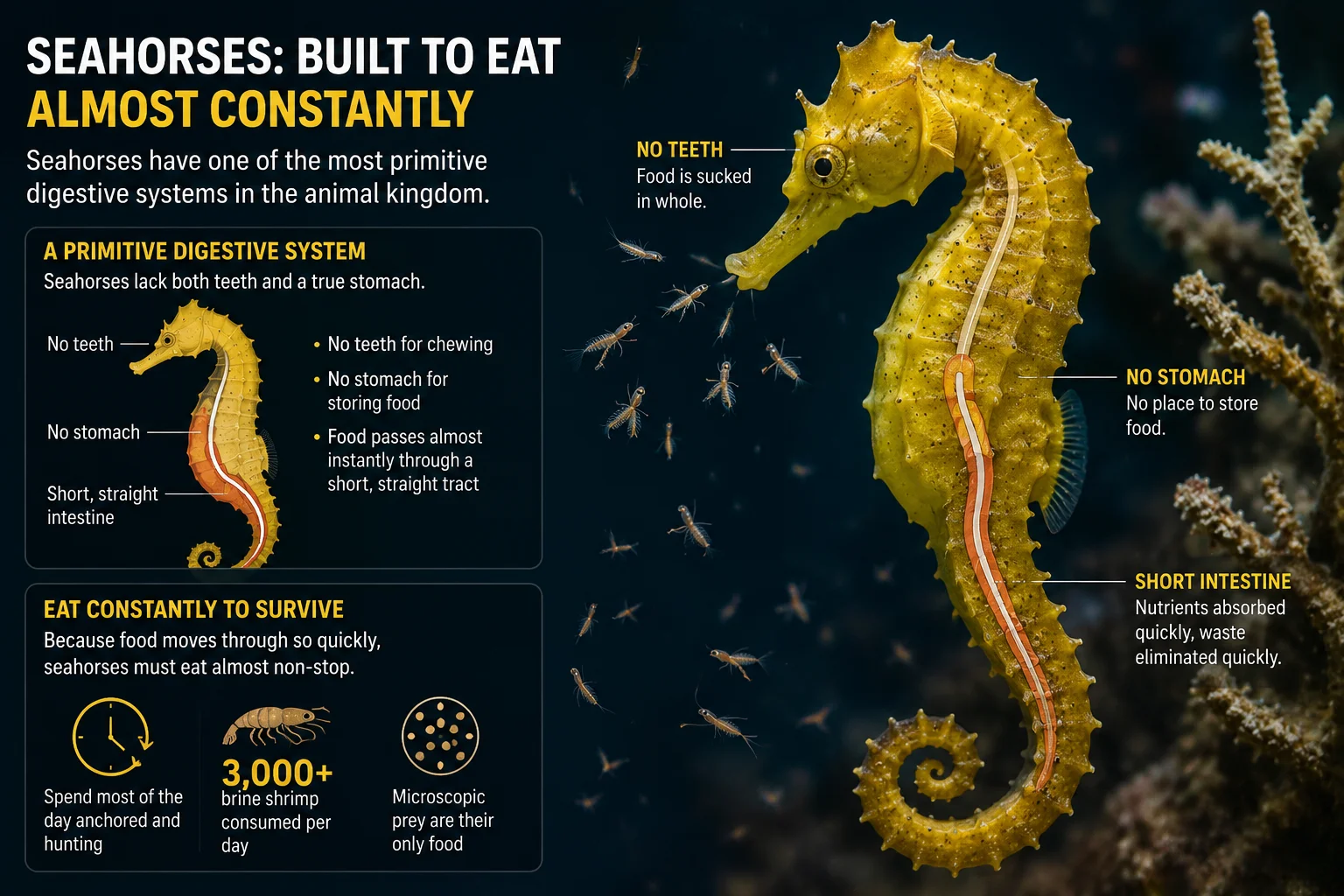
The digestive system of a seahorse is incredibly primitive, completely lacking both teeth for chewing and a true stomach for storing food. Any microscopic prey they consume passes almost instantly through a highly simplified, straight digestive tract. Because they cannot retain food to slowly extract nutrients over time, they must eat almost constantly just to survive. A single adult seahorse can easily consume over three thousand tiny brine shrimp in a single day, spending the vast majority of its waking hours anchored to a reef and hunting for microscopic snacks.
5. Eyes That Move Completely Independently
Because their rigid body structure prevents them from quickly turning their heads to look around, seahorses rely on a highly specialized visual system. Their eyes operate entirely independently of one another, functioning exactly like the swiveling eyes of a terrestrial chameleon. A seahorse can actively scan the water above for predatory crabs with its left eye while simultaneously tracking a tiny shrimp swimming below with its right eye. This incredible panoramic vision is an essential survival tool for a slow-moving creature that relies entirely on camouflage and ambush tactics.
6. Elaborate and Romantic Mating Dances
Seahorses engage in some of the most complex, beautiful, and heavily synchronized courtship rituals in the entire marine world. Before officially mating, a pair will engage in a romantic, multi-day dance that involves rapidly changing their skin colors to match one another. They swim closely side by side, intertwine their prehensile tails, and gracefully spiral together toward the surface of the water in a delicate aquatic ballet. This elaborate, extended ritual ensures that both partners are perfectly aligned in their reproductive cycles before the female successfully transfers her eggs.
7. They Are Officially Classified as Fish
With their horse-like heads, monkey-like tails, and insect-like armor, it is incredibly easy to assume these bizarre creatures belong to their own unique animal category. However, scientists officially classify seahorses as teleosts, making them bony fish belonging to the exact same taxonomic class as salmon and tuna. Just like standard fish, they extract oxygen from the water using gills, maneuver using a series of delicate fins, and utilize an internal swim bladder to precisely control their buoyancy. They have simply stretched and twisted the standard fish anatomy into a highly specialized, vertical format.
8. Skin Stretched Over Bony Armor
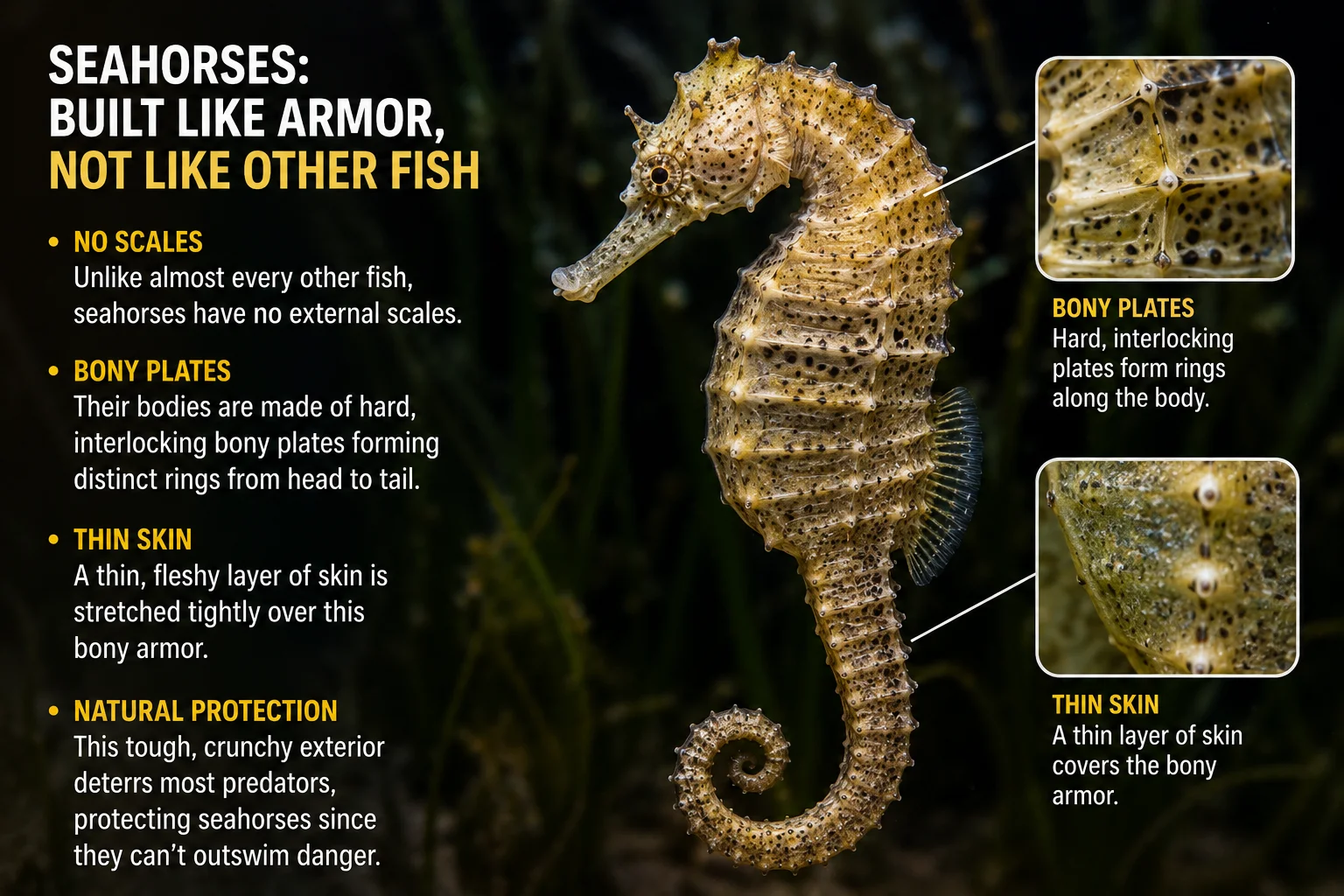
Unlike almost every other fish in the ocean, seahorses are entirely devoid of protective external scales. Instead, their bodies are constructed from a series of hard, interlocking bony plates shaped into distinct rings running from their heads down to the tips of their tails. A thin, highly fleshy layer of skin is stretched tightly over this rigid skeletal armor. This incredibly tough, crunchy exterior makes them highly unappetizing to most major marine predators, providing a necessary layer of physical protection for a creature that cannot physically outswim danger.
9. The Deadly Pivot Feeding Strike
While they appear completely gentle and docile, seahorses are actually ruthless and highly efficient ambush predators. Their elongated, tubular snout functions exactly like a high-powered biological pipette. When a tiny crustacean drifts too close, the seahorse rapidly pivots its head upward and massively expands its throat cavity to create a sudden, violent vacuum. This creates a lethal suction that instantly pulls the prey directly into its mouth in a fraction of a millisecond. This incredibly swift strike is actually one of the fastest feeding mechanisms ever recorded in the animal kingdom.
10. The Unique Fingerprint of the Coronet
If you look closely at the very top of a seahorse’s head, you will notice a distinct, crown-like bony crest pointing upward. This specialized anatomical feature is officially known as a coronet. Much like the unique ridges of a human fingerprint or the distinct black and white stripes of a wild zebra, the exact size, shape, and point pattern of the coronet is completely unique to every single individual seahorse. Marine biologists frequently use highly detailed macro photography of these specific crowns to accurately identify and track individual seahorses in the wild.
11. Masters of Extreme Camouflage
Because they are completely incapable of fleeing from danger, seahorses have evolved into some of the most advanced masters of aquatic camouflage on the planet. Many species can actively change their skin color to perfectly match their surrounding environment within minutes. More impressively, species like the leafy seadragon and the pygmy seahorse actually grow fleshy, external skin appendages called tubercles that flawlessly mimic the exact shape and texture of local algae or coral branches. This brilliant disguise makes them virtually invisible to both passing predators and unsuspecting prey.
12. They Communicate Through Clicking Sounds
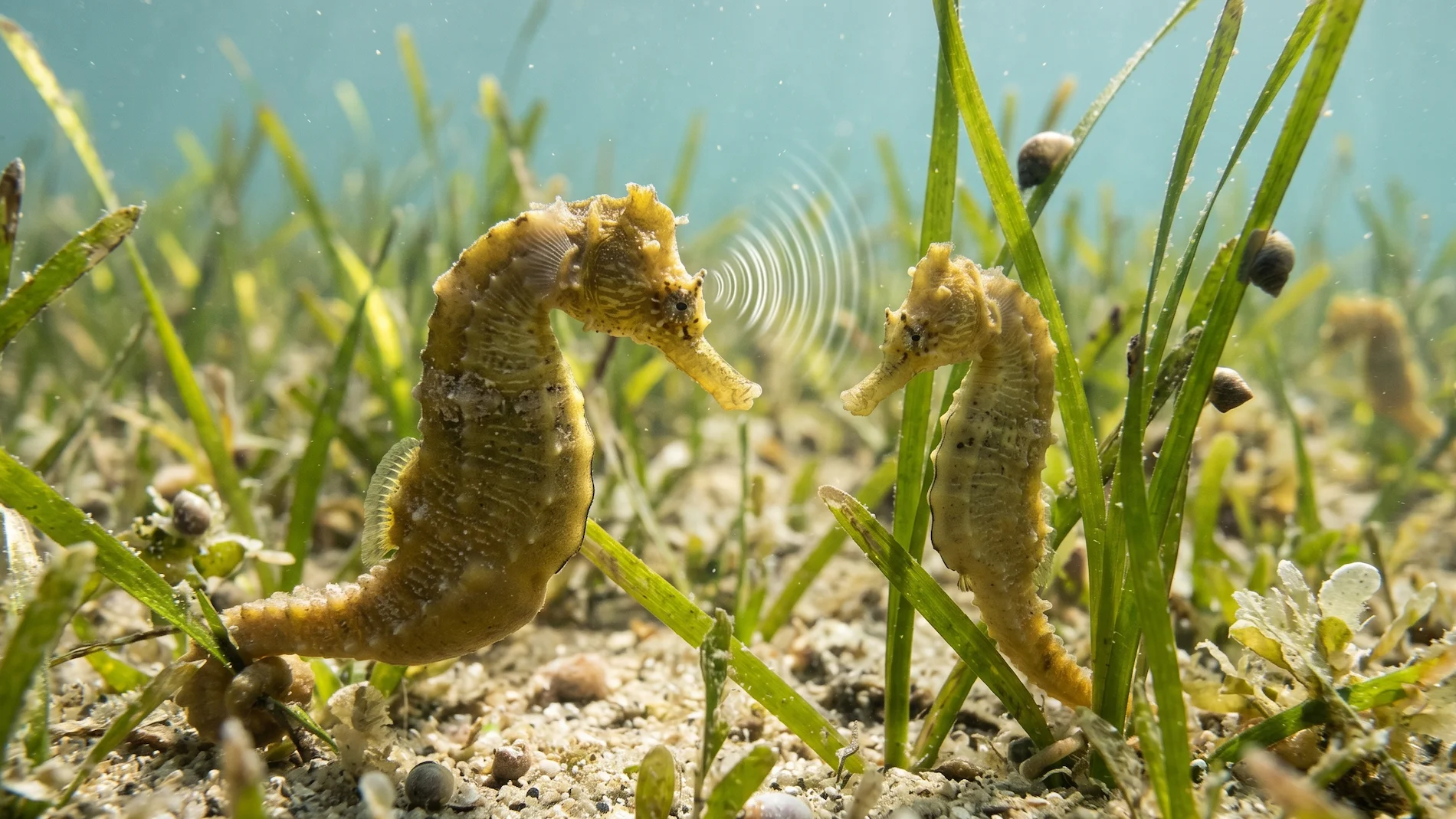
Despite lacking vocal cords, seahorses are actually quite noisy creatures that actively communicate with each other using a distinct acoustic system. They produce a sharp, rhythmic clicking or smacking sound by rapidly rubbing two small bones together at the very back of their skulls, right behind their coronet. These high-pitched clicks are most frequently heard during their elaborate courtship dances or when two males are aggressively competing over a specific territory. The acoustic vibrations easily travel through the dense water, allowing them to communicate while remaining perfectly camouflaged in the seagrass.
13. The Only Fish That Swims Vertically
In an ocean filled with sleek, horizontally swimming predators, the seahorse is the absolute only fish species designed to navigate the water completely upright. This bizarre vertical posture is made possible by a highly modified swim bladder that runs along the entire vertical length of their body. By actively shifting gas between the upper and lower chambers of this specialized organ, they can precisely maintain their upright orientation and control their vertical depth in the water column. This upright stance perfectly mirrors the vertical growth of the seagrass beds they call home.
14. Astounding Variations in Size
The global seahorse family contains over forty distinct species that exhibit a truly staggering range of physical sizes. The absolute smallest species is the Satomi’s pygmy seahorse, discovered in Indonesia, which reaches a maximum length of just over half an inch and is roughly the size of a single grain of rice. Conversely, the massive big-belly seahorse found in the cold waters around Australia and New Zealand can grow to an astonishing fourteen inches in length. Despite this massive size difference, they all share the exact same bizarre anatomical blueprint.
15. Deeply Threatened by Ancient Medicine
Tragically, the magical appearance of the seahorse has directly led to a massive, global ecological crisis that threatens their very existence. Every single year, tens of millions of wild seahorses are actively harvested from the oceans, completely dried out, and ground into powders for use in traditional Asian medicine. Unsubstantiated ancient beliefs claim that consuming these dried creatures can cure everything from baldness to asthma. This relentless, unsustainable commercial harvesting, combined with the widespread destruction of their delicate coral reef habitats, has pushed several species completely to the brink of extinction.
Sources and References