Beyond the Clouds: 15 Fascinating Facts About Machu Picchu

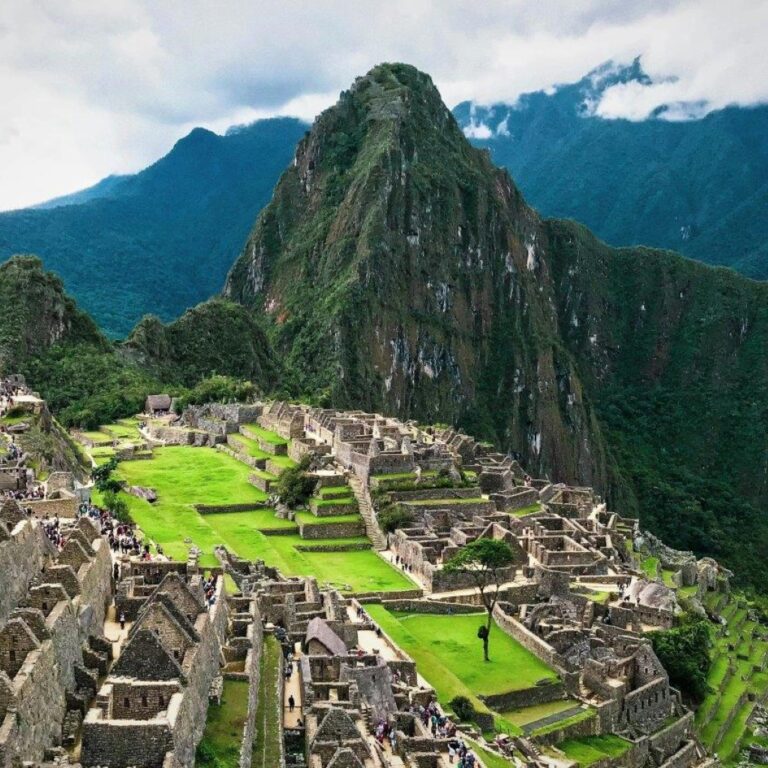
Perched high in the Andes Mountains of Peru, Machu Picchu is one of the most breathtaking and mysterious archaeological sites on the planet. Built at the height of the Incan Empire in the 15th century, this "Lost City" is a masterpiece of ancient engineering and astronomy. While millions of tourists flock to snap photos of its iconic green terraces, the true story of Machu Picchu involves invisible underground foundations, centuries-long legal battles, and a herd of resident lawn-mowing llamas. Discover the incredible hidden truths behind the sanctuary in the clouds.
Beyond the Clouds: 15 Fascinating Facts About Machu Picchu

1. It Was Never Actually “Lost”

When American explorer Hiram Bingham III brought Machu Picchu to international attention in 1911, he famously dubbed it the “Lost City of the Incas.” In reality, it was never lost to the indigenous people. When Bingham arrived at the site, he found three local farming families living among the ruins. In fact, he was guided up the mountain to the citadel by an 11-year-old local boy named Pablito Alvarez.

2. Bingham Was Looking for the Wrong City

Bingham did not set out to find Machu Picchu. He was actually searching for Vilcabamba, the legendary hidden capital where the Incas took their final refuge from the Spanish conquistadors. When he stumbled upon Machu Picchu, he mistakenly believed he had found Vilcabamba and died in 1956 still defending that incorrect theory. The real Vilcabamba was later identified deeper in the jungle.

3. The Spanish Conquistadors Never Found It

Unlike almost every other major Incan city, Machu Picchu was never sacked, looted, or destroyed by the invading Spanish forces in the 16th century. Because the Incas abandoned the site and left no written records of its location, the jungle quickly overgrew the trails. The Spanish completely bypassed it, which is the primary reason the stunning architecture remains so remarkably intact today.

4. Earthquake-Proof Engineering

Peru is a highly seismically active country, and Machu Picchu sits atop two geological fault lines. To combat this, the Incas used an architectural technique called “ashlar.” They cut massive granite stones so perfectly that they fit together without a single drop of mortar. During an earthquake, these perfectly fitted stones are designed to “dance,” bouncing and shifting with the tremors before settling exactly back into their original places.

5. Most of the Citadel is Invisible

When you look at Machu Picchu, you are only seeing about 40 percent of the actual construction. The Incas dedicated roughly 60 percent of their engineering efforts to what lies beneath the ground. The mountain is hollowed out and filled with deep, complex foundations consisting of layers of crushed rock and gravel, designed to stabilize the city and provide a massive underground drainage system to prevent landslides during heavy rains.

6. The Wheel-Less Wonder

The monumental stones used to build the city weigh upwards of 50 tons. Astonishingly, the Incas achieved this massive construction project without the use of iron tools, draft animals, or the wheel. Hundreds of men used sheer physical force to push the massive granite blocks up the steep mountainsides, shaping them with harder river rocks and bronze chisels.

7. It Was Only Inhabited for a Century

Despite the unimaginable effort required to build the mountain citadel around 1450 CE, it was only used for a relatively short period. Archaeologists believe it was abandoned roughly 100 years later, right around the time the Spanish began their conquest of the empire. Without the support of the larger Incan infrastructure, the isolated royal estate could not sustain itself.

8. The Century-Long Artifact Dispute

During his excavations between 1912 and 1915, Hiram Bingham removed tens of thousands of artifacts—including ceramics, silver statues, and human bones—and took them back to Yale University under an 18-month loan agreement. A bitter legal and political dispute erupted when Yale kept the artifacts for nearly a century. Following massive pressure from the Peruvian government, Yale finally agreed to return the entire collection to Peru in 2011.

Following massive pressure from the Peruvian government, Yale finally agreed to return the entire collection to Peru in 2011.

9. The Terrifying Stairs of Death

Overlooking the main ruins is the towering peak of Huayna Picchu. To reach the top, ancient builders carved a set of incredibly steep, narrow stone steps directly into the side of the cliff, hovering over a sheer drop of nearly 1,000 feet. Today, tourists affectionately refer to this vertigo-inducing climb as the “Stairs of Death,” though surprisingly, no fatal falls from the stairs have been recorded in recent modern history.

10. The Hidden Temple of the Moon

While most tourists focus on the Temple of the Sun in the main citadel, there is a much more secretive sanctuary hidden on the far side of Huayna Picchu. Built into a shallow natural cave, the Temple of the Moon features some of the finest, most intricate stonework in the entire region. Getting there requires a grueling, perilous hike that deters the vast majority of visitors.

11. The Hitching Post of the Sun

At the highest point of the main citadel sits the Intihuatana, a carved granite pillar that translates to “The Hitching Post of the Sun.” It is a highly precise astronomical observatory and calendar. On the two equinoxes (March 21 and September 21), the sun stands almost directly directly above the pillar, casting absolutely no shadow, signaling the exact turning of the seasons for Incan agriculture.

At the highest point of the main citadel in Machu Picchu sits the Intihuatana

12. A Strict No-Fly Zone

To protect the fragile ruins and the surrounding ecosystem from noise pollution and potential accidents, the Peruvian government established a strict no-fly zone over Machu Picchu in the late 1990s. Helicopters and small aircraft are completely banned from entering the airspace directly above the archaeological park, preserving the peaceful, natural serenity of the site.

13. The Modern-Day Lawn Mowers

Machu Picchu does not rely on modern landscaping crews with gas-powered trimmers to keep the iconic green terraces looking pristine. Instead, a large, resident herd of dozens of llamas and alpacas roam freely through the ruins every single day. They happily graze on the grass, serving as the city’s charming, eco-friendly, and highly photogenic lawn maintenance team.

14. An Active 500-Year-Old Water System

The Incas were absolute masters of hydrology. They engineered a 749-meter-long stone canal that channeled fresh spring water down the mountain, feeding a series of 16 cascading ceremonial fountains. The gravity-fed system was designed so perfectly that, even today—over 500 years after it was constructed—the water continues to flow flawlessly through the ancient channels.

15. Home to the Inspiration for Paddington Bear

The Historic Sanctuary of Machu Picchu isn’t just an archaeological marvel; it is a vital ecological reserve. The thick cloud forests surrounding the ruins are one of the natural habitats of the elusive Andean spectacled bear. This small, shy creature is the only surviving species of bear native to South America, and it famously served as the direct inspiration for the beloved children’s character, Paddington Bear.

Sources & References

  1. https://whc.unesco.org/en/list/274/
  2. https://www.nationalgeographic.com/history/article/machu-picchu-mystery
  3. https://www.smithsonianmag.com/travel/saving-machu-picchu-153497816/

How useful was this post?

Click on a star to rate it!

This AI-assisted post was rigorously curated and fact-checked for accuracy by: