The Indomitable Dame: 15 Fascinating Facts About Maggie Smith
Dame Maggie Smith was one of the most celebrated and beloved actresses in entertainment history, winning two Academy Awards, five BAFTAs, and a Tony Award across her legendary seven-decade career. From founding the Royal National Theatre alongside Laurence Olivier to captivating global audiences as Professor McGonagall in Harry Potter and Violet Crawley in Downton Abbey, her sharp wit and versatile talent remained unmatched. Despite her international stardom, she maintained a fiercely private life, battled cancer while filming, and famously never watched her own hit TV series. Discover the extraordinary life, remarkable achievements, and razor-sharp humor of Britain's premier acting icon.
1. Her Stage Career Launched at the Oxford Playhouse in 1952
Maggie Smith made her professional stage debut in 1952 at age 17, playing Viola in Shakespeare's Twelfth Night at the Oxford Playhouse. At the time, she was studying acting while living with her family in Oxford. Her natural talent for comedic timing quickly became apparent, leading her to revue theatre in London's West End and on Broadway. By 1956, she made her Broadway debut in the musical revue New Faces of '56, earning glowing reviews for her effortless stage presence. This early classical and comedic grounding paved the way for one of the most distinguished careers in acting history.
2. She Won Two Academy Awards for Strikingly Different Roles
Smith earned six Academy Award nominations throughout her career and took home two Oscars for strikingly different performances. In 1970, she won Best Actress for her brilliant performance as the romantic, headstrong Scottish schoolmistress in The Prime of Miss Jean Brodie. Nine years later, she won Best Supporting Actress for playing Diana Barrie in Neil Simon's ensemble comedy California Suite (1978). This second Oscar made her one of the select few actors to win Academy Awards in both leading and supporting categories. Her ability to pivot seamlessly between soaring drama and razor-sharp satire established her as a global cinematic powerhouse.
3. She Was a Founding Member of the Royal National Theatre
In 1962, iconic actor Sir Laurence Olivier recognized Smith's towering talent and invited her to join the newly established Royal National Theatre company. Operating out of the Old Vic in London, the company quickly became the epicenter of British theatrical excellence. Smith starred in prominent productions including Othello, playing Desdemona opposite Olivier's title character, and Beatrice in Much Ado About Nothing. Her work with the National Theatre earned critical acclaim and established her as a cornerstone of British theatrical heritage. She remained deeply connected to the British stage even as her international screen career skyrocketed.
4. J.K. Rowling Personally Requested Her for Harry Potter
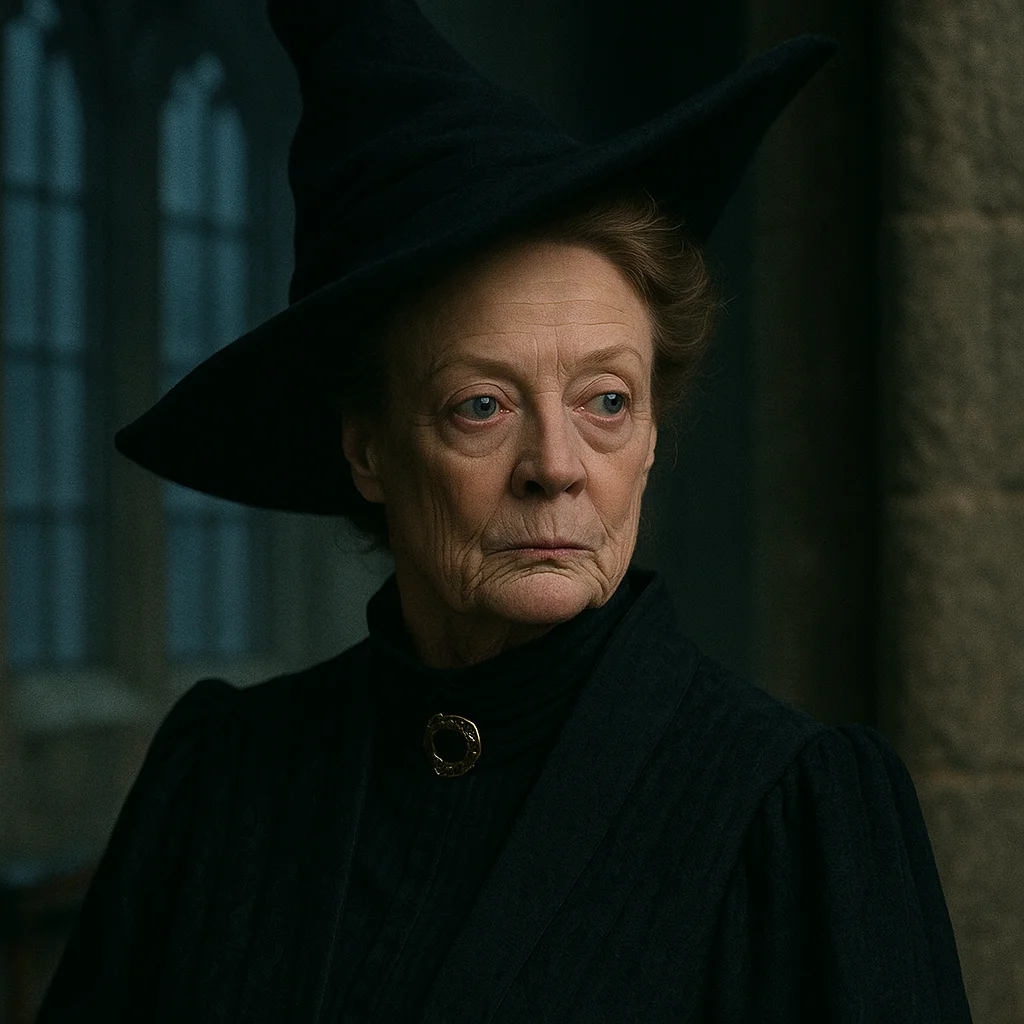
When Warner Bros. began casting the Harry Potter film series, author J.K. Rowling had one non-negotiable request: Maggie Smith had to play Professor Minerva McGonagall. Smith had previously starred alongside a young Daniel Radcliffe in the 1999 BBC television adaptation of David Copperfield. Recognizing Radcliffe's talent, Smith personally recommended the young actor to audition for the role of the boy wizard. Her portrayal of the strict yet deeply compassionate Gryffindor Head of House became a definitive highlight of all eight blockbuster films.
5. She Filmed Harry Potter While Secretly Battling Breast Cancer
While filming Harry Potter and the Half-Blood Prince in 2007, Smith received a harrowing diagnosis of breast cancer at the age of 73. Refusing to let illness halt production or derail her commitment to the franchise, she quietly endured severe chemotherapy and radiation treatments between shooting scenes. She wore wigs to cover her treatment-induced hair loss and soldiered through extreme physical exhaustion on set. Her castmates and crew marvelled at her extraordinary endurance, affectionately dubbing her "Maggie the Magnificent" for her unwavering professionalism.
6. She Refused to Watch Downton Abbey
Despite winning three Emmy Awards and a Golden Globe for playing Violet Crawley, the Dowager Countess of Grantham, in Downton Abbey, Smith never actually watched the show. She famously quipped in interviews that she had lived through the filming process, so there was no need to sit through the television broadcasts. The unexpected, monumental surge in international fame that arrived in her late 70s surprised and mildly overwhelmed the notoriously low-profile actress. She admitted that being recognized constantly in public made simple activities like grocery shopping nearly impossible.
7. She Won BAFTAs Across Five Separate Decades
Maggie Smith stands as one of the few performers in history to win British Academy Film and Television Awards (BAFTAs) across five separate decades. Her BAFTA winning journey began with a nomination in 1959, followed by victories in the 1960s, 1980s, 1990s, and 2000s for films like A Room with a View and The Lonely Passion of Judith Hearne. She was also honored with a prestigious BAFTA Special Award in 1993 and the BAFTA Fellowship in 1996. This incredible record reflects her sustained artistic excellence and relevance across generations of cinema and television.
8. She Was Created a Dame Commander and Companion of Honour
In the 1990 New Year Honours, Queen Elizabeth II appointed Maggie Smith a Dame Commander of the Order of the British Empire (DBE) for her extraordinary services to drama. Decades later, in 2014, the Queen bestowed an even higher honor by appointing her a Companion of Honour (CH). The Order of the Companions of Honour is an extraordinarily elite distinction restricted to only 65 living members globally at any single time. This prestigious double honor placed Dame Maggie in the highest echelon of British cultural icons recognized for lifelong national achievement.
9. She Captured a Tony Award for Lettice and Lovage
While worldwide audiences knew her best through television and film, Smith was a dominant force on the Broadway stage. After receiving Tony nominations for New Faces of '56 and Private Lives, she took home the 1990 Tony Award for Best Actress in a Play for Lettice and Lovage. Playwright Peter Shaffer had written the satirical comedy specifically with Smith in mind, crafting the eccentric tour guide character Lettice Douffet around her unmatched comic delivery. Her hilarious performance won rave reviews from critics and cemented her status as a theatrical legend on both sides of the Atlantic.
10. Her On-Screen Oscar Win Mirrored Real Life
Maggie Smith's performance in Neil Simon's California Suite (1978) created one of the most delightful paradoxes in Academy Award history. In the film, she played Diana Barrie, an anxious British actress who travels to Los Angeles for the Oscars only to lose the award and break down in hilarious frustration. In an astonishing twist of real-life art mirroring fiction, Smith won the actual Best Supporting Actress Oscar for playing that fictional loser. Playwright Neil Simon marvelled that Smith managed to turn a tragic personal collapse into an unforgettable masterclass in comedic acting.
11. She Preferred the Thrill of Live Theatre Over Cinema
Despite starring in more than 60 feature films, Smith consistently maintained that live theatre provided her with true artistic fulfillment. She often explained in interviews that film acting felt fragmented, repetitive, and devoid of the continuous energy that defines a live stage performance. For Smith, movie making consisted largely of standing around on sets waiting for lighting setups, whereas theatre required total physical focus and immediate connection with an audience. Nevertheless, she brought the same precision and commitment to her screen roles as she did to her stage performances.
12. Her Legendary Off-Screen Wit Left Castmates in Awe
On set and behind the scenes, Dame Maggie was famous for possessing a razor-sharp, unfiltered wit that mirrored her most biting screen characters. Co-stars and directors often spoke with a mix of awe and mild terror about her razor-sharp comebacks and effortless improvisational speed. Directors like Robert Altman and Kenneth Branagh routinely noted that her spontaneous line variations were so superior to the script that they kept them in the final cut. Her off-screen humor, sharp intellect, and refusal to tolerate nonsense made her a beloved, towering presence among fellow actors.
13. She Played Mother Superior in Sister Act
In 1992, Smith stepped into broad commercial comedy by starring as the stern Mother Superior alongside Whoopi Goldberg in Sister Act. Although the hit comedy was a dramatic departure from her classical Shakespearean repertoire, Smith threw herself into the role with complete dedication and dry comedic precision. The film became a massive global sensation, grossing over $230 million worldwide and spawning a successful 1993 sequel in which she happily returned. Her performance introduced her to a whole new generation of moviegoers long before her iconic roles in Harry Potter and Downton Abbey.
14. She Maintained Total Privacy and Never Used Social Media
Throughout a legendary career spanning seven decades, Dame Maggie Smith maintained an extraordinary level of personal privacy. She gave interviews exceedingly rarely, completely avoided late-night talk shows, and never established any social media accounts. Smith strongly believed that an actor's private life should remain private so that audiences could fully immerse themselves in her fictional characters without distraction. This deliberate distance preserved an enigmatic, old-school star quality that became increasingly rare in the modern era of constant digital celebrity exposure.
15. She Mastered the Art of Blending Comedy and Tragedy
At the heart of Maggie Smith's dramatic genius was her effortless mastery of blending high comedy with quiet heartbreak. She firmly believed that the most profound acting exists at the exact intersection where laughter and tears meet. Whether playing the tragicomic homeless woman in The Lady in the Van or the razor-tongued aristocrat in Downton Abbey, she could turn a scene from hysterical laughter to poignant sorrow in a split second. This rare gift ensured that her performances were never merely funny or dramatic, but deeply human and infinitely memorable.
Sources & References
This AI-assisted post was rigorously curated and fact-checked for accuracy by:
 Martin Roháček
How fun was this article? 🤔
Tap a star to rate it
🧠 Quiz: How closely were you paying attention?
10 questions — all answers are in the article above!
Enjoyed these facts? There's more! 💌
Fresh fun facts in your inbox. No spam, ever.