
The Simulated Reality: 15 Fascinating Facts About The Matrix
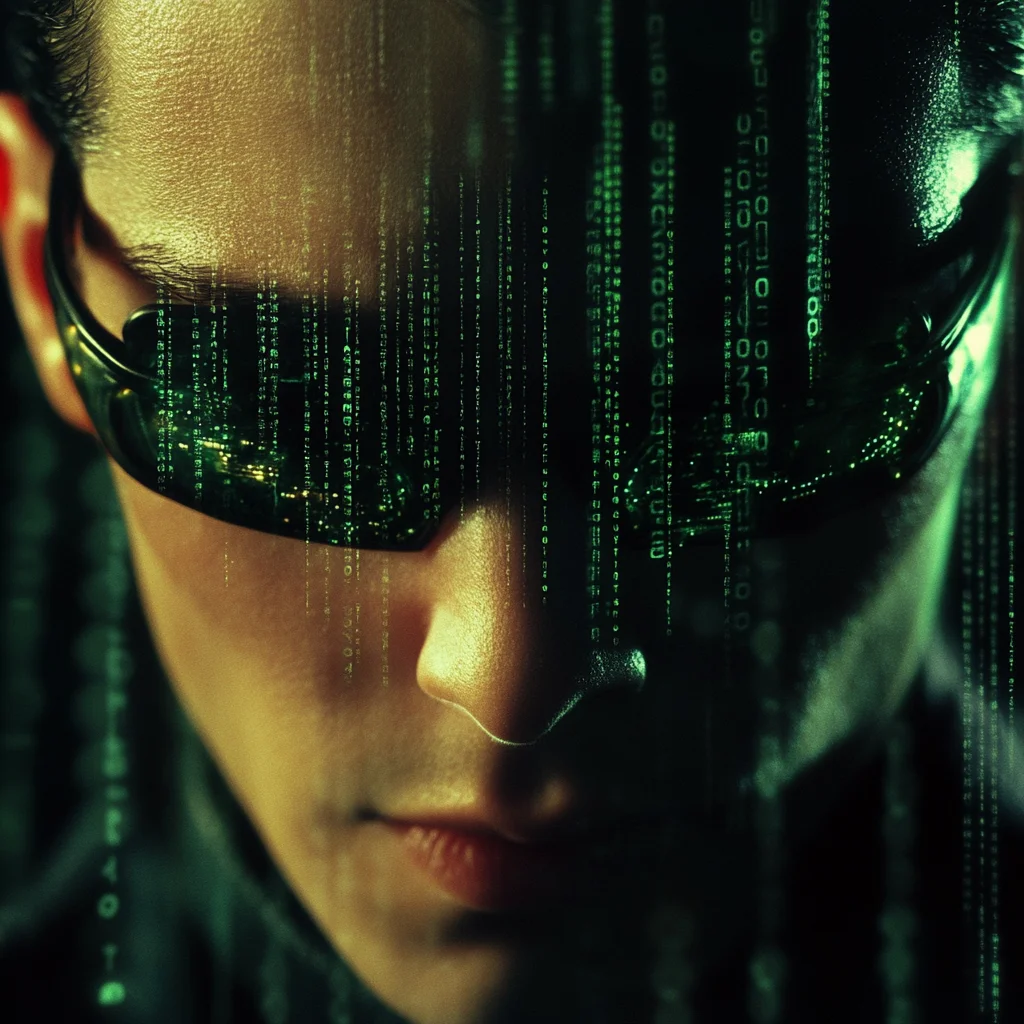
When The Matrix hit theaters in 1999, it redefined action cinema, visual effects, and philosophical storytelling in Hollywood blockbusters. Directed by Lana and Lilly Wachowski, the film combined bullet-time photography, Hong Kong martial arts choreography, and deep cyber-dystopian themes into a massive cultural phenomenon. Decades after its groundbreaking release, secrets regarding its high-tech production, cryptic set design, and ingenious costuming hacks continue to fascinate film enthusiasts. Here are 15 mind-bending facts about the sci-fi masterpiece that changed pop culture forever.
1. The Iconic Green Rain Code Is Actually Sushi Recipes
The cascading green digital code that opens The Matrix has become one of the most recognizable visual motifs in cinema history. However, its origin is far more mundane than complex computer programming algorithms. Production designer Simon Whiteley scanned the typography directly from his Japanese wife’s traditional cookbooks. The famous vertical streams of rain consist of flipped and mirrored Japanese Katakana characters, numbers, and Kanji symbols spelling out actual sushi recipes. Whiteley later joked in interviews that without those Japanese cooking guides, the visual language of the Matrix would not exist.
2. Keanu Reeves Trained for Months in a Neck Brace
Before principal photography began, Keanu Reeves required serious medical intervention for two damaged discs in his cervical spine, which had begun causing paralysis in his legs. He underwent a neck fusion surgery that required him to wear a rigid neck brace during the film's rigorous preparation phase. Martial arts legend Yuen Woo-ping was hesitant to train an actor who couldn't kick, but Reeves spent four months mastering punches, upper-body blocks, and wirework while recovering. Woo-ping adapted the choreography around Reeves' physical limitations, focusing heavily on upper-body moves until he healed enough to handle complex leg sweeps. The dedication paid off in the seamless, brutal combat style seen on screen.
3. Bullet-Time Required 120 Still Cameras Shot in Micro-Sequence
The groundbreaking bullet-time visual effect redefined sci-fi action filmmaking, but creating it without modern high-speed digital cameras was a colossal engineering feat. Visual effects supervisor John Gaeta and his team at Manex Visual Effects positioned 120 still cameras along a custom green-screen arc, flanked by two motion picture cameras. Each still camera was carefully calibrated and fired sequentially in fractions of a millisecond to capture motion frozen in time. The individual still frames were then scanned into computers, and interpolating software filled in the gaps to create a fluid, sweeping 360-degree camera movement around frozen bullets. This revolutionary technique earned the film an Academy Award for Best Visual Effects.
4. The Cast Had to Read Dense Philosophical Texts First
Before the actors were allowed to open the script, directors Lana and Lilly Wachowski assigned them mandatory reading to ensure they understood the story's philosophical roots. Keanu Reeves, Carrie-Anne Moss, and Laurence Fishburne were tasked with studying Simulacra and Simulation by French philosopher Jean Baudrillard, which explores the blur between reality and symbols. They were also given Kevin Kelly’s Out of Control, a text on network systems and swarm intelligence, alongside Dylan Evans' work on evolutionary psychology. Baudrillard’s book even makes an explicit cameo in the film, acting as Neo’s hollowed-out hiding spot for illegal computer disks. This intellectual homework gave the cast a deep grasp of the film's themes of illusion and control.
5. Neo's Iconic Trench Coat Was Made from Cheap Synthetic Fabric
Neo’s dramatic black trench coat appears luxurious, weighty, and expensive on screen, but it was actually crafted from a low-cost blend of synthetic fabric. Costume designer Kym Barrett worked under tight financial constraints and needed a material that floated gracefully during high-action wirework and heavy rain scenes. She settled on a cheap wool-look synthetic material sourced from a budget fabric dealer for around three dollars per yard. The material was light enough to swirl dynamically during fight scenes without weighing down Keanu Reeves or catching on harnesses. Barrett repeated a similar cost-effective approach for Trinity's outfit, using PVC vinyl instead of genuine high-grade leather.
6. Room Numbers and Symbols Hold Hidden Binary and Literary Codes
Every room number and numerical detail in the movie was chosen with symbolic intent by the filmmakers. Neo’s apartment number is 101, which serves as a dual metaphor: it represents both the fundamental building blocks of binary code (1s and 0s) and Room 101 from George Orwell’s 1984, the place where citizens face their ultimate fears. Meanwhile, Trinity’s apartment at the beginning of the movie is number 303, referencing the Holy Trinity and spiritual trios. Additionally, when Neo is interrogated by Agent Smith, his file displays his passport expiration date as September 11, 2001. This eerie coincidence was filmed and edited long before the real-world events of that date occurred.
7. Real Twin Actors Were Used to Represent Computer Glitches
In the famous "Woman in Red" simulation scene, Morpheus explains how the Matrix reuses digital assets to save computing power, leading to visual repetition. To pull off this illusion without relying heavily on expensive CGI, the Wachowskis put out a casting call specifically for identical twins and triplets in Sydney, Australia. Dozens of sets of identical twins were dressed in matching suits, hats, and dresses to act as background extras in the crowded street scene. As Neo walks through the crowd, careful viewers can spot identical people appearing side by side or walking in opposite directions. This clever physical trick created a subtle, uncanny atmosphere of a manufactured reality.
8. The Nebuchadnezzar Is Named After a Troubled Babylonian King
Morpheus’s real-world hovercraft, the Nebuchadnezzar, carries deep biblical and historical symbolism that mirrors the plot of the movie. The ship is named after King Nebuchadnezzar II of Babylon, a ruler mentioned in the Book of Daniel who suffered from terrifying, forgotten dreams that demanded interpretation. Inside the ship, a bronze metal plaque clearly displays the text "Mark III No. 11," referencing Mark 3:11 from the New Testament. That verse reads, "Whenever the impure spirits saw him, they fell down before him and cried out, 'You are the Son of God.'" This subtle detail foreshadows Neo’s eventual realization as "The One" who commands authority over the artificial world.
9. The S&M Nightclub Scene Was Filmed at a Real Sydney Club
Early in the film, Neo meets Trinity for the first time at a loud, dimly lit underground club filled with leather, chains, and fetish fashion. Rather than constructing an artificial set on a soundstage, the production team filmed the entire sequence at a famous real-world Sydney fetish venue called The Hellfire Club. To ensure the atmosphere felt authentic, the directors invited regular patrons of the club to appear as background extras. The extras brought their own personal wardrobe, leather outfits, and body piercing hardware to the set, saving the costume department thousands of dollars while lending genuine underground energy to the key meeting between Neo and Trinity.
10. Distinct Color Tints Separate the Matrix from Reality
The filmmakers used precise digital color grading to signal to the audience which reality the characters were currently occupying. Scenes taking place inside the Matrix are heavily saturated with a sickly green hue, reminiscent of old monochrome computer monitors and toxic atmospheres. Conversely, scenes set in the cold, desolate real world inside the hovercraft or human ruins feature a crisp blue color spectrum. Special simulation environments like the sparring program or the "Woman in Red" test use distinct yellow and red palettes. Even the physical costumes reflected this rule: clothes inside the Matrix were glossy and sleek, while real-world clothes were worn, knitted, and faded.
11. The Wachowskis Pitching Strategy Included a 600-Page Storyboard
When Lana and Lilly Wachowski first pitched The Matrix to Warner Bros., executives were deeply hesitant to hand over a massive $60 million budget to two directors who had only directed one low-budget thriller, Bound. To prove that their complex vision could be realized on screen, the sisters hired comic book artists Geof Darrow and Steve Skroce to illustrate a frame-by-frame 600-page storyboard sequence. The directors walked the studio executives through the thick binder page by page, demonstrating every single camera angle and visual effect. Impressed by the meticulous preparation and visual clarity, Warner Bros. finally granted greenlight approval for the ambitious project.
12. Will Smith Turned Down the Role of Neo for Wild Wild West
Before Keanu Reeves was chosen to play Neo, the role was offered to several prominent Hollywood stars, most notably Will Smith. At the time, Smith was one of the biggest box office draws on the planet following hits like Independence Day and Men in Black. However, Smith struggled to grasp the concept of bullet-time and the film's high-concept philosophy during his pitch meeting with the Wachowskis, ultimately choosing to star in Wild Wild West instead. Smith has since openly stated that turning down the role was the right decision, noting that Keanu Reeves was perfect for Neo, whereas he might have messed up the film's nuanced tone.
13. Agent Smith Was Heavily Inspired by Underground Comic Books
The iconic antagonist Agent Smith, chillingly portrayed by Hugo Weaving, owes much of his visual design and imposing aura to indie comic books. The Wachowskis drew heavy inspiration from Grant Morrison’s vertigo comic series The Invisibles, which features suit-wearing, sinister secret agents trying to keep humanity oblivious to an underlying reality. Additional influence came from Neil Gaiman’s The Sandman, where rigid, impersonal cosmic entities enforce systemic rules. Hugo Weaving developed Smith's monotone, rhythmic vocal delivery by combining the mechanical pitch of a synthesizer with the rigid speech patterns of 1950s news anchors, making him feel chillingly inhuman.
14. Subtle Foreshadowing Dialogue Is Hidden Throughout the Script
Long before Neo learns the truth about his artificial existence, the dialogue in the film's opening act drops subtle hints about his fate. When Choi buys a dark disk from Neo early in the movie, he tells him, "You're my own personal Jesus Christ," directly foreshadowing Neo's savior-like role as "The One." Moments later, Choi urges Neo that he "needs to unplug," a phrase that literally describes his impending physical detachment from the Matrix power grid. Furthermore, the computer message "Wake up, Neo" mirrors ancient Gnostic awakening motifs, signaling to the audience that Neo is living in a dream world long before he takes Morpheus's red pill.
15. The Helicopter Crash Scene Set a New Benchmark for Physical Props
During the climax where Neo and Trinity rescue Morpheus, a helicopter crashes into a glass skyscraper, sending visual ripple waves across the building's surface. While the ripple effect on the glass building was created using sophisticated CGI, the actual helicopter exploding and smashing into the structure involved a massive physical rig built on location. The production team constructed a life-sized helicopter mockup fitted with pyrotechnics, which was dropped on cables against a constructed wall. The blend of real physical destruction and groundbreaking CGI set a new industry standard for action sequences, contributing to the film winning all four Academy Awards for which it was nominated.
Sources & References
This AI-assisted post was rigorously curated and fact-checked for accuracy by:
 Martin Roháček
How fun was this article? 🤔
Tap a star to rate it
🧠 Quiz: How closely were you paying attention?
10 questions — all answers are in the article above!
Enjoyed these facts? There's more! 💌
Fresh fun facts in your inbox. No spam, ever.