The Subversive Satirist: 15 Fascinating Facts About Molière
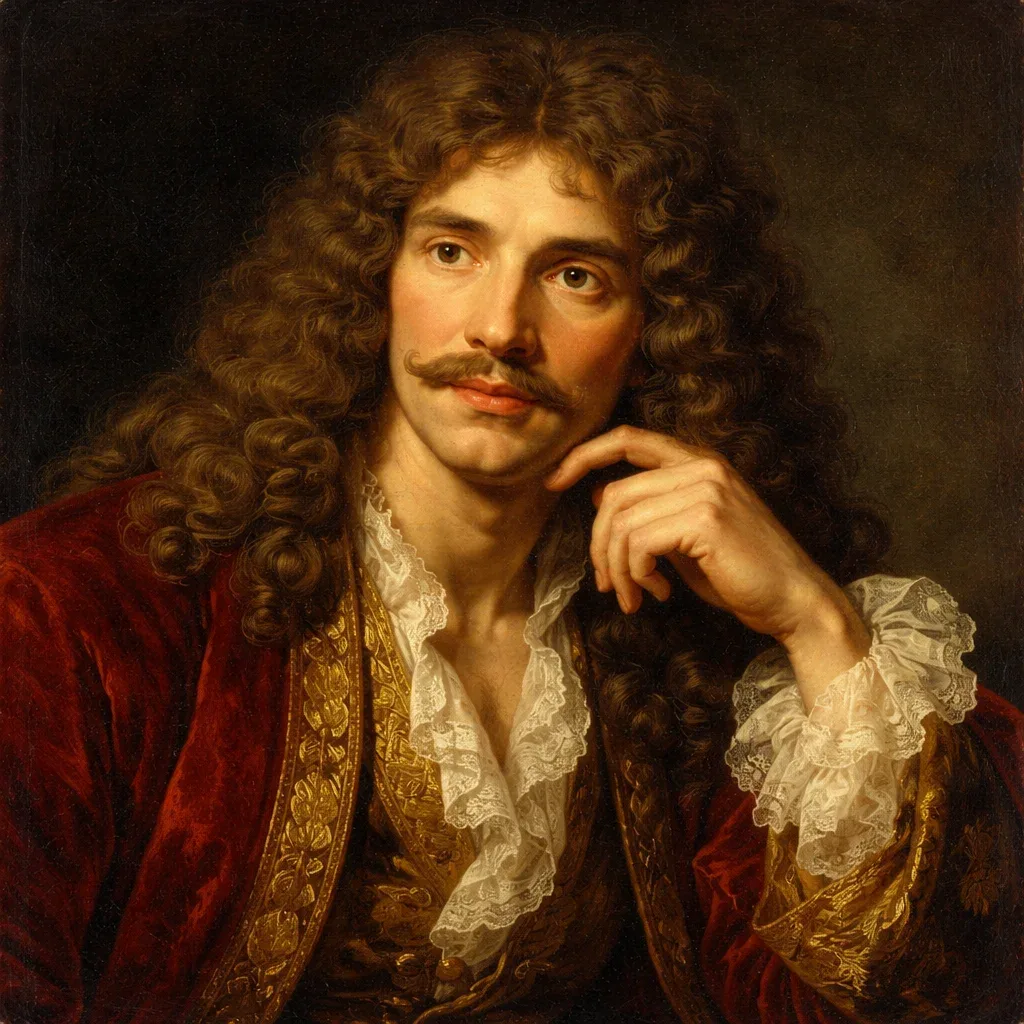
Jean-Baptiste Poquelin, known to history as Molière, revolutionized Western theatre by transforming comedy into an intellectual weapon capable of shaking the French establishment. From court upholsterer to debtor's prison inmate and royal favorite of King Louis XIV, his turbulent life rivaled the drama of his legendary plays. Despite facing fierce church bans, rumors of scandalous marriage, and technical excommunication, his literary legacy remains so monumental that French is still referred to as the language of Molière. Discover the obscure realities, myth-busting truths, and theatrical enduring traditions behind France's ultimate comedic genius.
1. The Pseudonym Born of Family Shame
Before he became the most celebrated playwright in France, Molière was known simply as Jean-Baptiste Poquelin. When he decided to pursue a career in the performing arts in 1643, he chose a stage name to protect his family's respectable social standing. In seventeenth-century France, acting was considered a disreputable profession that brought public disgrace upon bourgeois households. By adopting the pseudonym Molière, he ensured that his theatrical endeavors would not tarnish his father's business reputation. The origin of the name itself remains a mystery, though some scholars believe he borrowed it from a contemporary French writer.
2. He Was Formally Appointed as the King's Upholsterer
Long before he commanded royal stages, Molière was designated for a very different courtly service. His father held the coveted title of Tapissier du Roi, which granted him exclusive access to furnish the royal bedchambers and attend to the sovereign's daily needs. Molière officially inherited this lucrative court office in 1637 and even served a quarterly shift making the King's bed. Despite the security and prestige of this hereditary position, he relinquished his royal duties to embrace the financial instability of the stage. This intimate knowledge of royal court mechanics later provided rich material for his sharp satirical plays.
3. He Was Formally Trained as a Lawyer
Molière received an elite education at the prestigious Jesuit Collège de Clermont in Paris, where he studied classical humanities and philosophy. Following his rigorous schooling, he pursued legal studies and likely qualified as an advocate before the Paris Parlement around 1642. His legal training honed his sharp intellect, masterly command of debate, and deep understanding of institutional corruption. Rather than arguing cases in courtroom chambers, Molière channeled his legal acumen into constructing airtight comic arguments and dialogue. This formal background frequently shone through in his plays, which ruthlessly mocked pompous lawyers and legal jargon.
4. Debtor's Prison Nearly Ended His Career Before It Started
In 1643, Molière co-founded his first theatrical troupe, the Illustre Théâtre, alongside the acclaimed actress Madeleine Béjart. The ambitious young company struggled to attract Parisian audiences and rapidly accumulated massive financial debts. By the summer of 1645, the theatre failed completely, leading creditors to throw Molière into Châtelet prison for unpaid bills. His imprisonment was brief, as his supportive father eventually stepped forward to settle his debts and secure his release. This humbling bankruptcy forced Molière to abandon Paris temporarily and rebuild his career from scratch in the provinces.
5. Thirteen Years of Provincial Exile Forged His Genius
After his financial collapse in Paris, Molière spent thirteen years touring the French countryside with a traveling troupe of actors. From 1645 to 1658, he performed in provincial towns, learning the art of Italian commedia dell'arte and improvisational farce. This extended period of itinerant performance exposed him to every stratum of French society, from rustic peasants to regional aristocrats. Managing the troupe also sharpened his administrative skill and forced him to write original plays tailored to diverse audiences. When he finally returned to Paris, he possessed an unmatched mastery of stagecraft and human nature.
6. King Louis XIV Personally Protected Him from Enraged Enemies
Molière's fierce satires earned him powerful enemies among the nobility, the medical establishment, and the Catholic Church. Fortunately, King Louis XIV was an enthusiastic admirer of Molière's comedic genius and repeatedly intervened to shield him from prosecution. The Sun King granted Molière's troupe the prestigious title of Troupe du Roi and provided a substantial royal pension. Louis XIV even agreed to serve as the godfather to Molière's eldest son, signaling absolute royal backing to the playwright's detractors. Without the King's unwavering patronage, many of Molière's greatest works would have been permanently silenced.
7. The Catholic Church Banned Tartuffe for Five Years
Molière sparked one of the biggest cultural scandals of the seventeenth century with his 1664 masterpiece, Tartuffe. The play depicted a religious hypocrite who manipulates a wealthy nobleman under the guise of holy piety. Outraged religious leaders, including the Archbishop of Paris and the devout Cabale des Dévots, denounced the play as an attack on religion itself. Under intense pressure from church authorities, Louis XIV felt compelled to ban public performances of the play for five years. Molière tirelessly revised the text and submitted multiple petitions until the ban was finally lifted in 1669 to massive box-office success.
8. Vicious Rivals Claimed He Married His Own Daughter
In 1662, Molière married Armande Béjart, a young actress who was twenty years his junior. Armande was officially listed as the younger sister of Madeleine Béjart, Molière's long-time mistress and business partner. However, jealous theatrical rivals spread a malicious rumor asserting that Armande was actually Madeleine's secret daughter, making Molière her biological father. Opponents went so far as to send formal accusations of incest to King Louis XIV to destroy Molière's reputation. Modern historians confirm that Armande was indeed Madeleine's sister, and Louis XIV pointedly dismissed the slander by standing as godfather to the couple's child.
9. Contrary to Legend, He Did Not Die on Stage
One of the most persistent theatrical myths claims that Molière suffered a fatal collapse while performing on stage. On February 17, 1673, Molière was playing the role of Argan, a severe hypochondriac, in his play The Imaginary Invalid. During the fourth performance, he suffered a violent coughing fit caused by pulmonary tuberculosis but concealed his pain to complete the show. He was carried home to his house on the Rue de Richelieu, where his coughing fit resumed, rupturing a blood vessel. He died a few hours later at home surrounded by two visiting nuns, having never collapsed dead before the audience.
10. His Final Costume Spawned an Enduring Superstition
During that fatal final performance of The Imaginary Invalid, Molière wore a costume dyed in the color green. Following his sudden death hours later, French actors came to believe that wearing green on stage brought terrible misfortune and death. This theatrical taboo took deep root in France and remains widely observed by traditional performers today. Similar superstitions emerged in other countries, though with different unlucky colors, such as yellow in Spain and purple in Italy. Consequently, to this day, traditional French stage designers strictly avoid green fabrics in theatrical wardrobes.
11. As an Actor, He Was Technically Excommunicated by the Church
During the seventeenth century, the Catholic Church in France held that professional acting was inherently immoral. Actors were automatically excommunicated upon entering the profession and were routinely denied the holy sacraments, including last rites and Christian burial. To receive absolution on their deathbeds, actors were legally required to renounce their profession in writing. Because Molière died suddenly without a priest present to administer absolution, church authorities initially refused to allow him burial in consecrated ground. His widow had to make a personal plea directly to the King to overcome the clergy's refusal.
12. He Was Buried in Secret at Night to Avoid Public Riots
After Molière's death, King Louis XIV mediated a delicate compromise with the Archbishop of Paris regarding the playwright's burial. The Archbishop agreed to allow Molière to be interred in a consecrated cemetery, but only under strict conditions designed to prevent unrest. The burial was required to take place after sunset, without any formal funeral service or solemn church procession. On the night of February 21, 1673, Molière was buried by torchlight in Saint-Joseph cemetery under cover of dark to avoid sparking anti-actor riots. Hundreds of admirers quietly joined the nocturnal funeral procession to pay their respects.
13. The French Language Is Honored with His Name
Just as English is often poetically dubbed "the language of Shakespeare," French is universally referred to as la langue de Molière. This grand honor reflects his extraordinary impact on French literary culture, grammar, and national identity. Molière elevated comedy from crude street farce into a respected literary genre equal to classical tragedy. His plays established the standard for linguistic clarity, sharp wit, and satirical psychological observation in the French language. Today, institutions across the globe use his name as a symbol of French linguistic and cultural heritage.
14. He Co-Invented the Comédie-Ballet and Featured Live Animals
Molière was a pioneer of musical theatre who co-created a grand new genre known as the comédie-ballet. Working alongside royal composer Jean-Baptiste Lully, he seamlessly combined spoken comedic drama, vocal music, and choreographed dance. These elaborate productions were commissioned by Louis XIV for lavish court festivals held at Versailles and Fontainebleau. Molière consistently sought visual innovation, even featuring trained live animals such as dogs on stage during royal performances. This collaborative genre entertained the court while laying foundational stepping stones for the later evolution of French opera.
15. His Present Grave at Père Lachaise May Not Hold His Bones
In 1792, during the anti-clerical fervour of the French Revolution, authorities exhumed what they believed were Molière's remains from Saint-Joseph cemetery. In 1817, these bones were triumphantly transferred to the newly opened Père Lachaise Cemetery in Paris to boost its prestige. However, historical records regarding the exact location of his original 1673 grave were notoriously vague and poorly documented. Several historians argue that the revolutionary excavators dug up the wrong body from the mass graves of Saint-Joseph. Consequently, the famous monument bearing Molière's name in Père Lachaise may actually house the remains of an anonymous parishioner.
Sources & References
This AI-assisted post was rigorously curated and fact-checked for accuracy by:
 Martin Roháček
How fun was this article? 🤔
Tap a star to rate it
🧠 Quiz: How closely were you paying attention?
10 questions — all answers are in the article above!
Enjoyed these facts? There's more! 💌
Fresh fun facts in your inbox. No spam, ever.