The Moon Hero: 15 Fascinating Facts About Neil Armstrong
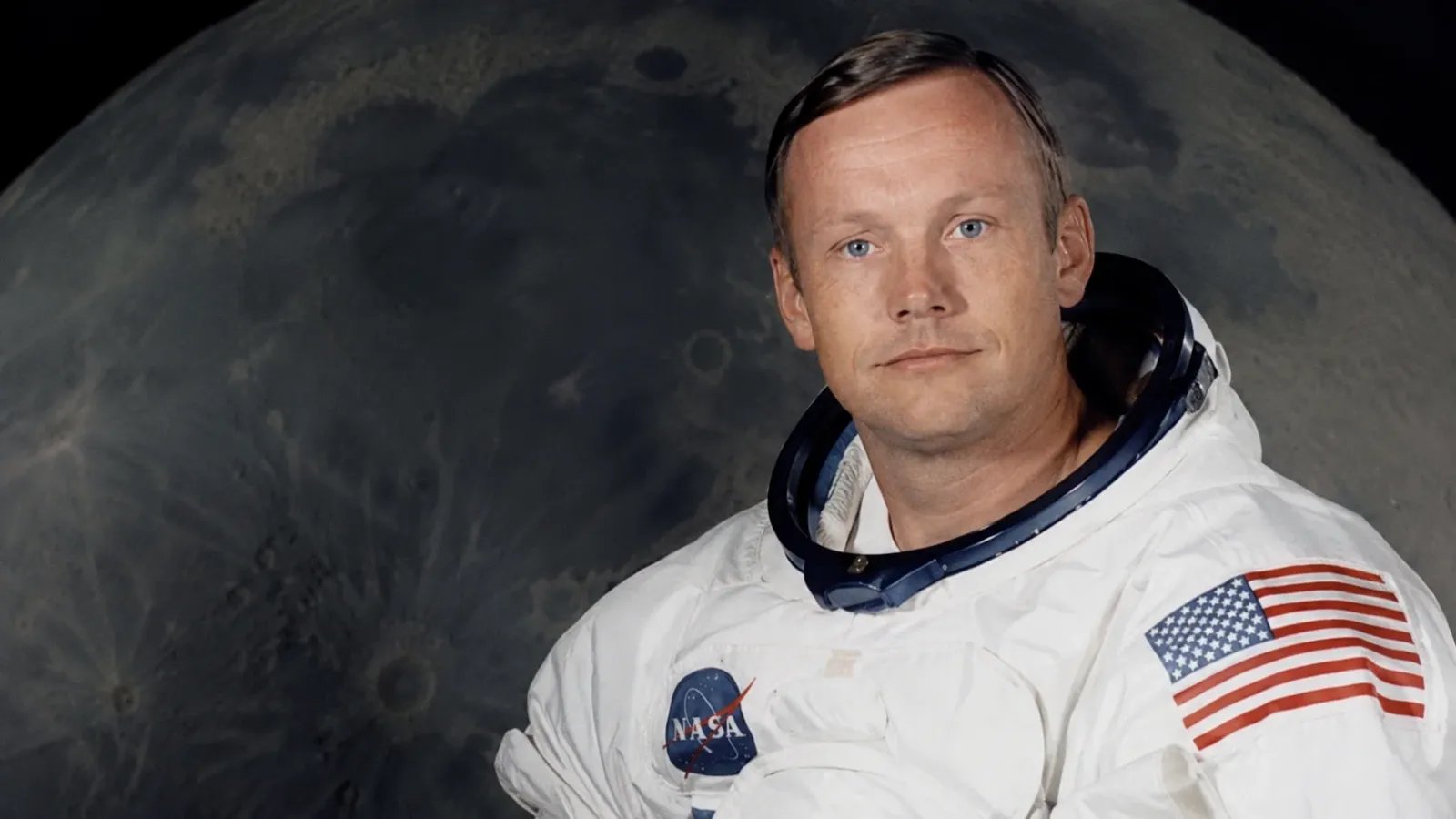
Neil Armstrong wasn't just a stoic flag-planter who lucked into Apollo 11. Contrary to popular myth, he wasn't chosen to walk first because of seniority, but due to his remarkably modest ego. Beneath the famous spacesuit was a brilliant engineer who nearly died in a bizarre lunar training vehicle. Discover the unseen complexities and surprising science behind the first man on the moon.
1. Neil Armstrong earned his pilot's license before he was legally allowed to drive an automobile.
At just 15 years old, Armstrong received his student flight certificate, a testament to his lifelong obsession with aviation. He paid for his flying lessons at a local Ohio airport by working various odd jobs, including stocking shelves at a pharmacy. By the time he turned 16 and was finally eligible for a driver's license, he was already an accomplished aviator who felt more comfortable navigating the skies than the roads.
2. His famous first words on the lunar surface were likely misheard by the entire world due to a dropped radio transmission.
Everyone knows the quote as "That's one small step for man, one giant leap for mankind," but Armstrong insisted for decades that he actually said "one small step for a man." Without the "a," the statement is technically a contradiction, as "man" and "mankind" mean the same thing. Modern audio analysis of the crackly transmission suggests a brief drop in static likely obscured the missing article, proving Armstrong's grammar was flawless all along.
3. NASA did not select Armstrong to be the first man out of the lunar module because he was the commander, but because of how the spacecraft's door opened.
A long-standing myth suggests NASA gave Armstrong the historical privilege based on rank. In reality, the physical constraints of the Lunar Module dictated the timeline. The hatch hinged on the right side and opened inward, pinning Buzz Aldrin into his corner of the tiny cabin. For Aldrin to exit first, he would have had to awkwardly climb over Armstrong wearing a bulky spacesuit, risking severe damage to the fragile module.
4. A year before the Apollo 11 launch, Armstrong narrowly escaped death by ejecting from a crashing lunar lander prototype mere seconds before it exploded.
Training for the moon landing required flying the Lunar Landing Research Vehicle, a famously unstable machine dubbed the "Flying Bedstead." During a simulation in May 1968, propellant leaked, causing the vehicle's flight controls to fail completely. Armstrong ejected at an altitude of just 200 feet, his parachute opening a split second before the vehicle slammed into the ground and erupted in a fireball, yet he calmly returned to his office to do paperwork that same afternoon.
5. He carried pieces of the Wright brothers' historic 1903 airplane with him to the surface of the moon.
Recognizing the profound connection between the first powered flight and the first lunar landing, Armstrong brought a piece of wood from the left propeller and a swatch of fabric from the wing of the original Wright Flyer. Both Armstrong and the Wright brothers hailed from Ohio, making this tribute a deeply personal nod to his home state's rich aviation heritage. These artifacts were later returned to the Smithsonian Institution.
6. Armstrong sued his own barber for secretly collecting his hair clippings and selling them to a prominent memorabilia collector.
In 2005, Armstrong discovered that his longtime barber in Lebanon, Ohio, had swept up his hair and sold it for three thousand dollars. Fiercely protective of his privacy and against the commercialization of his name, Armstrong threatened legal action unless the barber recovered the hair or donated the earnings to a charity of Armstrong's choosing. Because the buyer refused to return the clippings, the barber was forced to donate the money.
7. Before becoming an astronaut, Armstrong was a highly decorated combat pilot who flew 78 missions during the Korean War.
Armstrong's nerves of steel were forged in active combat. Flying a Grumman F9F Panther, he survived a harrowing mission in 1951 where his jet clipped an anti-aircraft cable strung across a valley, slicing off a massive portion of his right wing. He managed to fly the severely crippled aircraft back into friendly territory before safely ejecting, a feat of airmanship that foreshadowed his cool-headed piloting of the Apollo 11 Lunar Module.
8. The bag of moon dust he collected during Apollo 11 was accidentally sold at a government auction for less than a thousand dollars.
Due to a clerical error decades after the mission, the exact decontamination bag Armstrong used to collect the very first lunar samples was misidentified and seized during a criminal investigation into a museum director. The United States Marshals Service auctioned it off in 2015 for 995 dollars. The buyer subsequently sent it to NASA for authentication, sparking a fierce legal battle where the courts ultimately ruled the buyer was the legal owner of the priceless artifact.
9. Armstrong submitted his application for the Apollo astronaut program a week past the deadline but was secretly slipped into the candidate pool.
Despite his exceptional resume as an X-15 test pilot, Armstrong was distracted by a recent family tragedy and missed the June 1962 deadline for NASA's second group of astronauts. Dick Day, a flight simulator expert and former colleague at Edwards Air Force Base, saw the late application arrive. Knowing Armstrong's immense talent, Day quietly slipped the paperwork into the pile of on-time submissions before the selection panel reviewed them.
10. He purposefully landed the Lunar Module with less than thirty seconds of usable fuel remaining to avoid crashing into a boulder field.
The Apollo 11 onboard computer was guiding the spacecraft directly into a hazardous crater surrounded by massive rocks. Taking manual control, Armstrong skimmed over the lunar surface, frantically searching for a safe, flat place to touch down. Mission Control watched the fuel telemetry drop to terrifyingly low levels, preparing to abort, but Armstrong's unparalleled piloting skills allowed him to gently set the module down with just moments to spare.
11. Armstrong took his passion for aerospace engineering so seriously that he returned to teaching at a university shortly after leaving NASA.
Uncomfortable with the global celebrity status that came from the moon landing, Armstrong resigned from NASA in 1971. Instead of pursuing highly lucrative corporate endorsements or political office, he accepted a position as a professor of aerospace engineering at the University of Cincinnati. He spent eight years quietly teaching and grading papers, deeply committed to inspiring the next generation of engineers rather than resting on his historical laurels.
12. A rare and bizarre species of fossilized trilobite was named in honor of Armstrong's lunar achievements.
Paleontologists honoring the Apollo 11 crew named a newly discovered, ancient marine arthropod "Bumastus armstrongi." Scientists frequently pay tribute to cultural icons, but the trilobite carries an added layer of scientific irony. While Armstrong dedicated his life to exploring the vacuum of space above our atmosphere, his namesake fossil represents an organism that lived exclusively on the dark, muddy sea floors of Earth hundreds of millions of years ago.
13. He once served on an expedition to the North Pole alongside the man who first conquered Mount Everest.
In 1985, Armstrong joined an eclectic group of explorers, including Sir Edmund Hillary, on a small twin-engine plane flight to the North Pole. Armstrong famously remarked that he was curious to see what the North Pole looked like from the ground, since he had previously only viewed it from space. The trip was intended to be a quiet vacation, but it united two of the twentieth century's greatest pioneers of human endurance.
14. Armstrong and his crew were forced to fill out a standard United States customs declaration form upon returning from the moon.
Even the ultimate pioneers of space travel were not exempt from federal bureaucracy. When the Apollo 11 recovery ship docked in Honolulu, Hawaii, Armstrong, Aldrin, and Collins had to declare their cargo. The official customs form lists their flight route as starting at Cape Kennedy, stopping at the Moon, and ending in Honolulu. Under the section asking to declare cargo, Armstrong cheekily but accurately reported "Moon rock and moon dust samples."
15. The specialized spacesuit Armstrong wore on the moon was manufactured by the company famous for inventing the Playtex bra.
NASA required a spacesuit that was impenetrable to micrometeoroids and extreme temperatures, yet flexible enough to allow astronauts to walk and work. Traditional aerospace companies struggled with the joints, but the International Latex Corporation, utilizing their expertise in flexible undergarments, won the contract. Armstrong's iconic A7L suit was meticulously hand-sewn by seamstresses using twenty-one layers of nested fabrics, combining high-tech engineering with everyday garment construction.
Sources & References
This AI-assisted post was rigorously curated and fact-checked for accuracy by:
 Martin Roháček
How fun was this article? 🤔
Tap a star to rate it
🧠 Quiz: How closely were you paying attention?
10 questions — all answers are in the article above!
Enjoyed these facts? There's more! 💌
Fresh fun facts in your inbox. No spam, ever.