The Cold Hard Truth: 15 Fascinating Facts About the NHL
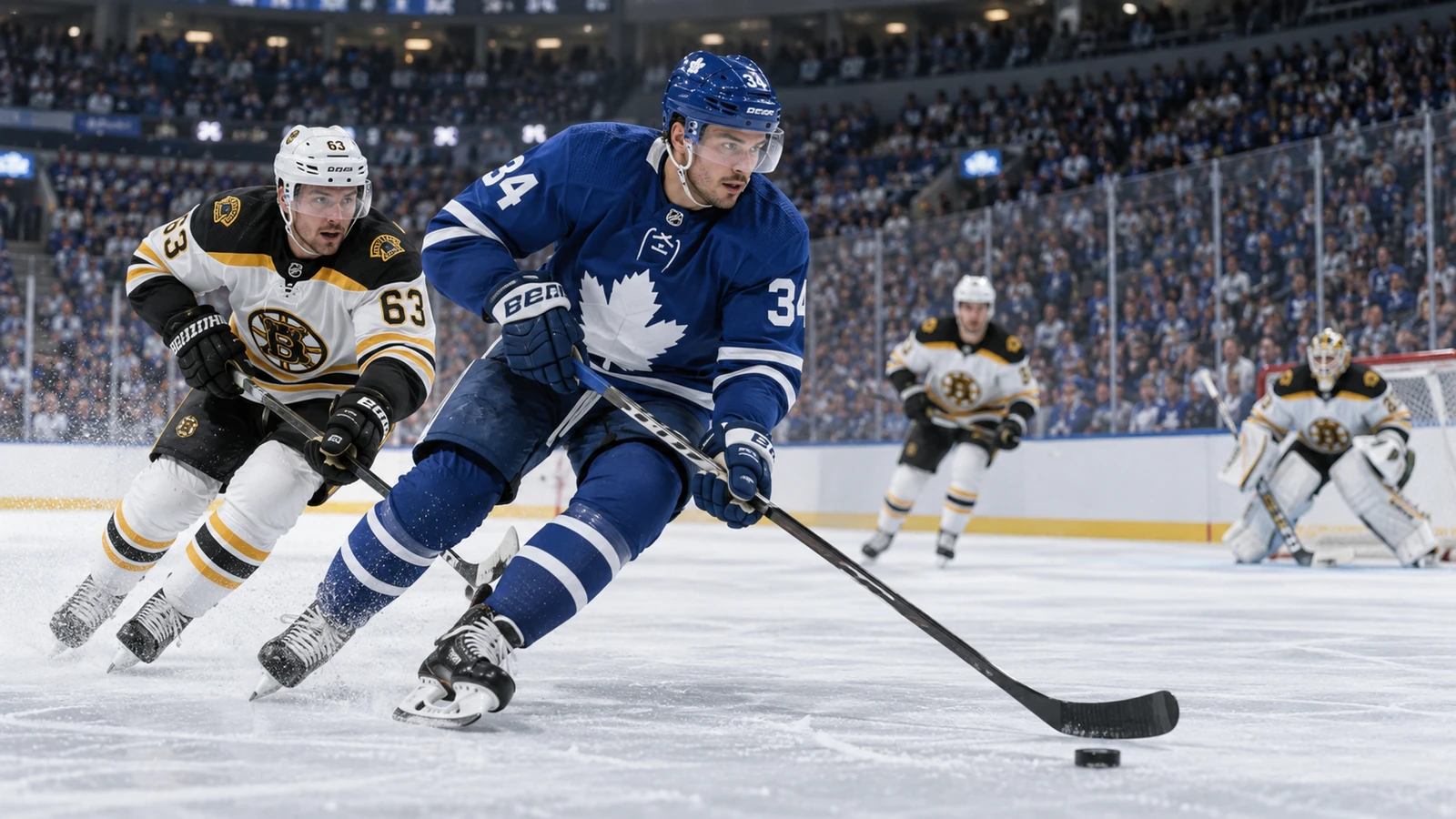
From frozen rubber pucks and phantom draft picks to historic gender barriers, the National Hockey League is steeped in high-octane drama and unbelievable lore. Beyond the bone-crushing hits and lightning-fast goals lies a rich history of bizarre traditions, engineering feats, and statistical anomalies. Whether it is an emergency goalie stepping off a Zamboni to win a game or permanent typos engraved on championship silver, professional hockey never fails to surprise. Dive into these 15 extraordinary facts that reveal the wild, fascinating world behind the fastest game on ice.
1. Pucks Are Frozen Before Every Game to Reduce Bouncing
Before every single NHL game, official game pucks are kept in a freezer to maintain a temperature between 14 and 20 degrees Fahrenheit. Vulcanized rubber tends to bounce when exposed to room temperature or warm environments, which would make puck handling unpredictable on the smooth sheet of ice. Freezing the puck hardens the rubber, ensuring it glides smoothly across the ice surface rather than hopping like a rubber ball. During a typical game, officials go through dozens of frozen pucks because the rubber gradually warms up under friction and ambient arena heat. Linesmen swap out pucks roughly every two to three minutes of active gameplay to maintain maximum predictability. This strict routine guarantees that players can execute crisp passes and control shots at speeds topping 100 miles per hour.
2. The Sabres Drafted a Non-Existent Player as a Prank
During the 1974 NHL Entry Draft, Buffalo Sabres general manager Punch Imlach grew frustrated with the league's tedious, secretive drafting process conducted over the telephone. To mock the endless draft rounds, Imlach created a fictitious Japanese player named Taro Tsujimoto from the imaginary Tokyo Katanas of the Japan Ice Hockey League. The NHL official scoring book recorded the 18th-round pick, and news outlets printed the draft results without realizing the deception. It was not until training camp approached that Imlach finally confessed to league officials that Tsujimoto was entirely made up. NHL President Clarence Campbell was unimpressed and officially rendered the selection invalid, though Sabres fans embraced the legendary hoax. Today, Taro Tsujimoto remains an iconic piece of hockey trivia and still receives occasional fan shout-outs in Buffalo.
3. Wayne Gretzky Would Still Be the Scoring Leader Without Ever Scoring a Goal
Wayne Gretzky earned the nickname "The Great One" by shattering virtually every offensive record in professional hockey history. His dominance was so overwhelming that if you removed every single one of his 894 career goals, he would still hold the record for the most total points in NHL history. Over his 20-season career, Gretzky accumulated an astounding 1,963 assists, which alone surpasses the combined goals and assists of second-place all-time scorer Jaromír Jágr. Gretzky is also the only player in NHL history to record over 200 points in a single season, a feat he accomplished four separate times. His extraordinary vision on the ice allowed him to setup teammates from behind the opponent's net, an area fans dubbed "Gretzky’s Office." No other athlete in major North American sports holds such a commanding statistical lead over their peers.
4. The Mighty Ducks of Anaheim Were Founded Directly by Disney
In 1993, The Walt Disney Company paid $50 million to establish an NHL expansion franchise in Anaheim, California. The company launched the real-life team directly to capitalize on the massive pop-culture success of its 1992 hit film, The Mighty Ducks. The professional team wore the exact same eggplant-and-teal jerseys featured in the movie and adopted the duck-shaped goalie mask logo. Disney retained ownership of the team for over a decade, using home games at the Honda Center to promote Disney characters and family entertainment. In 2005, the team was sold to new ownership, who shortened the name to the Anaheim Ducks and updated the logo and colors. Despite the rebranding, the team's cinematic origin remains one of the most unique founding stories in professional sports.
5. Detroit Red Wings Fans Have Thrown Octopuses on the Ice Since 1952
One of hockey's most bizarre traditions takes place in Detroit, where fans throw dead octopuses onto the ice surface during playoff games. The custom began during the 1952 Stanley Cup playoffs, when brothers Pete and Jerry Cusimano tossed an eight-legged creature onto the rink. At the time, an NHL team needed eight playoff victories to capture the Stanley Cup, making each tentacle symbolic of a required win. The Red Wings swept both series that year to win the championship, cementing the octopus as a permanent good luck charm. Arena Zamboni driver and building manager Al Sobotka became famous for scooping up the creatures and swinging them around his head to energize the crowd. Although the league established strict fines for throwing objects onto the ice, the tradition continues to thrive during crucial postseason runs.
6. The Stanley Cup Is Filled With Permanent Spelling Errors
The Stanley Cup is unique among major sports trophies because the names of winning players, coaches, and staff are hand-engraved directly onto its silver rings. Because human engravers hammer each letter into the metal individually, several noticeable typos have become a permanent part of hockey history. In 1972, the Boston Bruins were accidentally misspelled as "BQSTQN BRUINS," using a letter "Q" instead of an "O." Similarly, the 1981 Toronto Maple Leafs were etched onto the trophy as the "TORONTO MAPLE LEAES." Rather than scrapping the silver bands to correct these blunders, the NHL chooses to leave the misspelled names intact to preserve the authentic craftsmanship of the trophy. These quirky mistakes make the Stanley Cup one of the most distinctive and storied trophies in international athletics.
7. A 42-Year-Old Zamboni Driver Won an Official NHL Game
Under NHL regulations, if both active goaltenders on a roster are injured during a game, a designated emergency backup goalie (EBUG) can enter the game for either team. On February 22, 2020, 42-year-old Zamboni driver David Ayres was forced into action for the Carolina Hurricanes against the Toronto Maple Leafs after both Carolina goalies suffered injuries. Ayres had never played a single minute in the NHL and was wearing equipment borrowed from the home team's practice gear. Despite allowing two quick goals, he settled down to make eight saves in the third period and secured a thrilling 6-3 victory for Carolina. In doing so, Ayres became the oldest goaltender in NHL history to win his regular-season debut. His fairytale performance captured international media attention and resulted in his stick being enshrined in the Hockey Hall of Fame.
8. Jacques Plante Revolutionized Hockey by Refusing to Play Without a Mask
Before 1959, NHL goaltenders played without any face protection, routinely suffering severe lacerations, broken bones, and knocked-out teeth. Montreal Canadiens netminder Jacques Plante changed the sport forever after taking a hard shot to the face from Andy Bathgate on November 1, 1959. After receiving seven stitches to close a massive facial gash, Plante refused to return to the ice unless coach Toe Blake allowed him to wear his custom fiberglass practice mask. Blake initially detested the mask, fearing it would obstruct the goalie's peripheral vision, but Plante held his ground and led the Canadiens to an 18-game unbeaten streak. Seeing Plante's immense success and safety, goaltenders across the league quickly embraced face protection. Today, goalie masks are mandatory equipment and serve as iconic canvases for personalized artistic designs.
9. The "Original Six" Teams Were Not Actually the First Franchises in the League
The term "Original Six" is slightly misleading, as it does not refer to the founding members when the NHL was created in 1917. Instead, the moniker describes the six teams that survived severe economic hardships during the Great Depression and World War II. From 1942 until the 1967 expansion, the Boston Bruins, Chicago Black Hawks, Detroit Red Wings, Montreal Canadiens, New York Rangers, and Toronto Maple Leafs were the only teams in the league. Prior to 1942, numerous other franchises flourished and failed, including the Montreal Maroons, Hamilton Tigers, and Pittsburgh Pirates. The 25-year era of the Original Six established intense rivalries and classic traditions that still define modern hockey culture. While they were not the first teams, their stability saved professional hockey during a highly precarious quarter-century.
10. The Winnipeg Jets Once Traded a Future Star for Just One Dollar
In 1993, the Winnipeg Jets struck a deal with the Detroit Red Wings to trade forward Kris Draper for the absurdly low sum of one US dollar. The trade was essentially a cheap administrative transaction to clear roster space for Winnipeg, but it turned into one of the most lopsided deals in sports history. Draper went on to become a core member of Detroit's legendary "Grind Line," playing 17 seasons for the Red Wings as a top defensive forward. During his tenure in Detroit, he won four Stanley Cups and earned the Frank J. Selke Trophy in 2004 as the league's top defensive forward. Red Wings owner Mike Ilitch famously handed over a physical one-dollar bill to complete the transaction, which Draper later joked was the best dollar Detroit ever spent.
11. Rink Ice Is Painted Solid White Before Game Lines Are Added
Many fans assume that the bright white surface of an NHL arena is simply frozen water resting over concrete. In reality, natural frozen ice is completely clear, which would reveal the dull gray concrete floor and cooling pipes beneath the rink surface. To create the vivid playing area, maintenance crews build up a thin layer of ice and then spray thousands of gallons of white water-soluble paint across the entire surface. Once the white base layer freezes solid, workers painstakingly hand-paint the red lines, blue lines, face-off circles, and team logos directly onto the ice. Additional layers of clear water are sprayed over the painted graphics to seal them under several inches of durable, frozen ice. This precise paint job allows players, officials, and television cameras to track the small black rubber puck effortlessly.
12. Manon Rhéaume Made History as the First Woman to Play in an NHL Game
In September 1992, Canadian goaltender Manon Rhéaume shattered gender barriers in professional sports when she suited up for the Tampa Bay Lightning. General manager Phil Esposito signed the talented netminder, inviting her to compete in an NHL preseason game against the St. Louis Blues. Rhéaume played the entire first period, stopping seven out of nine shots against elite male professional athletes. Her historic appearance marked the first time a woman had ever played in any of the four major North American professional sports leagues. She appeared in another preseason game for the Lightning in 1993 and played several seasons in the minor leagues. Rhéaume’s groundbreaking moment proved that women could compete at the highest level of professional hockey and inspired generations of female athletes worldwide.
13. NHL Players Receive Zero Salary During the Stanley Cup Playoffs
Despite playing some of the most intense and grueling physical hockey of their lives, NHL players do not earn regular paychecks during the postseason. A player's contractual salary is divided exclusively among the 82 regular-season games, meaning their base pay officially stops when the regular season ends. Instead of salary, playoff participants compete for money drawn from an NHL playoff bonus pool funded by league revenues. This bonus fund is distributed to teams based on how far they advance in each playoff round, with players sharing equal portions of their team's earnings. However, the financial bonus per player is relatively modest compared to their multimillion-dollar annual contracts. Ultimately, NHL athletes endure two months of bruising playoff action driven almost entirely by the quest to win the Stanley Cup.
14. High Humidity Created a Ghostly Fog on the Ice During the 1975 Finals
Game 3 of the 1975 Stanley Cup Finals between the Buffalo Sabres and the Philadelphia Flyers went down in hockey lore as the infamous "Fog Game." Because the arena in Buffalo lacked air conditioning, an unseasonal heatwave pushed indoor temperatures over 90 degrees Fahrenheit. The intense heat mixed with the cold ice surface created a thick, dense wall of fog that hovered several feet above the rink. Players and goaltenders lost sight of the puck entirely, forcing referees to pause the game repeatedly so arena workers could skate around waving bedsheets and towels to dissipate the mist. To add to the surreal atmosphere, a live bat flew into the arena and swooped down over the ice until Sabres forward Jim Lorentz swatted it down with his stick. Buffalo eventually won the bizarre, fog-drenched overtime thriller 5-4.
15. Dr. Randy Gregg Won Five Stanley Cups While Practicing Medicine
While professional hockey demands full-time athletic dedication, a few rare players managed to excel in both medicine and elite sports. Defenseman Dr. Randy Gregg deferred his medical residency to represent Canada in the 1980 Winter Olympics before signing with the Edmonton Oilers. Throughout the 1980s, Gregg served as a reliable blueliner, helping the legendary Edmonton Oilers dynasty capture five Stanley Cup championships between 1984 and 1990. Balancing intense NHL schedules with medical training, Gregg earned his Doctor of Medicine degree and actively practiced medicine during offseasons. After retiring from professional hockey, Dr. Gregg established a highly successful practice in sports medicine and orthopedic rehabilitation in Alberta. His remarkable dual career remains one of the most impressive intellectual and athletic achievements in professional sports history.
Sources & References
This AI-assisted post was rigorously curated and fact-checked for accuracy by:
 Martin Roháček
How fun was this article? 🤔
Tap a star to rate it
🧠 Quiz: How closely were you paying attention?
10 questions — all answers are in the article above!
Enjoyed these facts? There's more! 💌
Fresh fun facts in your inbox. No spam, ever.