The Untamed Wilderness: 15 Fascinating Facts About Patagonia
Spanning over one million square kilometers across the southern tip of South America, Patagonia is a land of sheer geological drama and legendary natural history. Shared between Argentina and Chile, this vast region encompasses towering granite peaks, advancing glaciers, ancient petrified forests, and wind-swept steppes. From prehistoric giant handprints to fossilized titanosaur skeletons, Patagonia has long captured the imagination of explorers and scientists alike. Dive into these fifteen incredible facts to discover why Patagonia remains one of the wildest and most captivating places on Earth.
1. The Myth of the Patagonian Giants Fueled European Imagination for Centuries
When Ferdinand Magellan explored the southern coastline of South America in 1520, his crew encountered the indigenous Tehuelche people. Impressed by their tall stature and thick guanaco-skin footwear, Magellan dubbed them 'Patagones,' likely referencing a giant character from a popular contemporary chivalric romance novel named Primaleon. Antonio Pigafetta, the expedition's chronicler, recorded exaggerated claims that the locals were so tall the Spaniards only reached their waists. This myth persisted in European maps and travel accounts for over two hundred years, portraying Patagonia as a realm inhabited by mythical giants. In reality, while the Tehuelche were noticeably taller than average sixteenth-century Europeans, their true height was simply well above European norms of the era.
2. Patagonia Spans Over One Million Square Kilometers Across Two Ocean Coasts
Covering roughly 1.04 million square kilometers, Patagonia encompasses the southernmost region of South America, divided between Argentina and Chile. This vast territory is larger than 80 percent of the world's sovereign nations, stretching across dramatic ecological zones. To the west, Chilean Patagonia features a maze of wild Pacific ocean fjords, temperate rainforests, and intricate archipelagos carved by ancient glacial activity. To the east, Argentine Patagonia stretches into an immense, semi-arid Atlantic steppe that terminates in dramatic coastal cliffs rich in marine wildlife. This dual-ocean geography creates one of the most starkly contrasted landscapes on the planet within a single region.
3. Cueva de las Manos Preserves 13,000-Year-Old Rock Art
Tucked inside an isolated canyon along the Pinturas River in Santa Cruz, Argentina, sits Cueva de las Manos, or the Cave of Hands. Recognized as a UNESCO World Heritage Site, this extraordinary cave features hundreds of stenciled human handprints created between 13,000 and 9,000 years ago. Prehistoric hunter-gatherers, ancestors of the Tehuelche, created these vivid images by blowing mineral pigments through bone tubes over their left hands. Beyond handprints, the cave walls depict hunting scenes involving guanacos, geometric patterns, and representations of local wildlife. The mineral-based pigments, including iron oxides and kaolin, have remarkably survived millennia of exposure due to the region's dry climate.
4. Perito Moreno Glacier Is One of the Few Glaciers Still Advancing
Located within Argentina's Los Glaciares National Park, the Perito Moreno Glacier is a massive dynamic ice formation spanning 250 square kilometers. Unlike the vast majority of glaciers worldwide that are rapidly retreating due to global climate change, Perito Moreno remains in a stable state of equilibrium, periodically advancing across Lake Argentino. As it pushes forward, the ice creates a natural dam that divides the lake into two sections, causing water levels on one side to rise dramatically. Eventually, the immense water pressure ruptures the ice bridge in a spectacular natural phenomenon watched by scientists and travelers alike. This fresh water reserve forms part of the world's third-largest expanse of continental ice.
5. Ushuaia Holds the Title of the World’s Southernmost City
Perched on the southern coast of Tierra del Fuego in Argentina, Ushuaia is widely celebrated as the southernmost city on Earth. Nestled between the Martial mountain range and the icy waters of the Beagle Channel, the town sits at roughly 54 degrees south latitude. Originally inhabited by the Yaghan indigenous people and later established as an Argentine penal colony in the early twentieth century, Ushuaia has transformed into a bustling hub for Antarctic expeditions. Visitors to Ushuaia can board icebreakers bound for Antarctica, hike through subantarctic forests, or visit the historic end-of-the-world train line. Its extreme southern location means that summer days enjoy up to nineteen hours of daylight, while winter days are short and cold.
6. The Southern Patagonian Ice Field Is the Third-Largest Fresh Water Reserve
Spanning the high Andes between Chile and Argentina, the Southern Patagonian Ice Field is the world's third-largest continental ice mass, surpassed only by Antarctica and Greenland. Covering approximately 12,300 square kilometers, this colossal frozen wilderness feeds dozens of major glaciers, including Upsala, Viedma, and Grey Glacier. Because of its remote terrain and fierce weather conditions, large portions of the ice field remain rarely explored by foot. Scientists monitor the ice field closely using satellite imagery to track how global thermal shifts impact continental ice reserves and global sea levels. Navigating this vast frozen expanse requires specialized polar equipment and exceptional mountaineering skill.
7. Ferocious Winds of the Roaring Forties Shape the Landscape
Patagonia is notorious for experiencing some of the most relentless winds on Earth, driven by unchecked air currents moving across the southern oceans. Lying directly in the path of the westerly winds known as the 'Roaring Forties' and 'Furious Fifties,' the region regularly sees gale-force winds exceeding 100 kilometers per hour. These persistent squalls sweep over the Andes, sculpting the surrounding trees into permanently bent forms known locally as 'flag trees.' The powerful winds also drive rapid weather changes, where sun, rain, sleet, and snow can occur within a single hour. Mountain climbers and hikers in Patagonia must plan their routes meticulously to endure these punishing atmospheric conditions.
8. The Steppe Is Dominated by Wild Guanacos and Soaring Condors
The expansive, wind-swept steppes of Patagonia provide a vital habitat for iconic South American wildlife adapted to cold, dry climates. The most prominent herbivore is the guanaco, a wild ancestor of the domesticated llama that roams the plains in large social herds. Grazing on tough steppe grasses, guanacos serve as the primary prey for Patagonia's top predator, the puma. Soaring high above these grassland plains is the Andean condor, one of the world's largest flying birds, boasting a wingspan of up to 3.3 meters. These magnificent scavengers rely on powerful thermal updrafts generated by Patagonian winds to glide effortlessly across vast mountain distances.
9. The Endangered Huemul Deer Symbolizes Regional Biodiversity
Deep within the mountain forests and steep rocky slopes of Patagonia lives the huemul, a critically endangered species of South American deer. Also known as the South Andean deer, this stocky, sure-footed mammal is uniquely adapted to mountainous terrain and dense subantarctic beech forests. Because of historical hunting, habitat loss, and competition from introduced livestock, fewer than 1,500 huemuls remain in the wild today. The species holds deep cultural and ecological significance, featuring prominently alongside the Andean condor on Chile's official coat of arms. Conservation programs across both Argentina and Chile are now working vigorously to establish protected corridors for their survival.
10. Ancient Petrified Forests Reveal a Prehistoric Tropical Past
Long before Patagonia became a cold, wind-swept wilderness, the region enjoyed a humid, lush tropical climate during the Jurassic period. Millions of years ago, massive volcanic eruptions buried dense coniferous forests under thick layers of volcanic ash before the Andes mountains rose to block moisture from the Pacific. Mineral-rich groundwater gradually replaced the organic wood fibers with silica, preserving entire ancient tree trunks down to their cellular structure. Today, sites like the Monumento Natural Bosques Petrificados in Santa Cruz showcase petrified trees measuring over 30 meters long and 3 meters in diameter. These stone trunks offer geologists an incredible window into South America's flora from over 150 million years ago.
11. Torres del Paine Features World-Famous Granite Spires and Wildlife
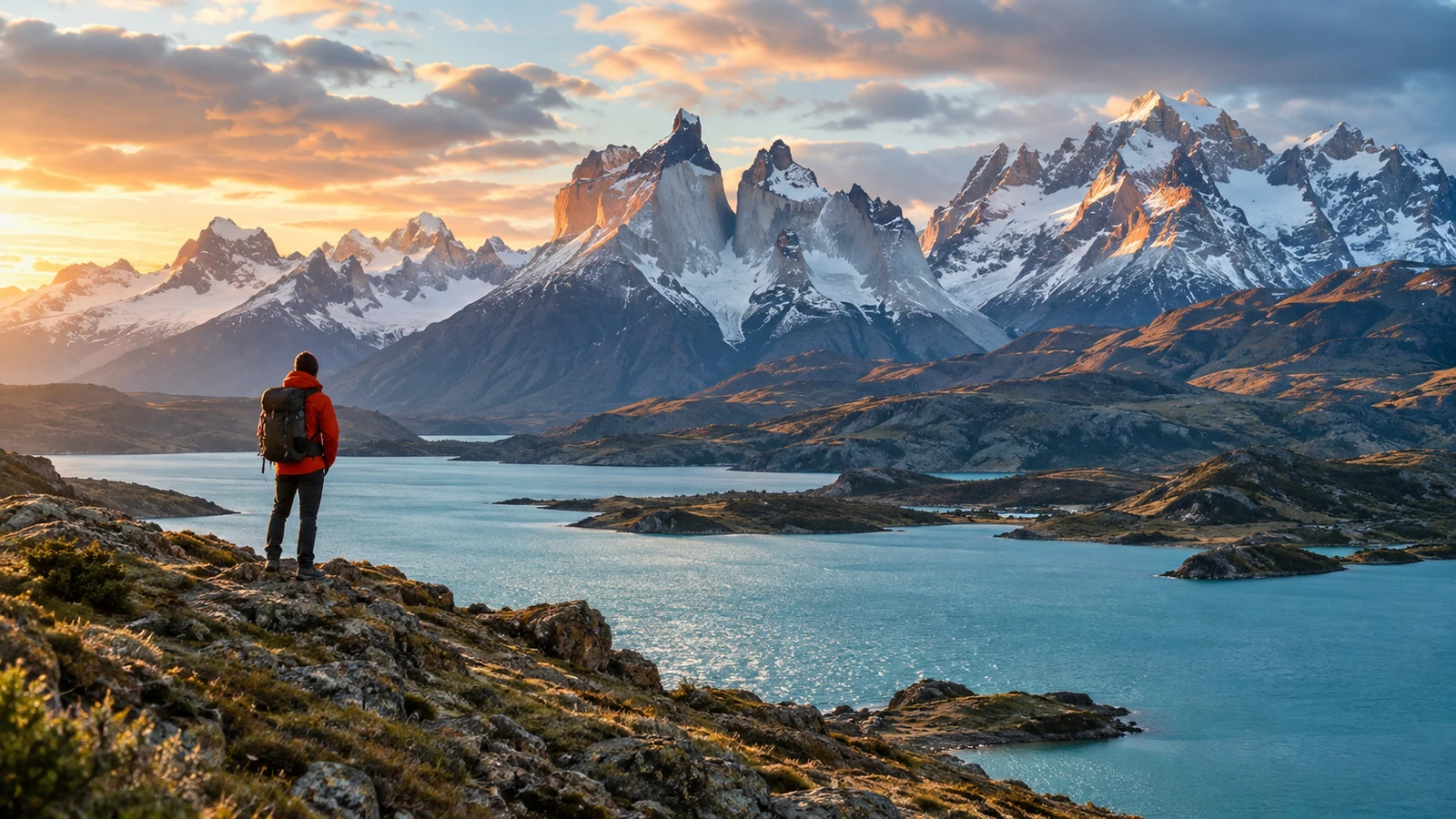
Encompassing over 227,000 hectares in southern Chile, Torres del Paine National Park is renowned for its soaring granite peaks that dominate the horizon. The park takes its name from the 'Torres,' three vertical granite towers carved by ancient glaciers that rise dramatically over 2,500 meters above the Patagonian steppe. Alongside these imposing rock formations lie turquoise glacial lakes, roaring rivers, and sweeping ice fields. The park protects a thriving ecosystem, hosting one of the highest concentrations of pumas in the Americas, along with foxes, flamingos, and guanacos. It attracts hundreds of thousands of trek enthusiasts annually who navigate famous multi-day routes like the 'W Trek' and 'O Circuit.'
12. Traditional Gaucho Culture Remains Alive on Extensive Estancias
Across the vast grassy plains of Patagonia, the figure of the gaucho remains an enduring symbol of South American rural heritage. These skilled horsemen and cattle herders have worked the region's immense sheep and cattle ranches, known as estancias, since the nineteenth century. Wearing traditional berets, boots, and ponchos, gauchos possess unrivaled knowledge of horse breeding, navigation, and livestock management in harsh terrain. Their daily routine often involves gathering around open fires to share yerba mate tea and host traditional asados, or slow-roasted lamb barbacoas. Today, many historic estancias welcome travelers, allowing visitors to experience authentic Patagonian ranch culture firsthand.
13. Welsh Immigrants Created a Unique Cultural Enclave in Patagonia
In 1865, a group of 153 Welsh immigrants aboard the ship Mimosa landed in Chubut, Argentina, seeking to create a settlement where their language and culture could flourish without British interference. They established a region known as Y Wladfa (The Colony), building irrigation systems along the Chubut River valley to turn dry desert into fertile farmland. Against all odds, the settlers formed peaceful relationships with the native Tehuelche people, who taught them how to hunt guanacos and survive in the harsh steppe. Today, towns like Gaiman and Trelew preserve Welsh heritage through traditional teahouses, bilingual Welsh-Spanish schools, and annual Eisteddfod cultural festivals. Visitors to these Patagonian towns can still enjoy authentic Welsh cakes served alongside traditional Argentine mate tea.
14. Patagonia Offers Views of the Elusive Aurora Australis
While northern lights attract international attention, southern Patagonia offers a rare venue for witnessing the Aurora Australis, or Southern Lights. During periods of heightened solar activity, energetic charged particles colliding with Earth's atmosphere create breathtaking displays of green, pink, and violet light dancing across the night sky. Because of Patagonia's high southern latitude and extremely low levels of light pollution in remote areas like Tierra del Fuego, dark sky conditions are exceptional. The ideal viewing windows occur during the dark winter months between May and September, when crisp polar air clarifies the night canopy. Observing this atmospheric light show above jagged snow-capped peaks provides an unforgettable celestial experience.
15. Patagonia Is Home to Some of the Largest Dinosaurs Ever Discovered
Paleontologists consider Argentine Patagonia one of the richest fossil beds on Earth, responsible for unearthing several of history's largest terrestrial creatures. In 2012, researchers in Chubut Province uncovered the remains of Patagotitan mayorum, a titanosaur species that lived roughly 100 million years ago during the Cretaceous period. Measuring an estimated 37 meters in length and weighing over 70 tons, this giant herbivore was as heavy as ten adult elephants combined. Other colossal discoveries in the region include Argentinosaurus and the terrifying predator Giganotosaurus, which was larger than Tyrannosaurus rex. These immense fossil finds demonstrate that prehistoric Patagonia provided an ideal environment for nourishing maximum biological scale.
Sources & References
This AI-assisted post was rigorously curated and fact-checked for accuracy by:
 Martin Roháček
How fun was this article? 🤔
Tap a star to rate it
🧠 Quiz: How closely were you paying attention?
10 questions — all answers are in the article above!
Enjoyed these facts? There's more! 💌
Fresh fun facts in your inbox. No spam, ever.