The Relentless Master: 15 Fascinating Facts About Pete Sampras
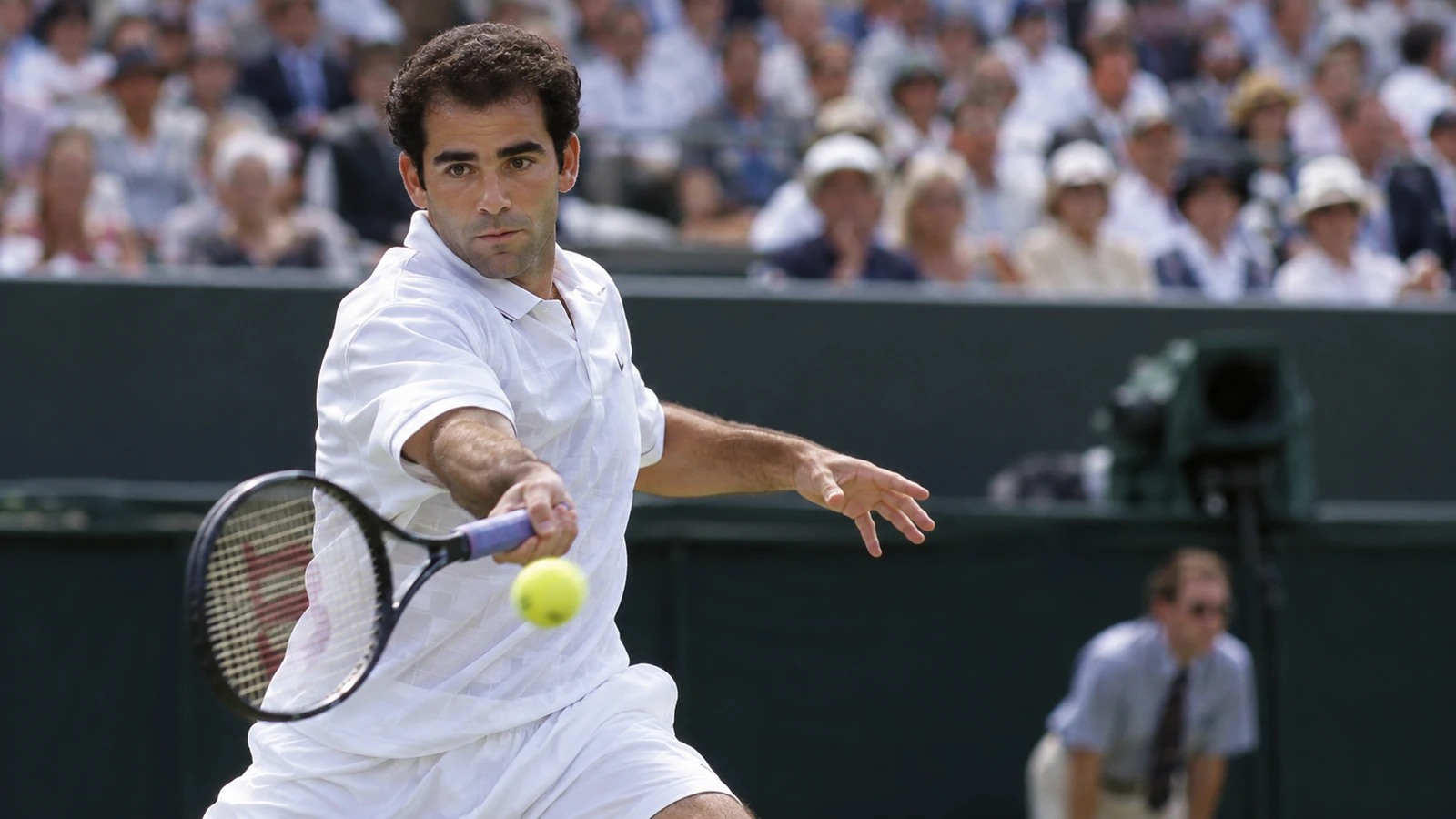
Pete Sampras dominated men's professional tennis throughout the 1990s with an unstoppable serve-and-volley game, winning 14 Grand Slam singles titles and holding the year-end world number one ranking for six consecutive years. Behind his stoic exterior was a fiercely competitive champion who overcome a chronic genetic blood condition, grueling physical battles, and heartbreaking personal moments on court. From custom equipment strung like wooden boards to a storybook retirement after beating his archrival, discover 15 incredible facts about the legendary American champion.
1. He Managed a Hidden Genetic Blood Condition Throughout His Career
Pete Sampras was diagnosed early in life with Thalassemia Minor, a hereditary blood disorder that limits the body's ability to produce hemoglobin and carry oxygen efficiently. This condition left him prone to severe physical exhaustion and muscle fatigue, particularly during prolonged matches in hot or humid weather. Mindful of his competitive image, Sampras kept his diagnosis confidential for most of his professional career to prevent opponents from exploiting his physical limitations. The internal struggle added an extra layer of difficulty to his physically demanding serve-and-volley style of play.
2. He Vomited on Court Before Winning an Epic US Open Match
During the quarterfinals of the 1996 US Open, Sampras faced Spain's Alex Corretja in a brutal five-set battle that lasted over four hours. Exhausted, dehydrated, and suffering from stomach cramps in the intense heat, Sampras visibly vomited near the baseline late in the fifth-set tiebreaker. Rather than defaulting, he stepped back up to the mark, served a clutch ace to save a match point, and ultimately secured the victory. The heroic effort remains one of the most famous demonstrations of sheer grit and willpower in Grand Slam history.
3. His Extreme Sleep Habits Earned Him an Unfair Reputation
To manage the chronic fatigue associated with his genetic blood condition, Sampras built his entire routine around rigorous physical rest. He routinely slept up to twelve hours a night and took afternoon naps to ensure his body could recover between demanding training sessions and matches. Because he prioritized sleep and recovery over public appearances, media commentators and fellow players frequently criticized him as dull or uncharismatic. However, this disciplined lifestyle was a deliberate survival mechanism that enabled him to stay at the summit of world tennis for over a decade.
4. A Petty Valet Tipping Dispute Sparked a Feud with Andre Agassi
In his explosive 2009 autobiography Open, rival Andre Agassi accused Sampras of being astonishingly tight-fisted with his money, pointing to an incident where Sampras allegedly tipped a valet driver just one dollar. The story made headlines worldwide and reignited a fiery dynamic between the two champions long after both had retired from the tour. The tension erupted publicly during a 2010 charity exhibition match in Indian Wells, where the two traded uncomfortable barbs on live television before a cringing crowd. While Sampras later downplayed the rift, the incident highlighted the intense personal contrast between tennis's two biggest 1990s stars.
5. He Met His Wife After Seeing Her in a Movie
Sampras found his future wife in an unconventional way—by spotting her while watching a movie at a cinema in 1999. While viewing the dark comedy Love Stinks, he was immediately smitten by actress Bridgette Wilson, a former Miss Teen USA who starred in the film. He casually mentioned to a friend that he would love to go on a date with her, prompting his friend to connect with Wilson's talent agent. The blind date was arranged, the couple hit it off immediately, and they were married just nine months later in September 2000.
6. His Childhood Coach Was Actually a Pediatrician
The man responsible for shaping Sampras's world-class game was not a former tour professional, but rather a pediatrician named Dr. Peter Fischer. Fischer had never coached high-level professional tennis, yet he possessed a deep, analytical passion for the sport's classical biomechanics. He mentored Sampras throughout his formative junior years, studying historical footage of legends like Rod Laver to mold Sampras's technique. Their partnership proved that masterclass coaching can come from unexpected backgrounds outside the traditional tennis establishment.
7. He Sacrificed His Junior Ranking to Switch to a One-Handed Backhand
Up until the age of fourteen, Sampras was a top-ranked American junior player who utilized a solid two-handed backhand. Coach Peter Fischer made the radical decision to dismantle his pupil's game, insisting that no player with a two-handed backhand would ever win the gentlemen's singles title at Wimbledon. Sampras trusted his coach and adopted a classical one-handed backhand, which caused an immediate collapse in his tournament results and national ranking. The temporary sacrifice paid off immensely in the long run, as his fluid single-hander became key to winning seven Wimbledon crowns.
8. He Played with an Unusually Heavy Custom Racquet
While modern players favor light, forgiving frames engineered for topspin, Sampras spent his entire professional career swinging a monster of a racquet. He played exclusively with the Wilson Pro Staff Original 85, a midsize frame that he customized heavily with lead tape applied to the sides. This added substantial mass, bringing the total weight to nearly 400 grams (14 ounces), making it vastly heavier than almost any racquet on the tour. While swinging such a heavy stick required extraordinary forearm strength, it provided unmatched mass behind the ball on his devastating serve.
9. He Strung His Racquets at Absurdly High Tensions
In addition to playing with an unusually heavy frame, Sampras insisted on stringing his racquets at extraordinarily high tensions. He utilized natural gut strings pulled to approximately 75 pounds (34 kilograms) of tension, far higher than the tour average. This setup made the string bed feel as stiff as a wooden board, eliminating any spring-like trampolining effect from the frame. Consequently, the racket offered virtually zero margin for error, but provided Sampras with laser-like directional control over his serve and volleys.
10. Burglars Stole Most of His Trophies from a Storage Facility
In December 2010, Sampras suffered a devastating personal loss when burglars raided a public storage facility in West Los Angeles where he was temporarily keeping his career memorabilia. The thieves made off with dozens of irreplaceable items, including his first Australian Open trophy, Olympic rings, and dozens of ATP tournament awards. Fortunately, Sampras kept his 14 Grand Slam replica trophies at his primary residence, so those remained safe from the heist. Despite public appeals and law enforcement investigations, the vast majority of the stolen historical items were never recovered.
11. The French Open Remained the Single Missing Piece of His Career
Despite his overwhelming dominance on fast grass and hard courts, Sampras was never able to conquer the slow red clay of Roland Garros. The high-bouncing clay neutralised his explosive serve and made his serve-and-volley tactics far less effective against baseline specialists. His best performance in Paris came in 1996, when he clawed his way into the semifinals before losing in straight sets to eventual champion Yevgeny Kafelnikov. As a result, the French Open remained the single missing piece preventing him from achieving a career Grand Slam.
12. He Wept Openly on Court During the 1995 Australian Open
One of the most emotional moments in tennis history occurred during the quarterfinal of the 1995 Australian Open between Sampras and Jim Courier. Just days earlier, Sampras's beloved coach and mentor, Tim Gullikson, had suffered a stroke during a practice session and was flown home to receive treatment for brain tumors. Overcome with grief during the fifth set, Sampras burst into tears on court and had to pause before serving. Seeing his opponent weeping, Courier offered to delay the match until the next day, but Sampras soldiered on and pulled off a dramatic victory.
13. He Retired Immediately After Winning the 2002 US Open
While most sporting icons gradually fade away through late-career slumps, Sampras produced a storybook ending to his professional career. Heading into the 2002 US Open without a tournament title in over two years, he was seeded 17th and written off by many sports journalists. He defied expectations by making a sensational run to the final, where he defeated his ultimate rival, Andre Agassi, in four thrilling sets. After holding the trophy high, Sampras never played another competitive match, officially announcing his retirement a year later at the exact same venue.
14. His Signature "Slam Dunk" Smash Was Inspired by Basketball
Sampras brought extraordinary athleticism to the court, highlighted by an impressive vertical leap that rivalled professional basketball players. He integrated this athletic leap into his game by creating his signature overhead smash, popularly known as the "Slam Dunk" smash. Whenever an opponent attempted to lob him, Sampras would leap high into the air with both feet off the ground and hammer the ball past them. The explosive move drew loud cheers from crowds worldwide and remains one of the most recognizable signature shots in modern sports.
15. He Held the All-Time Men's Grand Slam Title Record for Seven Years
When Sampras retired in 2002 with 14 Grand Slam men's singles titles, the sports world believed his record would stand unbreakable for decades. He held the all-time men's singles major record for seven years, standing alone at the pinnacle of the sport. That era came to an end at the 2009 Wimbledon Championships, when Roger Federer captured his 15th major title with Sampras watching from the Royal Box. While Federer, Rafael Nadal, and Novak Djokovic eventually surpassed his overall tally, Sampras's legacy as one of tennis's absolute greatest champions remains untouched.
Sources & References
This AI-assisted post was rigorously curated and fact-checked for accuracy by:
 Martin Roháček
How fun was this article? 🤔
Tap a star to rate it
🧠 Quiz: How closely were you paying attention?
10 questions — all answers are in the article above!
Enjoyed these facts? There's more! 💌
Fresh fun facts in your inbox. No spam, ever.