1. He Was a Hot-Headed Teenager
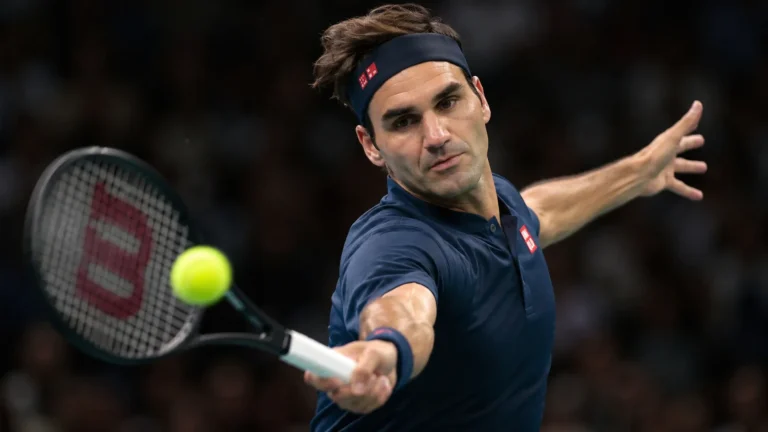
While the world knows Federer as the ultimate gentleman of tennis, his teenage years were an entirely different story. As a junior player, he was notorious for his explosive temper. He would frequently scream, cry, and violently smash his racquets during matches when he was losing. It took years of intense mental conditioning and sports psychology for him to harness that raw emotion into the icy, unbreakable focus he became famous for.
2. A Former Ball Boy in Basel
Long before he was lifting championship trophies, Federer was picking up stray tennis balls for other professionals. Growing up in Switzerland, he served as a ball boy at the Swiss Indoors tournament in his hometown of Basel for two consecutive years in the early 1990s. He later returned to that exact same tournament as a professional and won the title an astonishing ten times.
3. He Has Two Sets of Twins
The odds of a couple having a set of identical twins are relatively low, but the Federer family defied staggering statistical odds. Roger and his wife, Mirka, are the proud parents of two separate sets of twins. They welcomed twin girls, Myla Rose and Charlene Riva, in 2009, and twin boys, Leo and Lenny, in 2014.
4. He Never Retired Mid-Match
In a physically brutal, highly demanding sport where injuries frequently force players to abandon games, Federer holds a miraculous record of endurance. Throughout his sprawling professional career, he played exactly 1,526 singles matches and 223 doubles matches on the ATP tour. He never once retired in the middle of a match, seeing every single contest through to the final point regardless of his physical condition.
5. He Was Gifted Two Cows
After winning his very first Wimbledon title in 2003 and becoming a massive national hero, the organizers of the Swiss Open in Gstaad decided to give him a highly unconventional homecoming gift. They presented him with a milking cow named Juliette on the center court. A decade later, in 2013, the tournament organizers doubled down on the joke and gifted him a second cow named Desiree.
6. He is a Dual Citizen
While he represents Switzerland on the global stage and serves as the ultimate Swiss sporting ambassador, Federer actually holds dual citizenship. His father, Robert, is Swiss, but his mother, Lynette, was born and raised in South Africa. Because of his mother’s heritage, Roger holds both Swiss and South African passports and frequently visits the African continent for his philanthropic work.
7. The 2000 Sydney Olympics Romance
The Olympic Games hold a very special place in Federer’s heart, but not just because of the medals. During the 2000 Summer Olympics in Sydney, Australia, an 18-year-old Roger met a fellow Swiss tennis player named Miroslava “Mirka” Vavrinec. They shared a kiss on the final day of the games, sparking a romance that turned into one of the most enduring marriages and powerful business partnerships in sports history.
8. He Was a Teenage Vegetarian
Given the massive dietary requirements of a world-class professional athlete, it surprises many to learn that Federer was actually a vegetarian until his mid-teens. He abstained from eating meat throughout his early childhood. It wasn’t until he joined the Swiss national junior squad around the age of 14 that he finally tried meat, eventually making it a standard part of his athletic diet.
9. First Living Swiss to Get a Stamp
In Switzerland, having your face on a postage stamp was an honor strictly reserved for historical figures who had already passed away. However, in 2007, the Swiss Post completely broke their own rules to honor Federer’s staggering achievements. He became the first living Swiss person to have an official postage stamp released in his likeness.
10. He Speaks Four Languages Fluently
Federer’s massive global marketability is heavily aided by his impressive linguistic skills. Because he grew up in the culturally diverse borders of Switzerland, he is completely fluent in Swiss German, Standard German, English, and French. During his post-match press conferences, he was famous for flawlessly transitioning between all four languages to answer journalists from around the world without needing a translator.
11. A Street in Germany Bears His Name
While he is a Swiss hero, Federer is universally loved in neighboring Germany, particularly in the town of Halle, where he played a grass-court warm-up tournament before Wimbledon every year. He won the tournament so many times that in 2012, the city officially renamed the street leading to the tennis stadium “Roger-Federer-Allee” to honor his absolute dominance on their courts.
12. He Beat His Idol to Pass the Torch
In one of the most poetic matches in tennis history, a 19-year-old Federer faced off against Pete Sampras in the fourth round of Wimbledon in 2001. Sampras was Federer’s childhood idol and the undisputed king of grass courts at the time. In a grueling, five-set thriller, the young Swiss teenager dethroned the legendary American, effectively signaling the end of the Sampras era and the beginning of his own.
13. He Played the Piano as a Child
Before his parents realized he was a generational athletic prodigy, they encouraged him to pursue the arts. A young Roger took formal piano lessons for several years. While he ultimately abandoned the instrument to focus entirely on tennis, he has occasionally showcased his musical muscle memory by playing the piano in promotional videos for his sponsors.
14. He Has a Severe Fear of Rollercoasters
Despite having the ice-cold nerves required to face a 130 mph serve on championship point, Federer is highly risk-averse when it comes to amusement parks. He has openly admitted to suffering from a fear of rollercoasters, skydiving, and bungee jumping, preferring to keep his feet firmly planted on solid ground when he isn’t leaping for a smash.
15. A Massive Philanthropic Empire
Federer recognized the power of his platform very early in his career. In 2003, at just 22 years old, he launched the Roger Federer Foundation. The organization focuses heavily on providing early childhood education and basic learning resources to deeply impoverished regions in Southern Africa and Switzerland. To date, his foundation has reached over two million children and invested millions of dollars into educational infrastructure.