The Suave Icon: 15 Fascinating Facts About Pierce Brosnan
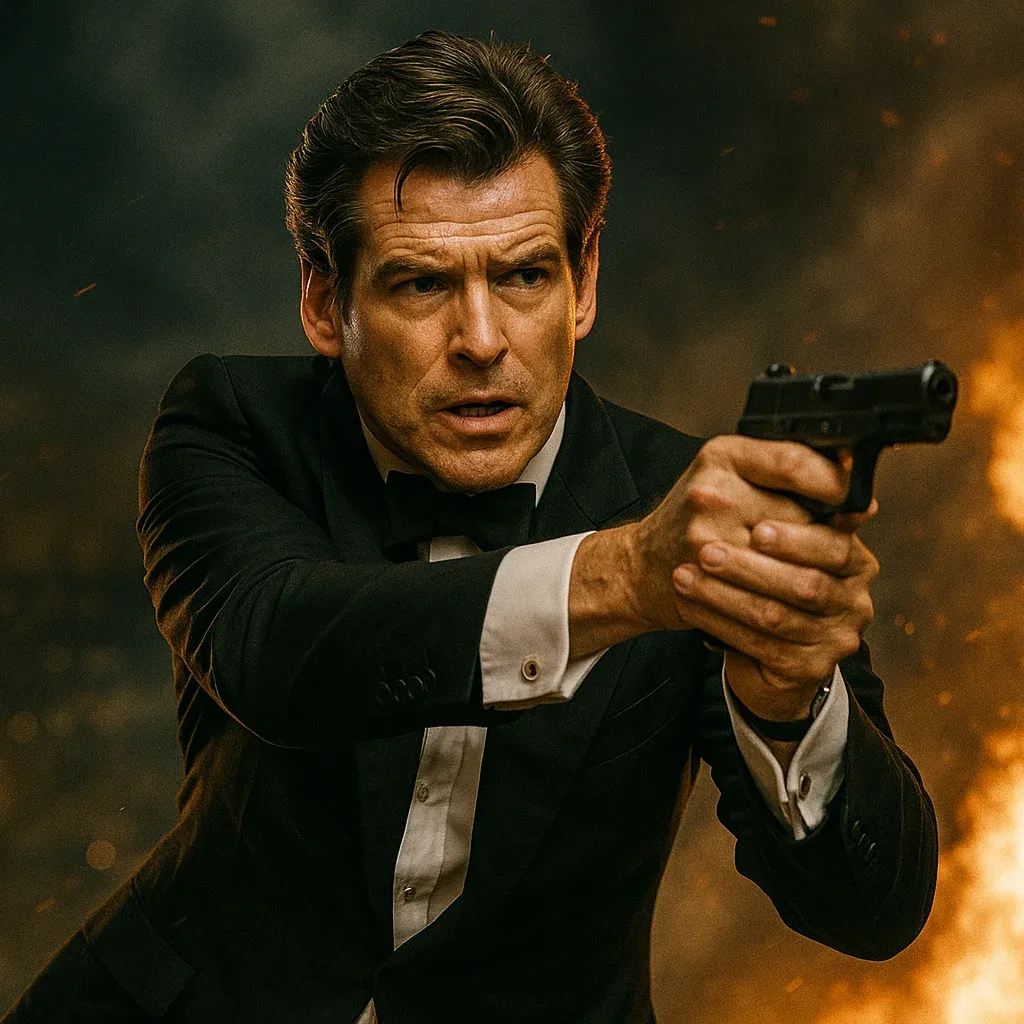
Pierce Brosnan is widely celebrated as one of the most charismatic actors of his generation, best known for redefining James Bond for a modern audience in the 1990s. However, his rise to international stardom was paved with remarkable personal twists, from working as a fire-eater in a circus to pursuing a career in commercial illustration. Behind the sharp suits and smooth charm lies a passionate painter, dedicated environmental activist, and versatile actor whose career spans stage, television, and blockbuster cinema. Discover the surprising truths and hidden talents behind the legendary Irish actor.
1. Solitary Childhood in Navan and Relocation to London
Pierce Brosnan experienced a difficult childhood in Navan, County Meath, Ireland. His father abandoned the family shortly after his birth, and his mother moved to London to work as a nurse when he was just four years old. Brosnan was raised primarily by his maternal grandparents and later by relatives and boarding house keepers. At age 11, he finally reunited with his mother in London, a transition that exposed him to urban British culture and cinematic entertainment. This early isolation fostered a vivid imagination that would later fuel his creative pursuits in painting and acting.
2. Trained Commercial Illustrator Before Acting
Before stepping into the spotlight, Pierce Brosnan was on track to become a visual artist. After leaving school at age 16, he enrolled at Saint Martin's School of Art in London to study commercial illustration. He worked as an illustrator for a brief period, developing a keen eye for composition, line, and color. His career trajectory shifted dramatically when a colleague invited him to join an experimental theatre group during a lunch break. Captivated by the dramatic arts, he abandoned graphic design to attend the Drama Centre London, though visual arts remained a lifelong passion.
3. Trained Fire-Eater in a Circus Workshop
One of the most surprising skills on Pierce Brosnan’s resume is his ability to eat fire. In 1969, while attending a workshop at the Oval House Theatre in London, he noticed a street performer teaching participants how to eat fire. Intrigued, Brosnan learned the dangerous technique and spent several years performing the act at various venues and street festivals. A circus agent even spotted him eating fire, leading to a brief stint performing in a circus troupe. The skill resurfaced decades later when he performed a fire-eating trick during a 1996 television appearance on The Muppets Tonight.
4. Stage Breakthrough Blessed by Tennessee Williams
Pierce Brosnan’s theatrical breakthrough came when legendary American playwright Tennessee Williams selected him personally for a major role. After graduating from the Drama Centre London in 1975, Brosnan was chosen by Williams to play McCabe in the 1977 British premiere of The Red Devil Battery Sign. Williams was so impressed by the young actor's dramatic weight and presence that he sent him a telegram stating simply, "Thank God for you, my dear boy." The critically acclaimed performance launched Brosnan’s professional acting career in London’s West End. Shortly thereafter, television roles brought him international fame.
5. Contract Trap Delayed His Bond Debut
Pierce Brosnan was originally chosen to play James Bond nearly a decade before he actually took on the role. In 1986, following Roger Moore's retirement, producer Albert R. Broccoli offered Brosnan the iconic role of Agent 007. However, the resulting media frenzy reignited interest in Brosnan's television series Remington Steele, prompting NBC to exercise a contract option to renew the show. Contractually forbidden from filming both projects simultaneously, Brosnan had to step aside, allowing Timothy Dalton to take over the role for two films. Brosnan eventually got a second chance when he was cast again in 1994.
6. Revitalized the Franchise with 'GoldenEye'
When Pierce Brosnan finally debuted as James Bond in 1995's GoldenEye, the franchise was at a critical turning point. The film marked the first Bond movie released after the fall of the Soviet Union, requiring a complete modernization of the character's post-Cold War dynamic. Directed by Martin Campbell, GoldenEye became a massive critical and commercial success, grossing over $350 million worldwide to become the highest-earning Bond film up to that date. Brosnan’s suave yet emotionally grounded portrayal proved that Agent 007 was still relevant to contemporary audiences. He would go on to star in four blockbuster Bond films through 2002.
7. Performed Dangerous Stunts and Earned Scars
Throughout his four-film tenure as James Bond, Pierce Brosnan insisted on performing as many of his own stunts as production insurance would allow. This commitment to physical realism came with real bodily consequences during high-octane sequences. While shooting 1997's Tomorrow Never Dies, Brosnan was accidentally hit in the face by a stunt double, requiring eight stitches above his upper lip. Filmmakers had to carefully adjust camera angles and use makeup for subsequent scenes to conceal the physical damage. Despite the injury, Brosnan continued doing stunt work throughout his time as 007.
8. An Accomplished Painter with Million-Dollar Sales
Beyond his work on screen, Pierce Brosnan is a deeply accomplished expressionist painter who has created art for over four decades. He turned to painting in the late 1980s as a therapeutic outlet during his first wife Cassandra Harris’s battle with ovarian cancer. His artwork features bold colors and figurative portraits, drawing inspiration from masters like Henri Matisse and Pablo Picasso. In 2018, his painted portrait of musician Bob Dylan sold at a charity auction in Cannes for a staggering $1.4 million. Brosnan routinely donates proceeds from his art sales to environmental and children's charities.
9. Devoted Ocean Conservationist and Environmentalist
Pierce Brosnan has long been an outspoken advocate for marine conservation and environmental protection. Alongside his wife Keely Shaye Smith, he has spent decades working with major environmental organizations like the Natural Resources Defense Council. His campaigns have focused on stopping commercial whaling, protecting coastal habitats, and protesting illegal marine sound testing that harms whales. In 1997, the couple was awarded the Environmental Leadership Award by Green Cross International for their tireless advocacy. Brosnan regularly uses his global celebrity status to lobby political leaders on climate change and ocean conservation.
10. Honored with an Honorary OBE by Queen Elizabeth II
In July 2003, Queen Elizabeth II named Pierce Brosnan an Honorary Officer of the Order of the British Empire (OBE). The honor was bestowed in recognition of his outstanding contribution to the British film industry and his charitable work globally. Because Brosnan is an Irish citizen rather than a subject of the Commonwealth, the appointment was conferred on an honorary basis. The award ceremony took place at the British Embassy in Dublin, celebrating his international cinematic success and humanitarian efforts. Brosnan expressed deep gratitude for the award, citing his ongoing affection for the British arts community.
11. Dual Irish-American Citizenship
Pierce Brosnan officially became a naturalized citizen of the United States in September 2004 during a ceremony in Los Angeles. Having lived in America for over two decades while building his career, he sought citizenship to fully participate in the democratic process. However, Brosnan proudly maintained his original Irish citizenship, frequently stating that his heart and soul remain tied to Ireland. He continues to visit his homeland regularly and maintains strong ties to Irish cultural initiatives. His dual citizenship reflects a career spent bridging both European and American film industries.
12. Embraced Musical Risk in 'Mamma Mia!'
Pierce Brosnan took a major departure from his slick action persona when he signed on to star in the 2008 film adaptation of Mamma Mia!. Playing Sam Carmichael opposite Meryl Streep, Brosnan accepted the role without knowing what the project was, simply wanting to work with Streep. His vocal performances of ABBA classics like "SOS" drew mixed reactions from critics and earned him a Golden Raspberry Award for Worst Supporting Actor. However, Brosnan embraced the experience with humor and pride, and the film became an international blockbuster grossing over $600 million. He later reprised his role in the successful 2018 sequel, Mamma Mia! Here We Go Again.
13. Co-Founded Irish DreamTime Production Company
In 1996, Pierce Brosnan co-founded his own independent production company, Irish DreamTime, alongside film producer Beau St. Clair. The production house was created to allow Brosnan greater creative control over his acting projects and to develop compelling cinematic stories. Irish DreamTime produced ten films, including the hit 1999 heist remake The Thomas Crown Affair and the acclaimed 2005 dark comedy The Matador. His performance in The Matador as an aging hitman earned Brosnan a Golden Globe nomination for Best Actor. The company successfully established Brosnan as a savvy producer behind the camera as well as a leading man in front of it.
14. Inspired by Seeing 'Goldfinger' as His First Cinema Movie
The trajectory of Pierce Brosnan’s life was quietly shaped by a single movie theater experience in August 1964. Shortly after moving to London at age 11, the first movie he ever saw in a cinema was the third James Bond film, Goldfinger, starring Sean Connery. Brosnan was mesmerized by the action, the gadgets, and Connery’s magnetic screen presence on the big screen. Decades later, he would often reflect on how that childhood experience planted the subtle seed for his eventual career as 007. Life came full circle when he stepped into Connery's famous tuxedo 31 years later.
15. Iconic Video Game Legacy in 'GoldenEye 007'
Pierce Brosnan’s era as James Bond coincided with a revolutionary chapter in interactive entertainment and digital culture. The 1997 Nintendo 64 video game adaptation GoldenEye 007, featuring Brosnan’s digital likeness, became a landmark title that revolutionized first-person shooter games. It sold over eight million copies worldwide and remains widely considered one of the greatest video games ever created. Brosnan went on to lend his likeness and voice to several subsequent 007 video games, including 2004's James Bond 007: Everything or Nothing. This digital crossover expanded his legacy as Bond far beyond movie theaters into millions of living rooms worldwide.
Sources & References
This AI-assisted post was rigorously curated and fact-checked for accuracy by:
 Martin Roháček
How fun was this article? 🤔
Tap a star to rate it
🧠 Quiz: How closely were you paying attention?
10 questions — all answers are in the article above!
Enjoyed these facts? There's more! 💌
Fresh fun facts in your inbox. No spam, ever.