1. He Added the “d” to His Own Name
He was born “Rembrant” (without a “d”). In 1633, for reasons that art historians still debate, he began signing his paintings “Rembrandt.” It was a deliberate branding choice. Like the Italian masters Leonardo, Michelangelo, and Titian, Rembrandt wanted to be known by his first name alone.
2. He Never Left the Netherlands
During the 17th century, it was almost mandatory for ambitious northern European artists to travel to Italy to study the Renaissance masters and classical antiquity. Rembrandt flatly refused. He believed he could learn everything he needed to know from the art already available in the bustling, wealthy trading hub of Amsterdam.
3. “The Night Watch” Is Not Actually a Night Scene
His most famous masterpiece, officially titled Militia Company of District II under the Command of Captain Frans Banninck Cocq, is globally known as The Night Watch. However, the painting is actually set in broad daylight. Over the centuries, a dark, protective varnish was applied to the canvas, which trapped dirt and soot. When it was finally cleaned in the 1940s, the bright sunlight of the original painting was revealed.
4. His Masterpiece Was Physically Cut Down
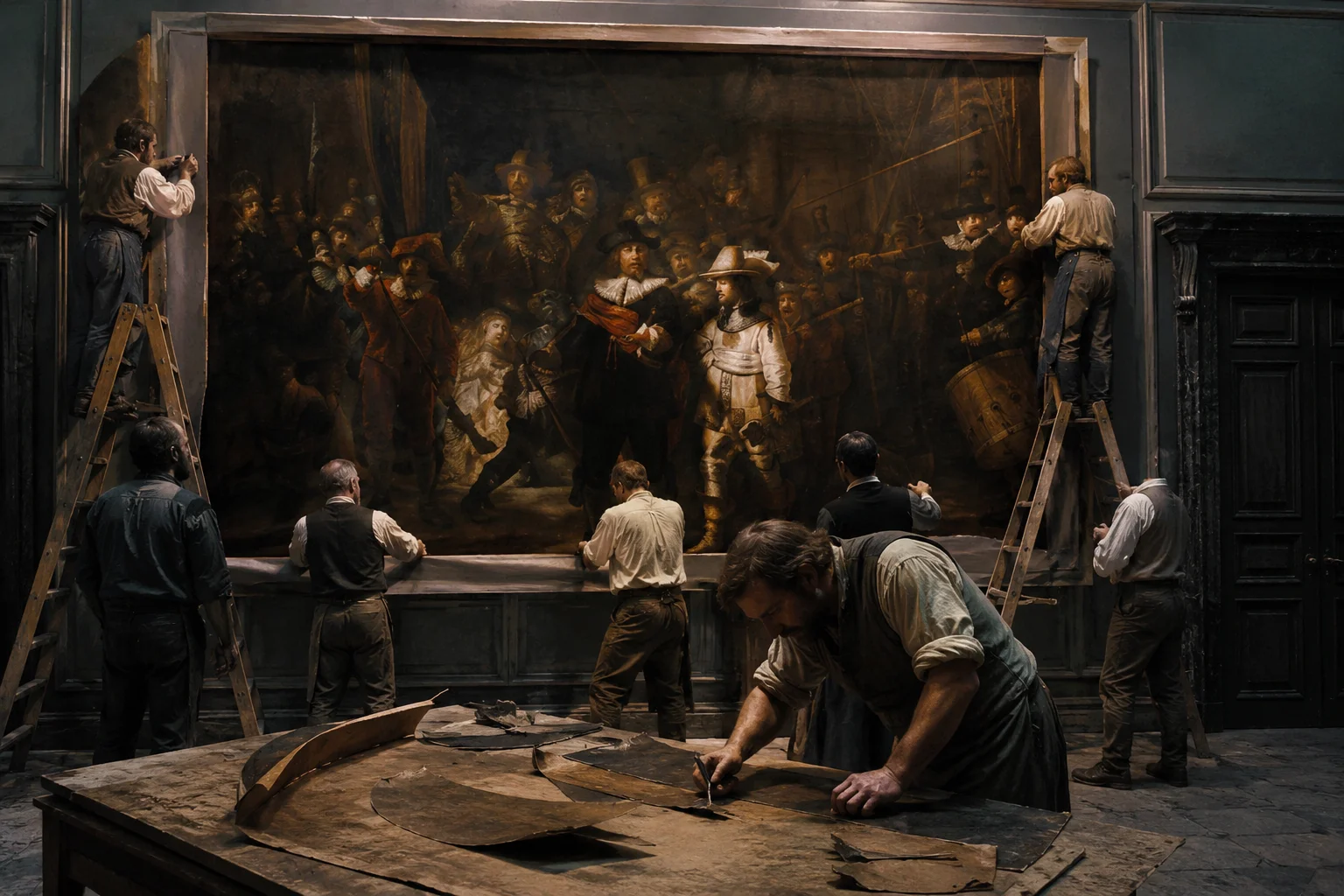
In 1715, The Night Watch was moved to the Amsterdam Town Hall. The canvas was too large to fit on the designated wall between two doors, so the city officials simply chopped off large strips from all four sides of the painting. The trimmed pieces were thrown away and lost to history, fundamentally altering the painting’s original, dynamic composition.
5. He Was the Original “King of the Selfie”
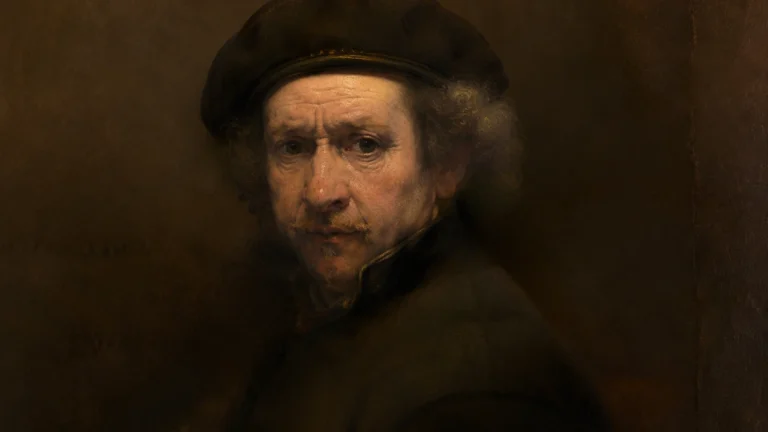
Long before smartphones, Rembrandt obsessively documented his own face. Over the course of his life, he created roughly 80 self-portraits (paintings, etchings, and drawings). Unlike other artists who painted themselves looking wealthy and flawless, Rembrandt documented his own aging, his financial ruin, and his grief with brutal, unflinching honesty.
6. He Revolutionized the Group Portrait
Before Rembrandt, group portraits were essentially static, boring line-ups of faces where everyone paid the same amount to be seen equally (like a modern class photo). In works like The Anatomy Lesson of Dr. Nicolaes Tulp, Rembrandt changed the game by painting his subjects actively engaged in a dramatic scene, ignoring the traditional rules of portraiture to create a compelling narrative.
7. He Was a Terrible Money Manager
Rembrandt earned a massive fortune at the height of his career, but he was physically incapable of saving it. He was a shopaholic who spent lavish sums on ancient sculptures, Flemish paintings, exotic weapons, Japanese armor, and historical costumes, which he used as props for his paintings. His rampant spending eventually led to his complete financial ruin.
8. He Went Bankrupt
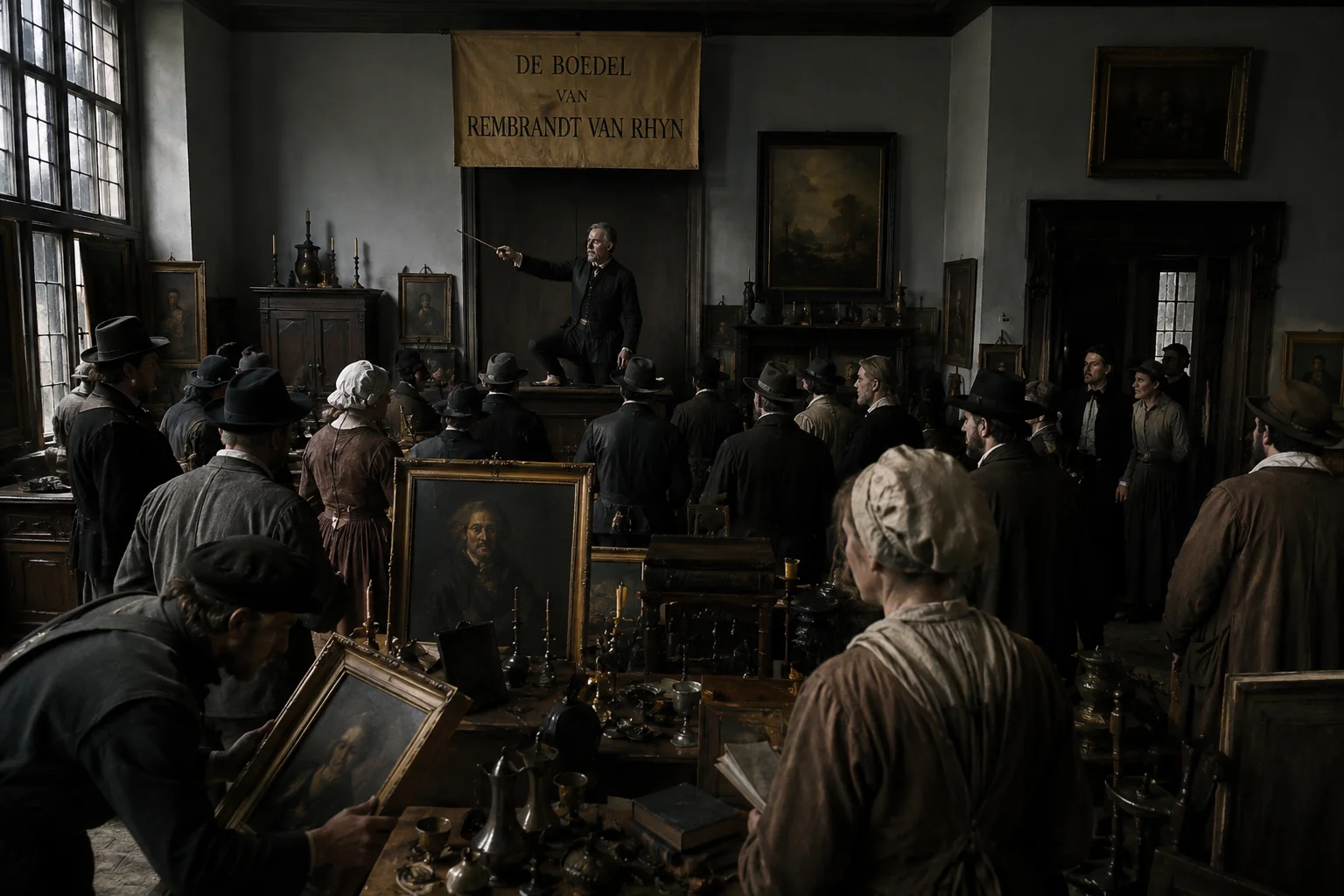
By 1656, Rembrandt’s debts had spiraled out of control. To avoid being sent to debtor’s prison, he filed for cessio bonorum (a form of voluntary bankruptcy). The city auctioned off his house, his printing press, and his massive art collection for a fraction of their worth. He spent his final years living in a modest rented house.
9. He Was Banned from Marrying His Final Partner
Rembrandt’s beloved first wife, Saskia, died in 1642. In her will, she left a substantial trust fund for their son, Titus, which Rembrandt controlled—but only on the condition that he never remarry. If he did, he would lose the money. Consequently, Rembrandt lived out his later years with his partner Hendrickje Stoffels out of wedlock, which led to her being publicly shunned by the Dutch Reformed Church.
10. He Outlived Almost Everyone He Loved
Rembrandt’s life was marred by staggering grief. He and Saskia had four children, but three died in infancy. Saskia herself died at just 29. Decades later, his common-law wife Hendrickje died during an outbreak of the plague. Finally, just a year before his own death, his only surviving son, Titus, died at age 27.
11. He Refused to Flatter His Clients
As Rembrandt aged, his style became thicker, rougher, and more expressive, moving away from the smooth, detailed finish that wealthy Dutch clients preferred. He also refused to paint out a client’s wrinkles, blemishes, or asymmetrical features. Because he prioritized raw truth over flattery, lucrative commissions dried up in his later years.
12. He Was a Master Printmaker
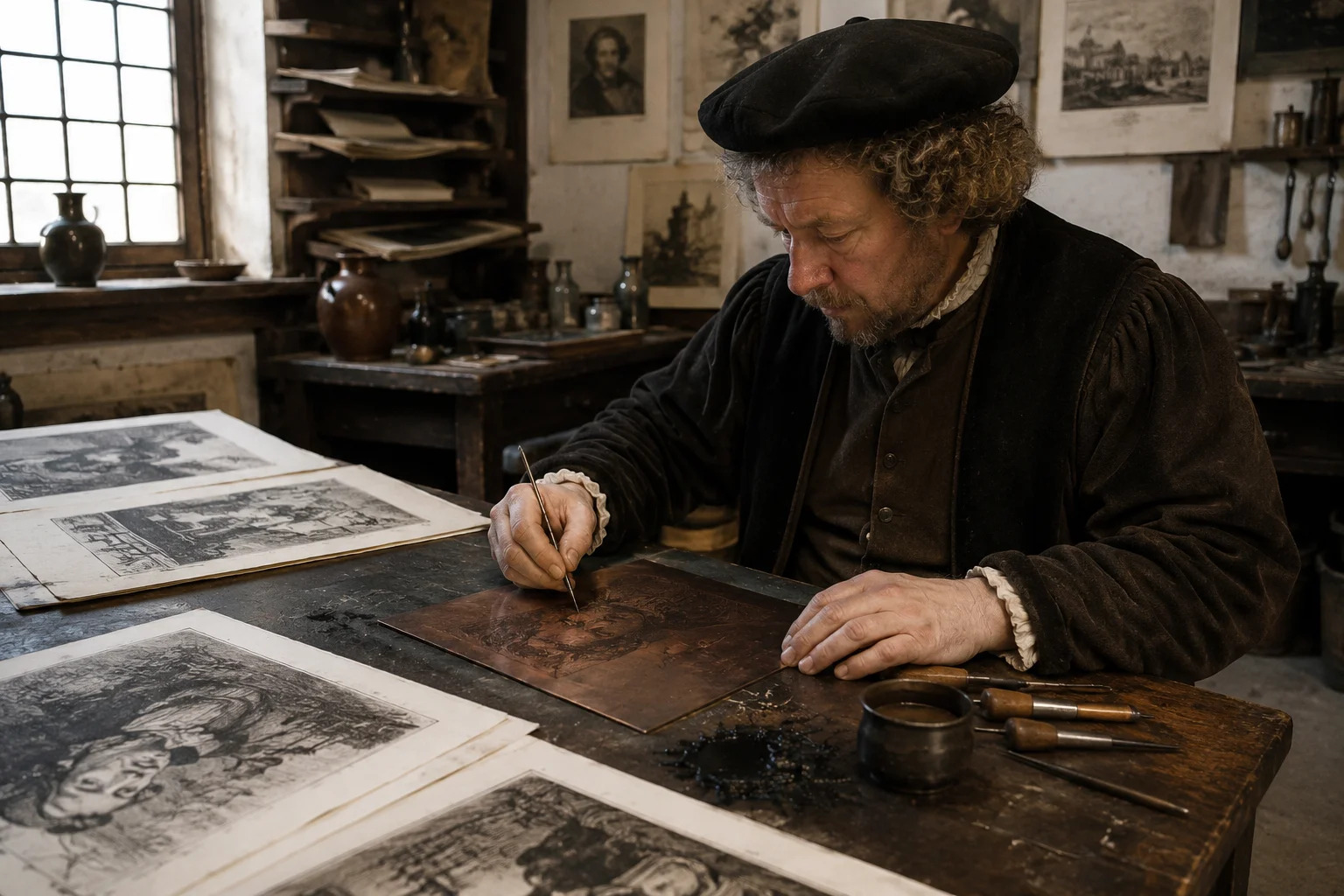
While he is famous for his oil paintings, Rembrandt was equally a genius in the medium of etching. He treated the etching plate like a canvas, experimenting with acid and ink to create dramatic shadows and delicate lines. His prints circulated widely across Europe, making him internationally famous long before his paintings ever left the Netherlands.
13. He Put Himself in the Bible
Rembrandt often used his own face as an extra in his grand historical and biblical scenes. In his painting The Raising of the Cross, he painted himself in the center of the action, actively helping to hoist Jesus onto the cross. Art historians interpret this as a profound theological statement about his own complicity in human sin.
14. He Died in Poverty and Obscurity
When Rembrandt died on October 4, 1669, he was destitute. He was buried in an unmarked, rented pauper’s grave in the Westerkerk in Amsterdam. Because it was a rented grave, his remains were eventually dug up and destroyed or discarded, which was standard practice at the time for the poor. Today, no one knows exactly where his bones are.
15. His Genius Was “Rediscovered” Centuries Later
Immediately after his death, Rembrandt’s rough, emotional style was heavily criticized by the next generation of artists, who favored classical elegance and strict rules. It wasn’t until the 19th century, during the Romantic era, that artists and critics “rediscovered” Rembrandt, elevating him to the mythic status he holds today.