The Futuristic City-State: 15 Fascinating Facts About Singapore
Singapore is world-famous as a gleaming financial hub and clean urban paradise, but its story is far richer and more surprising than its modern skyline suggests. From an archipelago of 64 distinct islands to an urban jungle where pedestrians walk faster than anywhere else on Earth, this vibrant sovereign city-state defies expectations at every turn. Delve into the strange history, legal quirks, and ecological wonders that make Singapore one of the most fascinating destinations on the planet.
1. A Nation Made of 64 Islands
While many people picture Singapore as a single compact landmass, the nation actually encompasses 64 islands. The main mainland island is surrounded by 63 smaller offshore islands, including popular destinations like Sentosa, St. John's Island, and Pulau Ubin. Many of these smaller islets are completely uninhabited, preserved as pristine nature spots or military zones. Over the decades, some islands have even been merged through massive land reclamation projects to support heavy industry. This surprisingly complex archipelago offers an array of coastal environments beyond the urban downtown core.
2. One of Only Three Surviving Sovereign City-States
Singapore holds a rare geographic distinction as one of only three surviving true city-states in the modern world. Alongside Monaco and Vatican City, it functions simultaneously as a city, an island, and an independent sovereign nation. Unlike standard metropolitan areas governed by federal or state authorities, Singapore manages all national defense, foreign policy, and domestic infrastructure under a single unified government. This streamlined administrative setup allows for rapid urban planning and long-term economic strategy. Consequently, the island nation has transformed from a colonial trading post into a global financial powerhouse within a single generation.
3. The "Lion City" Named After an Animal That Never Lived There
The name "Singapore" derives from Singapura, which translates to "Lion City" in Sanskrit. Legend holds that a 13th-century Sumatran prince named Sang Nila Utama spotted a strange beast on the island and believed it to be a lion. However, modern zoologists confirm that lions have never inhabited Malaya or Singapore in recorded history. The prince almost certainly caught sight of a Malayan tiger, which roamed the dense local jungles in substantial numbers until the early 20th century. Despite the biological mix-up, the lion moniker stuck and became permanently embedded in the country's national identity.
4. Four Official Languages and a Unique Creole
Singapore is one of the most linguistically diverse nations in Asia, recognizing four official languages: English, Mandarin, Malay, and Tamil. National policy ensures multilingualism in public education and government communication, with Malay designated as the symbolic national language. On the streets, however, locals frequently converse in Singlish, an expressive creole that weaves together English, Hokkien, Cantonese, Malay, and Tamil vocabulary. While Singlish features its own distinct grammatical rules and expressive sentence particles like "lah" and "leh", visitors often find it surprisingly easy to pick up. This linguistic blending serves as a living reflection of Singapore's rich multicultural history.
5. The Historical Architectural Limit of 280 Meters
For decades, Singapore's urban skyline was shaped by a strict architectural height restriction of 280 meters (918 feet). This ceiling was imposed by aviation authorities due to the central location of Paya Lebar Airbase and flight path safety requirements. As a result, major commercial landmarks like UOB Plaza, OUB Centre, and Republic Plaza were built to top out at precisely that maximum limit. The restriction was finally relaxed in 2016 to allow for the construction of Guoco Tower, which stands at 290 meters. Today, this carefully regulated skyline creates a strikingly uniform and balanced architectural silhouette along Marina Bay.
6. More Tree Species in One Reserve Than All of North America
Despite its high population density, Singapore boasts incredible natural biodiversity within its remaining rainforests. The 163-hectare Bukit Timah Nature Reserve contains more distinct tree species in its small perimeter than the entire North American continent combined. Naturalists have cataloged over 840 species of flowering plants and hundreds of native animal species within this ancient jungle fragment. The reserve also houses the country's highest natural point, Bukit Timah Hill, standing at 163.6 meters above sea level. Singapore's aggressive conservation efforts ensure these primary rainforest pockets survive right alongside bustling high-rises.
 Asian Cities
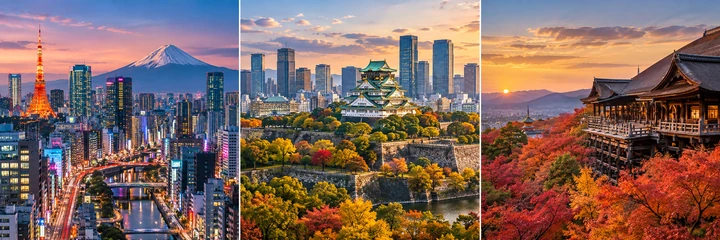
From hyper-futuristic megacities boasting heated subway seats to ancient imperial capitals hiding subterranean water palaces, Asia's greatest metropolises are defined by astonishing contrasts. Discover the hidden quirks and rich histories of these hubs.
See All Facts
Asian Cities
From hyper-futuristic megacities boasting heated subway seats to ancient imperial capitals hiding subterranean water palaces, Asia's greatest metropolises are defined by astonishing contrasts. Discover the hidden quirks and rich histories of these hubs.
See All Facts
7. Massive Land Reclamation Has Grown the Nation by Over 25%
Singapore is literally growing larger every year thanks to aggressive land reclamation projects. Since gaining independence in 1965, the country has expanded its land area by more than 25 percent, growing from roughly 580 square kilometers to over 730 square kilometers today. Entire famous districts, including Marina Bay, Changi Airport, and the Jurong Island petrochemical complex, sit on land reclaimed from the sea. The nation relies on imported sand, polder systems, and excavated materials from subterranean construction projects to build outward. Current government master plans project that Singapore will expand by another 70 square kilometers by 2030.
8. The World's First Nocturnal Zoo
In 1994, Singapore opened the world's very first nocturnal zoo, known as the Night Safari. Located adjacent to the Singapore Zoo, this innovative 35-hectare sanctuary allows visitors to observe over 900 animals from 100 species in their natural nighttime environments. The park uses subtle light technology designed to simulate moonlight without disrupting the circadian rhythms of nocturnal creatures. Visitors travel through seven geographical regions via open-air tramways and walking trails to view endangered species like the Asian elephant and Malayan pangolin. The groundbreaking concept proved so successful that it inspired similar nocturnal wildlife parks across the globe.
9. Infamous Laws and High Public Cleanliness Standards
Singapore is famous worldwide for its strict legal framework designed to maintain public order and spotless hygiene. One of the most famous regulations is the ban on the import and sale of chewing gum, introduced in 1992 to prevent vandalism on mass transit doors. Additionally, failing to flush a public toilet carries steep financial fines, and police officers occasionally conduct spot checks in public facilities. Other offenses like jaywalking, littering, and spitting can result in immediate fines or community service sentences. While these laws often intrigue foreign tourists, they have contributed to making Singapore one of the safest and cleanest cities on Earth.
10. Unrivaled Homeownership Powered by Public Housing
Singapore features one of the most successful public housing programs in human history, managed by the Housing & Development Board (HDB). Approximately 80 percent of the resident population lives in government-subsidized HDB flats spread across planned high-rise townships. Rather than acting strictly as rental housing, the system encourages long-term homeownership through subsidized purchase programs and pension fund financing. This unique policy has enabled Singapore to achieve an overall homeownership rate exceeding 89 percent. These vibrant residential complexes are designed as self-contained communities with neighborhood schools, transit hubs, and hawker dining centers.
11. Pedestrians Here Walk Faster Than Anywhere Else on Earth
Singaporeans are officially among the fastest pedestrians on the planet. A famous 2007 global research study conducted by the British Council measured walking speeds across 32 major world cities and found that Singapore took top honors. Researchers tracked pedestrians covering a flat, uncrowded distance of 60 feet and recorded Singaporeans moving at an impressive average speed of 6.15 kilometers per hour (3.82 miles per hour). This rapid pace beat out fast-moving residents in traditional hustle capitals like New York, London, and Tokyo. Experts attribute this brisk walking speed to the nation's high-tempo economy and dense urban environment.
12. An Airport Designed as a Destination in Itself
Singapore's Changi Airport routinely ranks as the world's best airport, functioning more like a luxury resort than a transit terminal. Passengers passing through can enjoy a free two-story butterfly garden featuring hundreds of tropical butterflies, a rooftop swimming pool, and movie theaters. The airport's central Jewel complex features the Rain Vortex, which stands at 40 meters (130 feet) tall and holds the title of the world's largest indoor waterfall. Surrounding the indoor waterfall is a lush four-story indoor rainforest containing over 2,000 trees and palm plants. These world-class amenities make Changi a major tourist attraction for visitors and local residents alike.
13. The Half-Fish, Half-Lion National Icon
The official national symbol of Singapore is the Merlion, a mythical creature featuring the head of a lion and the body of a fish. First designed in 1964 as a corporate logo for the Singapore Tourism Board, the icon carries deep historical symbolism. The fish tail represents Singapore's humble origins as an ancient fishing village named Temasek, which means "sea town" in Javanese. The lion head references the legendary founding of Singapura by Prince Sang Nila Utama. Today, the most famous 8.6-meter tall Merlion statue spouts water continuously into Marina Bay, serving as a beloved background for millions of visitor photos.
14. A Time Zone Shifted Six Times for Economic Convenience
Over the past century, Singapore has changed its official national time zone six different times to optimize international trade and regional alignment. Before 1905, Singapore operated on local mean time, but it later adjusted its clocks repeatedly to match various regional neighbors and wartime occupiers. In 1982, the nation shifted its clocks forward by 30 minutes to synchronize directly with West Malaysia, adopting UTC+8. This change aligned Singapore's financial trading hours with key Asian markets like Beijing, Hong Kong, and Perth. Despite sitting geographically closer to the UTC+7 solar zone, Singapore remains permanently set to UTC+8.
15. The Microprinted National Anthem on Currency
Singapore prints the micro-text of its entire national anthem, "Majulah Singapura", onto the back of its $1,000 currency note. Written in Malay by composer Zubir Said in 1958, the anthem's full lyrics are intricately micro-printed in tiny text within the musical note graphic on the bill. Although Singapore phased out the printing of $1,000 notes in 2021 to prevent money laundering, existing notes remain legal tender and prized collectors' items. The anthem's title translates to "Onward Singapore", serving as a constant reminder of the nation's relentless drive toward prosperity. This remarkable currency design combines monetary utility with intense national pride.
Sources & References
This AI-assisted post was rigorously curated and fact-checked for accuracy by:
 Martin Roháček
How fun was this article? 🤔
Tap a star to rate it
🧠 Quiz: How closely were you paying attention?
10 questions — all answers are in the article above!
Enjoyed these facts? There's more! 💌
Fresh fun facts in your inbox. No spam, ever.