The Musical Genius: 15 Fascinating Facts About Stevie Wonder
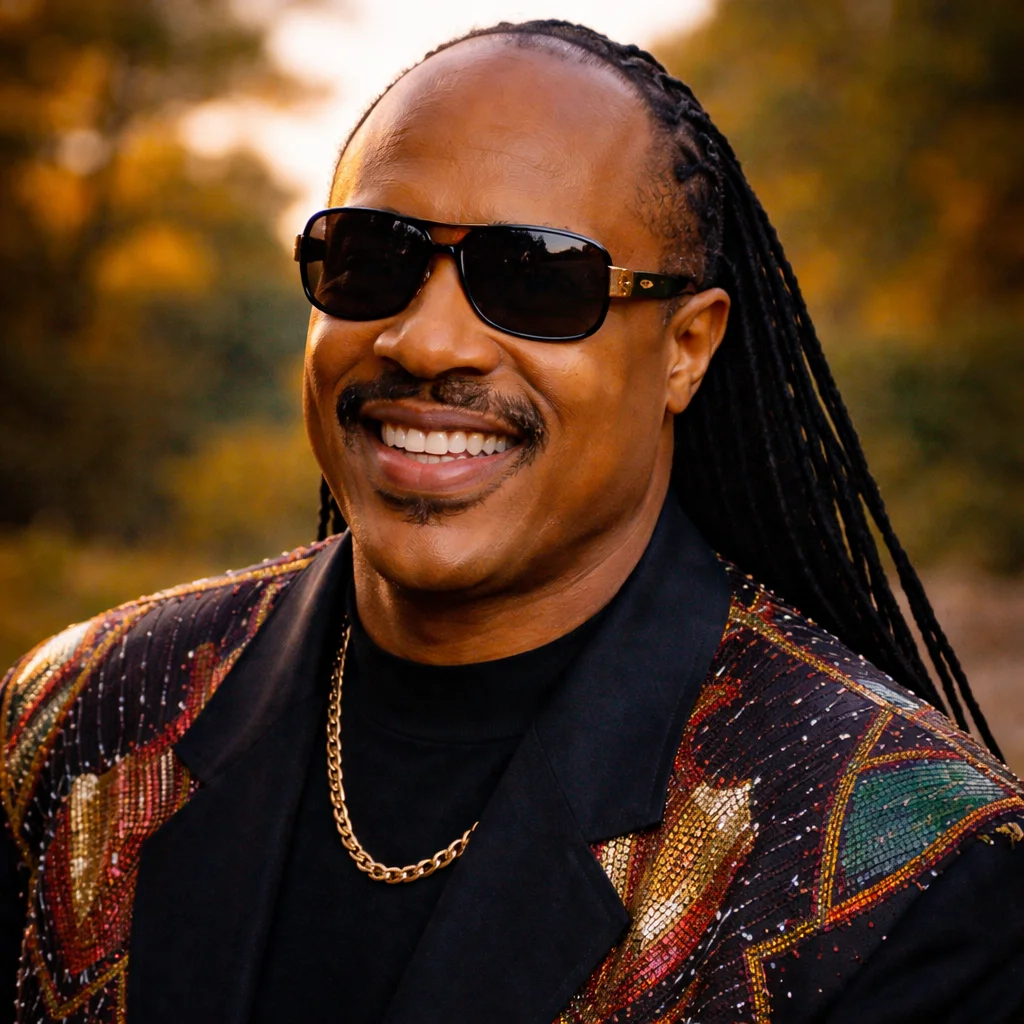
Stevie Wonder stands as one of the most visionary figures in modern music history, combining extraordinary instrumental mastery with groundbreaking songwriting. From becoming a child star at Motown to revolutionizing electronic music with early synthesizers, his legacy spans decades of chart-topping hits and political activism. Discover 15 surprising and deep-cut facts about the icon's life, studio secrets, and historical achievements.
1. Retinopathy of Prematurity Caused His Blindness
Stevie Wonder was born six weeks premature on May 13, 1950, in Saginaw, Michigan. Following his birth, he was placed in a hospital incubator supplied with an excessively high concentration of oxygen. The oxygen-rich atmosphere triggered retinopathy of prematurity, a disorder where abnormal blood vessels grow across the retina, eventually causing complete detachment and blindness. Wonder has frequently stated that he never let his visual impairment hinder his passion or creative ambition. His heightened auditory sensitivity became a cornerstone of his legendary musical career.
2. Marvin Gaye Played Drums on His First Major Hit
When a 12-year-old Stevie recorded 'Fingertips – Part 2' live at the Regal Theater in Chicago, he was backed by a stellar lineup of Motown musicians. Among them was future soul icon Marvin Gaye, who was working as a session drummer for the label before his own solo career took off. Gaye's driving, energetic rhythm on the drum kit gave the live performance an infectious momentum that electrified the crowd. The track catapulted to the top of the charts, launching Wonder's career while showcasing Gaye's immaculate sense of timing.
3. He Led the Campaign for Martin Luther King Jr. Day
In the late 1970s and early 1980s, Stevie Wonder became a central figure in the political movement to establish a national holiday honoring Dr. Martin Luther King Jr. He released the uplifting anthem 'Happy Birthday' in 1980 specifically to promote the cause and rally support across the United States. Wonder funded and led a massive march on Washington, D.C., in 1981 alongside Coretta Scott King, gathering over four million signatures on a petition. His relentless activism was instrumental in convincing Congress and President Ronald Reagan to sign the holiday into law in 1983.
4. A Near-Fatal 1973 Car Accident Altered His Senses
In August 1973, while on tour in North Carolina, Stevie Wonder was involved in a horrific car accident when his vehicle collided with a truck carrying logs. A heavy log crashed through the windshield, striking Wonder in the head and leaving him in a coma for four days. The trauma temporarily stripped him of his sense of smell and taste, raising severe concerns about his recovery. Fortunately, he gradually regained both senses and made a full creative recovery, releasing some of his greatest work shortly after the ordeal.
5. He Holds a Record-Breaking Consecutive Grammy Streak
During his 'classic period' in the 1970s, Stevie Wonder achieved an unprecedented streak at the Grammy Awards. He won the coveted Album of the Year award for three consecutive studio album releases: Innervisions (1973), Fulfillingness' First Finale (1974), and the double-album masterpiece Songs in the Key of Life (1976). To this day, he remains the only solo artist in Grammy history to win Album of the Year for three successive studio albums. His dominance during this decade redefined the standards of pop, R&B, and soul music production.
6. He Released an Album Under a Secret Identity
In 1968, Wonder released an unconventional instrumental album featuring his soulful harmonica work paired with jazz arrangements. To keep listeners focused on the music rather than his pop star identity, Motown released the record under the pseudonym 'Eivets Rednow.' The name was a simple backward spelling of 'Stevie Wonder,' designed as a clever inside joke for keen fans. The album cover omitted his face entirely, allowing the smooth jazz and orchestral compositions to stand on their own artistic merits.
7. He Was an Early Pioneer of Digital Sampling
Always an early adopter of groundbreaking music technology, Stevie Wonder was the very first person to purchase an E-mu Emulator, an early digital sampling synthesizer. E-mu Systems gave him Serial Number 0001 in 1981, recognizing his role as an innovator who could push the boundaries of electronic music. Wonder used the sampler to integrate realistic acoustic sounds and unusual sound effects directly into his compositions. His pioneering work with samplers and synthesizers helped pave the way for modern electronic and hip-hop production techniques.
8. He Co-Wrote 'The Tears of a Clown' for Smokey Robinson
Beyond his solo achievements, Stevie Wonder was a brilliant composer for other Motown artists during his teenage years. In 1967, he composed a bouncy, circus-like instrumental track at a Motown Christmas party and brought it to Smokey Robinson. Robinson fell in love with the melody, feeling it sounded like a circus carnival, and wrote lyrics inspired by the tragic clown Pagliacci. Performed by Smokey Robinson & the Miracles, 'The Tears of a Clown' became a global number-one smash hit and an enduring pop classic.
9. Chaos on Stage Produced the Iconic 'What Key?' Moment
The live recording of 'Fingertips' was actually an impromptu encore at Chicago's Regal Theater, catching the house backing band completely off guard. As the original performance ended, Wonder unexpectedly launched into an extended harmonica solo, forcing the musicians to hurry back onto the stage. The bass player, Joe Swift, was in the process of replacing the previous bassist and had no idea what song was playing. If you listen closely to the hit single recording around the two-minute mark, you can hear Swift shouting, 'What key? What key?' in total confusion.
10. He Remains the Youngest Solo Artist to Top the Hot 100
When 'Fingertips – Part 2' hit number one on the Billboard Hot 100 in August 1963, 'Little Stevie Wonder' was just 13 years and 3 months old. He simultaneously held the top spot on the Billboard 200 album chart with Recorded Live: The 12 Year Old Genius. This remarkable achievement made him the youngest male solo artist ever to top the Billboard Hot 100, a record that stands to this day. It instantly proved to the world that his prodigy status was far more than a passing gimmick.
11. His Perfect Pitch Let Him Hear Studio Equipment Hums
Stevie Wonder possesses absolute pitch, commonly known as perfect pitch, allowing him to identify or recreate any musical note instantly without a reference tone. His extraordinary hearing allows him to perceive tiny acoustic nuances that most trained musicians miss. On one famous occasion in the studio, Wonder stopped a recording session to point out that a piece of audio equipment was generating a faint background hum in the key of B-flat. Engineers checked the equipment with tuning meters and confirmed that his assessment was spot-on.
12. 'Superstition' Was Originally Written for Jeff Beck
Stevie Wonder originally composed the funk masterpiece 'Superstition' in 1972 intended as a gift for British rock guitarist Jeff Beck. Beck had collaborated with Wonder in the studio, laying down drum patterns and guitar riffs that helped inspire the song's signature groove. However, Motown founder Berry Gordy recognized the song's massive commercial potential and insisted that Stevie record and release it first. Beck was initially disappointed, but later recorded his own heavy rock version with his power trio, Beck, Bogert & Appice.
13. He Has Owned a Los Angeles Radio Station Since 1979
In 1979, Stevie Wonder purchased the Los Angeles radio station KJLH (102.3 FM) through his company, Taxi Productions. He acquired the station to ensure the African American community in Southern California had a strong voice and access to uplifting music and informative broadcasting. Under his ownership, KJLH has maintained its commitment to community service, news, and urban contemporary music. It holds the historic distinction of being the oldest continuously Black-owned radio station in the Western United States.
14. He Performed a Moving Tribute at Michael Jackson's Memorial
Stevie Wonder and Michael Jackson shared a close friendship that stretched back to their early days as child prodigies at Motown Records. Following Jackson's death in 2009, Wonder delivered a moving tribute at the public memorial service held at the Staples Center in Los Angeles. He spoke emotionally about their shared history before performing a tearful rendition of his 1971 song 'Never Dreamed You'd Leave in Summer.' His performance was widely praised as one of the most poignant moments of the memorial service.
15. He Loved Pranking James Corden on Carpool Karaoke
Despite the heavy soul and deep political themes in his music, Stevie Wonder is known among friends and colleagues for his sharp, infectious sense of humor. During his famous appearance on James Corden's Carpool Karaoke in 2015, Wonder deadpanned that he would be driving the car himself. He insisted he had a valid driver's license and sat behind the wheel, feigning confusion while Corden pretended to panic. His warm humor and willingness to joke about his blindness endeared him to millions of viewers worldwide.
Sources & References
This AI-assisted post was rigorously curated and fact-checked for accuracy by:
 Martin Roháček
How fun was this article? 🤔
Tap a star to rate it
🧠 Quiz: How closely were you paying attention?
10 questions — all answers are in the article above!
Enjoyed these facts? There's more! 💌
Fresh fun facts in your inbox. No spam, ever.