The Relentless Predator: 15 Fascinating Facts About Stoats
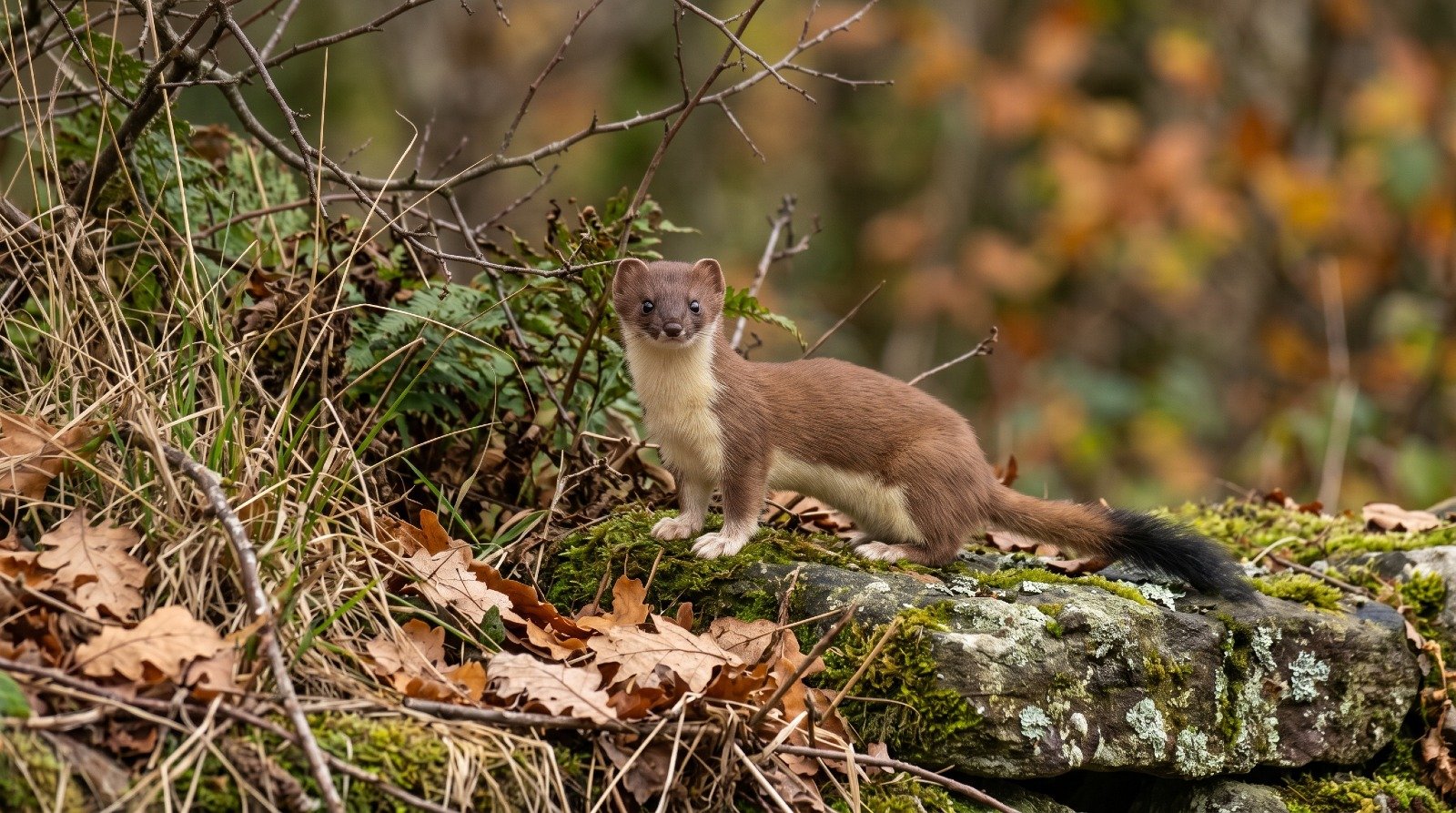
Often dismissed as cute woodland critters, stoats are actually apex micro-predators. Forget the myth that they are simply oversized weasels; stoats are a distinct species with a ruthless reputation. From mesmerizing death dances to bizarrely delayed pregnancies, these energetic hunters command respect. Prepare to discover the bizarre and bloody truths behind this phenomenal mammal.
1. Stoats perform a mesmerizing, acrobatic dance to hypnotize their prey before striking.
When a stoat encounters a rabbit, it often bounds, twists, and flips in the air in an erratic display. While it looks like playful frolicking, this crazy dance is actually a calculated predatory tactic. The bizarre movements confuse and entrance the rabbit, allowing the stoat to edge closer and closer until it is within striking distance for a rapid, lethal bite to the back of the neck.
2. Female stoats spend almost their entire lives pregnant due to a biological quirk called embryonic diapause.
A female stoat mates in early summer, but the fertilized eggs do not immediately implant in her uterus. Instead, the embryos remain completely dormant for nearly ten months. They finally implant in the spring when environmental conditions are optimal for raising young, meaning a female is technically pregnant for over 300 days a year despite a very brief active gestation period.
3. Newborn female stoats are impregnated by adult males before they are even fully weaned.
In one of the most bizarre reproductive strategies in the animal kingdom, adult male stoats will visit nests and mate with blind, deaf female kits who are only a few weeks old. Thanks to embryonic diapause, these infant females store the embryos and will not actually give birth until the following spring, when they are fully mature adults with established territories.
4. A stoat's winter coat, known as ermine, was historically reserved exclusively for royalty.
In colder climates, a stoat sheds its brown summer coat for a pure white winter coat, retaining only a black tip on its tail. This luxurious white fur, called ermine, was highly prized in medieval Europe. In England, strict sumptuary laws dictated that only the royal family and high-ranking nobility were allowed to wear ermine, using the black tail tips to create a striking spotted pattern.
5. The black tip on a stoat's tail acts as an ingenious decoy to distract airborne predators.
While the white winter coat provides excellent camouflage against snow, the prominent black tail tip seems entirely counterintuitive. However, evolutionary biologists believe this black spot serves to confuse predatory birds like hawks and owls. When a bird swoops down, it targets the most visible part of the animal, often striking the tail instead of the stoat's vulnerable body, allowing the mammal to escape.
6. Stoats routinely take down prey that is more than five times their own body weight.
Despite weighing only a few ounces, a stoat is perfectly capable of killing an adult rabbit. They are incredibly strong for their size, utilizing their speed and agility to latch onto the back of a much larger animal. Once attached, they use their sharp teeth to sever the spinal cord at the base of the brain, achieving a remarkably quick and efficient kill against seemingly insurmountable odds.
7. To survive the cold, stoats line their dens with the fur and feathers of their victims.
Stoats have long, slender bodies that lose heat rapidly, putting them at a severe metabolic disadvantage in freezing temperatures. To stay warm, they do not build their own nests from scratch; instead, they take over the burrows of the rodents they kill. They then insulate these stolen homes using the remaining fur, skins, and feathers of their prey, creating a macabre but highly effective thermal blanket.
8. Stoats were disastrously introduced to New Zealand and caused the extinction of several native bird species.
In the late nineteenth century, stoats were brought to New Zealand in a misguided attempt to control invasive rabbit populations. The plan backfired spectacularly. New Zealand's native birds, which had evolved without terrestrial mammalian predators, were entirely defenseless. Stoats decimated ground-nesting bird populations, driving several species to extinction and pushing others, like the kiwi, to the brink.
9. A stoat can reach running speeds of up to twenty miles per hour when chasing down a meal.
For an animal that is typically less than a foot long, achieving speeds of twenty miles per hour is an astonishing biomechanical feat. They move in a distinctive bounding gait, flexing their long spines like a tightly coiled spring to propel themselves forward. This explosive speed ensures that very few terrestrial prey animals can outrun a hungry stoat in an open sprint.
10. Stoats use an intricate system of highly pungent scent glands to communicate with one another.
While they possess excellent eyesight and hearing, stoats rely heavily on olfactory communication. They have specialized anal scent glands that secrete a powerful, musky liquid. They use this musk to mark their territories, signal their reproductive status, and warn away rivals. When severely threatened, a stoat can even discharge this foul-smelling liquid as a defense mechanism, much like a skunk.
11. Unlike most mammals, stoats are capable of delaying their molting process based on local climate conditions.
For many animals, changing seasonal coats is strictly triggered by photoperiod, or the length of daylight. While daylight plays a role for stoats, local temperatures heavily influence their molt. In southern regions experiencing mild winters with little snow, stoats may only partially turn white or remain entirely brown, ensuring they do not become stark white targets against a brown, snowless landscape.
12. A stoat's bite force is proportionately stronger than that of a lion or a tiger.
When adjusted for body size, the bite force quotient of a stoat ranks among the highest of all carnivorous mammals. Their short, robust skulls are packed with powerful jaw muscles that deliver an immense amount of pressure. This incredible evolutionary adaptation is exactly what allows such a tiny animal to pierce the thick skin and crush the vertebrae of significantly larger prey.
13. Stoats are excellent swimmers and have been known to hunt in aquatic environments.
While primarily known as terrestrial hunters, stoats are surprisingly amphibious when the situation demands it. They have been observed swimming across wide rivers and lakes to reach islands populated with nesting birds. Their streamlined bodies allow them to navigate water with ease, and they will readily hunt water voles and raid the nests of waterfowl along marshy banks.
14. They practice surplus killing, meaning they will slaughter far more prey than they can immediately eat.
When a stoat gains access to a confined space filled with prey, such as a chicken coop or a dense rodent burrow, its predatory instinct overrides its hunger. It will kill every moving thing in sight, even if it only needs one meal. This behavior is a practical evolutionary caching strategy; in the wild, the stoat will store these extra carcasses in its den to sustain itself during harsh winter months.
15. The geographic range of the stoat spans across the entire Northern Hemisphere.
Stoats are incredibly adaptable and are not confined to a specific niche environment. Their natural habitat stretches across North America, Europe, and Asia, ranging from temperate woodlands to the harsh Arctic tundra. This massive circumpolar distribution, combined with their relentless hunting prowess, makes them one of the most successful and widespread small carnivores on the planet.
Sources & References
This AI-assisted post was rigorously curated and fact-checked for accuracy by:
 Martin Roháček
How fun was this article? 🤔
Tap a star to rate it
Enjoyed these facts? There's more! 💌
Fresh fun facts in your inbox. No spam, ever.