1. He Is Known By Two Very Different Titles
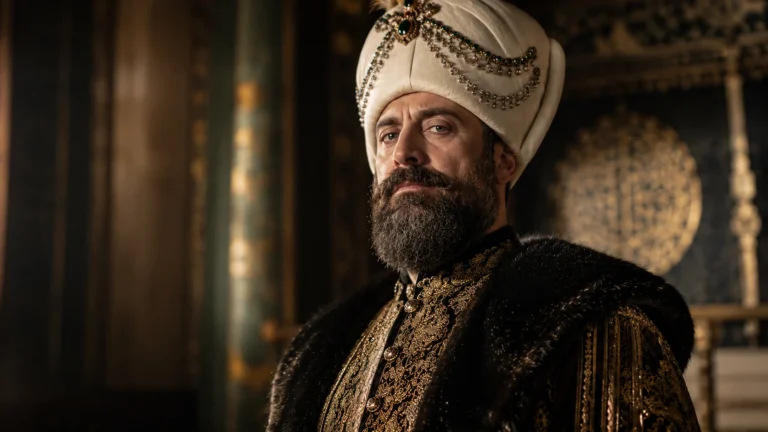
In Western history, he is universally referred to as “Suleiman the Magnificent” in awe of his immense wealth, military might, and the splendor of his court. However, within the Islamic world and the Ottoman Empire itself, he was known as Kanuni, meaning “The Lawgiver.” This eastern title reflects his complete reconstruction of the Ottoman legal system to harmonize secular directives with religious law.
2. He Broke Centuries of Tradition for Love
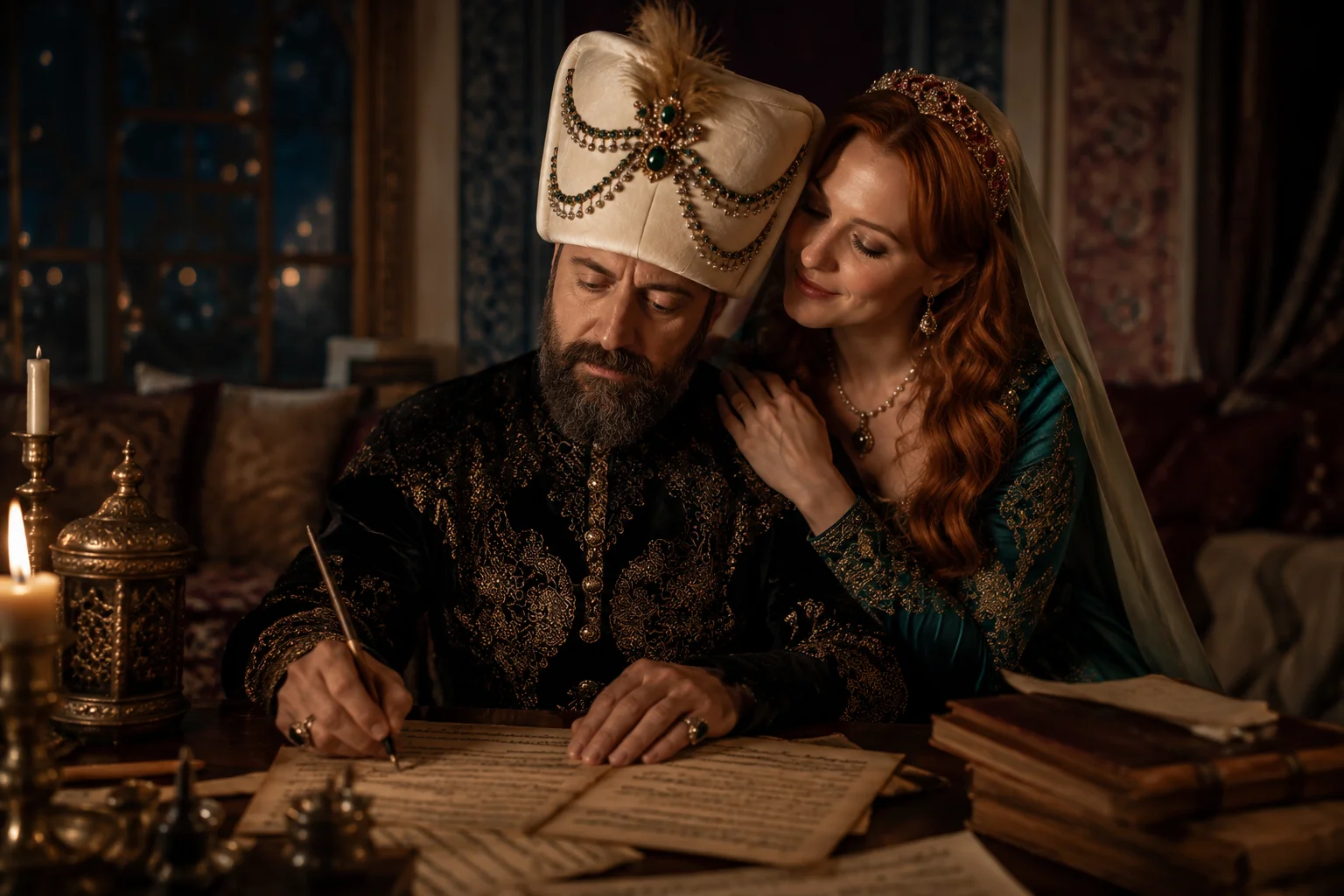
Ottoman Sultans traditionally did not marry their concubines, keeping relationships purely for the purpose of reproduction to avoid concentrating political power in a queen. Suleiman completely shattered this rule for a captive Eastern European woman named Roxelana (later known as Hürrem Sultan). He freed her from slavery, legally married her, and allowed her to become one of the most powerful political figures in the empire.
3. He Was a Prolific and Romantic Poet
Despite his fearsome reputation as a military conqueror, Suleiman was an incredibly dedicated and talented poet. Writing under the pen name Muhibbi (meaning “The Lover” or “Affectionate Friend”), he composed thousands of poems in Persian and Ottoman Turkish. Many of his surviving verses are deeply passionate love poems dedicated exclusively to his wife, Hürrem Sultan.
4. He Executed His Closest Friend
Pargali Ibrahim Pasha was a childhood friend of Suleiman who rose from slavery to become the empire’s Grand Vizier (equivalent to a prime minister). He was granted unprecedented power and wealth by the Sultan. However, as Ibrahim’s arrogance grew—he began calling himself “Sultan” in diplomatic letters—Suleiman’s paranoia was fueled by rumors of treason. In 1536, Suleiman had his lifelong friend strangled in his sleep.
5. He Rebuilt the Walls of Jerusalem
Following the Ottoman conquest of the Middle East, Suleiman took a deep interest in the city of Jerusalem. To protect the holy city and its inhabitants, he ordered the complete reconstruction of the city walls starting in 1537. These magnificent stone fortifications, which include the famous Damascus Gate, still surround the Old City of Jerusalem today.
6. He Sponsored the Islamic World’s Greatest Architect
Suleiman’s reign triggered a massive architectural renaissance, largely thanks to his chief architect, Mimar Sinan. Often compared to Michelangelo in the West, Sinan designed over 300 major structures, transforming the skyline of Istanbul and the wider empire. His crowning achievement under Suleiman was the magnificent Süleymaniye Mosque, a masterpiece of engineering and acoustic design.
7. He Terrified Europe by Besieging Vienna
In 1529, Suleiman led an army of over 100,000 men deep into the heart of Europe to lay siege to Vienna, the capital of the Habsburg Empire. While the siege ultimately failed due to unexpectedly harsh winter weather and supply chain issues, it sent shockwaves of terror throughout Christian Europe. The event marked the maximum expansion of the Ottoman Empire into Western Europe.
8. He Forged an Unlikely Alliance with France
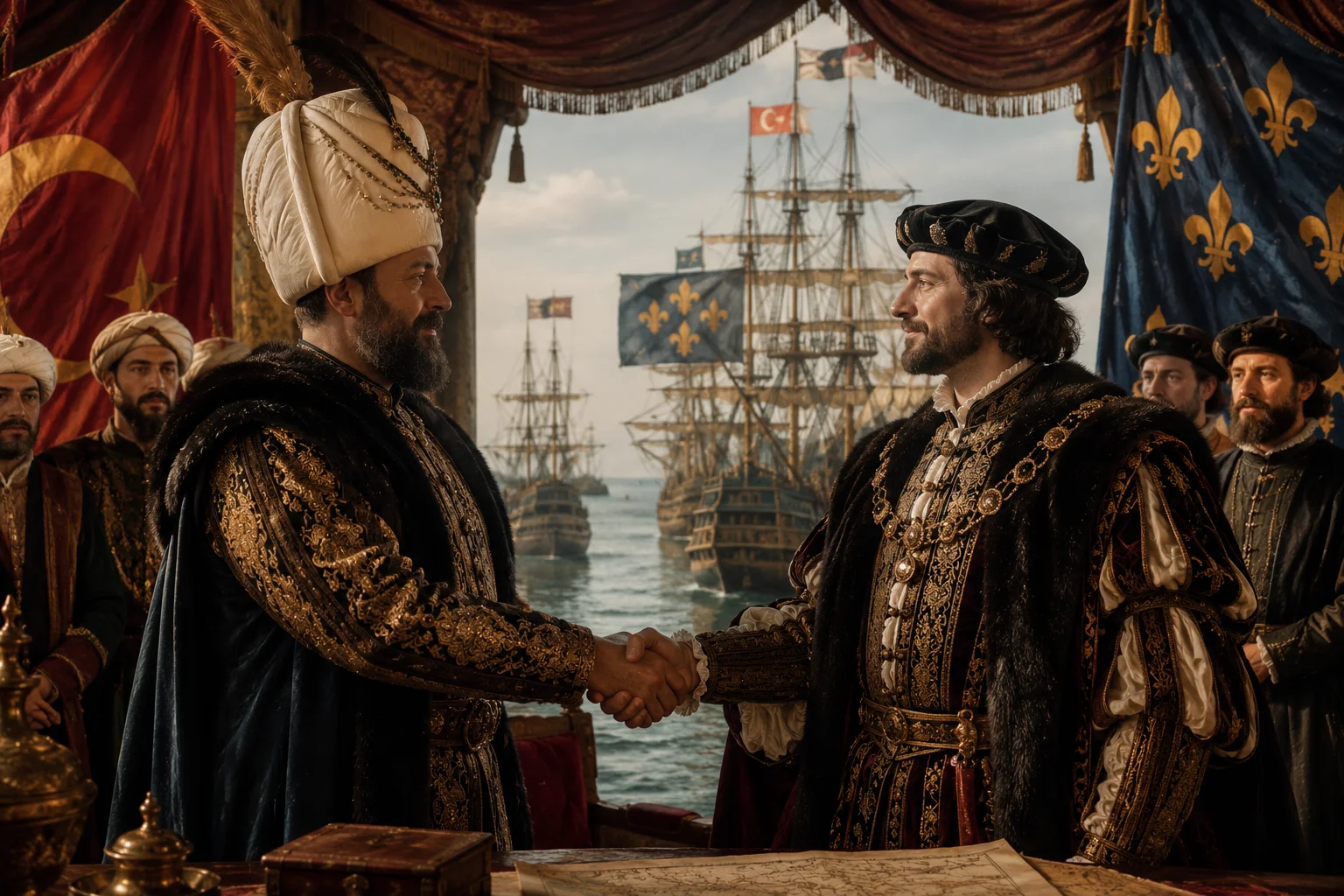
In a move that shocked the Christian world, Suleiman formed a strategic military and economic alliance with King Francis I of France in 1536. Driven by a mutual hatred for the Habsburg Holy Roman Emperor Charles V, this “unholy alliance” allowed French and Ottoman naval fleets to conduct joint military operations in the Mediterranean, a partnership that lasted for centuries.
9. He Enlisted a Legendary Pirate to Run His Navy
To secure dominance over the Mediterranean Sea, Suleiman recruited the feared Barbary corsair Khizr Reis, better known in the West as Hayreddin Barbarossa. Suleiman appointed the notorious pirate as the Grand Admiral of the Ottoman Navy. Under Barbarossa’s brilliant naval command, the Ottoman fleet decisively defeated the combined navies of Christian Europe, securing naval supremacy for decades.
10. He Was a Master Goldsmith
In Ottoman royal tradition, every prince was expected to learn a practical, manual trade, ensuring they stayed grounded and possessed a skill regardless of their royal status. Suleiman chose the delicate and precise craft of goldsmithing. He often designed and crafted intricate pieces of jewelry himself, occasionally gifting them to his favored courtiers and his wife.
11. He Protected Jewish Refugees from the Inquisition
When the Spanish Inquisition forced thousands of Jewish people to flee the Iberian Peninsula, the Ottoman Empire offered them sanctuary. Suleiman continued the welcoming policies of his father and actively encouraged Jewish immigration to his cities. He recognized their valuable skills in medicine, trade, and printing, and fiercely protected their religious freedom under Ottoman law.
12. Paranoia Led Him to Execute His Own Sons
The Ottoman succession system was notoriously brutal, often resulting in civil war. Influenced by court intrigue and the machinations of his wife Hürrem (who wanted her own sons to rule), Suleiman became convinced that his brilliant and highly popular eldest son, Mustafa, was planning a coup. In 1553, Suleiman ordered Mustafa to be strangled in his tent. Years later, he also ordered the execution of another son, Bayezid, for rebellion.
13. He Enacted Strict Anti-Corruption Laws
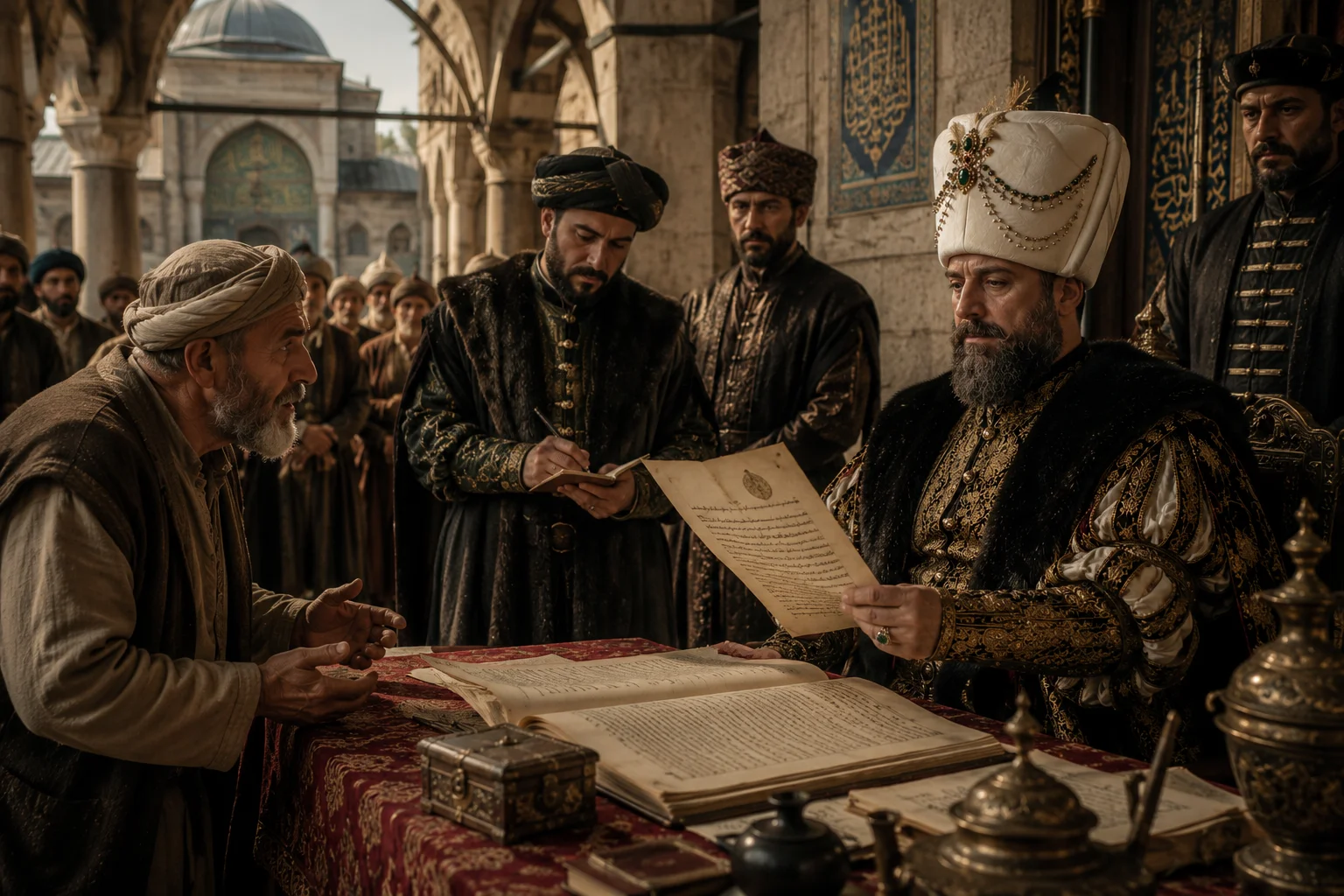
As “The Lawgiver,” Suleiman was obsessed with fair administration and rooting out corruption. His legal codes heavily regulated taxation, standardizing levies to prevent local governors from extorting the peasantry. He frequently dispatched undercover inspectors into the provinces to audit officials, instantly dismissing or executing those found guilty of abusing their power or overtaxing the poor.
14. His Death Was Kept Secret for Weeks
Suleiman died in his tent at the age of 71 while leading his army during the Siege of Szigetvár in Hungary in 1566. Fearing that the news of the Sultan’s death would cause the army to mutiny or abandon the campaign, his Grand Vizier kept his death a complete secret for 48 days. His body was embalmed, and orders continued to be issued in his name until his successor could secure the throne.
15. He Left His Successor a Financial Crisis
While his reign is remembered as a golden age, Suleiman’s endless military campaigns, massive architectural projects, and lavish court spending drained the imperial treasury. He left his successor, Selim II, with a vastly expanded empire but severe financial instability. Many historians view the end of Suleiman’s reign as the turning point where the slow decline of the Ottoman Empire began.