The Majestic Canyon: 15 Fascinating Facts About Zion National Park
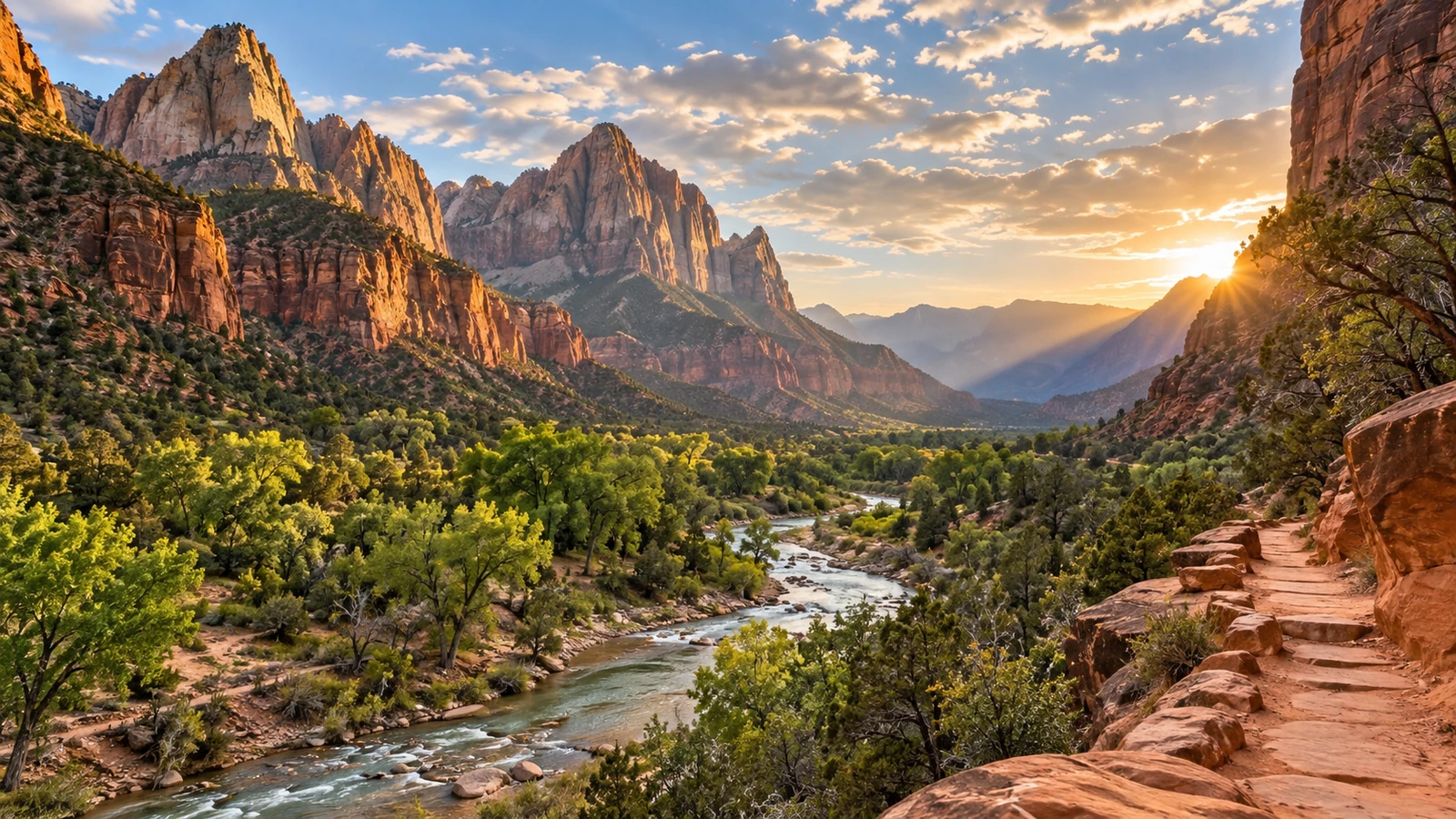
Zion National Park is one of America's most spectacular natural wonders, boasting towering red cliff faces, ancient spring water, and soaring, rare wildlife. Carved over millions of years by the Virgin River, this geological marvel in southwestern Utah draws millions of adventurers seeking thrilling ridge hikes and deep slot canyons. From a controversial name change designed to lure tourists to thousand-year-old water dripping through stone, Zion is packed with astonishing history and science. Discover the obscure history, extreme geology, and surprising ecological secrets that make Zion National Park truly unmissable.
1. It Was Originally Named Mukuntuweap National Monument
Before becoming a household name, the park was designated as Mukuntuweap National Monument by President William Howard Taft in 1909. The name originated from a Southern Paiute word translated as "straight canyon" or "straight valley." However, early Mormon settlers and tourism proponents complained that the Indigenous name was too difficult for visitors to pronounce or remember. In 1918, acting National Park Service director Horace Albright changed the monument's name to Zion, a biblical term meaning a place of peace and refuge. The strategic rebranding worked as intended, quickly turning the remote destination into a popular tourist attraction for travelers across the United States.
2. Water dripping at Weeping Rock fell as rain 1,000 years ago
One of the park's most memorable natural displays is Weeping Rock, where water constantly trickles from a recessed sandstone alcove. This moisture does not come from recent rainfall, but from precipitation that fell onto the high plateau roughly a millennium ago. Rainwater slowly percolates downward through porous Navajo sandstone at a agonizing pace of just a few inches per year. When the water finally hits an impermeable layer of Kayenta shale beneath, it is forced sideways until it shoots out of the cliff face as a dripping spring. Hikers standing underneath the rock alcove are literally getting showered by rainwater from medieval times.
3. The Virgin River removes over one million tons of sediment per year
Despite its serene name, the Virgin River acts as a relentless, powerful industrial conveyor belt cutting through southwest Utah. Every single year, the river carries more than one million tons of rock and soil away from the park. During extreme summer flash floods, the river's flow volume can surge from a peaceful trickle to thousands of cubic feet per second within minutes. This tremendous abrasive force allows the river to continuously carve and deepen the canyon floor by roughly one inch every 1,000 years. Without this persistent aquatic erosion, Zion's sheer 2,000-foot sandstone walls would not exist today.
4. Angels Landing features a harrowing ridge with 1,000-foot drop-offs
Angels Landing is world-famous as one of the most terrifying yet thrilling day hikes on Earth. The final half-mile of the trail ascends a razor-thin sandstone spine with sheer vertical drops of over 1,000 feet (305 meters) on both sides. To prevent hikers from plummeting into the canyon below, Park Service engineers anchored heavy iron hand-chains along the exposed slickrock. The destination earned its name in 1916 when explorer Frederick Fisher remarked that only an angel could land on such an isolated pinnacle. Today, the trail is so heavily visited that park authorities require a strict permit lottery system to manage dangerous crowd congestion.
5. It is a vital sanctuary for giant California condors
The skies above the canyon cliffs are home to one of the world's rarest and largest avian scavengers, the California condor. Boasting an immense wingspan of nearly 10 feet (3 meters), these massive birds look almost prehistoric as they glide effortlesly on thermal air currents. By the late 1980s, the species was on the brink of complete extinction, with only 22 individuals remaining on Earth. Thanks to intensive captive breeding and reintroduction programs in northern Arizona and southern Utah, condors have successfully nested in Zion's high cliff alcoves. Visitors using binoculars can often spot these magnificent, tagged birds soaring around Angels Landing and Scout Lookout.
6. The Zion-Mount Carmel Tunnel contains hidden cliff windows
Dedicated in 1930, the 1.1-mile Zion-Mount Carmel Tunnel was considered a groundbreaking civil engineering marvel that connected the park to Bryce Canyon and the Grand Canyon. To build the long passageway through solid sandstone, crews cut large openings known as "galleries" directly into the cliff faces. These massive stone windows served primarily as ventilation shafts and dumping ports for tons of blasted rock debris during construction. Today, drivers passing through the dark tunnel catch brief, breathtaking glimpses of the canyon through these rustic carved portals. Due to the tunnel's narrow dimensions, oversized recreational vehicles require a special traffic escort permit to clear the interior arches safely.
7. Kolob Arch is one of the largest natural arches on Earth
Hidden far away from the main canyon in the wilderness of Kolob Canyons sits one of the longest natural arches in the world. Kolob Arch spans a staggering 287 feet (87 meters) across a high canyon wall, defying gravity with its immense mass of red sandstone. For decades, outdoor enthusiasts fiercely debated whether Kolob Arch or Delicate Arch was larger, leading to high-precision laser measurements that confirmed Kolob's massive scale. Reaching this remote landmark requires a strenuous 14-mile round-trip hike through deep backcountry trails. Because the arch hangs precariously on a decaying cliff face, walking underneath it is strictly prohibited to prevent accidents and protect the fragile geologic feature.
8. The Subway formation was carved by violent flash floods
One of the park's most iconic backcountry features is "The Subway," a unique slot canyon that mirrors a subterranean metro station. Over tens of thousands of years, churning torrents of water loaded with abrasive sand and cobbles swirled through the tight canyon, scooping out a smooth, cylindrical tube. The resulting natural tunnel features glowing green pools, mossy cascades, and curved rock walls reminiscent of a city train platform. Navigating this technical route requires swimming through freezing water, scrambling over boulders, and rappelling down drop-offs. Because of its fragile ecosystem and extreme hazards, access is strictly limited via a competitive wilderness permit system.
9. Ancestral Puebloans built elevated cliff granaries thousands of years ago
Human history in the canyon stretches back over 10,000 years, beginning with nomadic Archaic hunter-gatherers. Around 300 CE, the Ancestral Puebloans (formerly referred to as the Anasazi) established permanent agricultural settlements in the fertile canyon floor. To protect their harvested corn, beans, and squash from flash floods and hungry rodents, they built intricate masonry granaries tucked high into natural cliff alcoves. These mud-and-stone storage structures remain intact centuries later, standing as silent monuments to ancient engineering. Visitors looking closely at high canyon walls along the Virgin River can still spot these incredibly preserved structures perched high above the valley floor.
10. Checkerboard Mesa was formed by sand dunes and cross-bedding
Rising near the park's east entrance, Checkerboard Mesa is a striking 900-foot sandstone hill covered in a giant grid pattern. The unique cross-hatched design is the result of two distinct geological processes acting on ancient rock over millions of years. Horizontal lines were formed during the Jurassic period, when massive windblown sand dunes shifted and compacted into layers of Navajo sandstone, creating cross-bedding. Vertical lines were caused later by expansion, contraction, and stress relief as temperature swings and freezing water fractured the rock face. Together, these intersecting geometric patterns make the mountain look like a giant gaming board frozen in solid stone.
11. Zion harbors greater plant diversity than the Hawaiian Islands
While many visitors picture Zion as a dry desert landscape, the park hosts an astoundingly rich variety of plant life. Because elevation within the park ranges from 3,600 feet on the canyon floor to nearly 8,800 feet on high plateaus, it encompasses four distinct life zones: desert, riparian, pinyon-juniper, and high-elevation ponderosa forest. This incredible geographic diversity allows over 900 species of plants to flourish inside park boundaries. Surprisingly, this gives Zion a broader spectrum of native vascular plant species than the entire isolated chain of the Hawaiian Islands. High hanging gardens fed by seeping cliff water even shelter endemic plant species found nowhere else on Earth.
12. Private vehicles are banned in the main canyon during peak season
To combat severe traffic jams, toxic exhaust pollution, and environmental degradation, Zion introduced a mandatory shuttle system in the year 2000. For most of the year, personal automobiles are completely prohibited from driving along the scenic Zion Canyon Scenic Drive. Instead, visitors ride sleek, free propane-powered shuttle buses that stop at major trailheads every few minutes. This transit overhaul dramatically reduced air pollution, eliminated gridlock, and restored quiet solitude to the narrow canyon floor. The success of Zion's shuttle program has since served as an operational model for other overcrowded national parks across North America.
13. The Great White Throne stands as a 2,350-foot solid white monolith
Dominating the skyline of the main canyon, the Great White Throne is a massive, sheer monolith rising 2,350 feet (716 meters) from the floor of the Virgin River. Unlike the fiery reddish-orange cliffs surrounding it, the top section of this gigantic rock face consists of brilliant white Navajo sandstone. This dramatic color variation occurs because ancient iron oxides were leached out of the upper sand layers by acidic groundwater long before the stone was exposed. The sheer vertical face of the throne is a legendary target for elite big-wall rock climbers from around the globe. Its breathtaking appearance makes it one of the most photographed geological formations in the entire American Southwest.
14. Desert bighorn sheep staged a miraculous comeback in the park
Desert bighorn sheep were once completely wiped out from the region surrounding the canyon due to overhunting and introduced livestock diseases by the mid-20th century. In 1978, wildlife biologists launched a recovery effort by reintroducing just 14 desert bighorns into the rugged east side of the park. Thriving in the rocky terrain, the herd expanded rapidly and now numbers several hundred healthy animals. These sure-footed mammals feature specially designed cloven hooves with soft pads that act like rubber climbing shoes on slick sandstone. Drivers traveling along the winding eastern highway frequently spot herds effortlessly bounding up impossibly steep cliff walls.
15. The 2002 Winter Olympic Torch was carried through the canyon
When Salt Lake City hosted the 2002 Olympic Winter Games, organizers wanted to broadcast Utah's spectacular landscape to billions of international television viewers. As part of the global torch relay, official flame bearers ran the Olympic Torch directly through the heart of Zion National Park. The sight of the glowing Olympic flame framed by soaring red sandstone cliffs served as a iconic symbol for the games. The event highlighted the deep connection between Utah's rugged wilderness history and its modern culture of outdoor athletics. Today, a plaque commemorating the historic torch run can be seen near the park's main visitor center area.
Sources & References
This AI-assisted post was rigorously curated and fact-checked for accuracy by:
 Martin Roháček
How fun was this article? 🤔
Tap a star to rate it
🧠 Quiz: How closely were you paying attention?
10 questions — all answers are in the article above!
Enjoyed these facts? There's more! 💌
Fresh fun facts in your inbox. No spam, ever.