1. The Origin of the “Albiceleste” Stripes
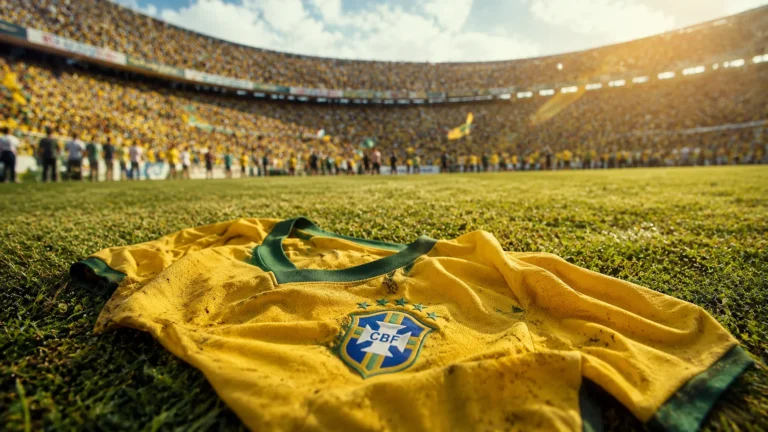
For over a century, the Argentine squad has worn their iconic light blue and white stripes, earning them the famous nickname “La Albiceleste.” These vibrant colors were directly inspired by the Argentine national flag and the cockade worn by revolutionaries during the fight for independence. The team first officially debuted this classic vertically striped jersey during a match against Uruguay in 1908, permanently discarding their earlier solid-colored kits. This iconic design has since become a global symbol of footballing excellence and national pride, instantly recognizable on pitches around the world.
2. Playing the First Official Match Outside the UK
While international football was initially localized entirely within the British Isles, South America quickly embraced the beautiful game and made history. In July 1902, Argentina traveled to Montevideo to face Uruguay in what is officially recognized as the very first international football match played outside of the United Kingdom. The Argentine squad demonstrated immediate dominance, crushing their neighbors with a staggering 6-0 victory. This historic encounter laid the absolute foundation for international football in the Americas and sparked a fierce, century-long rivalry between the two bordering nations.
3. A Tense First World Cup Victory on Home Soil
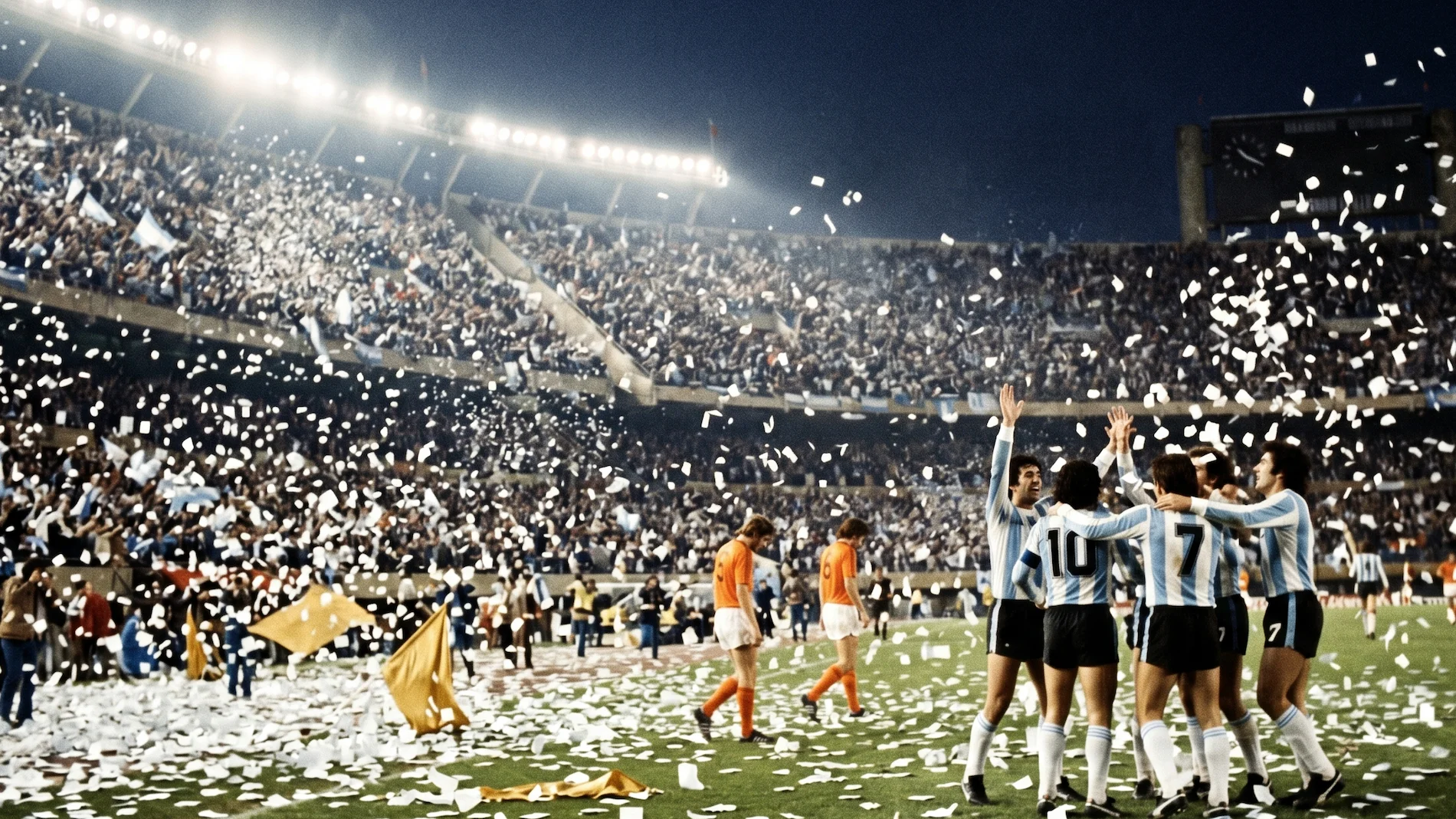
Argentina hosted the 1978 World Cup under an incredibly dark and tense political backdrop, as the country was ruled by a brutal military junta. Despite the oppressive atmosphere and international calls for boycotts, the passionate Argentine public completely embraced the tournament, creating a deafening, intimidating atmosphere in the stadiums. The local fans became globally famous for throwing massive amounts of shredded white paper confetti—known as “papelitos”—onto the pitch, openly defying the junta’s strict bans on the practice. Propelled by striker Mario Kempes, Argentina defeated the Netherlands in the final to claim their first-ever world championship.
4. The Hand of God and Goal of the Century
The 1986 World Cup quarter-final between Argentina and England remains one of the most culturally significant and highly scrutinized matches in football history. Driven by the lingering geopolitical tensions of the Falklands War, Argentine captain Diego Maradona delivered a performance of breathtaking duality. He first scored the highly controversial “Hand of God” goal by illegally punching the ball into the net past the English goalkeeper. Just four minutes later, Maradona dribbled past five English players from his own half to score what FIFA officially named the “Goal of the Century,” perfectly encapsulating his flawed, undeniable genius.
5. The “Superclásico de las Américas” Rivalry
The intense, fiercely contested footballing relationship between Argentina and Brazil is widely considered the greatest international rivalry in the world. Officially branded as the “Superclásico de las Américas,” this monumental clash represents a massive ideological battle between Brazil’s joyful, free-flowing rhythm and Argentina’s tactical, fiercely aggressive passion. The two continental giants have battled for absolute supremacy across decades of World Cups, Copa America finals, and brutal qualifying matches. Whenever these two powerhouses meet on the pitch, entire nations grind to a halt to witness the sheer spectacle of South American footballing royalty.
6. Absolute Dominance in the Copa America
While their global triumphs often dominate the headlines, Argentina’s absolute stranglehold on their own continent is statistically undeniable. La Albiceleste currently holds the outright record for the most Copa America titles won in the tournament’s long history, having lifted the prestigious trophy 16 times. After enduring a painfully long 28-year continental title drought, they secured back-to-back championships in 2021 and 2024 to finally surpass Uruguay in the historic rankings. This incredible regional dominance perfectly solidifies their status as the undisputed kings of South American football.
7. Lionel Messi’s Emotional Journey to World Cup Glory
For over a decade, Lionel Messi carried the crushing, almost impossible weight of a nation desperate for World Cup glory. Despite winning every conceivable individual award and club trophy, he suffered agonizing, heartbreaking defeats in the 2014 World Cup final and multiple Copa America finals, even briefly retiring from international football in 2016. However, his epic story culminated in absolute triumph at the 2022 World Cup in Qatar. In a historic, deeply emotional final against France, Messi scored twice and lifted the ultimate prize, permanently cementing his legacy alongside Maradona as an immortal Argentine hero.
8. The Record for Most World Cup Penalty Shootout Wins
When an international match goes to the dreaded penalty shootout, no nation on earth is more statistically formidable than Argentina. La Albiceleste holds the all-time record for the most penalty shootout victories in FIFA World Cup history, having won six out of their seven total tiebreakers. Legendary goalkeepers like Sergio Goycochea in 1990 and Emiliano Martínez in 2022 became instant national icons for their incredible penalty-saving heroics under unimaginable pressure. This remarkable psychological resilience from the spot has repeatedly saved the team during the most intense knockout stages.
9. Back-to-Back Olympic Gold Medals
While the World Cup is their ultimate prize, Argentina has also achieved a spectacular era of absolute dominance at the Summer Olympic Games. They won back-to-back Olympic gold medals in men’s football in Athens in 2004 and Beijing in 2008, featuring early career performances by future legends like Carlos Tevez, Javier Mascherano, and Lionel Messi. The 2004 squad was particularly terrifying, as they completely swept the tournament by scoring 17 goals and winning the gold medal without conceding a single goal, an unprecedented feat in modern Olympic football.
10. Playing in the Inaugural World Cup Final
When FIFA organized the very first World Cup in Uruguay in 1930, Argentina proved they were already a dominant global force by powering their way to the championship match. They faced host nation Uruguay in a highly tense final that required a bizarre logistical compromise. Because both fiercely proud nations demanded to use their own specific type of football, FIFA decided that Argentina would provide the ball for the first half, and Uruguay would provide theirs for the second. Despite leading at halftime with their ball, Argentina ultimately lost the historic match 4-2.
11. Gabriel Batistuta’s Unique Hat-Trick Record
Before the era of Messi, the Argentine attack was spearheaded by the legendary, incredibly powerful striker Gabriel “Batigol” Batistuta. He achieved an astonishing individual scoring milestone that has never been matched by any other player in the long history of the sport. Batistuta is the absolute only player to ever score a hat-trick in two different World Cup tournaments, achieving the incredible feat against Greece in 1994 and against Jamaica in 1998. His terrifying shot power and clinical finishing made him Argentina’s all-time leading scorer until Messi eventually surpassed his record.
12. A Historic 36-Match Unbeaten Streak
In the years leading up to their 2022 World Cup triumph, the Argentine national team became an entirely invincible, perfectly unified machine under manager Lionel Scaloni. The squad, affectionately dubbed “La Scaloneta,” went on a staggering 36-match unbeaten run stretching from the summer of 2019 until November 2022. This streak stands as the second-longest undefeated run in the history of men’s international football. The epic momentum was only surprisingly snapped by a shocking 2-1 defeat to Saudi Arabia in their opening match in Qatar, a necessary wake-up call that ultimately propelled them to the title.

13. Attempting to Retire the Number 10 Jersey
The cultural impact of Diego Maradona on Argentine football is so overwhelmingly massive that the national federation actually tried to permanently retire his iconic shirt number. In 2001, the Argentine Football Association officially announced that no player would ever wear the number 10 jersey again in honor of his legendary contributions. However, FIFA strictly rejected this request for the 2002 World Cup, mandating that tournament squads must be numbered sequentially from 1 to 23. The number 10 was eventually assigned to Ariel Ortega, keeping the legendary shirt active for future superstars.
14. Guillermo Stábile Won the First Golden Boot
While the 1930 World Cup ended in a painful final defeat for Argentina, it also launched the career of the tournament’s very first global scoring superstar. Argentine forward Guillermo Stábile was not even supposed to start the tournament, only playing after the primary striker suffered an anxiety attack before the second match. Stábile seized the sudden opportunity by scoring a staggering eight goals in just four matches, including a hat-trick on his debut. This incredible performance officially earned him the inaugural Golden Boot award as the top scorer of the very first World Cup.
15. The Revival of the Finalissima Trophy
Proving their absolute dominance stretched far beyond South America, Argentina successfully conquered Europe’s best in a historic transatlantic showdown in 2022. Facing the reigning European champions, Italy, in the revived CONMEBOL–UEFA Cup of Champions—branded as the “Finalissima”—Argentina delivered a brutal masterclass at Wembley Stadium in London. They dismantled the Italian squad with a highly convincing 3-0 victory, completely outplaying their European rivals from the opening whistle. This massive, statement-making triumph provided a crucial psychological boost and served as the ultimate prelude to their World Cup victory in Qatar just months later.
Sources and References