1. It Holds the All-Time World Cup Attendance Record
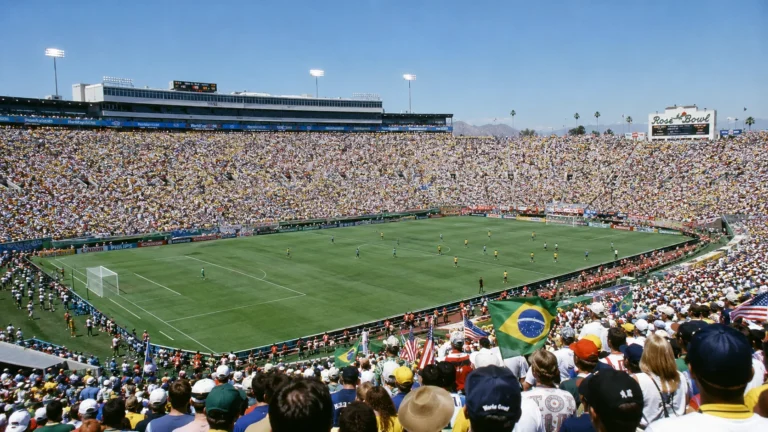
Despite taking place in a nation where soccer was not the dominant sport, the 1994 tournament shattered global attendance records. Total attendance surpassed an astonishing 3.5 million spectators across just 52 matches, resulting in an average crowd of nearly 69,000 fans per game. Because stadiums in the United States were massive structures built for American football, venues like the Rose Bowl easily accommodated crowds exceeding 90,000 people. This incredible aggregate attendance record stood unchallenged for decades, even after FIFA expanded subsequent tournaments to include significantly more teams and matches.
2. Diana Ross Missed an Opening Ceremony Penalty Kick
The tournament kicked off with a uniquely American, glitzy opening ceremony at Soldier Field in Chicago that featured a highly memorable live mishap. Pop icon Diana Ross was scheduled to run up and kick a soccer ball into the net as part of a choreographed musical routine, which would trigger the goalposts to split apart. Unfortunately, Ross pulled her shot wide, sending the ball missing the goal entirely to the amusement of a global television audience. In a hilarious display of show business resilience, the prop goalposts mechanically collapsed anyway, perfectly matching the original script despite the missed shot.
3. The Final Was the First Decided by a Penalty Shootout
The highly anticipated championship clash between Brazil and Italy at the scorching Rose Bowl in Pasadena delivered immense tactical tension but zero goals. After 120 grueling minutes of regulation and extra time under the blazing California sun, the match ended in a scoreless stalemate. This marked the absolute first time in the decades-long history of the FIFA World Cup that a final match ended without a single goal scored from open play. The ultimate champion had to be decided by a high-stakes penalty shootout, permanently altering the dramatic threshold of soccer’s biggest stage.
4. Roberto Baggio Suffered Iconic Final Heartbreak
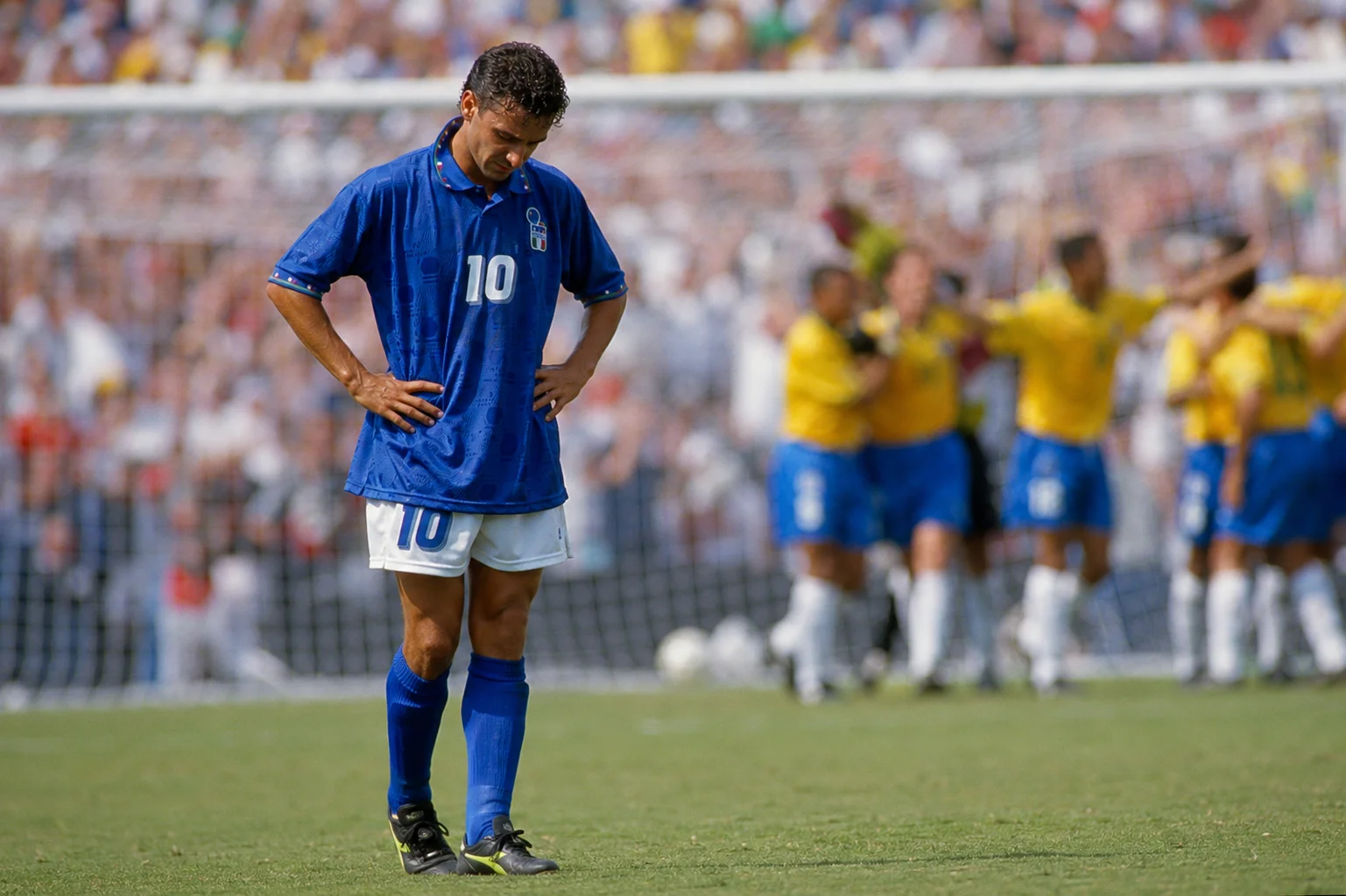
Italian forward Roberto Baggio was the undisputed hero of the tournament leading up to the final, single-handedly carrying his nation through the knockout stages with five crucial goals. However, his spectacular summer ended in absolute tragedy during the deciding moments of the championship penalty shootout against Brazil. Stepping up to take Italy’s final mandatory kick, Baggio leaned back and launched the ball soaring high over the crossbar into the Pasadena sky. His silent, devastated pose looking down at the penalty spot while Brazil celebrated remains one of the most hauntingly poetic images in sports history.
5. Indoor Matches Were Played on Grass for the First Time
Hosting matches inside the massive Pontiac Silverdome in Michigan presented a severe logistical challenge for FIFA, which strictly mandated natural grass surfaces. Because natural turf cannot grow inside a dark enclosed dome, agricultural experts executed a brilliant experimental workaround. They successfully grew modular hexagonal sod trays of real grass outdoors in California before shipping them across the country and assembling them inside the stadium like a massive puzzle. The historic match between the United States and Switzerland marked the first time a World Cup fixture was played indoors on real grass.
6. Diego Maradona Was Expelled After a Wild Celebration
Argentine legend Diego Maradona provided one of the tournament’s most unhinged visual moments after scoring a brilliant curling goal against Greece in Boston. He aggressively ran toward a sideline broadcast camera, screaming maniacally into the lens with his eyes bulging in a display of raw emotion. However, his comeback story ended abruptly just days later when random drug testing revealed he had multiple strains of the banned stimulant ephedrine in his system. FIFA immediately expelled the disgraced superstar from the tournament, marking a highly dramatic and unfortunate end to his glorious World Cup career.
7. Oleg Salenko Scored Five Goals in a Single Match
Russian striker Oleg Salenko achieved a monumental feat of individual scoring efficiency during a group stage match against Cameroon at Stanford Stadium. Salenko found the back of the net an astonishing five times in a single game, leading Russia to a dominant victory. This blistering performance officially set an all-time World Cup record for the most goals scored by an individual player in one match. Thanks to this incredible haul, Salenko shared the tournament’s Golden Boot award with Hristo Stoichkov despite Russia being eliminated in the first round.
8. Roger Milla Became the Oldest World Cup Goalscorer
While Oleg Salenko was dismantling the Cameroonian defense in California, legendary forward Roger Milla managed to write his own historic chapter for the African nation during the exact same game. Subbed on during the match, Milla scored a consolation goal against Russia at the incredible age of 42 years and 39 days old. This strike officially made him the oldest goalscorer in the entire history of the FIFA World Cup. His enduring athleticism and famous corner-flag dance celebrations secured his permanent legacy as one of soccer’s most beloved global ambassadors.
9. Extreme Midday Heat Pushed Players to Their Limits
To maximize highly lucrative broadcast ratings for prime-time European television audiences, organizers scheduled many matches during the absolute hottest hours of the American afternoon. Teams playing at venues like the Cotton Bowl in Dallas or the Citrus Bowl in Orlando faced sweltering midday temperatures that frequently exceeded 100 degrees Fahrenheit with extreme humidity. Pundits and team doctors expressed severe concern for player safety, noting that the brutal thermal conditions caused rapid dehydration and extreme physical exhaustion. Players routinely poured bottles of ice water over their heads during stoppages just to survive the grueling matches.
10. Andrés Escobar Suffered Tragic Retribution for an Own Goal
The tournament featured a deeply sorrowful real-world tragedy surrounding the highly favored Colombian national team. During a tense group stage match against the host nation, defender Andrés Escobar accidentally stretched out and deflected an American cross into his own net, contributing to Colombia’s shocking early elimination. Just days after returning to his home country, Escobar was tragically shot and killed outside a nightclub in Medellín by individuals allegedly connected to powerful gambling cartels. The senseless murder sent shockwaves of profound grief through the international soccer community, casting a dark shadow over the tournament.
11. The USA Wore Faux-Denim Kits Covered in Stars
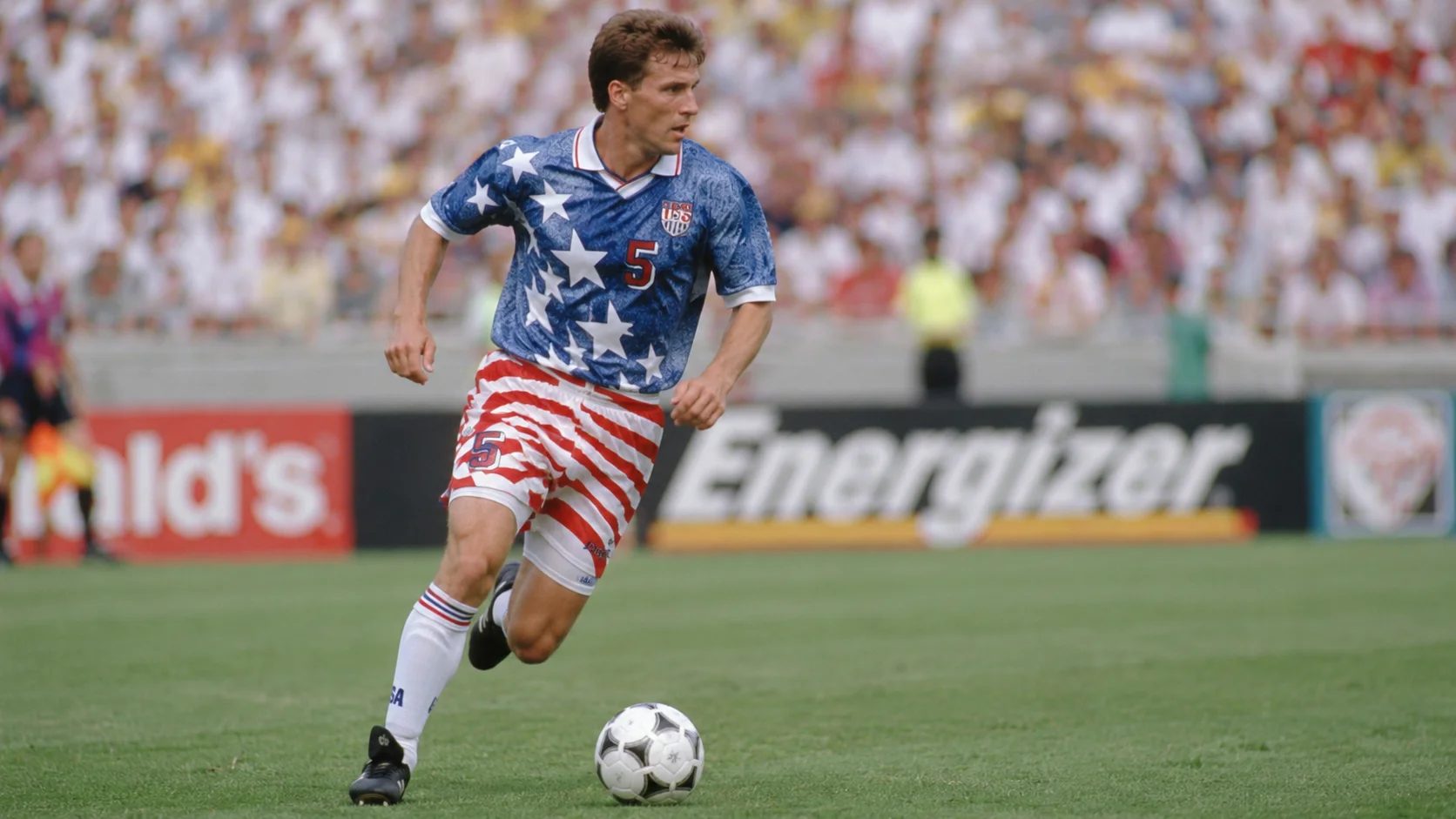
The host nation took the field wearing what would quickly become one of the most polarizing and memorable uniform designs in sports history. Produced by Adidas, the United States away kit featured a highly unique blue and white pattern printed specifically to look like distressed denim fabric. To complete the patriotic aesthetic, the faux-jean shirts were covered in waving sets of massive white stars paired with solid red shorts. While heavily criticized by traditionalists at the time as a fashion disaster, the kits have since achieved legendary cult status among modern soccer jersey collectors.
12. Bebeto Birthed the Iconic Rock the Cradle Celebration
During a thrilling quarterfinal clash between Brazil and the Netherlands in Dallas, Brazilian forward Bebeto scored a crucial goal and instantly created a timeless piece of soccer culture. Running toward the sideline, he brought his arms together and began swinging them back and forth to mimic rocking a newborn baby to sleep. His teammates Romário and Mazinho spontaneously rushed over and joined him in perfect synchronization to celebrate the recent birth of Bebeto’s son, Mattheus. This incredibly wholesome, iconic visual gesture has since been replicated by thousands of scoring players worldwide to celebrate their own growing families.
13. Hosting the Tournament Directly Created Major League Soccer
When FIFA awarded the hosting rights to the United States back in 1988, they attached one major, non-negotiable condition to the agreement. Because the country lacked a top-tier professional outdoor soccer league, US Soccer was strictly mandated to establish a fully operational domestic competition. This strict contractual requirement directly forced the creation of Major League Soccer, which officially launched its inaugural season two years after the tournament concluded. The successful execution of the World Cup effectively laid the permanent foundation for the thriving professional domestic game seen in America today.
14. An American Victory Ended a 44-Year Drought
Entering the tournament, the United States Men’s National Team had not won a World Cup match since their famous upset of England back in 1950. That agonizing 44-year drought was permanently shattered during a dramatic group stage encounter against heavily favored Colombia at the Rose Bowl. Fueled by an electric home crowd, midfielder Earnie Stewart scored a brilliant second-half goal to secure a stunning victory for the underdog Americans. This historic win proved to the world that the United States was finally ready to compete seriously on the global stage, sparking a massive surge of domestic soccer interest.
15. Ireland Stunned Italy in Front of a Massive Diaspora
Giants Stadium in New Jersey hosted one of the most intensely atmospheric matches of the tournament when the Republic of Ireland faced off against European giants Italy. Because the New York metropolitan area boasts an incredibly dense Irish-American population, the stadium was heavily packed with a passionate sea of green shirts. Midfielder Ray Houghton scored a stunning early goal with a looping shot, sending the massive stadium crowd into an absolute frenzy. Ireland held on to secure a legendary victory against the eventual tournament finalists, triggering massive street celebrations across local Irish neighborhoods.
Sources and References