The Historic Nagano Games: 15 Fascinating Facts About the 1998 Winter Olympics
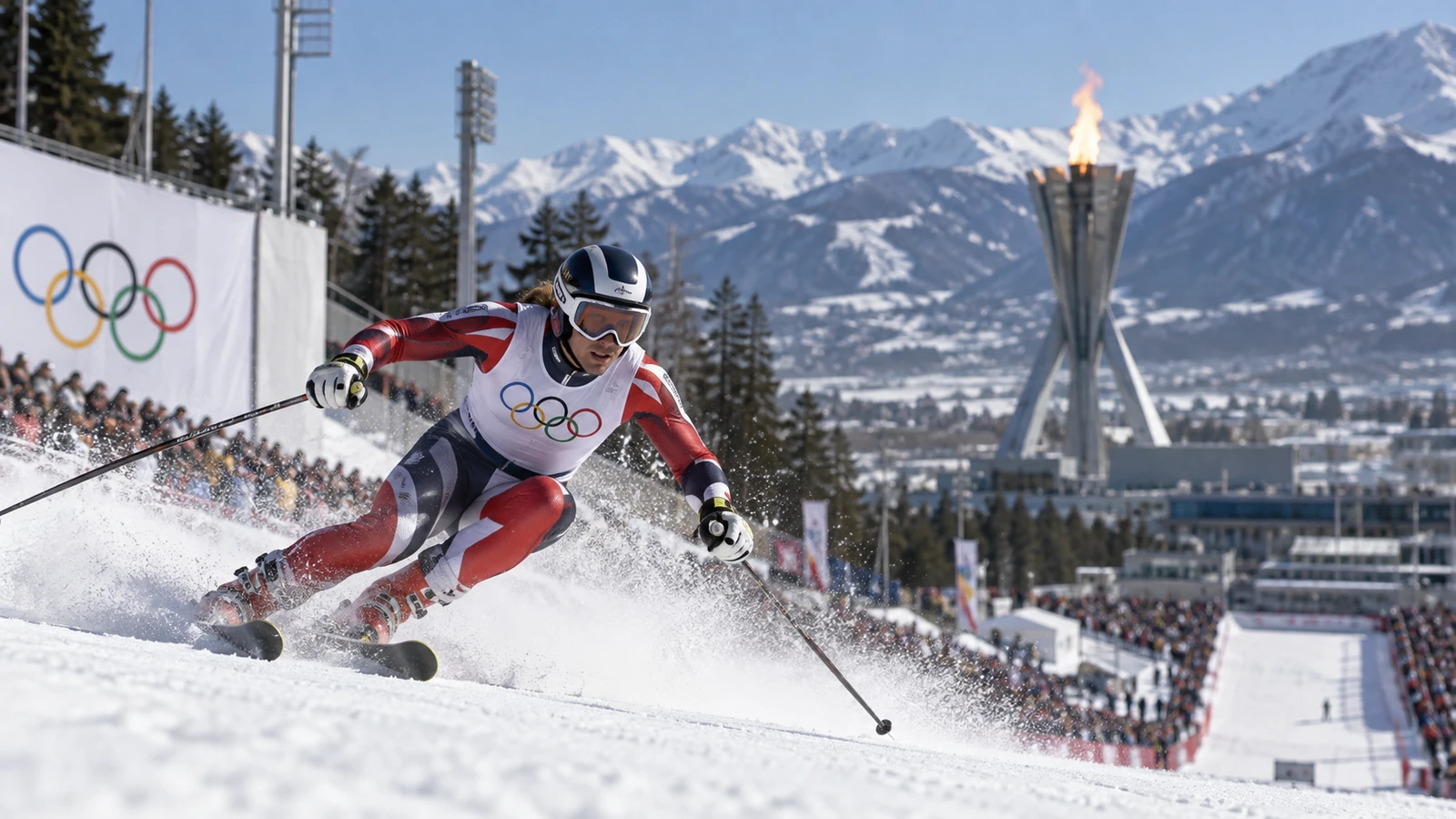
Held in Nagano, Japan, the XVIII Olympic Winter Games were a defining moment in modern sports history. The 1998 Winter Olympics introduced global audiences to new sports like snowboarding and women's ice hockey, while welcoming NHL superstars to the international stage for the first time. From astonishing displays of athletic resilience to unique traditional Japanese cultural elements, Nagano delivered unforgettable moments on and off the ice. Here are 15 fascinating facts about one of the most memorable Winter Olympic Games ever staged.
1. Snowboarding Debuted with a Sudden Scandal
Snowboarding made its official debut at the 1998 Nagano Games, but its inaugural competition immediately erupted into controversy. Canadian rider Ross Rebagliati won the first-ever gold medal in the men's giant slalom, only to be stripped of it days later after testing positive for marijuana. Rebagliati claimed he had inhaled secondhand smoke at a send-off party in Vancouver before traveling to Japan. The Court of Arbitration for Sport eventually restored his gold medal on appeal because marijuana was not listed as a prohibited substance under International Olympic Committee rules at the time. The sensational incident led sports authorities to formally ban cannabis across all Olympic events shortly thereafter.
2. Sumo Grand Champions Purified the Opening Ceremony
The opening ceremony of the Nagano Games offered a striking blend of modern athletics and ancient Japanese tradition. Organizers invited top-ranked professional sumo wrestlers, led by legendary American-born Grand Champion Akebono, to perform a ceremonial purification ritual on the stadium stage. The wrestlers executed shiko, a ritualistic stomping motion meant to drive away evil spirits and bring prosperity to the venue. Akebono performed the ceremonial ring entrance bare-chested in sub-zero temperature conditions before an audience of tens of thousands. This traditional display ensured that local spiritual customs were integrated into the heart of the global sports showcase.
3. NHL Superstars Joined, But the Czech Republic Stunned the World
For the first time in Olympic history, the National Hockey League paused its regular season schedule to allow its star players to compete for their national teams. Fans anticipated a high-profile gold medal showdown between star-studded rosters from Canada and the United States, featuring legends like Wayne Gretzky and Brett Hull. However, both North American powerhouse teams failed to reach the gold medal game due to unexpected losses in the knockout rounds. Dominant goaltending from Dominik Hašek led the unfavored Czech Republic team past Russia in a tense 1-0 final to capture their country's first hockey gold medal. The triumph sparked legendary national celebrations back in Prague.
4. The Medals Were Crafted Using Ancient Japanese Lacquerware
Organizers sought to showcase local artistic heritage by manufacturing the 1998 Olympic medals using traditional Japanese crafting techniques rather than plain metal. The center of each medal featured delicate Kiso lacquerware, a regionally famous craft originating in the Nagano area that dates back hundreds of years. Skilled local artisans applied coats of black lacquer by hand before accentuating the surface with gold dust detailing using the historic maki-e technique. The lacquered discs were then encased in solid brass gilded with gold, silver, or bronze frames. These unique pieces remain among the most distinctive and culturally resonant award medals ever produced for the Games.
5. Tara Lipinski Made History as the Youngest Individual Champion
American figure skater Tara Lipinski delivered a flawless performance in the women's singles event, capturing the gold medal at just 15 years and 255 days old. Going into the competition, her teammate Michelle Kwan was widely considered the overwhelming favorite to take top honors. Lipinski landed two difficult triple-triple jump combinations during her free skate program to narrowly edge out Kwan in the judges' scoring. By taking the title, she broke Sonja Henie's 70-year-old record to become the youngest individual gold medalist in Winter Olympic history. Lipinski remains the youngest female champion of an individual event at the Winter Games to this day.
6. Clap Skates Shattered World Records in Speed Skating
The speed skating events at Nagano were completely transformed by the introduction of revolutionary footwear known as clap skates. Unlike traditional skates where the blade is permanently fixed to the boot heel, clap skates feature a hinged toe joint that lets the blade detach at the back. This mechanical flexibility allows the blade to remain in contact with the ice longer during each stroke, transferring significantly more energy into forward motion. Athletes using the new technology smashed world records in almost every speed skating distance contested during the Games. The massive performance improvements made clap skates the permanent standard across competitive long-track speed skating worldwide.
7. Bjørn Dæhlie Displayed Unforgettable Sportsmanship
Norwegian cross-country legend Bjørn Dæhlie cemented his legacy as one of the greatest Winter Olympians by winning the men's 10-kilometer classical race. However, his actions after crossing the line gained even greater international acclaim than his gold medal win. Dæhlie refused to leave the finish area or proceed to media interviews until the final competitor in the race crossed the line. That runner was Philip Boit, an athlete who had recently transitioned from running to become Kenya's very first Winter Olympic competitor. Dæhlie waited twenty minutes in the freezing cold to embrace Boit, producing a celebrated moment of cross-cultural camaraderie that echoed across global sports media.
8. Hermann Maier Survived a Horrific Crash to Win Double Gold
Austrian alpine skier Hermann Maier earned his nickname "The Herminator" after surviving one of the most violent crashes in downhill racing history. During his downhill run, Maier caught an edge at 65 miles per hour, launched airborne, cartwheeled over safety netting, and slammed hard into the snow bank. Miraculously, he walked away from the terrifying crash with only minor bruising and soreness in his shoulder. Just three days later, Maier returned to the slopes to win gold in the Super-G, before winning a second gold medal in the giant slalom later that week. His incredible recovery remains a legendary story of athletic toughness.
9. Curling Returned to the Official Program After 74 Years
Curling made its long-awaited return as an official medal sport at the Nagano Games after missing out for nearly three-quarters of a century. The sport had been included in the inaugural 1924 Chamonix Games, but it was subsequently demoted to a demonstration event for decades. The International Olympic Committee officially reinstated curling into the full Olympic medal program starting in 1998 following growing broadcast interest. The intense strategic battles on the ice captivated television viewers worldwide and turned curling into an unexpected fan favorite. Switzerland claimed the men's gold medal, while Canada took victory in the women's tournament.
10. Women's Ice Hockey Made Its Historic Olympic Debut
The 1998 Nagano Games served as a historic milestone for gender equality by hosting the inaugural Olympic women's ice hockey tournament. Six nations competed in the groundbreaking event, which highlighted the rapid growth of women's athletics around the globe. The tournament culminated in a fierce final match between traditional rivals the United States and Canada. The underdog American squad secured a thrilling 3-1 victory over Canada to claim the first-ever Olympic gold medal in the discipline. The electric competition catalyzed funding and interest for women's hockey leagues across North America and Europe.
11. Seiji Ozawa Conducted a Simultaneous Five-Continent Chorus
During the opening ceremony, world-renowned conductor Seiji Ozawa led an unprecedented global musical performance powered by satellite technology. Standing inside the Nagano stadium, Ozawa conducted vocal choirs gathered simultaneously across five different continents in a performance of Beethoven's "Ode to Joy." Singers in Beijing, Berlin, Cape Town, Sydney, and New York performed in real-time unison despite the thousands of miles separating them. Advanced broadcast satellite feeds transmitted audio signals back and forth with near-zero latency for the era. The harmonious global chorus stood as a triumph of modern telecommunications technology and international artistic unity.
12. Four Owls Named the Snowlets Replaced a Weasel Mascot
The official mascots of the 1998 Winter Games were four stylized snowy owls collectively known as the Snowlets. Named Sukki, Nokki, Lekki, and Tsukki, the four owls individually symbolized fire, air, earth, and water, while collectively representing the four years of an Olympiad cycle. Interestingly, organizers initially planned to feature a single weasel named "Oko" as the main event mascot. However, marketing advisers ultimately selected the four owl figures to better convey wise guidance and represent the four regions of Japan hosting Olympic events. The owl quartet appeared on thousands of souvenir products throughout the host country.
13. Masahiko Harada Earned Emotional Redemption in Ski Jumping
Japanese ski jumper Masahiko Harada experienced dramatic redemption on home soil after years of Olympic heartbreak. Four years prior at the 1994 Lillehammer Games, Harada had misjudged his final jump, costing team Japan an almost certain gold medal in the large hill event. Pressure was high as he stepped up to jump in front of his home fans in Nagano amid heavy snow squalls. Harada delivered an enormous jump of 137 meters to anchor Japan's team victory, bursting into tears of joy at the finish line. The emotional scene became one of the most celebrated sports moments in Japanese television history.
14. Chaotic Weather Nearly Cancelled Alpine Skiing Events
Extreme weather patterns constantly disrupted event scheduling throughout the sixteen days of competition in Nagano. Heavy mountain snowstorms, dense fog, and torrential rain forced race marshals to postpone alpine skiing events multiple times. At one critical point midway through the Games, race directors worried they would not be able to finish the flagship downhill events before the closing ceremony. Workers labored around the clock clearing courses and treating slippery snow tracks to keep athletes safe. Thanks to frantic rescheduling and relentless maintenance work, every scheduled alpine race was completed just in time.
15. An Unexpected Condom Shortage Swept the Olympic Village
Off the field of play, the 1998 Nagano Games gained notoriety for an unexpected logistical shortage inside the Olympic Village. Organizers originally distributed approximately 20,000 free condoms to competing athletes as part of health awareness campaigns. However, the initial supply ran out completely days before the competitions were set to conclude. Surprised administrative staff had to place urgent emergency rush-orders to bring in thousands of additional prophylactics for the village residents. The high demand established a trend of massive Olympic prophylactic orders that continues at both Summer and Winter Games today.
Sources & References
This AI-assisted post was rigorously curated and fact-checked for accuracy by:
 Martin Roháček
How fun was this article? 🤔
Tap a star to rate it
🧠 Quiz: How closely were you paying attention?
10 questions — all answers are in the article above!
Enjoyed these facts? There's more! 💌
Fresh fun facts in your inbox. No spam, ever.