The Relativistic Mind: 15 Fascinating Facts About Albert Einstein
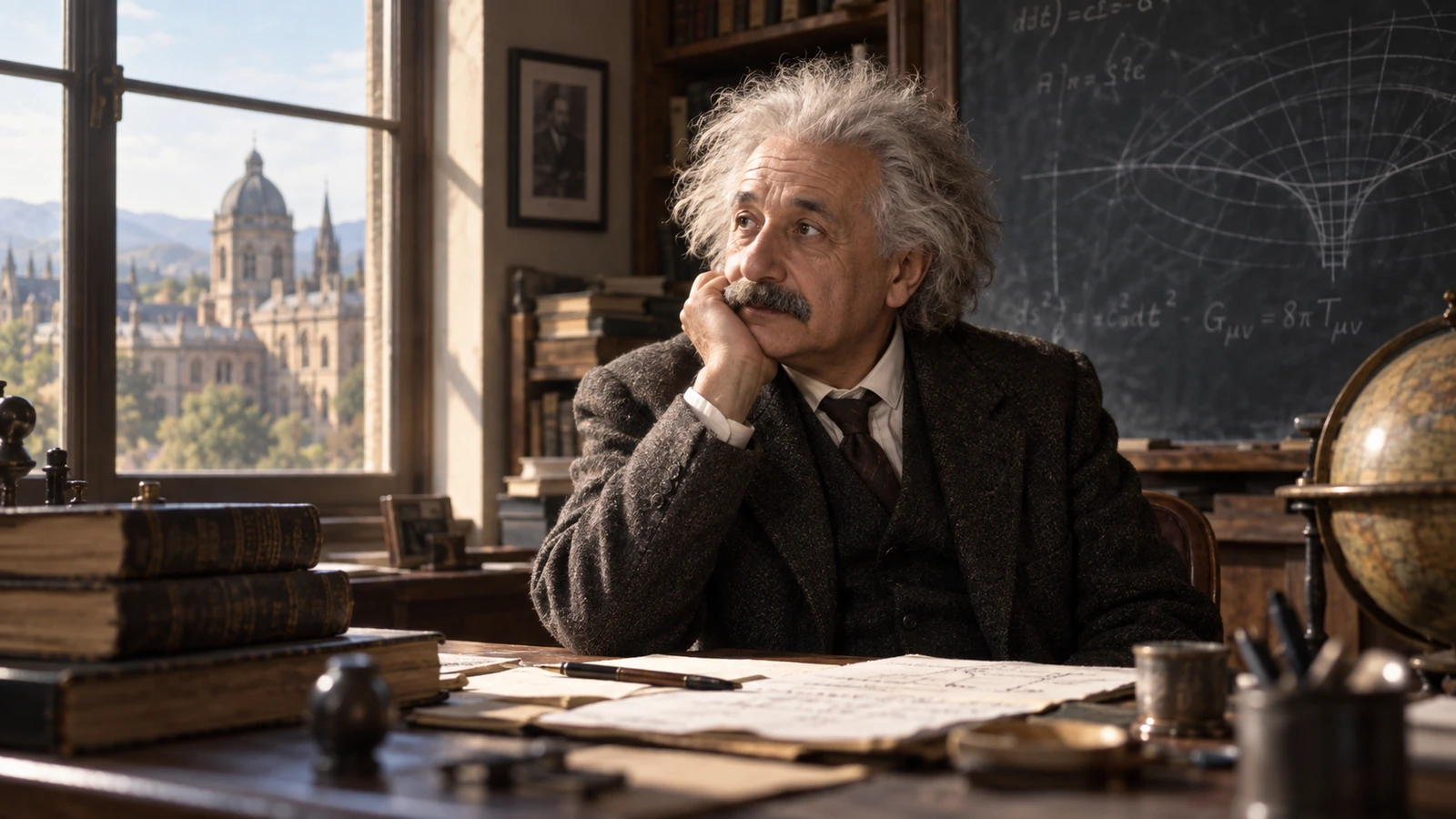
Albert Einstein revolutionized our understanding of physics, space, and time, transforming him into an enduring global symbol of genius. Beyond his iconic equations and unruly hair lies a complex human story filled with eccentric personal habits, surprising political offers, and extraordinary scientific breakthroughs. From his musical passion to the bizarre post-mortem journey of his brain, his life was as fascinating as his theoretical discoveries. Explore fifteen detailed facts that reveal the true history behind theoretical physics' most famous figure.
1. The Myth of His Mathematical Failure Is Completely False
The popular urban legend claiming Albert Einstein failed mathematics as a student is entirely untrue. In reality, he excelled in academic studies from a young age and had mastered differential and integral calculus by the age of fourteen. When shown a newspaper article repeating the failure rumor in 1935, Einstein laughed and clarified that he had conquered integral calculus before turning fifteen. His school records in Switzerland consistently showed top marks in mathematics and physics throughout his youth. The widespread misconception likely originated from a reversal of the grading scale at his Swiss school, where the numerical ranking system was flipped the year after he attended.
2. A Childhood Compass Sparked His Scientific Curiosity
When Einstein was five years old and sick in bed, his father brought him a simple pocket compass to entertain him. Watching the needle consistently point north regardless of how he turned the casing deeply astonished the young boy. He realized that something hidden deep in space had to be acting upon the magnetic needle. Einstein later identified this specific moment as a foundational turning point that ignited his lifelong fascination with invisible physical forces. The quiet mystery of that device stayed with him for the rest of his life, ultimately shaping his approach to modern physics.
3. Late Speech Development Alarmed His Parents
Einstein was notoriously slow to develop verbal communication skills as a child, leading his parents to consult a physician. He did not speak fluently until he was around three or four years old, often repeating sentences quietly to himself before saying them aloud. This unusual developmental trajectory caused his family and early teachers to worry that he suffered from a severe learning disability. Modern researchers sometimes refer to exceptionally bright children who experience delayed speech development as exhibiting Einstein Syndrome. Ultimately, his slow verbal start did not hinder his analytical thinking, which was largely visual and conceptual rather than linguistic.
4. Violin Playing Was Essential to His Creative Process
Music was not merely a casual hobby for Einstein; it was an indispensable tool for his intellectual breakthroughs. Taught to play the violin by his mother at age six, he developed a deep passion for the compositions of Wolfgang Amadeus Mozart and Johann Sebastian Bach. Whenever he found himself stuck on a complex theoretical physics problem, he would play his beloved violin, affectionately named Lina, to clear his mental block. His second wife noted that music helped him relax and frequently allowed him to process difficult equations unconsciously. He once remarked that if he had not been a scientist, he would have undoubtedly pursued a career as a professional musician.
5. He Stumbled on His First University Entrance Exam
In 1895, at sixteen years old, Einstein took the entrance examination for the prestigious Zurich Polytechnic school in Switzerland. While he achieved exceptional scores in mathematics and physics, he failed the non-science sections, including botany, zoology, and language arts. Because he was two years younger than most applicants, the school principal advised him to complete his secondary education first. Einstein attended a high school in Aarau, Switzerland, where he earned his diploma before successfully enrolling at Zurich Polytechnic on his second attempt. This initial setback demonstrates that even legendary intellects require well-rounded preparation to progress academically.
6. His Revolution in Physics Started in a Patent Office
Unable to secure an academic teaching position after graduating from university, Einstein took a job as a technical examiner at the Swiss Patent Office in Bern. Working as a third-class expert, his daily routine involved evaluating mechanical patent applications, many of which dealt with synchronized electrical signals. This mundane environment proved to be a hidden blessing, as he finished his daily assignments quickly and spent the remaining hours working on theoretical physics. The patent office provided financial stability and allowed his mind the total freedom needed to question established scientific notions of time and space.
 Scientists and Inventors Who Changed the World
See All Facts
Scientists and Inventors Who Changed the World
See All Facts
7. The Miracle Year of 1905 Redefined Science
The year 1905 is widely recognized by scientific historians as Einstein's Annus Mirabilis, or Miracle Year. Working entirely in his spare time outside the patent office, he published four revolutionary papers in the Annalen der Physik journal. These papers explained the photoelectric effect, proved the existence of atoms through Brownian motion, introduced special relativity, and derived the famous mass-energy equivalence equation E=mc². Any single one of these contributions would have secured a physicist's place in history, yet Einstein produced all four within a span of just a few months.
8. His Nobel Prize Was Not Awarded for Relativity
Despite his revolutionary theory of general relativity transforming human understanding of gravity, it was not the primary reason he received science's highest honor. The Nobel Committee was initially hesitant to award the prize for relativity, as it remained politically controversial and difficult to verify empirically at the time. Consequently, Einstein was awarded the 1921 Nobel Prize in Physics specifically for his explanation of the photoelectric effect, which laid crucial groundwork for quantum theory. The decision highlighted the scientific establishment's extreme caution regarding theoretical breakthroughs during the early twentieth century.
9. He Famously Refused to Wear Socks
Einstein was notorious for his eccentric personal habits, none more famous than his strict refusal to wear socks. As a young man, he noticed that his big toes inevitably wore holes in his socks, leading him to conclude that wearing them was an unnecessary bother. He abandoned socks entirely, wearing leather shoes on bare feet whether he was working in his study or attending formal state dinners. His minimalist approach to attire extended to his hair and clothing, as he preferred personal comfort and practical simplicity over strict social conformity.
10. The FBI Amassed a 1,400-Page File on Him
Einstein's outspoken political views, vocal anti-racism, and passionate advocacy for pacifism drew intense scrutiny from American law enforcement. Before he even settled permanently in the United States in 1933, Federal Bureau of Investigation director J. Edgar Hoover initiated a file on him. The FBI monitored Einstein's mail, phone calls, and social connections, eventually amassing a dossier that spanned over 1,400 pages. Agencies suspected him of holding radical sympathies, though no evidence was ever uncovered to suggest he posed any threat to national security.
11. He Was Offered the Presidency of Israel
Following the death of Chaim Weizmann, the first president of Israel, in 1952, the Israeli government officially offered Einstein the presidency. The offer came directly from Prime Minister David Ben-Gurion, who recognized Einstein's immense global prestige and dedication to Jewish cultural causes. Einstein was deeply moved by the invitation but politely declined, stating that he lacked both the natural aptitude and experience to deal properly with people and official state duties. He insisted that his entire life had been spent dealing with objective scientific matters, making him ill-suited for political office.
12. An Avid Sailor Who Never Learned to Swim
Throughout his adult life, Einstein enjoyed sailing as a peaceful hobby to disconnect from intense research. He frequently took his modest sailboat, which he named Tinef (a Yiddish term meaning junk), out onto lakes and coastal waters. Despite his passion for the sport, he was an exceptionally poor sailor who frequently ran aground, lost his bearings, or capsized the vessel. Remarkably, Einstein never learned how to swim, making his routine nautical misadventures a source of constant anxiety for his family and friends.
13. His Second Marriage Was to His Cousin
After divorcing his first wife, fellow physicist Mileva Marić, in 1919, Einstein married Elsa Löwenthal later that same year. Elsa was his first cousin on his mother's side and his second cousin on his father's side, as their mothers were sisters and their grandfathers were brothers. The couple had grown close during Einstein's illness in Berlin, where Elsa nursed him back to health. Their marriage endured until Elsa's death in 1936, providing Einstein with a supportive domestic environment throughout his meteoric rise to international celebrity status.
14. A Pathologist Stole His Brain After His Death
Shortly after Einstein died at Princeton Hospital in 1955, the attending pathologist, Dr. Thomas Harvey, removed his brain during the autopsy without prior permission from the family. Harvey preserved the brain in formalin, sliced it into 240 blocks, and kept it stored in glass jars inside a cider box for decades. He hoped that neuroscientists could study the organ to discover the biological secret behind Einstein's extraordinary intellect. Though the theft caused widespread public outrage, scientific studies of the brain sections later revealed unique anatomical features, including an unusual concentration of glial cells.
15. His Final Words Were Lost in Translation
On April 18, 1955, Albert Einstein suffered an abdominal aortic aneurysm rupture and passed away at the age of 76. In his final moments at Princeton Hospital, he muttered his last words aloud in his native German language. Unfortunately, the night nurse attending to him spoke only English and was unable to understand or memorize what he had said. As a result, the final thoughts of history's most celebrated theoretical physicist were lost to time forever, adding a poignant note of mystery to his legendary life.
Sources & References
This AI-assisted post was rigorously curated and fact-checked for accuracy by:
 Martin Roháček
How fun was this article? 🤔
Tap a star to rate it
🧠 Quiz: How closely were you paying attention?
10 questions — all answers are in the article above!
Enjoyed these facts? There's more! 💌
Fresh fun facts in your inbox. No spam, ever.