1. The Mexican Walking Fish is Not a Fish
Despite their incredibly popular global nickname, the Mexican walking fish is not a fish at all. They are actually a highly specialized species of aquatic salamander belonging to the amphibian family. While typical salamanders start their lives in the water and eventually transition to land, the axolotl lives its entire life completely submerged underwater, perfectly bridging the gap between aquatic and terrestrial evolution.
2. They Are Absolute Masters of Neoteny
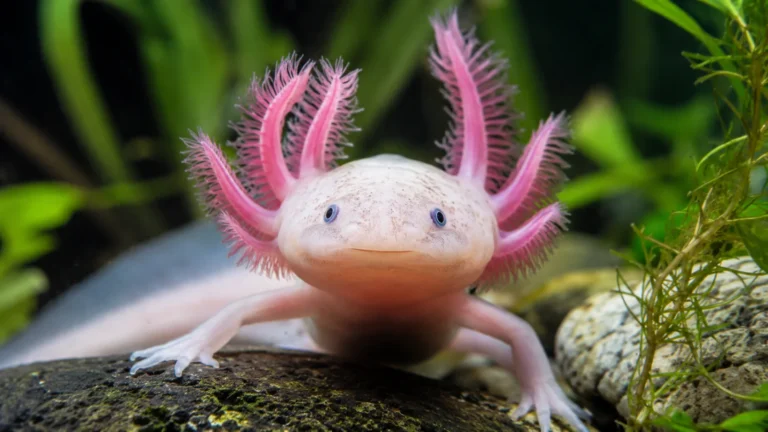
The absolute most defining biological feature of the axolotl is a rare phenomenon known as neoteny. Unlike frogs or standard salamanders that undergo a massive physical metamorphosis to become adults, the axolotl completely skips this step. They reach full sexual maturity and perfectly reproduce while permanently retaining all of their juvenile, larval features, including their webbed feet, dorsal fin, and external gills.
3. Named After an Ancient Aztec God
The cultural history of the axolotl is deeply intertwined with the ancient Aztec empire. Their unique name translates to water dog or water monster in the indigenous Nahuatl language. According to ancient Mesoamerican mythology, Xolotl was a dog-headed god of fire and lightning who physically transformed himself into an axolotl and hid deep in the lake to escape being sacrificed by the other gods.
4. They Possess God-Like Regeneration
While many lizards can regrow a severed tail, the axolotl possesses the absolute most advanced regenerative capabilities of any vertebrate on Earth. If an axolotl completely loses a leg in a predator attack, it will seamlessly regrow a perfect, fully functioning replacement limb in just a few weeks. Incredibly, they can completely regenerate massive portions of their spinal cord, their heart, and even parts of their physical brain without leaving a single trace of scar tissue.
5. A Genome Ten Times Larger Than Ours
To completely understand how these incredible amphibians regenerate their bodies, scientists decided to sequence the entire axolotl genome. They discovered a massive biological reality. The genetic code of a single axolotl contains an astonishing thirty-two billion base pairs. This makes their genome roughly ten times larger and significantly more complex than the entire human genome, holding countless profound secrets about cellular repair.
6. Highly Resistant to Cancer
Alongside their miraculous regenerative powers, axolotls exhibit an incredibly bizarre and highly fortunate biological immunity. Scientific research has revealed that they are over one thousand times more resistant to developing cancerous tumors than mammals. Their highly regulated cellular division process allows them to rapidly construct new, healthy tissue to replace missing limbs without ever triggering the uncontrolled cellular growth that causes cancer.
7. They Can Breathe in Four Different Ways
Living in murky, low-oxygen aquatic environments requires incredible biological flexibility. The axolotl has perfectly adapted by developing four entirely distinct methods of respiration. They primarily use their feathery external gills to pull oxygen directly from the water. However, they can also absorb oxygen directly through their highly permeable skin, use a buccal cavity in the back of their throats, and even swim to the surface to gulp air directly into their rudimentary, functional lungs.
8. They Are Critically Endangered in the Wild
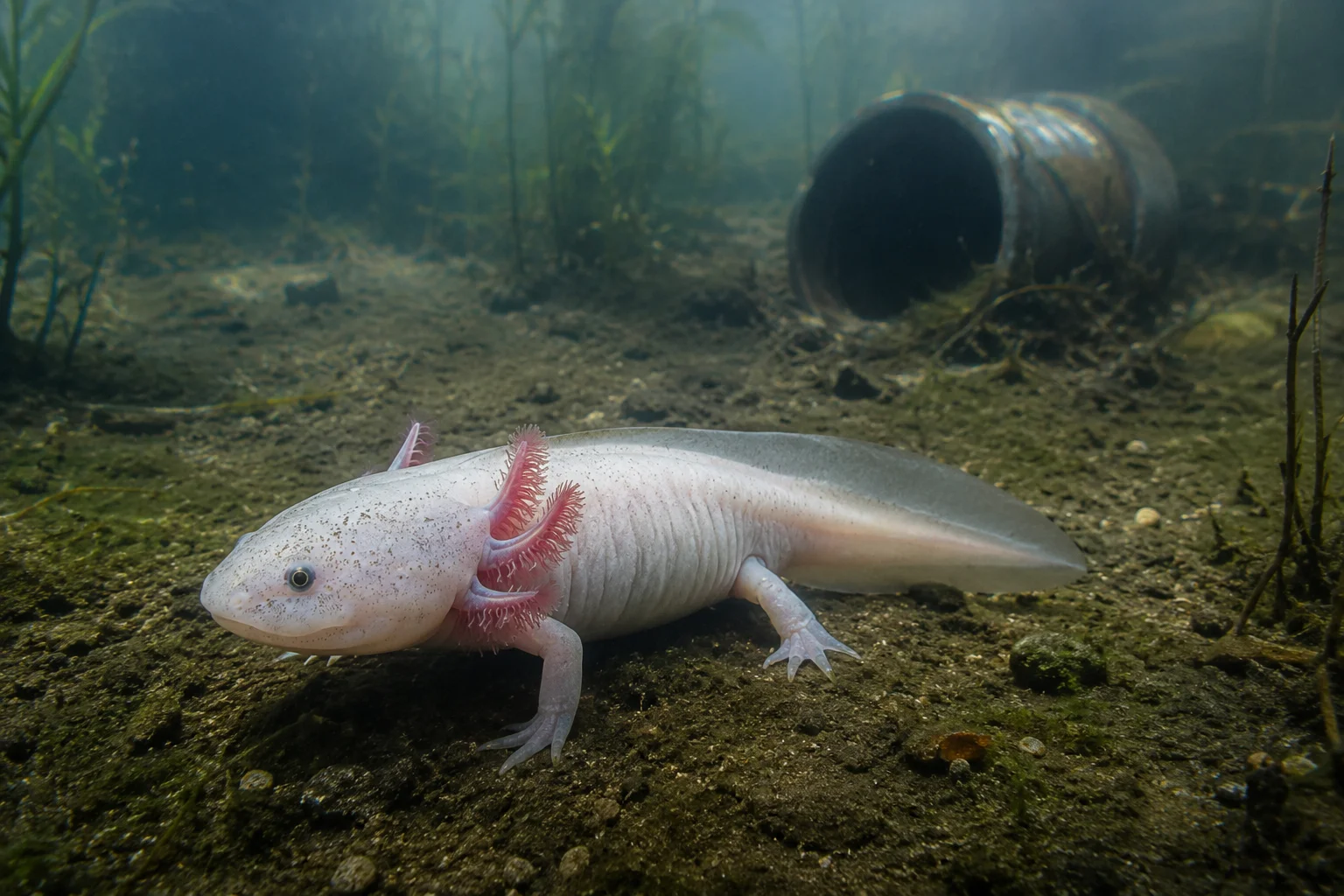
While they are globally abundant in private aquariums and massive research laboratories, the wild axolotl is tragically facing absolute extinction. They are entirely endemic to a single, highly specific location on Earth: the high-altitude Lake Xochimilco complex in Mexico City. Due to massive urban expansion, severe water pollution, and the introduction of invasive predatory fish like tilapia, researchers estimate there are only a few hundred wild axolotls left in their natural habitat.
9. They Were Once an Aztec Delicacy
Long before they became highly protected endangered species or beloved household pets, the axolotl served a highly practical, dietary purpose in ancient Mesoamerica. The massive network of lakes surrounding the Aztec capital of Tenochtitlan was heavily populated with the amphibians. The Aztecs regularly harvested them as a highly reliable, protein-rich staple food, frequently consuming them roasted over open fires or boiled down into thick, nutritious stews.
10. They Inhale Their Food Like a Vacuum
Because axolotls completely lack sharp, cutting teeth, they cannot physically bite or tear their prey apart. Instead, they possess highly rudimentary, sandpaper-like teeth designed solely for gripping. To capture a meal, they utilize a highly efficient biological strategy known as suction feeding. When a worm or small fish swims too close, the axolotl rapidly drops its lower jaw, instantly creating a massive, terrifying vacuum that completely sucks the water and the prey directly into its throat.
11. Metamorphosis Can Be Artificially Forced
While they naturally remain in their larval state forever, scientists discovered a bizarre biological loophole. An axolotl can actually be forced to undergo a complete, terrestrial metamorphosis if it is injected with heavy doses of iodine. The iodine artificially triggers their dormant thyroid glands, causing them to completely lose their gills, shed their fins, and walk onto dry land. However, this massive forced transition causes extreme physiological stress and significantly reduces their overall lifespan.
12. They Swallow Gravel for Buoyancy
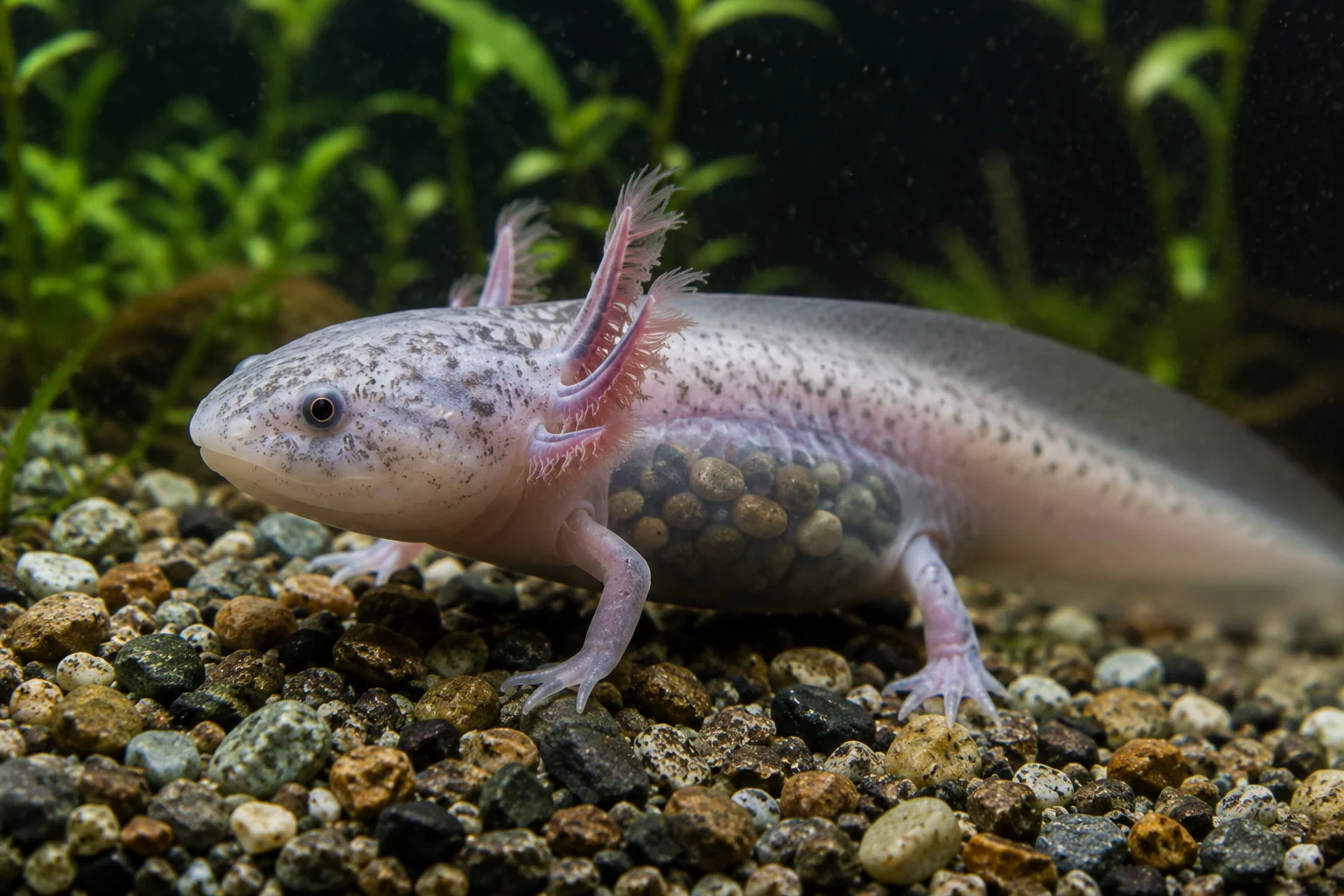
Like many other highly specialized aquatic animals, axolotls frequently consume materials that have absolutely zero nutritional value. Wild axolotls actively swallow small stones and coarse gravel, which permanently sit inside their digestive tracts as gastroliths. These small stones serve a highly crucial dual purpose. They act as internal ballasts to keep the animal perfectly buoyant and stable while hovering in the water, and they physically help grind up tough insect shells during digestion.
13. The Internet Famous Pink Axolotl is a Mutant
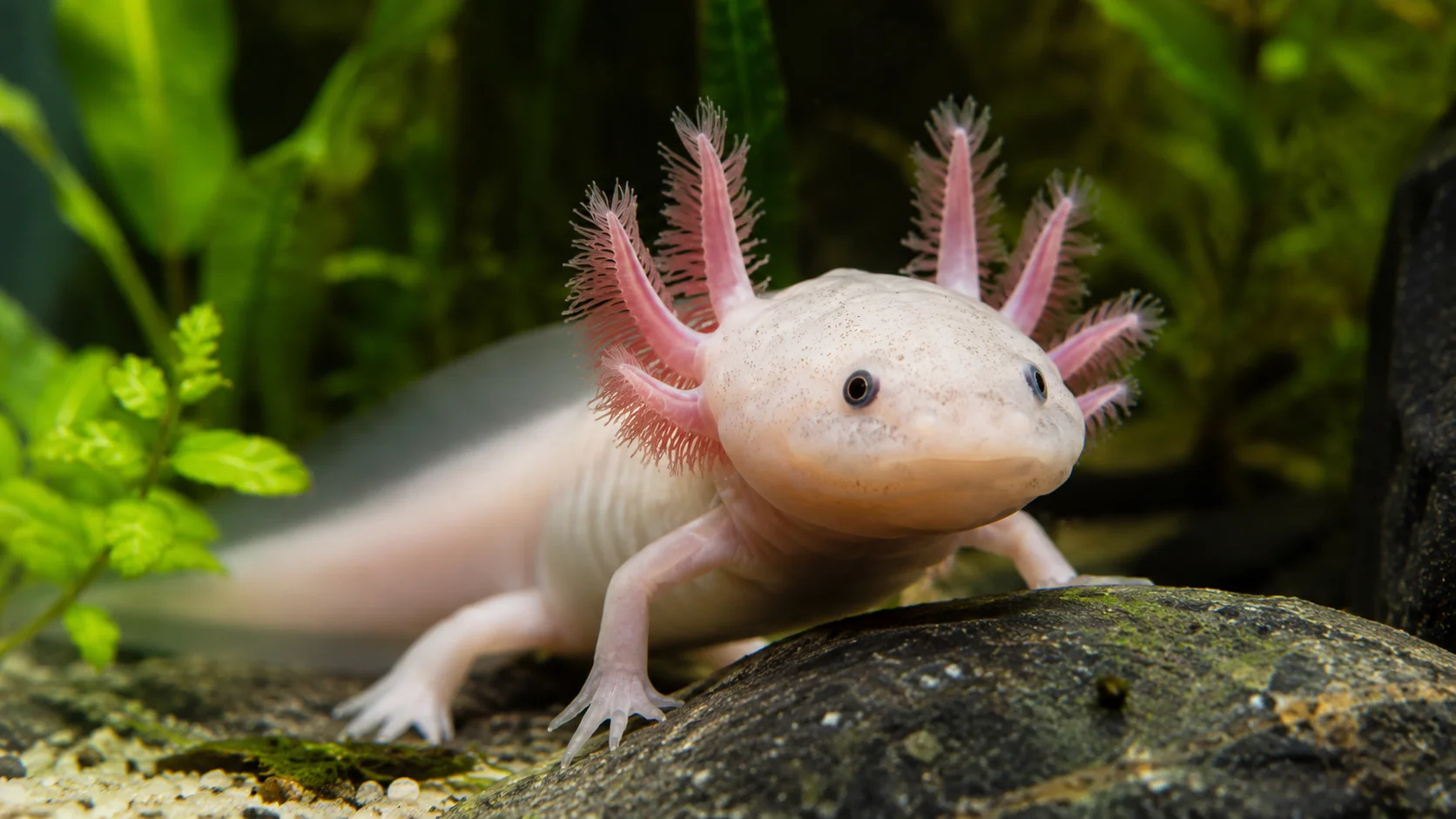
When people picture an axolotl, they almost universally imagine a bright pink or entirely white creature with vibrant, neon-red gills. In biological reality, this color is completely unnatural in the wild. Wild axolotls are a highly camouflaged, mottled olive-green and dark brown color. The iconic pink coloration is the result of a highly specific genetic mutation known as leucism, which was artificially isolated and heavily selectively bred by captive breeders for the pet trade.
14. Their External Gills Are Highly Functional
The iconic, feathery stalks sticking out of the sides of an axolotls head are far more than just a beautiful biological decoration. These structures are the physical gills themselves. The intricate, highly branched filaments are known as fimbriae, and they completely drastically increase the overall surface area of the gill. This allows the axolotl to highly efficiently extract maximum oxygen from the stagnant, slow-moving lake water they naturally inhabit.
15. They Are Crucial to Modern Medical Research
Because of their absolutely unprecedented regenerative abilities and massive genetic code, the axolotl is considered one of the most highly valuable biological models on the planet. Massive colonies of these amphibians are actively maintained in hospitals and research universities across the globe. By completely unlocking the genetic secrets of how an axolotl repairs a severed spinal cord, scientists heavily hope to eventually develop revolutionary, life-saving regenerative treatments for human patients.