1. They Are Basically Jungle Raccoons
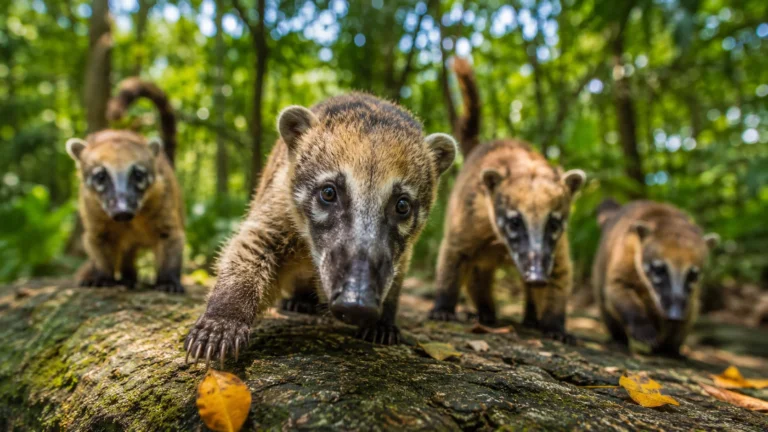
Despite their highly unusual appearance, the coati is completely biologically related to the common North American raccoon. They both belong to the Procyonidae family. While they share the exact same heavily ringed tails and highly distinct facial masks as their trash-raiding cousins, the coati has completely adapted its body over millions of years for a vastly different, highly specialized tropical lifestyle.
2. The Iconic Periscope Tail
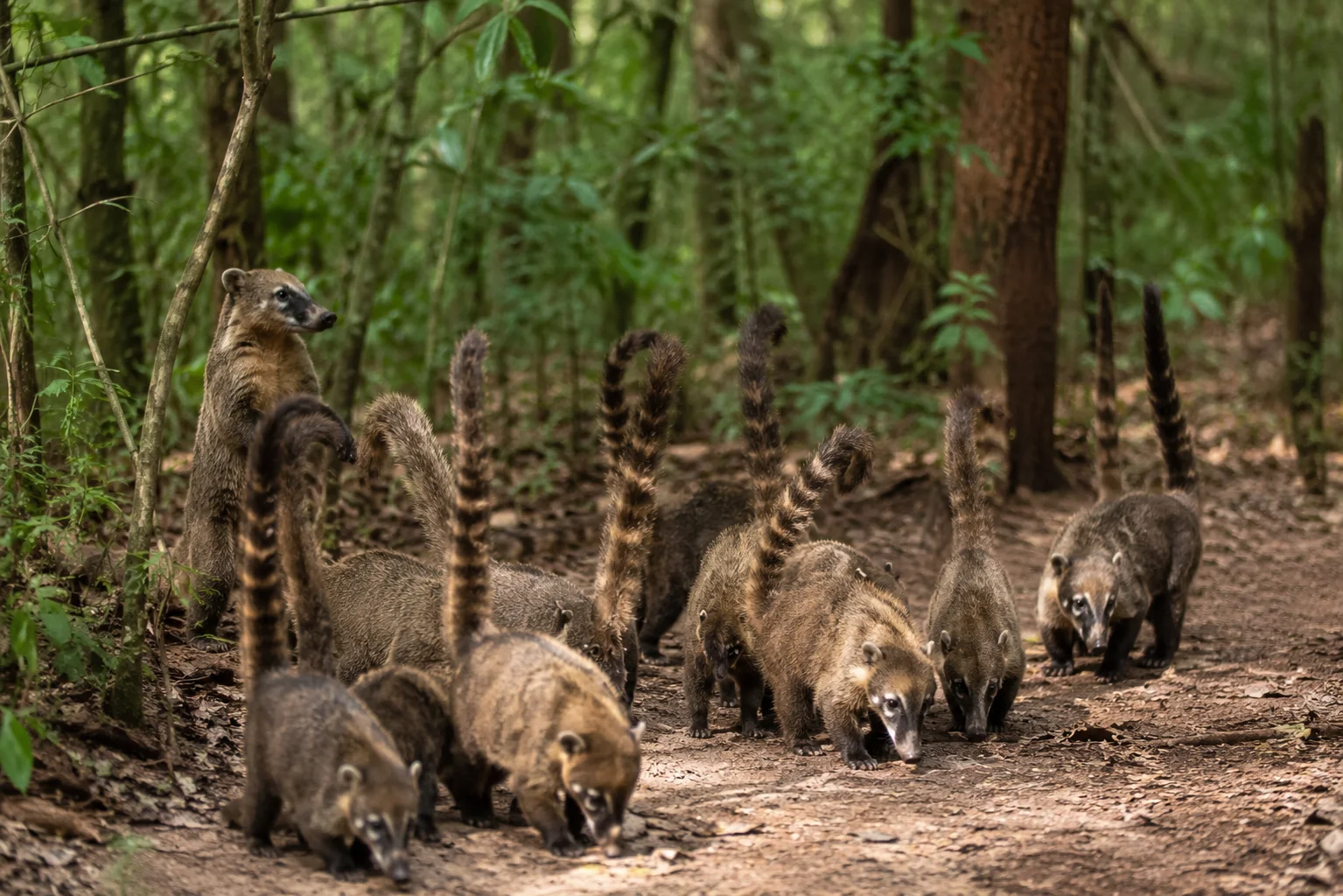
When a massive troop of coatis is foraging through tall, dense jungle grass, they utilize a brilliant biological signaling system. They hold their long, ringed tails completely straight up in the air, exactly like a submarine periscope. Because the tails frequently measure up to two feet long, they act as highly visible, moving antennas that prevent the troop members from completely losing each other in the thick vegetation.
3. Reversible Ankles for Downward Sprints
Like the elusive civets of Asia, the coati is an absolute master of arboreal acrobatics. Because they spend a massive amount of time escaping predators in the high forest canopy, they possess double-jointed, completely reversible ankles. They can physically rotate their hind feet a full 180 degrees backward, allowing their sharp claws to firmly grip the bark and enabling them to sprint completely headfirst down a vertical tree trunk without falling.
4. Females Form Massive, Organized Troops
The social structure of the coati is highly complex and entirely dominated by females. Adult females and their juvenile offspring live together in massive, highly organized bands that can frequently consist of up to thirty individuals. These large groups provide highly efficient, mutual protection against massive predators like jaguars and eagles, with members constantly taking turns acting as highly vigilant sentinels.
5. Males Are Fiercely Solitary
In a massive contrast to the highly social females, adult male coatis are completely solitary creatures. Once a young male reaches sexual maturity at around two years old, he is aggressively chased entirely out of the band by the adult females. The solitary nature of the males completely confused early European biologists and indigenous tribes, who historically believed the lone males were an entirely different species, naming them “coati-mundi,” which translates to “lone coati.”
6. A Highly Prehensile, Pig-Like Snout
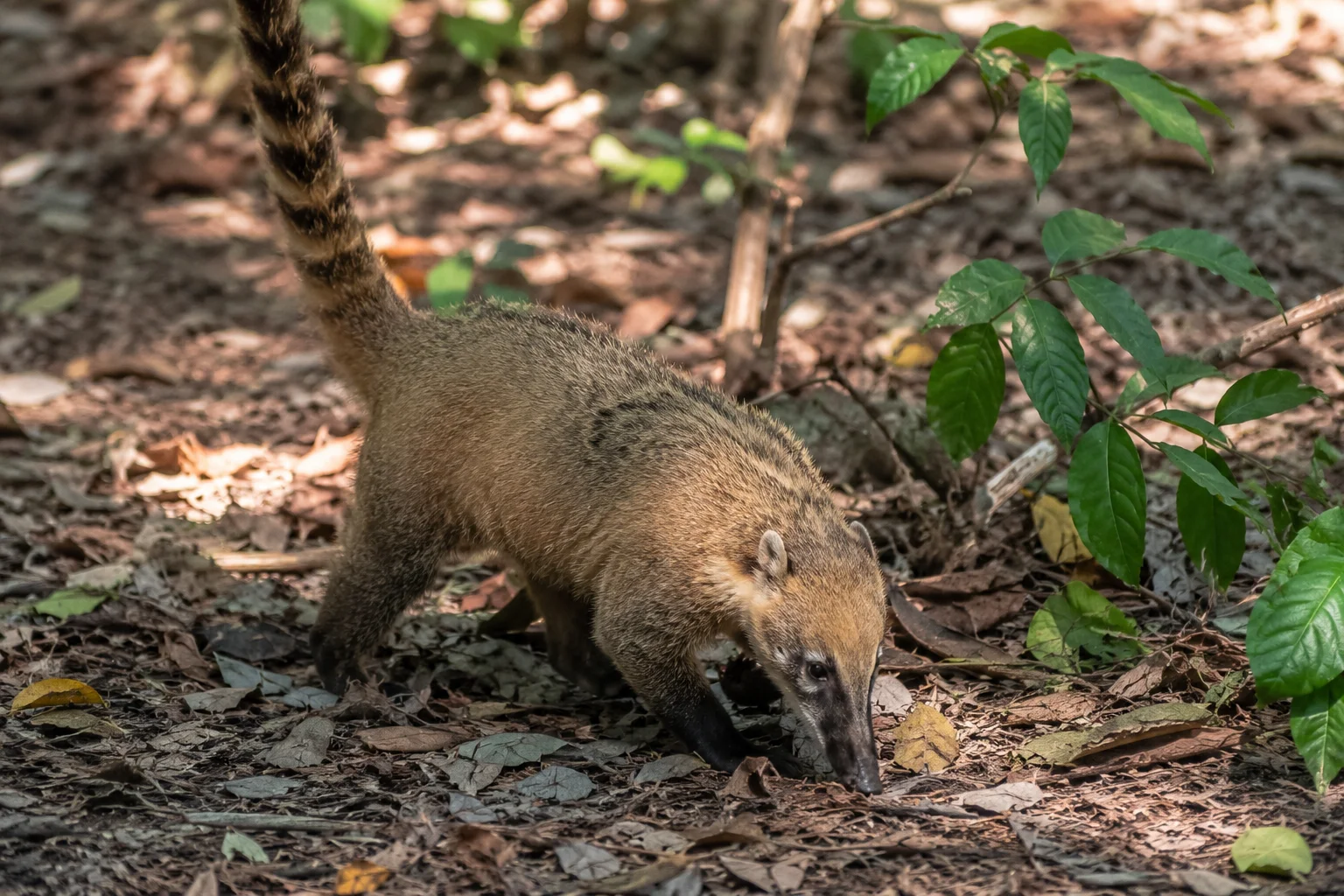
The absolute most defining facial feature of the coati is its incredibly long, rubbery snout. This nose is highly prehensile and packed with massive amounts of sensory receptors. The coati can physically bend its snout up to sixty degrees in any direction, aggressively using it like a biological plow to completely root through hard dirt, flip over heavy rocks, and expertly sniff out deeply buried beetles and grubs.
7. They Violently Roll Toxic Prey
Coatis are completely fearless when it comes to capturing highly dangerous meals. They actively hunt venomous tarantulas and completely completely toxic, stinging caterpillars. To safely consume these dangerous insects, the coati has developed a highly intelligent behavioral adaptation. They will rapidly and violently roll the insect back and forth in the dirt using their front paws, completely stripping off all the venomous hairs and stinging spines before safely swallowing it whole.
8. Unlike Raccoons, They Are Diurnal
While their famous raccoon cousins are globally known as entirely nocturnal creatures of the night, the coati operates on a completely reversed schedule. They are strictly diurnal, meaning they are highly active during the daylight hours. They spend their entire day aggressively foraging on the forest floor, and when the sun finally sets, they completely retreat high into the tree canopy to safely sleep away from nocturnal predators.
9. They Build Elaborate Tree Nests
Despite spending massive amounts of their waking hours completely on the ground, coatis completely refuse to sleep in the dirt. Every single night, the troop climbs high into the trees to construct highly elaborate, flimsy sleeping nests out of bent branches and leafy vines. They will frequently sleep completely huddled together in massive, furry piles to share body heat and heavily protect the youngest members of the band.
10. A Highly Complex Acoustic Vocabulary
To safely coordinate the movements of a massive troop through a dense, chaotic rainforest, coatis rely on a highly complex acoustic vocabulary. They are incredibly vocal animals, constantly emitting a highly distinct series of soft chirps, deep grunts, and loud snorts to communicate. If a sentry spots a terrifying predator, they will instantly emit a series of explosive, dog-like barks, completely signaling the entire troop to rapidly scatter into the trees.
11. Equipped With Dagger-Like Canines
Looking at their adorable, long-nosed faces, it is incredibly easy to assume the coati is completely defenseless. In biological reality, they are completely formidable fighters. Their jaws are equipped with incredibly sharp, highly elongated canine teeth that perfectly resemble the fangs of a massive dog. If completely cornered by a predator or an aggressive domestic dog, a coati will violently slash and bite, frequently inflicting deeply severe, highly lethal injuries.
12. Crucial Rainforest Gardeners
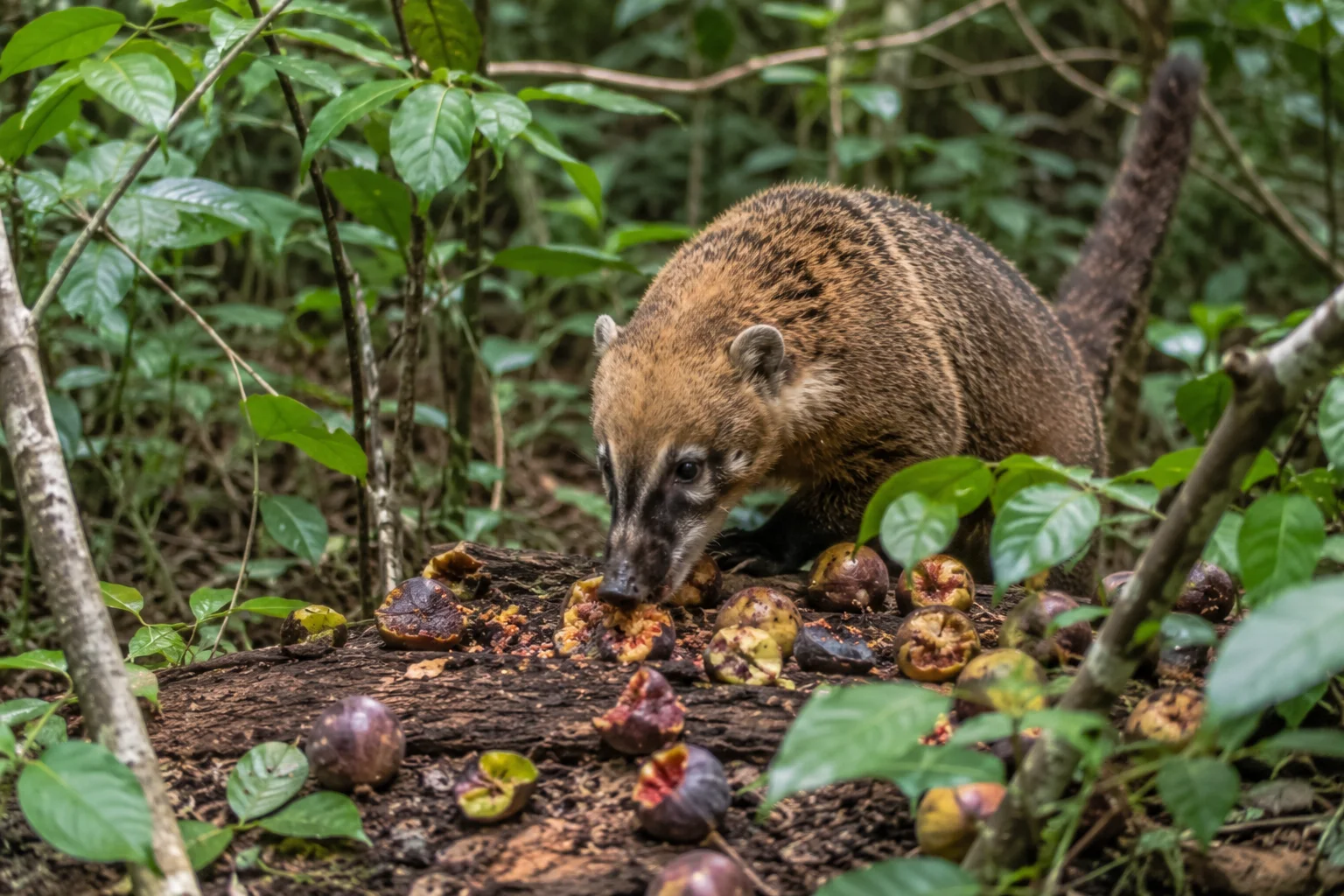
While they aggressively hunt small insects and rodents, coatis are highly opportunistic omnivores with a massive sweet tooth. They consume absolutely massive quantities of wild figs, fallen palm nuts, and fleshy jungle fruits. Because they constantly travel massive distances across the forest floor every single day, they act as highly efficient biological seed dispersers, completely ensuring the rapid regeneration of the tropical rainforest ecosystem.
13. They Thrive in the Scorching Desert
While they are almost universally associated with the deeply humid, steaming rainforests of South and Central America, the highly adaptable coati also thrives in completely different environments. The white-nosed coati species can be found perfectly surviving in the harsh, scorching desert canyons and high-altitude, freezing mountain ranges of southern Arizona, New Mexico, and Texas, completely proving their massive biological resilience.
14. Mothers Isolate Themselves to Give Birth
Despite heavily relying on the massive troop for daily protection, pregnant female coatis experience a complete behavioral shift when it comes time to give birth. The mother will actively leave the absolute safety of the band and build a highly isolated, secretive nest high in a tree. She raises her incredibly fragile, completely blind babies entirely alone for roughly six weeks before finally introducing the newly fully mobile juveniles back into the massive troop.
15. A Walking Biological Vacuum Cleaner
The absolute key to the incredible evolutionary success of the coati is their completely indiscriminate, highly efficient digestive system. They operate exactly like biological vacuum cleaners, completely consuming whatever seasonal food is placed in front of them. From tearing apart rotting logs to eat termite colonies, to hunting small lizards, raiding wild bird nests for eggs, and eating massive amounts of fruit, their highly varied diet perfectly guarantees their survival in a constantly changing world.