
The Philosophical Monarch: 15 Fascinating Facts About Frederick the Great
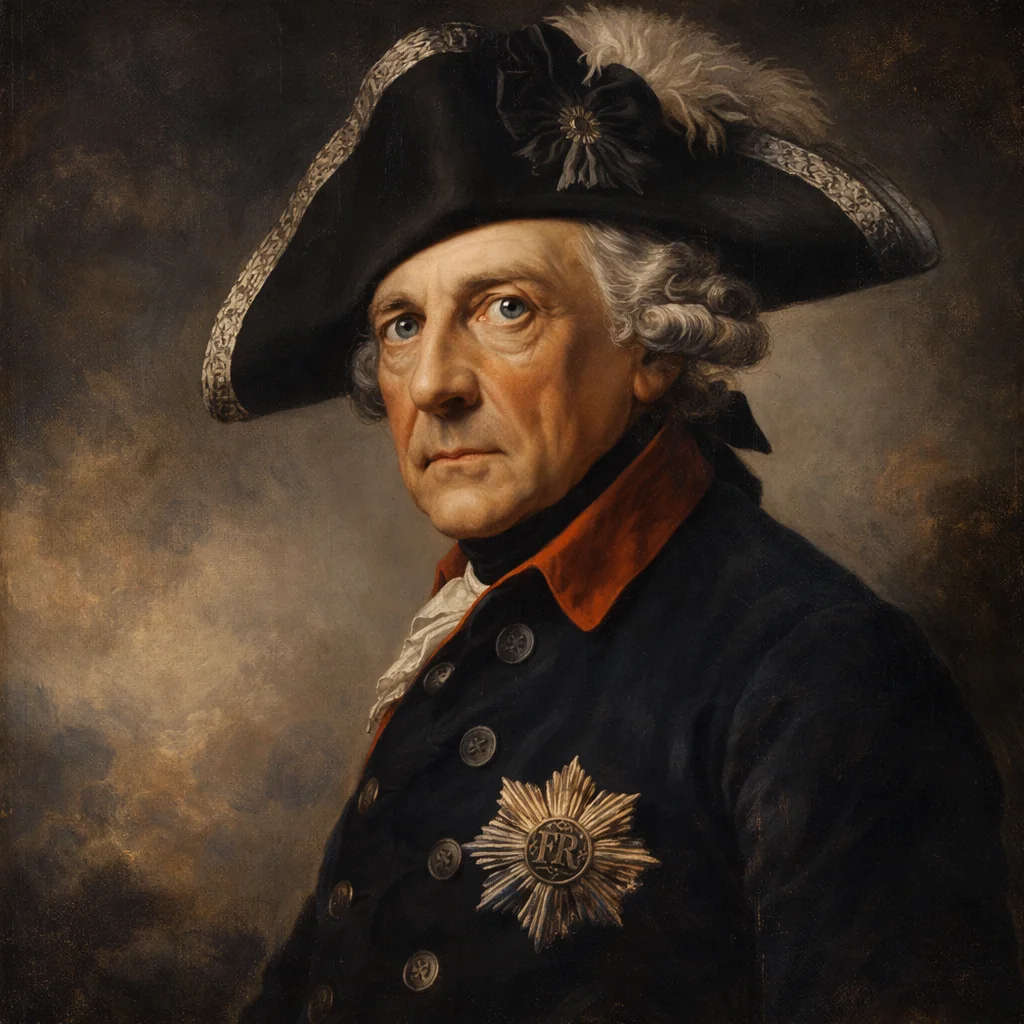
King Frederick II of Prussia, known to history as Frederick the Great, remains one of the most enigmatic figures of the 18th century. Renowned as a ruthless military genius who elevated Prussia into a European superpower, he was equally a flute-playing philosopher, an avid art patron, and an eccentric dog lover. From his bizarre culinary habits to his masterclass in reverse psychology involving potatoes, his life was filled with surprising contradictions. Discover 15 fascinating facts about the monarch who reshaped European history.
1. The Clever Potato Trick That Saved Prussia From Famine
In the mid-18th century, King Frederick II recognized that the humble potato could protect his kingdom from recurring crop failures and devastating famines. However, Prussian peasants initially refused to eat the strange tubers, viewing them as filthy, tasteless, and unfit for human consumption. To overcome their stubborn resistance, the King employed a brilliant masterclass in reverse psychology. He planted extensive potato patches on royal land and posted heavily armed soldiers around them, instructing the guards to act as though the crop were an invaluable crown secret. Intrigued by the sudden security, curious local farmers began sneaking into the fields at night to steal the "royal" vegetables and plant them in their own plots. Today, visitors to Sanssouci Palace in Potsdam still place raw potatoes on Frederick's tomb to honor his agricultural cunning.
2. A Traumatic Youth and the Forced Execution of His Best Friend
Frederick's childhood was defined by severe cruelty at the hands of his tyrannical father, King Frederick William I, known as the "Soldier King." His father despised Frederick's artistic inclinations, frequently beating him in public and subjecting him to humiliating insults. In 1730, an 18-year-old Frederick attempted to flee to England alongside his close friend and confidant, Lieutenant Hans Hermann von Katte. The escape plot was intercepted, and the furious monarch charged both young men with high treason. To break his son's spirit, the King forced Frederick to watch Katte's beheading from the window of his fortress cell in Cuestrin. This devastating event severely traumatized the young prince, hardening his personality and transforming him into the disciplined leader who would later dominate European politics.
3. A Devoted Flutist Who Composed Over 100 Musical Works
Behind Frederick's fierce military reputation was a deeply passionate musician who dedicated hours each day to mastering the flute. He studied under the renowned flutist and composer Johann Joachim Quantz, who secretly taught the prince despite the wrath of Frederick's father. Over his lifetime, the monarch composed four symphonies and more than 100 flute sonatas, many of which are still performed by classical musicians today. Even while conducting grueling military campaigns, Frederick brought a portable folding keyboard and his flutes into his command tents. Every evening at court, he held private chamber music concerts where he performed his own compositions for selected guests. His passion for music even led him to host a legendary meeting with Johann Sebastian Bach in 1747, inspiring Bach's masterwork The Musical Offering.
4. His Explosive and Tempestuous Friendship with Voltaire
Frederick maintained a turbulent, decades-long relationship with the famous French Enlightenment philosopher Voltaire. The two men engaged in an affectionate correspondence for years before Frederick finally persuaded Voltaire to reside at his court in Potsdam in 1750. For three years, they shared meals, edited literary works, and engaged in brilliant philosophical debates in the halls of Sanssouci. However, their towering egos and clashing opinions quickly sparked bitter rivalries and vicious petty quarrels. Frederick began using Voltaire's drafts as scrap paper, while Voltaire mocked the King's French poetry behind his back. The dramatic friendship combusted in 1753 when Voltaire fled Prussia in anger, leading to his temporary arrest by royal agents at the border.
5. He Preferred Dogs to Humans and Demanded to Be Buried Beside Them
Throughout his life, Frederick harbored a profound distrust of human nature, famously declaring that the more he learned about people, the more he loved his dogs. He was particularly fond of Italian greyhounds, keeping a pack of them in his private quarters and allowing them to sleep in his bed. His favorite companion was a greyhound named Biche, who accompanied him on military campaigns and was even briefly captured by Austrian troops. Frederick spent enormous sums caring for his canine companions and mourned their deaths far more openly than those of his family members. In his ultimate royal will, he explicitly requested to be buried in a modest brick vault on the vineyard terrace of Sanssouci, directly beside his beloved greyhounds.
6. The Strange 205-Year Journey of His Mortal Remains
When Frederick died in 1786, his successor ignored his final wishes and buried him in the Potsdam Garrison Church alongside his abusive father. However, his remains would not stay at rest, embarking on a bizarre odyssey during the 20th century. In 1943, as Allied bombing raids threatened Potsdam, Nazi authorities exhumed the King's coffin and hid it deep inside a salt mine in Thuringia. American forces later retrieved the casket, moving it to Marburg and eventually transferring it to Hohenzollern Castle in West Germany during the Cold War. It was not until August 17, 1991—exactly 205 years after his death—that Frederick's final wish was finally fulfilled following German reunification, resting beside his greyhounds under a simple stone slab.
7. He Commanded Europe's Formidable Army Despite Standing 5 Feet 3 Inches Tall
Physically, Frederick the Great was not an imposing figure, standing only about 5 feet 3 inches (1.60 meters) tall. He suffered from severe asthma and persistent physical ailments throughout his adult life, making his battlefield stamina all the more remarkable. Despite his small physical stature, he commanded immense fear and respect across Europe as one of history's greatest military strategists. His tactical genius shone during battles such as Rossbach and Leuthen in 1757, where he defeated armies twice the size of his own. Napoleon Bonaparte later studied Frederick's campaigns extensively, famously visiting the Prussian king's tomb in 1806 and declaring that had Frederick still been alive, Napoleon would not have conquered Prussia so easily.
8. An Obsessive Collector of Over 300 Jeweled Snuff Boxes
Frederick possessed a lifelong obsession with luxury snuff boxes, amassing a staggering collection of over 300 exquisite pieces. Craftspeople fashioned these small containers from gold, jasper, agate, and porcelain, frequently encrusting them with diamonds and precious gemstones. The King carried several of these heavy boxes stuffed into his pockets at all times, taking frequent pinches of tobacco during state meetings and battlefield planning. His collection was so valuable that it represented a significant fortune, with individual boxes costing as much as a small estate. During one battle, a metal snuff box in his breast pocket even reportedly deflected a bullet, saving the monarch's life.
9. He Despised the German Language as Unrefined and Spoke French
Despite ruling one of the most prominent German-speaking states, Frederick held a deep disdain for the German language and its literature. He famously considered German to be a coarse, barbaric tongue fit only for peasants, soldiers, and horses. Consequently, Frederick spoke and wrote almost exclusively in French throughout his personal and professional life. He penned his volume of memoirs, philosophical essays, and historical treatises entirely in the French language, corresponding with European intellectuals in refined Parisian style. German writers like Johann Wolfgang von Goethe expressed frustration at the King's cultural snobbery, but Frederick refused to support German-language theater or literature at court.
10. He Carried a Secret Vial of Poison Throughout the Seven Years' War
During the brutal Seven Years' War (1756–1763), Prussia found itself surrounded by a coalition of powerful enemies, including Austria, Russia, and France. Confronted by overwhelming numerical superiority, Frederick faced near-total defeat on multiple occasions as enemy armies occupied Berlin. Refusing to endure the humiliation of public captivity or torture, the King carried a small vial of lethal poison wrapped in silk around his neck at all times. He left strict instructions for his ministers to rule Prussia without him if he were captured, resolving to take his own life instantly rather than surrender. Fortunately for Frederick, the unexpected death of Empress Elizabeth of Russia in 1762 fractured the enemy alliance and saved his kingdom from destruction.
11. He Commissioned the First Standalone Opera House in Europe
Early in his reign, Frederick sought to transform Berlin into a major cultural capital that could rival Paris and Vienna. In 1741, he commissioned architect Georg Wenzeslaus von Knobelsdorff to design the Berlin State Opera, known as the Staatsoper Unter den Linden. Notably, this grand building was the first free-standing opera house in Europe, erected as an independent structure rather than as a wing of a royal palace. Frederick personally reviewed the architectural blueprints and funded the opera house from the royal treasury to demonstrate his commitment to public arts. The theater opened in 1742 and established Berlin as a premier destination for classical opera and musical performances.
12. A Surprisingly Unwashed King Who Neglected Personal Hygiene
While many 18th-century European monarchs spent fortunes on elaborate wigs, fine silks, and heavy perfumes, Frederick was infamous for his total neglect of personal hygiene. As he aged, the King virtually abandoned bathing, grooming, and changing his clothes on a regular basis. He spent weeks in the same worn, threadbare military uniform, which was routinely covered in spilled coffee and dark snuff stains. Visitors to Sanssouci often noted the pungent smell that accompanied the monarch, as well as his disheveled hair and dirty boots. Frederick scoffed at court vanity, viewing his unpolished appearance as a badge of honor for a hard-working ruler who prioritized statecraft over fashion.
13. His Unconventional Recipe for Champagne and Mustard Coffee
Frederick was a fanatical coffee drinker who relied heavily on caffeine to fuel his intense work schedule of up to eighteen hours a day. However, his personal coffee-brewing methods were extraordinarily bizarre even by the eccentric standards of the Prussian court. Rather than using ordinary water, the King insisted that his personal chefs brew his morning coffee using fine French champagne. To add an extra fiery kick to the concoction, he frequently ordered them to mix in a generous spoonful of spicy mustard or crushed black pepper. This bizarre, effervescent brew was consumed burning hot, providing a potent morning ritual that bewildered visiting foreign diplomats.
14. He Secretly Penned an Anti-Machiavellian Treatise Before Taking the Throne
In 1739, while still crown prince, Frederick secretly authored a political treatise titled Anti-Machiavel as a direct refutation of Niccolò Machiavelli's The Prince. In the book, which was edited and published anonymously by Voltaire, Frederick argued that a ruler should act as a moral leader and the "first servant of his state" rather than a ruthless tyrant. He strongly condemned wars of aggression and political deceit, advocating for enlightened governance focused on the welfare of subjects. It was ironic, however, that within months of taking the throne in 1740, Frederick launched an unprovoked invasion of Silesia, demonstrating that practical statecraft often trumped his theoretical idealism.
15. He Abolished Judicial Torture and Granted Widespread Religious Freedom
Despite his authoritarian rule and aggressive military expansion, Frederick enacted groundbreaking social reforms that made Prussia one of the most progressive states in 18th-century Europe. Just days after assuming power in 1740, he banned judicial torture in all criminal cases, except for high treason and mass murder, making Prussia one of the first European nations to dismantle the practice. Furthermore, he established total religious tolerance across his lands, inviting persecuted Huguenots, Catholics, and Jews to settle in Prussia and contribute to the economy. He famously declared that "all religions are equal and good" and that in his kingdom, "everyone must get to heaven in his own way."
Sources & References
This AI-assisted post was rigorously curated and fact-checked for accuracy by:
 Martin Roháček
How fun was this article? 🤔
Tap a star to rate it
🧠 Quiz: How closely were you paying attention?
10 questions — all answers are in the article above!
Enjoyed these facts? There's more! 💌
Fresh fun facts in your inbox. No spam, ever.