The Deadly Arena: 15 Fascinating Facts About The Hunger Games
When Suzanne Collins’s dystopian novel hit movie theaters in 2012, The Hunger Games transformed from a literary sensation into a global cinematic juggernaut. Behind the thrilling arena battles and striking Capitol fashion lies a production history packed with intense physical training, brilliant improvisation, and unexpected real-world cultural impacts. From Olympic-level archery lessons to secret actor letters, the story behind bringing Panem to life is as compelling as the film itself. Here are 15 fascinating facts about how Katniss Everdeen’s story conquered the big screen.
1. Jennifer Lawrence Trained with an Olympic Archer
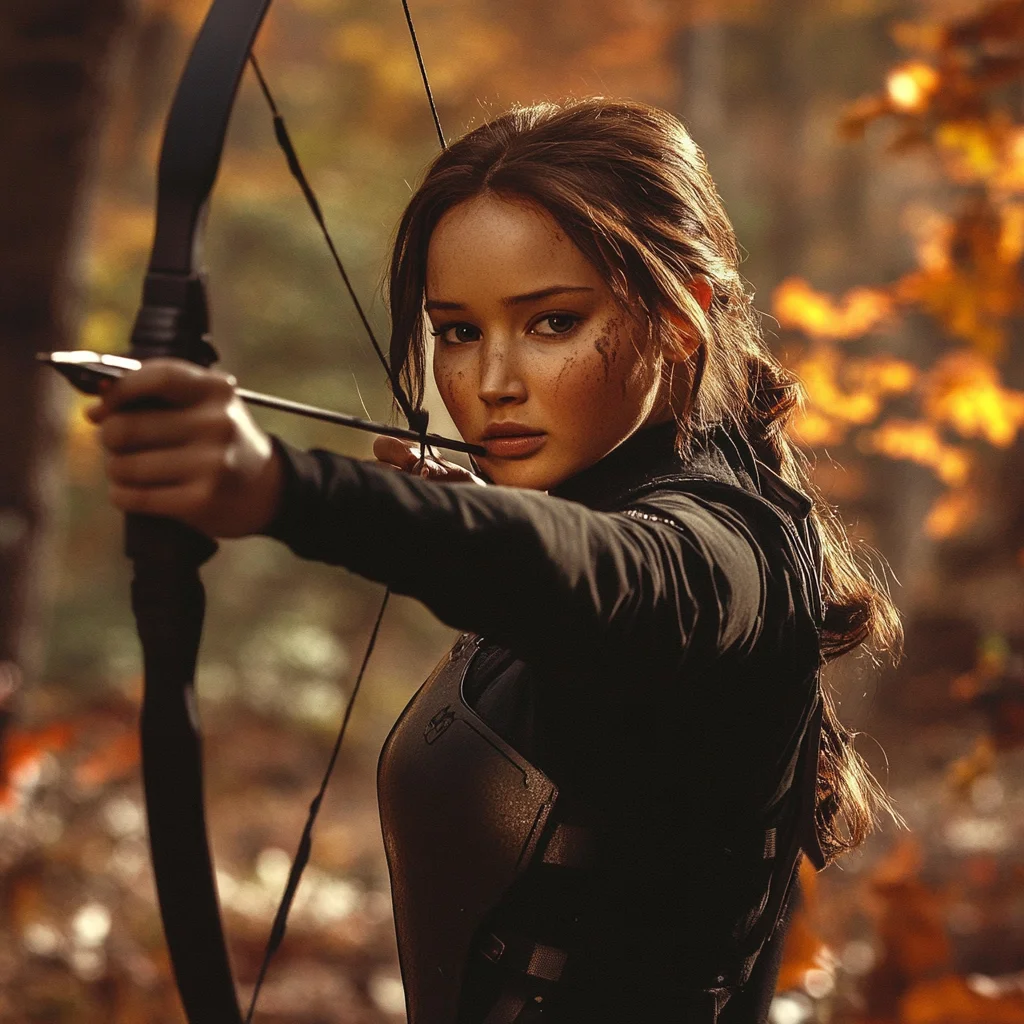
To portray the formidable Katniss Everdeen convincingly, Jennifer Lawrence underwent weeks of intense physical conditioning, including archery lessons from five-time Olympic archer Khatuna Lorig. Lorig taught the actress proper form, shooting technique, and muscle posture to ensure every shot looked entirely authentic on camera. Lawrence trained until her form was flawless, even earning praise from professional archers worldwide for her realistic technique. Her dedication was so thorough that she avoided developing common beginner mistakes that usually plague Hollywood archers. This rigorous training laid the foundation for Katniss's signature, deadly presence with a bow.
2. District 12 Was Filmed in a Real Abandoned Textile Village
Rather than constructing an artificial studio set for the impoverished District 12, the filmmakers shot on location in Henry River Mill Village, North Carolina. This abandoned 1920s textile mill town featured worn wooden houses and rusting machinery that perfectly captured the bleak, depressed atmosphere described in Suzanne Collins’s novel. The local surroundings gave the cast and crew a palpable sense of historical poverty and isolation. Many local residents from the surrounding Appalachian region were even hired as background extras, adding genuine regional authenticity to the scenes. Today, the preserved village remains a popular tourist destination for fans of the franchise.
3. Donald Sutherland Wrote a Letter to Secure His Role as President Snow
Veteran actor Donald Sutherland was not originally offered the role of the tyrannical President Coriolanus Snow, but he aggressively sought it after reading the script. Fascinated by the story’s socio-political parallels to modern authoritarianism, Sutherland wrote a passionate three-page letter titled "Power" to director Gary Ross detailing his vision for the character. Ross was so impressed by Sutherland’s deep understanding of the story's themes that he cast him immediately. Furthermore, Sutherland’s insightful letter inspired the filmmakers to write additional scenes for President Snow that were not present in the original book. His masterful portrayal subsequently became one of the defining highlights of the entire film series.
4. The Silent Three-Finger Salute Was Reimagined for the Screen
In Suzanne Collins’s original book, the three-finger salute was an ancient District 12 gesture used at funerals to express gratitude, admiration, and farewell. Director Gary Ross recognized the visual power of this gesture and adapted it into a quiet, unanimous act of silent defiance on screen. During Rue’s heartbreaking funeral scene, Katniss turns to the Capitol cameras and presses three fingers to her lips before raising them into the air. This emotional moment transformed the book's regional custom into a cinematic symbol of unity and global rebellion. The gesture became so powerful that real-world political protesters around the globe eventually adopted it in actual anti-authoritarian demonstrations.
5. Jennifer Lawrence Hesitated for Days Before Accepting the Lead Role
Despite being the director’s top choice for Katniss Everdeen, Jennifer Lawrence almost turned down the iconic role. Having previously worked primarily in independent films like Winter's Bone, she feared that joining a massive blockbuster franchise would completely destroy her privacy and personal life. She took three agonizing days to consider the offer while discussing the massive lifestyle shift with her mother. Ultimately, her mother pointed out that turning down a role she loved out of fear would be hypocritical. Lawrence officially signed on, stepping directly into the global spotlight that changed her career forever.
6. Woody Harrelson Based Haymitch’s Look on Legendary Rockers
Woody Harrelson brought a unique blend of humor and tragic depth to Haymitch Abernathy, Katniss and Peeta’s perpetually intoxicated mentor. Harrelson personally designed much of Haymitch’s distinctive style, including his famous long, blonde curtain hairstyle. He drew inspiration for the wig from his friend, Allman Brothers Band frontman Gregg Allman, wanting Haymitch to resemble a washed-up rock star. Harrelson felt this aesthetic reflected a man who had once experienced massive fame in the arena but retreated into isolation and substance abuse. The bold stylistic choice helped make Haymitch one of the most beloved and memorable characters in the franchise.
7. Modern 3D Printing Was Used to Craft the Mockingjay Pin
The iconic Mockingjay pin given to Katniss was crafted using cutting-edge technology that was quite innovative for film prop design in 2011. Prop master Jay Maia utilized 3D printing software to digitalize and sculpt the bird clutching an arrow within a ring. This digital manufacturing technique allowed the prop team to produce dozens of identical, highly detailed metallic pins quickly for filming. Having exact duplicates was essential because the pin endured heavy action sequences, mud, and water during the intense arena shoots. The resulting prop became one of the most recognizable cinematic emblems of the 2010s.
8. Jennifer Lawrence’s Swearing Habit Fueled a Massive Set Profanity Jar
To keep the atmosphere light during a grueling shoot, the cast and crew set up a swear jar on set. Director Gary Ross noted that Jennifer Lawrence was by far the largest contributor to the pot due to her colorful language between takes. Lawrence admitted that her candid vocabulary and energetic demeanor often caught the crew off guard, leading to rapid accumulations of cash in the jar. The collected money was ultimately donated to a local charity in North Carolina following the completion of principal photography. This lighthearted rule helped maintain high morale among the cast during intense filming days.
9. Brutal Forest Heat and Swarms of Bugs Plagued the Arena Shoot
Filming the dangerous Hunger Games arena scenes took place in the dense woods of DuPont State Recreational Forest in North Carolina during peak summer heat. Temperatures regularly soared past 100 degrees Fahrenheit with extreme humidity, creating exhausting conditions for actors wearing heavy costumes. Furthermore, the cast had to contend with swarms of biting insects, ticks, and abundant poison ivy throughout the forest floor. Several stunt doubles and actors suffered mild heat exhaustion while sprinting through the terrain. Despite these physical hardships, the harsh conditions added a layer of raw, visceral realism to the actors' performances.
10. The Film Sparked a Massive Global Boom in Archery Membership
The overwhelming success of the film triggered an unprecedented international surge in archery interest, often referred to by sports organizations as the "Katniss Effect." Organizations such as USA Archery reported a dramatic spike in club memberships, particularly among young women and teenage girls. Archery ranges across North America and Europe saw record enrollment numbers in beginner training courses following the movie's 2012 release. Equipment manufacturers also experienced record sales for traditional recurve bows similar to the one Katniss wielded in the arena. The movie successfully modernized and popularized an ancient sport for a brand-new generation.
11. Author Suzanne Collins Actively Co-Wrote the Screenplay
Unlike many authors who sell the movie rights to their books and step back, Suzanne Collins was intimately involved in bringing her vision to the screen. She co-wrote the initial movie screenplay alongside director Gary Ross and screenwriter Billy Ray. Collins worked closely with the filmmakers to determine which subplots to condense while preserving the core political critique of the novel. Her direct involvement ensured that the emotional weight and dystopian commentary remained central to the cinematic adaptation. Her hands-on role set a strong foundation that carried through all subsequent film installments.
12. Capitol Fashion Was Inspired by High-Fashion Surrealism and History
To showcase the absurd wealth and excess of the Capitol, costume designer Judianna Makovsky drew inspiration from dramatic historical eras and avant-garde fashion. She examined 18th-century French court attire, Russian avant-garde art, and the iconic 1930s designs of surrealist fashion pioneer Elsa Schiaparelli. Over 1,800 custom, hand-crafted outfits were created specifically for the Capitol scenes to emphasize the stark contrast with the impoverished districts. Elizabeth Banks spent up to four hours daily in hair, makeup, and elaborately painted long nails to transform into Effie Trinket. This meticulously exaggerated aesthetic highlighted the moral decay and superficiality of Panem’s ruling class.
13. Practical Animatronics Were Favored Over CGI Digital Animals
While modern sci-fi blockbusters often rely almost exclusively on computer-generated imagery, the filmmakers prioritized practical visual effects whenever possible. For the terrifying creature encounters and environmental hazards, the production team constructed physical animatronic models and used practical pyrotechnics. CGI was utilized primarily to touch up arena backgrounds or enhance complex sequences like the Tracker Jacker attack. This commitment to tangible props allowed the actors to react to real physical objects in front of them rather than green screens. This artistic decision gave the arena battles a grounded, gritty, and authentic feel.
14. On-Set Pranks Kept the Cast’s Spirits High During Dark Scenes
Given the heavy and grim thematic material of children fighting for survival, the young cast relied on humor to keep mood levels light on set. Josh Hutcherson and Jennifer Lawrence were notorious pranksters throughout the production. In one infamous incident, Hutcherson placed a hyper-realistic dummy of a swollen, bloated corpse from the prop department inside Lawrence’s trailer bathroom. When Lawrence opened the door, the terrifying sight caused her to scream and literally fall to the floor in shock. These playful antics created a tight bond among the cast that translated into genuine on-screen chemistry.
15. Natural Audio Recordings Were Blended Into the Movie's Score
Composer James Newton Howard worked closely with sound designers to craft a unique, immersive sonic experience for the movie's soundtrack. Instead of relying solely on traditional orchestral instruments, the sound team recorded authentic ambient noise in deep Appalachian forests. They recorded natural wind rustling through trees, bird calls, and running water, which were then subtly pitched and layered into the musical score. This unique audio technique seamlessly blurred the line between the natural environment and atmospheric background music. The resulting soundscape heightened the tension, making the forest arena feel alive and ominous.
Sources & References
This AI-assisted post was rigorously curated and fact-checked for accuracy by:
 Martin Roháček
How fun was this article? 🤔
Tap a star to rate it
🧠 Quiz: How closely were you paying attention?
10 questions — all answers are in the article above!
Enjoyed these facts? There's more! 💌
Fresh fun facts in your inbox. No spam, ever.