The Enigmatic Actor: 15 Fascinating Facts About Kevin Spacey
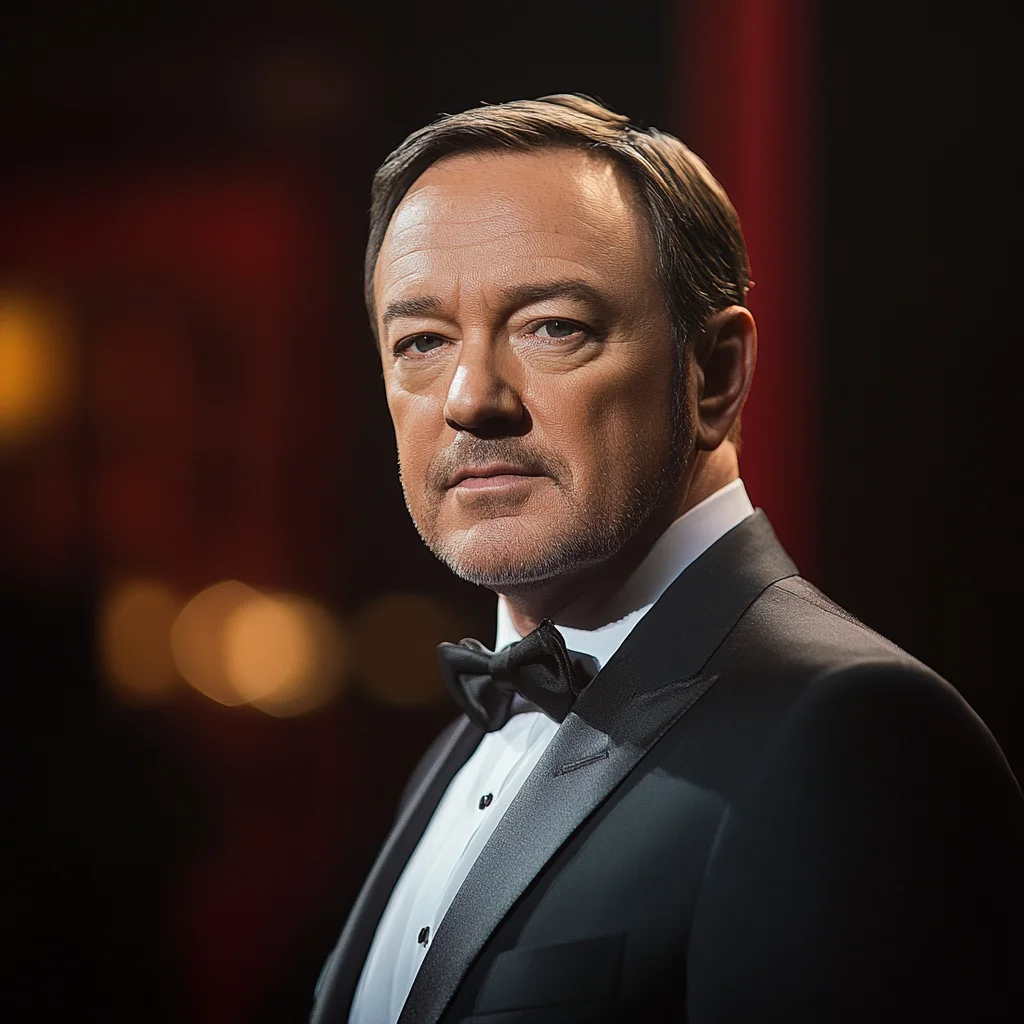
From his dramatic high school impersonations and Juilliard training to his double Oscar wins and transformative run leading London's Old Vic Theatre, Kevin Spacey has long been recognized as one of his generation's most compelling actors. Beyond his acclaimed performances in classics like The Usual Suspects, Se7en, and House of Cards, his career features intriguing behind-the-scenes stories, unexpected vocal talents, and historic industry firsts. Here are 15 fascinating facts about Kevin Spacey, exploring his rise, artistic achievements, and complex modern legacy.
1. Juilliard Dropout and Early Impersonations
Before becoming an acclaimed dramatic actor, Kevin Spacey honed his craft through stand-up comedy and character impersonations during his high school years in Southern California. Encouraged by his drama teacher, he developed a knack for mimicking famous celebrities like Johnny Carson and James Stewart. He went on to attend the prestigious Juilliard School in New York City in 1979 to study drama under legendary instructor Marian Seldes. However, Spacey grew restless with formal classroom instruction after just two years and dropped out to accept professional theatrical roles. His early hustle paid off quickly as he rapidly transitioned into Broadway and off-Broadway productions.
2. Broadway Debut Opposite Acting Royalty
Spacey made his Broadway debut in 1982 appearing alongside legendary Norwegian actress Liv Ullmann in Henrik Ibsen’s classical drama Ghosts. His performance caught the attention of veteran director Mike Nichols, who cast him in several subsequent stage productions, including The Real Thing. During this early stage career, Spacey developed a reputation as a ferocious, detail-oriented performer who immersed himself entirely in his roles. His theatrical breakout culminated in 1991 when he won a Tony Award for Best Featured Actor in a Play for his performance as Uncle Louie in Neil Simon's Lost in Yonkers. This critical acclaim established him as one of the finest theatrical talents of his generation.
3. Creating Keyser Söze for The Usual Suspects
Spacey gained international cinematic stardom with his portrayal of the mysterious criminal Verbal Kint in the 1995 crime classic The Usual Suspects. To make Kint’s physical disability convincing, Spacey glued his fingers together on one hand and wore filed-down shoes to give himself an authentic, labored limp. His nuanced performance captivated audiences and critics alike, earning him his first Academy Award for Best Supporting Actor. The film’s famous twist ending remains one of the most celebrated moments in cinema history, largely driven by Spacey's sinister, quiet intensity.
4. Demanding Uncredited Billing for Se7en
In the same year The Usual Suspects was released, Spacey delivered another unforgettable performance as serial killer John Doe in David Fincher's psychological thriller Se7en. Spacey specifically requested that his name be left out of all marketing materials, movie posters, and opening credits. He argued that keeping his involvement secret would heighten the element of surprise when his character unexpectedly surrenders to police late in the film. The studio agreed, and to make up for the lack of opening billing, Spacey's name was placed first in the closing credits. His terrifying performance contributed enormously to the film's enduring cult status.
5. An Oscar-Winning Turn in American Beauty
In 1999, Spacey landed the role of Lester Burnham, a disillusioned suburban father undergoing a midlife crisis in Sam Mendes's American Beauty. The film was a massive critical and commercial hit, grossing over $350 million worldwide against a modest $15 million budget. Spacey’s masterful balance of dark humor, vulnerability, and quiet desperation resonated deeply with audiences and critics. His riveting lead performance earned him the Academy Award for Best Actor, cementing his status as an A-list Hollywood star.
6. A Decade Leading London’s Old Vic Theatre
At the height of his Hollywood film career in 2003, Spacey made the surprising decision to step back from full-time film acting to become the Artistic Director of the Old Vic Theatre in London. He led the historic venue for twelve years from 2004 to 2015, directing and starring in numerous acclaimed productions. Under his tenure, the struggling theater experienced a historic revival, attracting international stars and revitalizing its financial standing. Spacey earned widespread praise from British theater critics for his hands-on leadership and artistic dedication.
7. Performing His Own Vocals in Beyond the Sea
Spacey harbored a lifelong passion for legendary pop singer Bobby Darin, culminating in his passion project Beyond the Sea (2004). Spacey co-wrote, directed, produced, and starred as Darin in the musical biographical drama. Rather than lip-syncing to original recordings, Spacey sang every track on the film's soundtrack himself, accompanied by a full big band orchestra. He toured extensively across North America to promote the soundtrack, delivering live musical performances that showcased his surprising vocal capabilities.
8. Revolutionizing Television with House of Cards
In 2013, Spacey made television history by starring as the ruthless political operative Frank Underwood in Netflix's political drama House of Cards. As Netflix's first major original series, the show pioneered the modern era of streaming content and full-season releases. Spacey’s direct-to-camera monologues and cold, calculating performance turned Underwood into an iconic TV antihero. He won a Golden Globe Award and received five consecutive Emmy nominations for Best Lead Actor in a Drama Series during his tenure on the show.
9. Awarded an Honorary British Knighthood
Due to his extraordinary contributions to British theater and culture through his work at the Old Vic, Spacey was honored by the British Crown. In 2010, he was named an honorary Commander of the Order of the British Empire (CBE) by Prince Charles. In 2015, he was awarded an honorary Knight Commander of the Order of the British Empire (KBE) for his services to drama. Because Spacey is a citizen of the United States, the knighthood was honorary, meaning he does not carry the title "Sir," but he retains the right to use the KBE post-nominal letters.
10. A World-Class Celebrity Impressionist
Long before he was an Oscar winner, Spacey was widely recognized in entertainment circles for his exceptional talent as a celebrity impressionist. He frequently showcased his uncanny vocal and physical impersonations during talk show appearances, including spot-on renditions of Christopher Walken, Al Pacino, Jack Nicholson, and Marlon Brando. During an appearance on Inside the Actors Studio, Spacey delighted the audience by flawlessly switching between over a dozen different celebrity voices on command. Fellow actors and talk show hosts have frequently cited him as one of the finest celebrity impersonators in modern Hollywood.
11. Directorial Debut on Neo-Noir Albino Alligator
Spacey made his feature film directorial debut in 1996 with the tense neo-noir thriller Albino Alligator. The film starred an impressive ensemble cast including Matt Dillon, Faye Dunaway, Viggo Mortensen, and Gary Sinise, centered on three thieves trapped in a bar during a hostage standoff. While the film had a limited release and modest box office returns, critics praised Spacey's stylish direction and ability to draw strong performances from his cast. The project demonstrated his versatile talent behind the camera early in his cinematic career.
12. Stepping into the Video Game Industry
In 2014, Spacey broke ground by entering the interactive entertainment industry with Activision's blockbuster video game Call of Duty: Advanced Warfare. He provided both the voice and 3D motion-capture performance for the primary antagonist, Jonathan Irons, the CEO of a rogue private military corporation. Developers used cutting-edge facial scan technology to recreate Spacey’s likeness with incredible accuracy. His participation represented a significant shift in high-budget video gaming, paving the way for mainstream Oscar-winning actors to headline triple-A interactive titles.
13. Sudden Downfall and Industry Removal
In October 2017, Spacey’s career abruptly collapsed after multiple allegations of sexual misconduct were made against him. In response, Netflix severed ties with him, cutting his character out of the final season of House of Cards and shelving an unreleased biopic about Gore Vidal starring Spacey. Director Ridley Scott took the unprecedented step of completely removing Spacey from the completed film All the Money in the World, reshooting all his scenes with actor Christopher Plummer just weeks before the theatrical release. Within months, Spacey went from one of Hollywood's most powerful figures to an industry outcast.
14. High-Profile Court Victories and Legal Acquittals
Following years of severe public backlash, Spacey faced several high-profile legal battles in both the United States and the United Kingdom. In October 2022, a federal jury in New York found Spacey not liable in a $40 million civil lawsuit brought by actor Anthony Rapp. Less than a year later, in July 2023, a London criminal court acquitted Spacey of nine counts of sexual assault involving four men following a four-week trial. Despite these total legal acquittals in court, his professional reputation remained deeply fractured.
15. Return via International Independent Film
Following his legal acquittals, Spacey began making tentative steps back into screen acting through international independent productions. He secured voice and supporting roles in low-budget European and American indie features, including the thriller Peter Five Eight and the suspense film Control. In 2024, he was honored with a lifetime achievement award at the Museum of Cinema in Turin, Italy, signaling a degree of international willingness to recognize his artistic legacy. Spacey remains a divisive and complex figure in contemporary entertainment history.
Sources & References
This AI-assisted post was rigorously curated and fact-checked for accuracy by:
 Martin Roháček
How fun was this article? 🤔
Tap a star to rate it
🧠 Quiz: How closely were you paying attention?
10 questions — all answers are in the article above!
Enjoyed these facts? There's more! 💌
Fresh fun facts in your inbox. No spam, ever.