The Gentle Guardian: 15 Fascinating Facts About Llamas
Long celebrated as the hard-working pack animals of the high Andes, llamas are far more complex and fascinating than most people realize. From their surprising ancient origins on the North American plains to their unique blood structure and uncanny ability to guard sheep herds, these intelligent camelids possess extraordinary adaptations. Whether they are humming to communicate or orgling to court a mate, llamas continue to delight animal lovers around the globe. Read on to discover fifteen incredible, lesser-known facts about these gentle South American icons.
1. Ancient North American Origins
Contrary to popular belief, llamas did not originate in the South American Andes, but on the Great Plains of North America. Fossil records reveal that their evolutionary ancestors roamed North America millions of years ago during the Ice Age. Around three million years ago, these ancestral camelids migrated south across the newly formed Isthmus of Panama. Eventually, the North American populations went extinct around 10,000 to 12,000 years ago during the Quaternary extinction event. Today, their domesticated descendants thrive throughout South America and across the globe as iconic high-altitude pack animals.
2. Soft-Padded Foot Structure
Llamas do not possess solid hooves like horses or cattle, which makes them remarkably gentle on fragile mountain ecosystems. Instead, each foot features two large toenails and a soft, pliable, leathery pad on the bottom. This unique design provides exceptional traction on steep, slippery mountain paths and rocky terrain. Because their padded feet press into the ground rather than digging into it, llamas cause significantly less soil erosion than traditional livestock. This soft footfall made them ideal pack animals for the ancient Inca along delicate Andean trail networks.
3. Oval-Shaped Red Blood Cells
Living thousands of feet above sea level requires specialized biological adaptations to survive thin, oxygen-deprived air. Llamas possess unique oval-shaped red blood cells, unlike the round cells found in humans and most other mammals. This elliptical shape allows their red blood cells to flow smoothly through tiny blood vessels without clumping during periods of dehydration. Furthermore, their hemoglobin has a much higher affinity for oxygen, allowing llamas to extract maximum oxygen from thin atmospheric conditions. This physiological evolutionary feat enables them to sprint and carry heavy loads effortlessly at high altitudes.
4. Communication Through Gentle Humming
Communication within a llama herd relies primarily on subtle body language and an array of gentle humming sounds. Mothers hum softly to their newborns, known as crias, to establish a close bond immediately after birth. Llamas also hum when they are curious, tired, anxious, or facing an unfamiliar situation in their environment. The pitch and cadence of the hum change depending on the animal's emotional state, allowing herd mates and handlers to read their mood easily. It serves as an acoustic social glue that keeps the herd coordinated, calm, and connected.
5. Strange Courtship "Orgling"
When a male llama prepares to mate, he produces a remarkably strange vocalization known to breeders and behaviorists as "orgling." This unique sound is a guttural, gargling noise that the male emits continuously throughout the courtship and mating process. The noise serves to signal his presence to the female and stimulate her ovulation, as llamas are induced ovulators. A breeding session can last anywhere from 15 to 45 minutes, accompanied non-stop by this unusual love song. To human ears, it sounds like a bubbling kettle, but to female llamas, it is an irresistible romantic acoustic cue.
6. Distinctive Banana-Shaped Ears
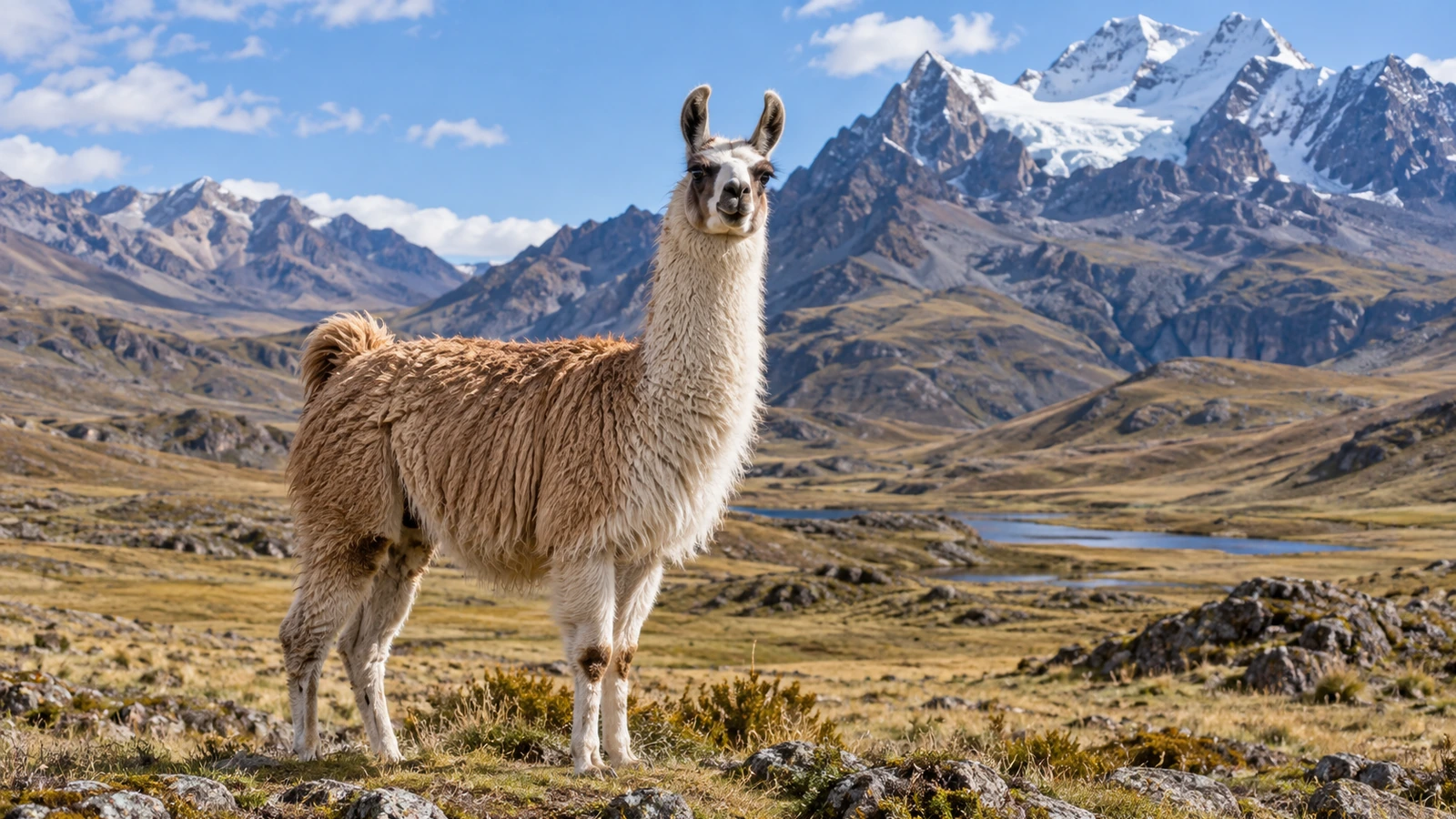
One of the quickest ways to distinguish a llama from its smaller camelid cousin, the alpaca, is by looking at its ears. Llamas possess long, curved, banana-shaped ears that lean inward toward each other. In contrast, alpacas have short, straight, spear-shaped ears that point straight up into the air. A llama's face is also longer and less covered in fleece compared to the fluffy, compact face of an alpaca. This distinctive ear shape is not just cosmetic; it allows llamas to capture faint sounds across vast, wind-swept Andean valleys.
7. The Projectile Truth About Llama Spit
The infamous "llama spit" is not actually simple saliva, but rather regurgitated fluid from the animal's digestive system. When a llama feels severely threatened, annoyed, or challenged by a herd rival, it draws up contents from its stomach compartments. This projectile mixture consists of green, foul-smelling, semi-digested plant matter that is sprayed with impressive accuracy over several feet. Llamas prefer not to spit because it leaves a foul taste in their own mouths and renders them temporarily defensive. Usually, they give fair warning by flattening their ears and tilting their heads back before letting loose.
8. Three-Chambered Ruminant Stomachs
Like cows and sheep, llamas are ruminants that chew their cud, but their digestive system features three stomach compartments rather than four. These chambers, known to biologists as C-1, C-2, and C-3, allow them to extract maximum nutrients from tough, fibrous vegetation. Food is initially fermented in the first two chambers before being regurgitated and re-chewed as cud for further breakdown. The final chamber, C-3, acts as the true acidic stomach where protein digestion is completed. This highly efficient process enables llamas to survive in harsh high-altitude environments where vegetation is sparse.
9. Strict Personal Work Limits
Llamas are remarkably intelligent pack animals that possess a firm understanding of their physical limits. If a pack is loaded with too much weight—typically exceeding 25 to 30 percent of their total body weight—a llama simply refuses to move. It will drop to its chest, lay down stubbornly, and make groaning noises until the excessive load is removed. No amount of coaxing, pulling, or yelling will convince an overloaded llama to stand up and carry the burden. This self-preserving instinct prevents injury and ensured that historical Andean traders treated their pack animals with respect.
10. Fearless Natural Flock Guards
Thanks to their naturally protective instinct against wild canines, llamas make exceptional guard animals for herds of sheep, goats, or poultry. Farmers frequently place a single castrated male or female llama in a pasture with smaller livestock. The llama adopts the flock as its personal family, actively scanning the horizon for potential threats. When a coyote, neighbor dog, or fox approaches, the llama emits a piercing alarm call, charges the intruder, and kicks it with its front legs. A single vigilant guard llama can dramatically reduce livestock losses without requiring extra security dogs.
11. Hygienic Communal Dung Piles
Hygiene is a top priority for llama herds, which practice the unusual habit of using a shared communal bathroom. Every member of the herd deposits their droppings in the exact same location, creating a consolidated dung pile known as a "midden." This behavior helps keep their grazing pastures clean and prevents the spread of intestinal parasites across the herd. Farmers appreciate this tidy habit because harvesting llama manure—often called "llama beans"—is remarkably easy. Furthermore, llama manure is low in odor and rich in nitrogen, making it a prized fertilizer for organic gardens.
12. Lanolin-Free Hypoallergenic Fleece
Llama fleece is highly valued in the textile industry because it is exceptionally soft, lightweight, and warm. Unlike sheep's wool, llama fiber completely lacks lanolin, the natural grease that attracts dirt and triggers skin allergies in many humans. As a result, llama wool is naturally hypoallergenic and requires far less washing or harsh chemical processing before being spun into yarn. The hollow structure of each individual hair fiber traps air, providing superior insulation against both cold temperatures and high heat. This remarkable fiber yields garments that are luxuriously soft, lightweight, and long-lasting.
13. Giving Birth Standing Up
A baby llama is called a "cria," a word derived from the Spanish term for "creation" or "nurture." Llama mothers, known as dams, almost always give birth during the morning hours on clear, sunny days. They deliver their babies while standing up, allowing the newborn cria to drop gently to the ground. Morning births are an evolutionary adaptation that ensures the cria dries off in the warm daytime sun before freezing night temperatures set in. Amazingly, a healthy cria can usually stand up and begin nursing within just one hour of entering the world.
14. High-Speed Andean Sprinters
While they may appear calm and slow-moving as they graze in meadows, llamas are surprisingly agile and fast sprinters when threatened. When fleeing predators like mountain lions or pumas, a llama can accelerate quickly, reaching top speeds of up to 35 miles per hour. This impressive speed, combined with their sharp eyesight and nimble footwork, allows them to outrun predators across rocky terrain. They can maintain high speeds over short distances, using quick changes in direction to confuse pursuers. Their athletic capability makes them formidable opponents to wild predators in the mountains.
15. Discriminating Threat Intelligence
Llamas possess superior cognitive abilities that allow them to assess potential threats with remarkable accuracy. Research and farm observations show that llamas can easily distinguish between friendly domestic pet dogs and wild predators like coyotes. A llama will often ignore a familiar farm dog, displaying calm indifference as the dog walks past the pasture. However, if an unfamiliar dog or coyote enters its territory, the llama instantly alerts the herd and assumes a defensive posture. This selective intelligence makes them far more effective livestock protectors than animals that react indiscriminately to all moving objects.
Sources & References
This AI-assisted post was rigorously curated and fact-checked for accuracy by:
 Martin Roháček
How fun was this article? 🤔
Tap a star to rate it
🧠 Quiz: How closely were you paying attention?
10 questions — all answers are in the article above!
Enjoyed these facts? There's more! 💌
Fresh fun facts in your inbox. No spam, ever.