The Epic Trilogy: 15 Fascinating Facts About The Lord of the Rings
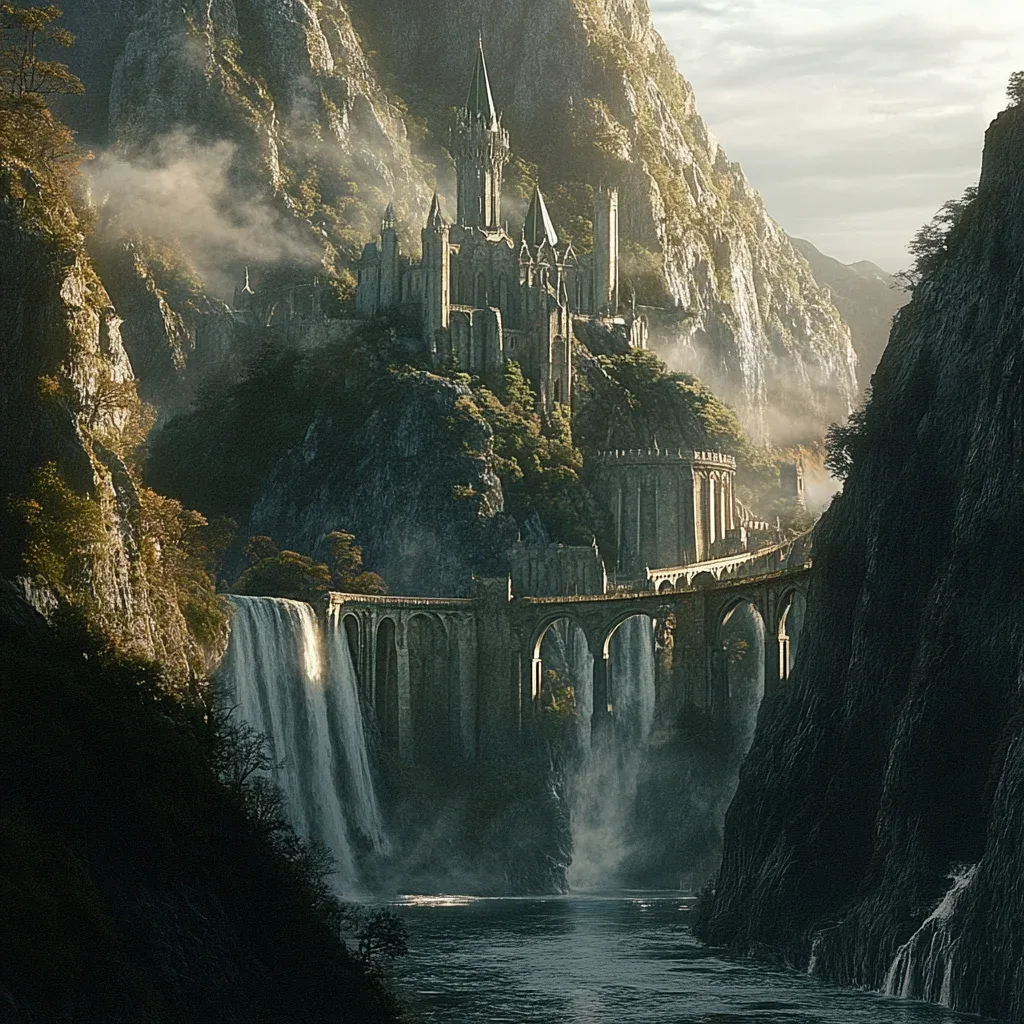
Peter Jackson's cinematic adaptation of J.R.R. Tolkien's The Lord of the Rings stands as one of the most ambitious achievements in film history. Filmed simultaneously across the breathtaking landscapes of New Zealand, the trilogy combined ground-breaking visual effects with unmatched physical craftsmanship. Behind the scenes, the production was defined by grueling injuries, improvised sound engineering, and bizarre casting near-misses. Discover fifteen incredible facts about how Middle-earth was brought to life on the big screen.
1. The Beatles Attempted to Adapt Middle-earth into a Feature Film
In the late 1960s, the Beatles actively pursued making a cinematic musical adaptation of The Lord of the Rings. Paul McCartney was slated to play Frodo Baggins, Ringo Starr was envisioned as Samwise Gamgee, George Harrison wanted to play Gandalf, and John Lennon intended to play Gollum. The band even approached legendary director Stanley Kubrick to helm the project, but Kubrick turned down the offer, calling the books unfilmable. Ultimately, J.R.R. Tolkien himself vetoed the entire project because he was not a fan of the pop group. Decades later, Peter Jackson confirmed the story directly to McCartney during a meeting.
2. Christopher Lee Was the Only Cast Member Who Personally Met J.R.R. Tolkien
Sir Christopher Lee, who played the fallen wizard Saruman, possessed a lifelong obsession with Tolkien's literature and read the entire trilogy every single year. Long before the movies were greenlit, Lee actually encountered J.R.R. Tolkien in person at The Eagle and Child pub in Oxford during the 1950s. Lee knelt before the author in reverence, receiving a brief blessing and word of encouragement from Tolkien. The author reportedly gave Lee his blessing to play Gandalf if a film were ever produced. Although age prevented Lee from taking on the physical demands of Gandalf, his encyclopedic knowledge of Middle-earth lore proved invaluable on set.
3. Sean Connery Turned Down Gandalf Because He Didn't Understand the Script
Before Ian McKellen was cast as Gandalf, the producers aggressively pursued iconic actor Sean Connery for the pivotal role. To entice the screen legend, New Line Cinema offered Connery a massive package including $10 million up front plus a 15 percent stake in the trilogy's box office profits. Connery ultimately turned down the role, later explaining that he read both the books and the screenplay but simply did not understand the material. Had Connery accepted, his backend deal would have earned him over $450 million across the three blockbusters. Instead, Ian McKellen stepped into the role and created one of cinema's most unforgettable performances.
4. Miramax Threatened to Replace Peter Jackson with Quentin Tarantino
During early development at Miramax, producer Harvey Weinstein grew furious over the rising budget and insisted that Tolkien's entire trilogy be condensed into a single two-hour movie. Weinstein threatened to fire Peter Jackson and hire Quentin Tarantino to direct the truncated single film instead. Jackson refused to compromise his creative vision and was granted a brief window to shop the project to other studios. When Jackson pitched the project to New Line Cinema executive Mark Ordesky, the studio took an unprecedented gamble. Rather than agreeing to two films as Jackson requested, Ordesky insisted that Tolkien's three books must be made into three separate movies.
5. Viggo Mortensen Broke His Toes in an Iconic On-Screen Moment
One of the most famous behind-the-scenes injuries occurred during the filming of The Two Towers. In a scene where Aragorn believes Merry and Pippin have been killed, he kicks a heavy steel Uruk-hai helmet in sheer frustration. During the fifth take, Viggo Mortensen kicked the iron prop full force, breaking two of his toes on impact. Instead of stopping the scene, Mortensen channeled his genuine agony into a visceral, gut-wrenching scream that remained in the final cut. Director Peter Jackson was so impressed by the raw emotion that he had no idea Mortensen was actually screaming in physical pain until filming wrapped.
6. Eight Fellowship Cast Members Received Matching Elvish Tattoos
To commemorate their bond after years of grueling filming in New Zealand, eight of the nine actors who played the Fellowship received matching tattoos. They selected the word "nine" written in Tolkien's Tengwar Elvish script. Elijah Wood, Ian McKellen, Viggo Mortensen, Orlando Bloom, Sean Astin, Billy Boyd, Dominic Monaghan, and Sean Bean all visited a local tattoo parlor together. The lone holdout was John Rhys-Davies, who played Gimli, citing his reluctance to deal with needles. Instead, Rhys-Davies sent his stunt double, Brett Beattie—who logged hundreds of hours in the dwarf armor—to receive the tattoo in his place.
 Famous Film Series and Franchises
Explore the fascinating behind-the-scenes secrets, groundbreaking visual effects, and unexpected cultural impacts of cinema's biggest blockbusters. From nuclear allegories to million-dollar improvisations, discover the untold stories behind your favorite film franchises.
See All Facts
Famous Film Series and Franchises
Explore the fascinating behind-the-scenes secrets, groundbreaking visual effects, and unexpected cultural impacts of cinema's biggest blockbusters. From nuclear allegories to million-dollar improvisations, discover the untold stories behind your favorite film franchises.
See All Facts
7. John Rhys-Davies Was Actually the Tallest Actor in the Fellowship
Despite playing the gruff dwarf Gimli, actor John Rhys-Davies stood at 6 feet 1 inch, making him the tallest actor among the actors playing the Fellowship members. Because dwarves are taller than hobbits in Tolkien's lore, the production did not need to scale down Rhys-Davies relative to the hobbit actors; his natural height proportion worked perfectly next to Elijah Wood and Sean Astin. However, playing Gimli took a severe physical toll on the actor due to the heavy prosthetics. Rhys-Davies suffered severe allergic contact dermatitis from the facial silicon glue, which essentially burned off the skin beneath his eyes every day.
8. Andy Serkis Drank a Custom Concoction to Sustain Gollum's Voice
Andy Serkis delivered a ground-breaking performance as Gollum, laying the foundation for modern performance-capture acting. However, producing Gollum's signature rasping, hacking throat sounds put an immense strain on Serkis's vocal cords. To keep his throat from tearing up during endless takes, Serkis drank liters of a liquid mixture dubbed "Gollum Juice." The remedy consisted of hot water, raw honey, lemon, and fresh ginger, which he kept in a thermos on set at all times. Serkis explained that the harsh vocal noise was originally inspired by watching his cat cough up hairballs.
9. Terrifying Sound Effects Were Made from Common Everyday Objects
Sound designer David Farmer created the bone-chilling shrieks of the Ringwraiths using surprisingly mundane household materials. The foundational screech of the Nazgûl was generated by scraping plastic drinking cups together in different rhythms and pitches. To add a wet, fluttering texture to the fell beasts and Nazgûl movements, the audio team recorded the rustling sound of plastic Target shopping bags. These domestic sound elements were then pitched down, reversed, and layered alongside screams recorded by sound designer Fran Walsh. The resulting soundscape turned simple everyday trash into cinema's most spine-tingling shrieks.
10. The New Zealand Army Provided Mass Troops for Middle-earth Battles
To assemble the vast armies required for epic confrontations like the Battle of Helm's Deep, the production hired hundreds of active-duty soldiers from the New Zealand Army. The soldiers brought disciplined military formation, physical endurance, and combat skills to the chaotic battle sets. During downtime between lengthy night shoots, the soldiers raised morale by performing the traditional Māori Haka dance for the cast and crew. Director Peter Jackson also recorded the troops chanting commands in the studio to construct the imposing vocal soundscape of the Black Speech of Mordor. However, many soldiers had to leave production abruptly when deployed on a peacekeeping mission to East Timor.
11. Sean Astin Suffered a Severe Foot Injury During an Emotional Scene
At the climax of The Fellowship of the Ring, Samwise Gamgee rushes into the river to follow Frodo's boat, despite not knowing how to swim. While filming this sequence in a natural New Zealand river, actor Sean Astin stepped heavily on a jagged piece of submerged glass. The sharp shard pierced through his rubber hobbit foot prosthetic and deep into his real heel, causing severe arterial bleeding. The onset medical team immediately wrapped his foot, and a helicopter was called to airlift Astin to the nearest hospital for surgery. Despite the injury, Astin recovered quickly and returned to set within days.
12. The Cast Suffered an Astonishing Array of Physical Injuries
The physical intensity of filming three epic films back-to-back resulted in constant injuries for the main cast. Beyond Mortensen's broken toes and Astin's punctured foot, Orlando Bloom broke a rib after being thrown from his horse during a stunt. Stunt double Brett Beattie dislocated his knee and suffered permanent joint damage while playing Gimli in action sequences. Viggo Mortensen also chipped a tooth during a sword fight scene and famously asked the crew to superglue it back on so he could keep filming. Jackson gently refused and sent Mortensen to a local dentist during his lunch break instead.
13. The Return of the King Achieved an Unprecedented Oscar Sweep
At the 76th Academy Awards in 2004, The Lord of the Rings: The Return of the King made history by winning all 11 categories in which it was nominated. This total clean sweep tied the record for the most Academy Awards won by a single film, held alongside Ben-Hur and Titanic. Furthermore, it became the first and only fantasy feature film to ever win the prestigious Academy Award for Best Picture. The victory was widely seen as a collective tribute by the Academy for the monumental achievement of the entire trilogy.
14. Multiple Cast and Crew Members Received "Real" One Ring Props
Prop maker Jens Hansen forged several dozens of gold rings in various sizes for filming, ranging from tiny close-up models to giant rings used for forced-perspective shots. When production finally wrapped, Peter Jackson presented key individuals with their own authentic movie-used Ring prop. Both Elijah Wood (Frodo) and Andy Serkis (Gollum) were gifted rings used during crucial close-up photography. Peter Jackson also kept one of the master rings for his personal collection. For years, Wood and Serkis playfully claimed in interviews that they possessed the single "true" screen-used Ring.
15. Props Artisans Literally Wore Off Their Fingerprints Making Armor
The scale of physical prop creation for Middle-earth was staggering, requiring over 48,000 individual armor pieces created by Weta Workshop. To craft authentic chainmail for thousands of Orcs and Elves, two prop makers spent over two years manually linking together tens of millions of tiny plastic rings. The process involved cutting PVC plastic pipes into thin rings, joining them, and melting them closed individually. By the time production ended, the repetitive physical friction of linking rings had permanently erased the fingerprints of the two lead chainmail artisans.
Sources & References
This AI-assisted post was rigorously curated and fact-checked for accuracy by:
 Martin Roháček
How fun was this article? 🤔
Tap a star to rate it
🧠 Quiz: How closely were you paying attention?
10 questions — all answers are in the article above!
Enjoyed these facts? There's more! 💌
Fresh fun facts in your inbox. No spam, ever.