The Hollywood Icon: 15 Fascinating Facts About Marilyn Monroe
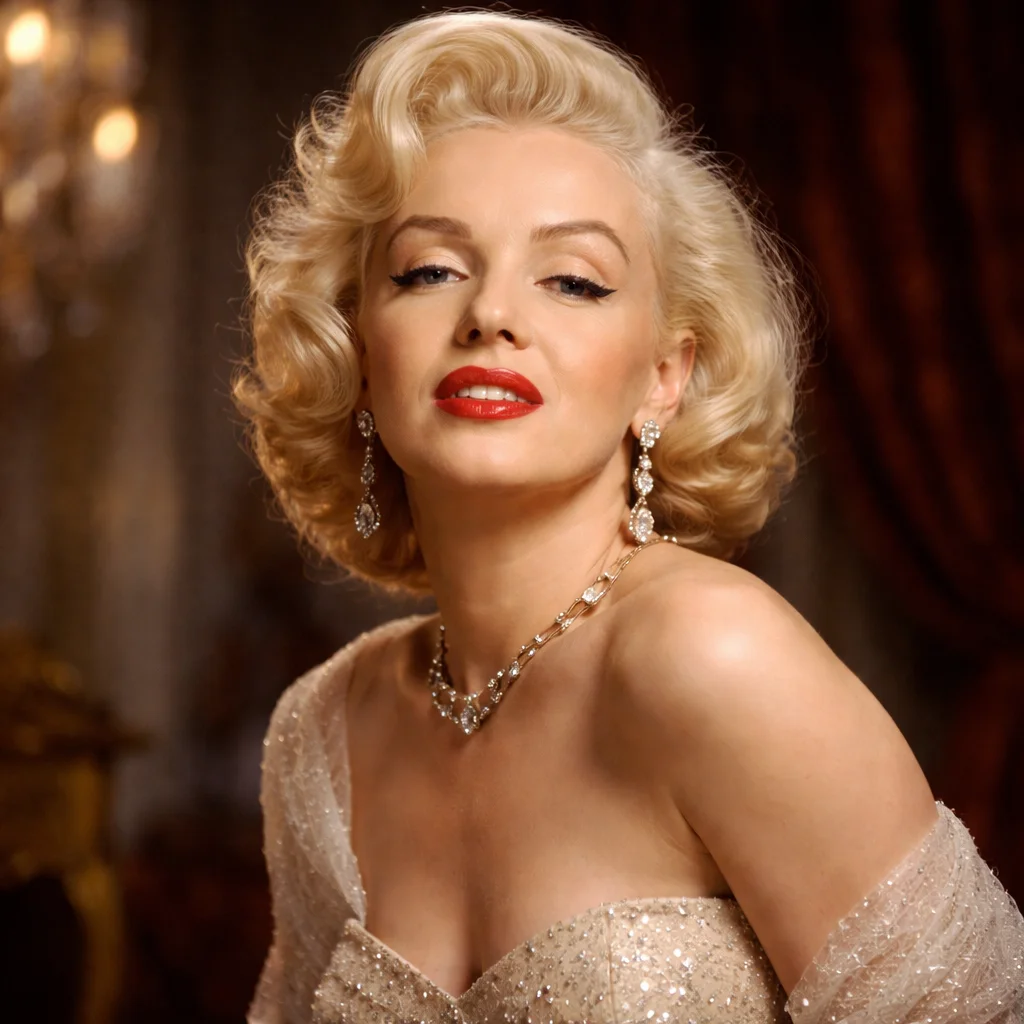
Marilyn Monroe remains one of the most enduring icons of twentieth-century pop culture, yet the real woman behind the glamorous screen persona was far more complex than studio publicity let on. Beneath her famous platinum hair and breathy voice was a trailblazing businesswoman, an avid reader with a 400-book personal library, and a courageous civil rights advocate. From her secret plastic surgery and FBI surveillance files to her pioneering fitness routines, Monroe constantly shattered expectations behind the scenes. Here are 15 fascinating facts about the life, career, and hidden intellect of Marilyn Monroe.
1. Her Breathy Voice Was a Speech Therapy Technique
Long before it became her signature sensual trademark, Marilyn Monroe’s famous breathy voice was actually a psychological coping mechanism. As a child, Norma Jeane Baker suffered from a pronounced stutter that resurfaced during times of severe stress or anxiety. During her time in foster care and later while working in a defense plant, the speech impediment occasionally rendered her completely mute. A dedicated speech therapist eventually taught her to adopt a rhythmic, panting tone to bypass her vocal cords' muscle spasms and articulate words smoothly. What began as a practical exercise to conquer a speech impediment ultimately transformed into one of the most recognized vocal styles in cinematic history.
2. She Was an Avid Reader with a 400-Book Library
Contrary to the "dumb blonde" stereotype Hollywood forced upon her, Marilyn Monroe was a deeply curious intellectual and an insatiable reader. At the time of her death in 1962, her personal library contained over 400 carefully curated books spanning classical literature, philosophy, psychoanalysis, and art history. Her collection included heavy works by Fyodor Dostoevsky, James Joyce, Sigmund Freud, and Walt Whitman, many of which were filled with her own handwritten marginal notes. Photography sessions frequently caught her engrossed in complex literature between takes, such as reading Ulysses on set in 1951. She once remarked that she selected books by opening them to random pages to see if she connected with the author's spirit.
3. She Founded Her Own Independent Production Company
Frustrated by the restrictive star system and low pay of 20th Century Fox, Monroe took a revolutionary step in December 1954. She partnered with photographer Milton Greene to launch Marilyn Monroe Productions, making her only the second woman in Hollywood history after Mary Pickford to form her own film company. Studio head Darryl F. Zanuck initially ridiculed the venture, claiming Monroe would never produce a single picture without studio oversight. However, Monroe held her ground, refusing roles she found insulting and forcing Fox to negotiate a historic new contract that gave her approval over directors, scripts, and cinematographers. Her bold corporate defiance effectively broke the studio’s absolute control and paved the way for artistic independence among Hollywood actors.
4. Her Famous JFK Dress Was Sewn Directly Onto Her Body
When Marilyn Monroe performed her sultry rendition of "Happy Birthday" for President John F. Kennedy at Madison Square Garden in May 1962, her appearance caused an absolute sensation. Designed by Jean Louis, the sheer flesh-colored gown was encrusted with more than 6,000 hand-sewn rhinestones and tailored to fit her exact proportions. The dress was so impossibly tight that Monroe had to be sewn into it while standing completely naked right before stepping onto the stage. Wearing no undergarments beneath the sparkling fabric, she gave the illusion of stepping out clad in nothing but pure shimmer. The iconic dress later set a world record when it sold at auction in 2016 for a staggering $4.8 million.
5. Joe DiMaggio Sent Roses to Her Crypt for 20 Years
Although their turbulent marriage lasted less than a year, baseball legend Joe DiMaggio remained devoted to Monroe for the rest of his life. Following her tragic passing in August 1962, DiMaggio claimed her body, arranged her private funeral, and made a silent vow of eternal remembrance. For the next twenty years, he paid a local florist to deliver a half-dozen fresh red roses to her crypt at Westwood Village Memorial Park three times every single week. DiMaggio never publicly discussed their relationship in interviews and never remarried before his own death in 1999. His final words on his deathbed were reportedly, "I'll finally get to see Marilyn again."
6. She Was Paid Significantly Less Than Her Female Co-Stars
Despite being one of the biggest box-office draws in the world, Monroe was notoriously underpaid by 20th Century Fox throughout most of her career. During the filming of the 1953 hit Gentlemen Prefer Blondes, co-star Jane Russell was paid approximately $100,000 while Monroe received a mere $18,000. When Monroe pointed out that she was the main attraction of the movie, studio executives scoffed and reminded her that she wasn't technically a star on paper. Even at the height of her fame while filming Some Like It Hot, her salary paled in comparison to co-stars Tony Curtis and Jack Lemmon. This severe wage gap was one of the primary catalysts that drove her to form her own production company to demand fair market value.
7. Truman Capote Wrote Holly Golightly Specifically for Her
Novelist Truman Capote envisioned Marilyn Monroe as the definitive choice to play the charmingly eccentric Holly Golightly in the film adaptation of Breakfast at Tiffany's. Capote felt her natural vulnerability and chaotic charm matched the character perfectly, and he spent months convincing her to take the role. Monroe went so far as to perform dramatic scenes from the script for her acting mentors, Lee and Paula Strasberg, to prepare for the part. However, Paula Strasberg advised her against accepting, arguing that playing an expensive call girl would damage her carefully cultivated screen image. The role ultimately went to Audrey Hepburn, a casting choice that left Capote bitter, as he felt Paramount Pictures betrayed his artistic vision.
8. She Helped Break Segregation Barriers for Ella Fitzgerald
In 1955, the legendary jazz vocalist Ella Fitzgerald was barred from performing at the prestigious Mocambo nightclub in West Hollywood due to racial segregation practices. Monroe, a huge admirer of Fitzgerald's talent, personally telephoned the club's owner to demand that he book the singer immediately. To incentivize the owner, Monroe promised to reserve a front-row table every single night Fitzgerald performed and bring maximum media coverage with her. The owner agreed, and Monroe kept her promise, sitting front and center as photographers swarmed the venue night after night. Fitzgerald later credited Monroe’s courageous intervention as a major turning point that propelled her career into mainstream, high-end venues.
9. She Was an Early Pioneer of Weightlifting and Yoga
Long before strength training and mindfulness became mainstream wellness trends, Monroe embraced an unconventional physical fitness regimen. In an era when women were discouraged from lifting weights out of fear of building bulky muscles, Monroe lifted hand weights daily to tone her chest and shoulders. She studied under Indra Devi, the woman credited with bringing modern yoga to the Western world, practicing complex poses to maintain her posture and flexibility. Monroe also rejected the fad diets of the 1950s, favoring a high-protein diet that included raw eggs whipped into warm milk for breakfast. She openly showcased her workout routines in magazine photo shoots, encouraging women to embrace physical strength alongside femininity.
10. Frank Sinatra Gave Her a Maltese Terrier Named "Maf"
During the final year of her life, Monroe received a white Maltese terrier puppy as a gift from her close friend Frank Sinatra. She mischievously named the dog "Mafia Honey"—shortened to "Maf"—as a humorous nod to Sinatra’s alleged underworld connections. Maf lived a lavish lifestyle alongside Monroe, sleeping on expensive white furniture and accompanying her to major social gatherings. Following Monroe's death in 1962, the pampered pup was adopted by Sinatra’s secretary, Gloria Lovell, who cared for him for the rest of his natural life. In 2008, two of Maf's original dog license tags were sold at auction for thousands of dollars to an avid Monroe memorabilia collector.
11. Secret Medical Records Confirmed Early Plastic Surgery
For decades, rumors persisted that Monroe's timeless beauty was entirely natural, but medical records released in 2013 proved she had subtle cosmetic procedures. A set of medical X-rays and physician notes confirmed that she underwent a chin cartilage implant in 1950 early in her Hollywood career. The procedure was performed to soften her jawline, though the implant eventually began to dissolve and required minor surgical revision. The records also indicated that she received minor tip rhinoplasty to refine the shape of her nose. These subtle alterations were executed so masterfully that they enhanced her features without robbing her of her distinct natural appearance.
12. Her Signature Pout Used Five Different Lipstick Shades
Monroe’s signature pout was not merely the result of genetics, but a carefully engineered masterpiece created by her personal makeup artist, Allan "Whitey" Snyder. To create the illusion of three-dimensional depth and fullness, Snyder applied up to five distinct shades of red lipstick simultaneously. Darker, burgundy tones were painted around the outer corners of her lips, while lighter, brighter reds were applied directly to the center. He then added a touch of white highlighter to the center of her bottom lip and finished with a thick coat of petroleum jelly for high shine. This painstaking contouring technique pioneered modern lip-plumping makeup methods decades before cosmetic filler injections existed.
13. The FBI Maintained an Active Surveillance File on Her
During the height of the Cold War, the Federal Bureau of Investigation kept Marilyn Monroe under active surveillance. FBI director J. Edgar Hoover expressed deep suspicion regarding her 1956 marriage to playwright Arthur Miller, who was under investigation for left-wing political affiliations. Agents closely monitored her travel itineraries, personal phone calls, and social circles, suspecting she might be influenced by communist sympathizers. Her file grew significantly larger following a 1962 vacation to Mexico, where she associated with prominent American expats and left-leaning artists. Despite years of intense scrutiny, the FBI file contained no evidence that Monroe ever engaged in subversive political activities.
14. Severe Stage Fright Caused Her to Take Up to 60 Takes
Behind her effortless screen presence lay severe perfectionism and crippling anxiety that often paralyzed her on set. Monroe frequently struggled to memorize even short, basic lines of dialogue, requiring an extraordinary number of retakes. During the filming of Billy Wilder's Some Like It Hot, it took her 60 takes to correctly deliver the simple line, "It's me, Sugar." On another occasion in the same film, saying "Where's the bourbon?" took 47 takes, forcing Wilder to tape the line inside a prop drawer. Despite the immense frustration this caused her co-stars, directors consistently admitted that her eventual final takes possessed a magical quality unmatched by any other actor.
15. She Was Born Norma Jeane and Spent Childhood in Foster Care
Before becoming global icon Marilyn Monroe, she was born Norma Jeane Mortenson on June 1, 1926, in Los Angeles, California. Her mother, Gladys Pearl Baker, suffered from severe paranoid schizophrenia and was institutionalized for most of Norma Jeane’s youth. As a result, the young girl spent her childhood bouncing between eleven different foster homes and an orphanage, where she experienced neglect and abuse. At just sixteen years old, she married navy merchant Jim Dougherty primarily to avoid being returned to an orphanage when her foster parents moved away. It was only while working at the Radioplane munitions factory during World War II that a military photographer discovered her, setting her on the path to stardom.
Sources & References
This AI-assisted post was rigorously curated and fact-checked for accuracy by:
 Martin Roháček
How fun was this article? 🤔
Tap a star to rate it
🧠 Quiz: How closely were you paying attention?
10 questions — all answers are in the article above!
Enjoyed these facts? There's more! 💌
Fresh fun facts in your inbox. No spam, ever.