The Visionary Maverick: 15 Fascinating Facts About Steve Jobs
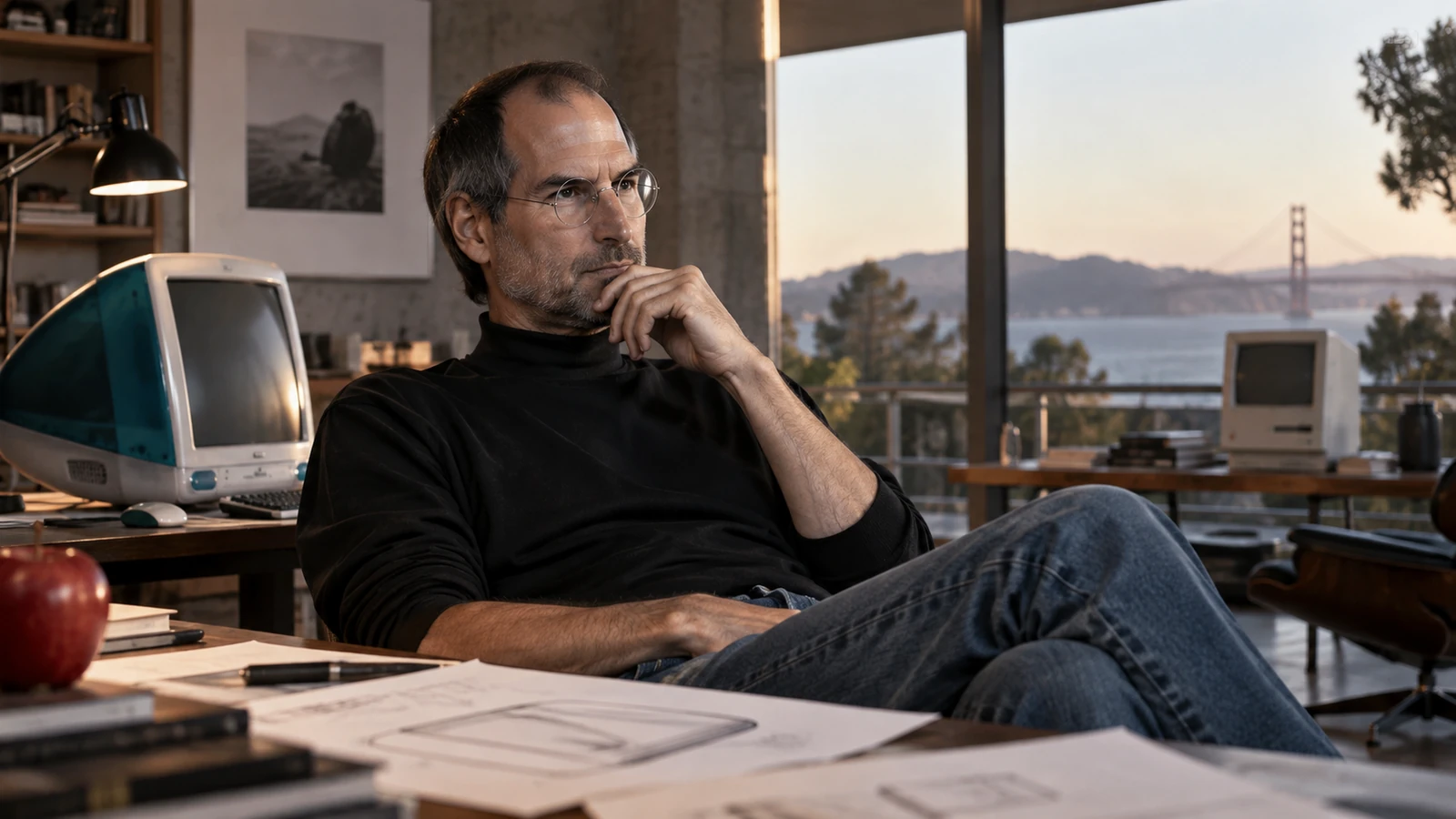
Steve Jobs was one of the most transformative figures of the modern digital era, co-founding Apple and reshaping how humanity interacts with technology, music, and media. Yet behind his iconic black turtlenecks and sleek product launches lies a life filled with eccentricities, unbelievable coincidences, and intense personal drama. From secret biological ties and strange diet-inspired decisions to legal loopholes and unusual workplace habits, his journey was anything but conventional. Here are 15 fascinating facts that reveal the complex, brilliant, and often bizarre reality of Steve Jobs.
1. His Biological Roots Connected Him to a Famous Novelist and an Unknowing Restaurant Encounter
Jobs was born to Abdulfattah Jandali and Joanne Schieble and was adopted as an infant by Paul and Clara Jobs, whom he always considered his true parents. Decades later, Jobs discovered that his biological sister was acclaimed author Mona Simpson, with whom he developed a remarkably close bond. In an astonishing twist of fate, Jobs actually met his biological father, Jandali, without either man recognizing the other. Jandali was managing a popular Mediterranean restaurant in San Jose where Jobs occasionally dined and shook his hand. Upon discovering his biological father's identity later in life, Jobs chose never to build a relationship with him.
2. A College Drop-Out Calligraphy Class Revolutionized Digital Typography
After spending just one semester at Reed College, Jobs dropped out because the steep tuition was draining his working-class parents' life savings. However, he stayed on campus as an unofficial auditor, taking creative classes that genuinely intrigued him, including a calligraphy course taught by Trappist monk Robert Palladino. Jobs studied serif and sans-serif typefaces, line spacing, and the artistry of exceptional lettering. A decade later, while designing the original Macintosh, Jobs applied those exact artistic lessons to the computer's operating system. This single decision gifted the Mac the world's first beautiful, proportionally spaced digital fonts, permanently transforming desktop publishing.
3. The First Apple Computer Was Priced at Exactly $666.66
When the Apple I launched in 1976, it was sold to local retailers for $500 and retailed to the public for the eyebrow-raising price of $666.66. Despite persistent rumors over the years, the price tag had no occult or satanic significance whatsoever. Apple co-founder Steve Wozniak designed the board and simply liked repeating digits because they were easier and more satisfying to type on a keypad. Additionally, applying a standard one-third retail markup on the wholesale price of $500 brought the exact sum to $666.66. Wozniak later admitted he had no idea the number carried sinister religious connotations in popular culture.
4. A Fruitarian Diet Inspired the Name of the World's Most Valuable Tech Company
In 1976, while brainstorming names for their nascent computer business, Jobs and Wozniak cycled through various technical terms without success. At the time, Jobs was following a strict fruitarian diet and had just returned from spending time at an apple orchard commune in Oregon. He suggested the name "Apple Computer" because he felt it sounded fun, spirited, and approachable rather than cold and intimidating. Furthermore, choosing a name starting with the letter A provided a clever corporate advantage: it listed Apple ahead of competitor Atari in the phone directory.
5. His Poor Hygiene at Atari Forced Him onto the Night Shift
In 1974, a teenage Steve Jobs landed a job as an electronics technician at pioneering video game maker Atari. However, his personal habits quickly created friction among management and his fellow co-workers. Jobs mistakenly believed that his strict vegan diet eliminated natural body odor, leading him to rarely shower or use deodorant, and he routinely walked around the office barefoot. To avoid firing the brilliant young designer while keeping peace in the building, Atari chief engineer Al Alcorn assigned Jobs to work exclusively on the night shift when the office was empty.
6. He Exploited a Vehicle Registration Loophole to Drive Without License Plates
For years, observers noticed that Steve Jobs routinely drove his silver Mercedes-Benz SL55 AMG around Silicon Valley without any rear license plates. While many assumed he was simply paying continuous traffic fines or ignoring motor vehicle laws, Jobs was actually exploiting a specific legal loophole. California law at the time granted drivers six full months to attach state plates to a newly leased vehicle. By entering a custom agreement with his leasing company, Jobs swapped his car for an identical new Mercedes every six months, ensuring he legally never had to display plates.
7. His Signature Daily Uniform Was Designed by a High-Fashion Icon
Steve Jobs was famous for wearing the exact same outfit every day: a black turtleneck, Levi's 501 jeans, and grey New Balance 991 sneakers. This choice was intended to eliminate decision fatigue every morning so he could focus entirely on work decisions. The iconic black turtlenecks were custom-crafted for Jobs by legendary Japanese fashion designer Issey Miyake. After Jobs visited Sony's headquarters in Japan and admired their corporate uniforms, he asked Miyake to design a personal uniform, resulting in a shipment of roughly 100 identical black turtlenecks that filled his closet.
8. He Was Ousted from Apple and Made His Fortune with Pixar
Following an intense executive power struggle with CEO John Sculley in 1985, Jobs was stripped of his operational duties and resigned from Apple. Undeterred, he invested $10 million to purchase the Computer Graphics Division from filmmaker George Lucas, spinning it off as Pixar. Although the company initially struggled selling hardware, Pixar's pivot to computer-animated filmmaking yielded the landmark 1995 blockbuster Toy Story. When Pixar went public shortly after the film's release, Jobs's 80% majority stake instantly made him a billionaire long before he returned to rescue Apple.
9. He Took a Cash Salary of Just $1 per Year for Over a Decade
When Steve Jobs returned to lead Apple as interim CEO in 1997, he insisted on receiving a formal cash salary of just $1 per year. He maintained this symbolic pay check until his death in 2011, taking no annual performance bonuses or cash raises. While he held millions of shares of Apple stock and Disney equity from the sale of Pixar, the $1 salary was a deliberate statement of commitment to Apple's turnaround. Jobs frequently joked that 50 cents of his annual salary went to taxes, while the remaining 50 cents went into his company healthcare plan.
10. He Named an Early Apple Computer After the Daughter He Initially Denied
In 1978, Jobs's high school girlfriend Chrisann Brennan gave birth to a daughter named Lisa. For years, Jobs publicly denied paternity, going so far as to claim in court documents that he was sterile despite a legal DNA test proving a 99.9% probability of fatherhood. During this exact era, Apple was developing the Apple Lisa, a pioneering commercial computer featuring a graphical user interface. Jobs insisted publicly for years that "Lisa" stood for "Local Integrated System Architecture," though he later confessed he named the machine directly after his daughter before eventually reconciling with her.
11. Zen Buddhism Heavily Shaped Apple's Minimalist Design Aesthetic
In 1974, Jobs traveled throughout India in search of spiritual enlightenment, a journey that led him to embrace Zen Buddhism under the guidance of mentor Kobun Chino Otogawa. Jobs practiced meditation daily and developed a profound reverence for Zen concepts such as simplicity, intuition, and the elimination of clutter. This spiritual philosophy directly shaped his product management style at Apple. He relentlessly demanded stripped-down, elegant aesthetics, which ultimately defined iconic products like the iPod, iPhone, and iPad.
12. His Bold Cold Call to Hewlett-Packard at Age 12 Landed Him a Summer Job
Even as a 12-year-old growing up in California, Steve Jobs possessed extraordinary audacity and initiative. While attempting to build a electronic frequency counter for a school project, he realized he was missing crucial electronic components. Jobs unhesitatingly looked up the home phone number of William Hewlett, co-founder of Hewlett-Packard, in the public phone book and called him directly. Hewlett was so thoroughly impressed by the young boy's bold determination that he supplied the missing parts and offered Jobs a summer job on an HP assembly line.
13. He Demanded Gorilla Glass for the iPhone Just Weeks Before Launch
When Apple was developing the original iPhone, prototype models featured plastic screens that scratched easily when carried alongside keys in pockets. Just weeks before the official product announcement in 2007, Jobs complained bitterly about the scratched plastic display and insisted on switching to scratch-resistant glass. Apple reached out to Corning Glass, whose CEO revived an abandoned 1960s chemical-strengthening glass technology known as Gorilla Glass. Corning manufactured the pristine glass displays in a high-intensity rush, forever altering the smartphone manufacturing industry.
14. He Paid $100,000 for a Single Corporate Logo Concept
After being pushed out of Apple in 1985, Jobs founded NeXT Computer to build powerful educational workstations. Seeking a world-class corporate identity, Jobs hired graphic design legend Paul Rand, creator of famous logos for IBM, ABC, and UPS. Jobs agreed to pay Rand an astounding $100,000 for the project, but Rand famously refused to provide multiple options to choose from. Instead, Rand presented a single 100-page brand book detailing the exact 28-degree angle and colors of the iconic NeXT cube logo, which Jobs immediately accepted and adored.
15. His Final Words Were a Mysterious Expression of Wonder
Steve Jobs passed away on October 5, 2011, at his home in Palo Alto, California, at age 56 following a long battle with pancreatic cancer. His sister, novelist Mona Simpson, delivered a touching eulogy at his private memorial service, revealing his poignant final moments. According to Simpson, Jobs looked intently at his sister Patty, then spent a long time gazing at his children and his wife Laurene, before looking past them into the distance. His final spoken words were simply: "Oh wow. Oh wow. Oh wow."
Sources & References
This AI-assisted post was rigorously curated and fact-checked for accuracy by:
 Martin Roháček
How fun was this article? 🤔
Tap a star to rate it
🧠 Quiz: How closely were you paying attention?
10 questions — all answers are in the article above!
Enjoyed these facts? There's more! 💌
Fresh fun facts in your inbox. No spam, ever.