The Unyielding Suffragist: 15 Fascinating Facts About Susan B. Anthony
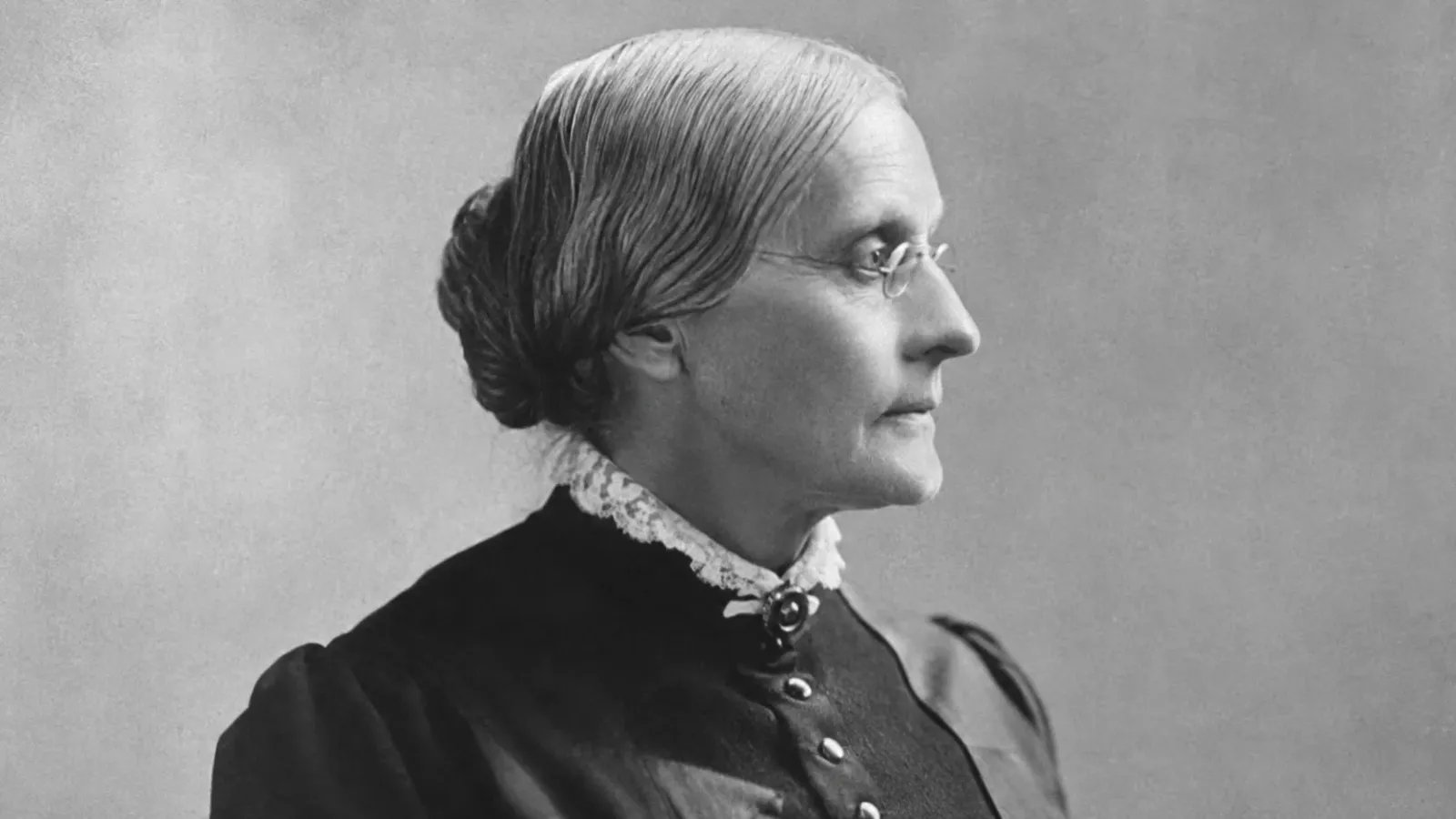
Often reduced to a stern face on a coin, Susan B. Anthony was far more than a one-dimensional suffragist. She was a radical abolitionist and labor advocate who engaged in daring civil disobedience. Beyond the simple myths, uncover the highly strategic and fiercely defiant reality of a true pioneer whose relentless lifetime of activism completely reshaped American democracy.
1. Susan B. Anthony was arrested, tried, and criminally convicted for voting in the 1872 presidential election.
Convinced that the Fourteenth Amendment inherently granted women the right to vote by defining them as citizens, Anthony led a group of women to the polls in Rochester, New York. She successfully cast a ballot for Ulysses S. Grant, but federal authorities arrested her weeks later. At her highly publicized trial, the judge ordered the all-male jury to find her guilty without deliberation and fined her one hundred dollars, a penalty she famously refused to pay for the rest of her life.
2. Despite her status as the face of the suffrage movement, Anthony did not attend the famous 1848 Seneca Falls Convention.
It is a common historical misconception that Anthony was present at the inaugural women's rights convention organized by Elizabeth Cady Stanton and Lucretia Mott. In reality, Anthony was living in Canajoharie, New York, focusing on her work as a teacher and her activism in the temperance movement. She did not formally meet Stanton until 1851, introduced by Amelia Bloomer on a street corner, which sparked a fifty-year political partnership that drove the suffrage movement forward.
3. Before focusing primarily on women's suffrage, Anthony was a fierce abolitionist who served as a key agent for the American Anti-Slavery Society.
Raised in a Quaker household with deep anti-slavery sentiments, Anthony made her family's farm in Rochester a frequent meeting place for prominent abolitionists, including Frederick Douglass. During the early days of the Civil War, she organized the Women's National Loyal League with Stanton, gathering nearly four hundred thousand signatures to petition Congress for an amendment abolishing slavery. This massive petition drive significantly bolstered the political pressure that eventually led to the passage of the Thirteenth Amendment.
4. Anthony briefly adopted the controversial bloomer costume to protest the physical restrictions of traditional women's clothing before abandoning it for strategic reasons.
In the 1850s, tightly laced corsets and heavy, floor-length dresses were both standard and incredibly physically restrictive. Anthony and other reformers adopted the bloomer dress, which consisted of a knee-length skirt worn over loose trousers, allowing for far greater mobility. However, the sheer public outrage and relentless media mockery over their attire began to overshadow their political message. Recognizing the distraction, Anthony reluctantly returned to conventional dresses to ensure audiences focused on her words rather than her wardrobe.
5. She considered the invention of the bicycle to be one of the greatest tools for women's emancipation in the nineteenth century.
In an 1896 interview, Anthony famously declared that bicycling had done more to emancipate women than anything else in the world. The bicycle provided unprecedented independent mobility, allowing women to travel without needing a man to drive a carriage or escort them. Furthermore, riding bicycles necessitated practical, less restrictive clothing, which helped slowly dismantle the oppressive Victorian fashion standards that had constrained women's physical freedom for decades.
6. Anthony cut her hair short in a bold defiance of Victorian gender norms, though she later grew it out to appear more conventional.
In her radical younger years, Anthony chopped off her hair in a style that was considered highly un-feminine for the era. Like her experiment with bloomers, this physical rebellion was a statement against the societal expectations that prioritized a woman's ornamental appearance over her comfort and utility. She eventually grew her hair back out and wore it in her signature tight bun to present a highly respectable, grandmotherly image to the public, neutralizing attacks on her character and making her radical ideas more palatable to conservative audiences.
 Human Rights Icons and Moral Leaders
Explore the complex realities of history's most renowned human rights icons and moral leaders. From strategic militants to quiet rebels, discover the astonishing sacrifices, fierce defiance, and brilliant tactics that drove these revolutionary figures to reshape our world.
See All Facts
Human Rights Icons and Moral Leaders
Explore the complex realities of history's most renowned human rights icons and moral leaders. From strategic militants to quiet rebels, discover the astonishing sacrifices, fierce defiance, and brilliant tactics that drove these revolutionary figures to reshape our world.
See All Facts
7. Her first major legislative victory was not about voting, but rather securing the right for married women to own property and keep their own wages.
Under the legal doctrine of coverture, married women in the nineteenth century experienced a civil death, meaning they could not own property, sign contracts, or control money they earned. Anthony relentlessly campaigned across New York State, gathering signatures and lobbying legislators to change this archaic system. Her tireless efforts culminated in the New York State Married Women's Property Bill of 1860, a landmark piece of legislation that granted married women the right to own property, enter into contracts, and assume joint custody of their children.
8. Anthony formed a labor union for women in the publishing industry after male typographical unions refused to admit female members.
Realizing that women needed economic independence to achieve political equality, Anthony became a staunch advocate for working women. In 1868, when male-dominated printing unions barred women from joining, she founded the Working Women's Association to report on working conditions and advocate for equal pay. She even used her own suffrage newspaper to employ female typesetters and print pieces defending the labor rights of women in various industrial trades.
9. She published a radical weekly newspaper called The Revolution whose motto demanded absolute equality for all marginalized groups.
Funded initially by wealthy eccentric George Francis Train, The Revolution was established by Anthony and Stanton in 1868. Its masthead boldly declared that men should have their rights and nothing more, while women should have their rights and nothing less. The publication tackled highly controversial topics of the day that other papers avoided, including reproductive rights, equal pay, unionization, and divorce reform. Although it eventually went bankrupt due to its uncompromising stances, it served as a crucial intellectual hub for early feminist thought.
10. Anthony pledged her own life insurance policy to force the University of Rochester to admit female students.
In 1900, the University of Rochester agreed to admit women, but only if organizers could raise fifty thousand dollars to fund the transition. On the day of the absolute deadline, the committee found themselves eight thousand dollars short. An elderly but determined Anthony stepped in, pledging the cash value of her life insurance policy to close the gap. The university accepted the pledge, officially opening its doors to women, and Anthony's quick financial maneuvering secured an educational victory in her hometown.
11. In a deeply controversial move, Anthony actively campaigned against the Fifteenth Amendment because it excluded women.
Following the Civil War, the abolitionist and women's rights movements fractured over the Fifteenth Amendment, which aimed to enfranchise Black men but omitted any mention of gender. Anthony and Stanton were furious that women were being left behind and argued that educated white women deserved the vote before uneducated men of any race. This stance led them to employ racist rhetoric and align with notoriously racist politicians who opposed Black suffrage, creating a deep and lasting schism with former allies like Frederick Douglass.
12. She spent over a decade co-writing a massive, multi-volume history of the suffrage movement to ensure her narrative would survive for future generations.
Recognizing the importance of controlling the historical narrative, Anthony, Stanton, and Matilda Joslyn Gage began compiling The History of Woman Suffrage in 1876. What was originally intended to be a simple pamphlet expanded into a mammoth six-volume archive totaling thousands of pages. By heavily documenting their own speeches, letters, and strategic maneuvers, Anthony effectively cemented herself and Stanton at the absolute center of the feminist pantheon, often minimizing the contributions of rival suffrage factions.
13. Susan B. Anthony was the first actual, historical woman to be depicted on circulating United States coinage.
Before the Susan B. Anthony dollar debuted in 1979, United States coins had only featured allegorical female figures, such as Lady Liberty. The decision to honor a real female historical figure was groundbreaking, though the coin itself suffered a disastrous reception. Its similar size, weight, and reeded edge made it easily confused with the Washington quarter, leading to widespread public frustration and a halt in production just two years after its initial release.
14. She consciously chose to remain unmarried for her entire life to retain her legal autonomy and dedicate herself fully to activism.
In nineteenth-century America, entering into a marriage legally subordinated a woman to her husband, stripping her of independent legal standing and property rights. Anthony viewed this arrangement as fundamentally oppressive and decided early on that she would never take a husband. By remaining single, she kept total control over her finances, her travel schedule, and her political voice, allowing her to crisscross the country giving hundreds of speeches a year without requiring male permission.
15. Anthony died fourteen years before the Nineteenth Amendment was ratified, but the legislation was colloquially named in her honor.
Although she devoted over fifty years of her life to the cause of women's suffrage, Anthony died of heart failure in 1906 at the age of eighty-six. When Congress finally passed the amendment granting women the right to vote in 1919, and it was ratified in 1920, it was widely referred to as the Susan B. Anthony Amendment. Her dying words asserting that failure was impossible became the rallying cry that pushed the final generation of suffragists across the finish line.
Sources & References
This AI-assisted post was rigorously curated and fact-checked for accuracy by:
 Martin Roháček
How fun was this article? 🤔
Tap a star to rate it
🧠 Quiz: How closely were you paying attention?
10 questions — all answers are in the article above!
Enjoyed these facts? There's more! 💌
Fresh fun facts in your inbox. No spam, ever.