The Gardeners of the Forest: 15 Fascinating Facts About Tapirs
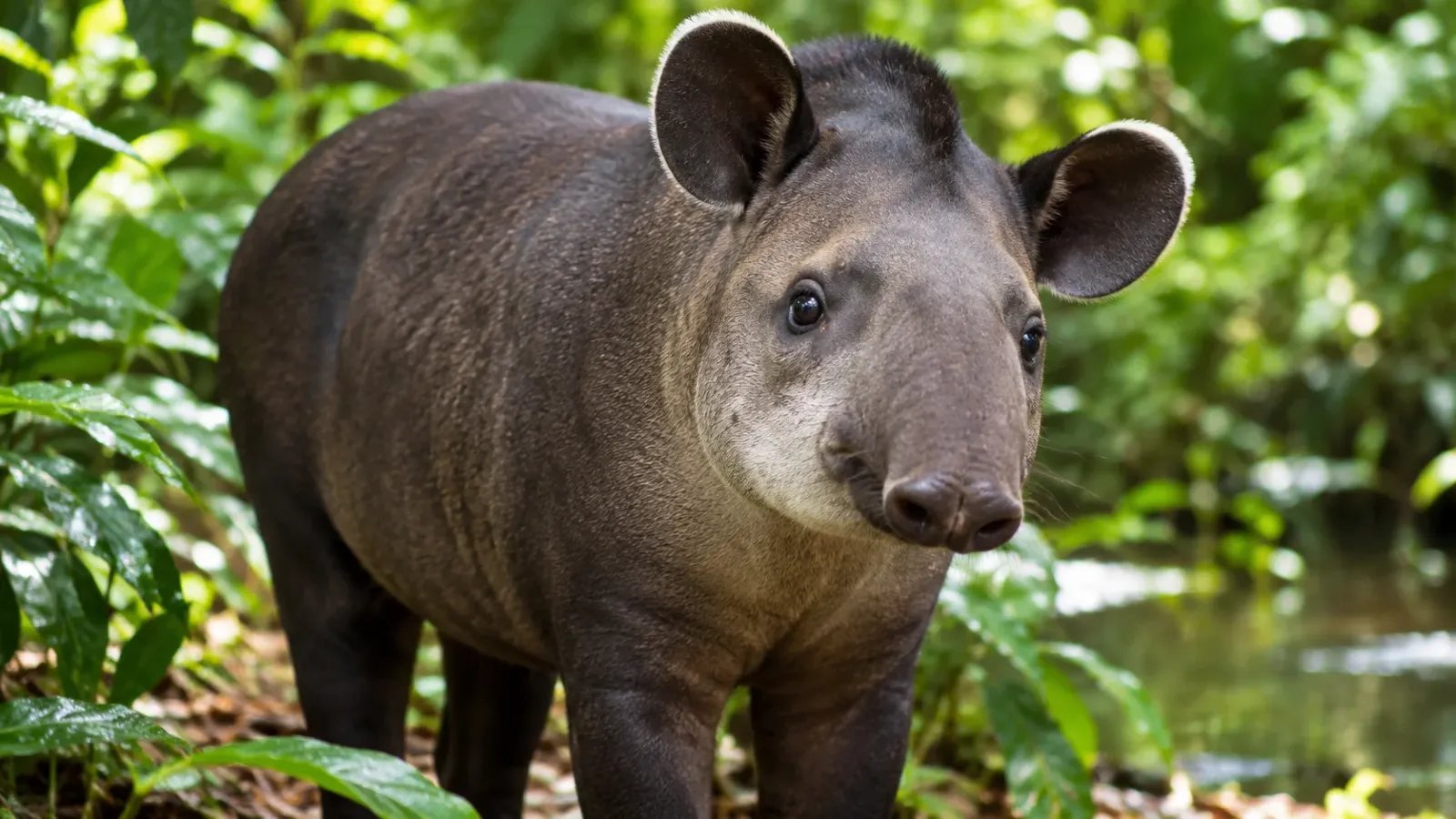
Tapirs look like a pig with an elephant's trunk, but their closest relatives are actually horses and rhinos. Their babies are striped like watermelons, they walk along riverbeds underwater, and their family has barely changed in millions of years. Here are the surprising facts about these gentle forest giants.
1. Tapirs are related to horses and rhinos.
Tapirs may look like oversized pigs, but they belong to a completely different group of animals. Together with horses and rhinoceroses, they are odd-toed ungulates, hoofed mammals that carry their weight mainly on their middle toes. Tapirs have four toes on their front feet and three on their back feet, which helps them walk on soft, muddy ground.
2. Their nose is a mini trunk.
A tapir's snout and upper lip are fused into a short, flexible trunk called a proboscis. It can move in all directions, allowing the tapir to grab leaves, fruit and branches that would otherwise be out of reach. The trunk also works like a snorkel when the animal is swimming.
3. Their babies look like striped watermelons.
Baby tapirs of every species are born with a coat of white stripes and spots on a dark brown background. The pattern acts as camouflage in the dappled light of the forest floor, making the calves hard for predators to see. The stripes fade as the young tapirs grow, and they disappear within a year or so.
4. They can walk along the bottom of rivers.
Tapirs love water. Those living near rivers spend much of their time swimming, cooling off and escaping from predators by diving. They can sink to the bottom and walk along the riverbed to feed on water plants. Some even submerge themselves so that small fish can nibble parasites off their skin.
5. The Malayan tapir wears a built-in disguise.
The Malayan tapir, the only species found in Asia, has a black head, shoulders and legs and a large white "saddle" across its middle. This bold pattern breaks up its outline, especially at night, making it surprisingly difficult for predators such as tigers to recognise the shape of a tapir in the moonlit forest.
6. There are four widely recognised species.
The four tapir species are the South American tapir, Baird's tapir of Central America, the woolly mountain tapir of the Andes and the Malayan tapir of Southeast Asia. In 2013, researchers announced a possible fifth species, the kabomani tapir, but later genetic studies suggested it is simply a form of the South American tapir.
7. Tapirs once roamed North America and Europe.
Today, tapirs live only in Central and South America and Southeast Asia, but their ancestors were far more widespread. Tapirs lived across North America until the end of the last Ice Age, around 12,000 years ago, and in Europe until about 2.6 million years ago. Their basic body shape has changed remarkably little over millions of years.
8. They are called "gardeners of the forest".
Tapirs eat large amounts of fruit and swallow the seeds whole. They then wander long distances and deposit the seeds in their droppings, often far from the parent tree. By spreading seeds in this way, tapirs help to regenerate forests, which has earned them the nickname "gardeners of the forest".
9. A tapir pregnancy lasts more than a year.
Female tapirs carry their young for about 13 months, one of the longest pregnancies among land mammals of their size. They usually give birth to a single calf, and a healthy female can breed only once every two years. This slow rate of reproduction makes tapir populations especially vulnerable to hunting.
10. Their name means "thick".
The word "tapir" comes from the Tupi language of Brazil, where it roughly means "thick", referring to the animal's tough hide. The thick skin on the back of a tapir's neck helps protect it from the bites of predators such as jaguars, which often attack by grabbing the neck.
11. They can weigh as much as a small piano.
Adult tapirs typically weigh between 150 and 300 kilograms and stand around one metre tall at the shoulder. The Malayan tapir is the largest species. Despite their bulk, tapirs are agile and can run quickly through dense undergrowth, scramble up steep riverbanks and swim well.
12. They communicate with whistles.
Tapirs are mostly solitary, but they keep in touch using high-pitched whistles and squeaks that sound surprisingly bird-like for such a large animal. Researchers believe the calls help tapirs find each other and signal alarm. They also leave scent marks to communicate with their neighbours.
13. In Japan, the tapir eats bad dreams.
In Japanese folklore, a mythical creature called the baku devours nightmares. Over time, the baku became associated with the tapir, and today the Japanese word for tapir is also "baku". Some people in Japan even keep baku charms to protect them from bad dreams.
14. They can live for around 30 years.
The natural lifespan of a tapir is about 25 to 30 years, both in the wild and in zoos. Apart from mothers and their calves, adult tapirs spend most of their lives alone, following well-worn trails through the forest to their feeding and bathing spots.
15. Every tapir species is threatened.
All four tapir species are listed by the IUCN as either Endangered or Vulnerable. Their forests are being cut down for farming, logging and roads, and tapirs are hunted for their meat. Because they breed so slowly, it takes a long time for populations to recover once they have been reduced.
Sources & References
This AI-assisted post was rigorously curated and fact-checked for accuracy by:
 Martin Roháček
How fun was this article? 🤔
Tap a star to rate it
🧠 Quiz: How closely were you paying attention?
10 questions — all answers are in the article above!
Enjoyed these facts? There's more! 💌
Fresh fun facts in your inbox. No spam, ever.