The Misunderstood Predator: 15 Fascinating Facts About Tarantulas
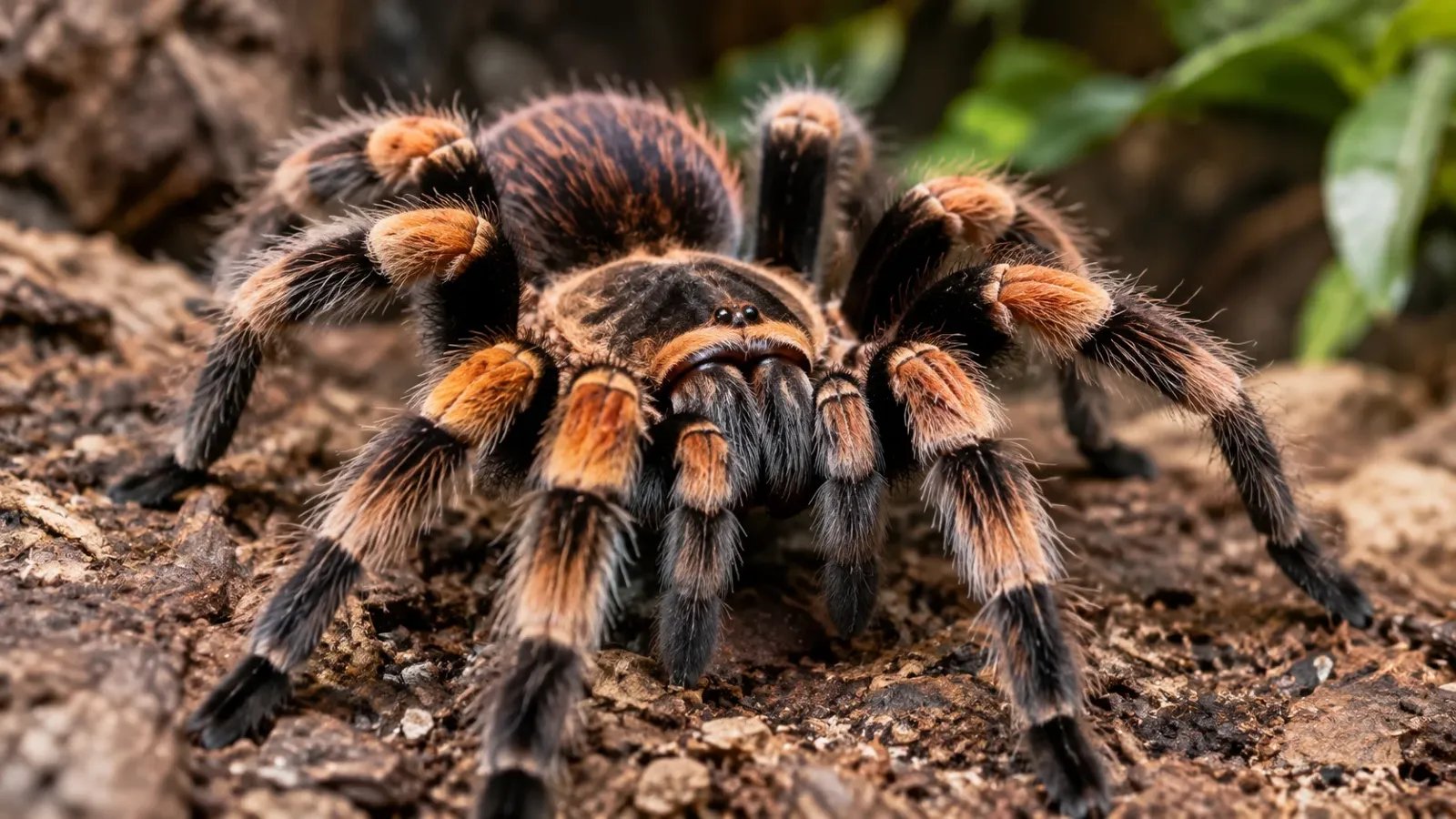
Feared as deadly monsters, tarantulas are actually fragile, gentle giants. Despite their Hollywood reputation, their venom is usually weaker than a bee sting. Dive into their complex biology, strange defenses, and ancient evolution to discover the captivating truths hiding behind the pop-culture myths.
1. Tarantulas possess barbed abdominal hairs that they kick at predators like tiny spears.
While their fangs get all the attention, most New World tarantulas rely on urticating hairs for defense. When threatened, the spider rapidly rubs its hind legs against its abdomen, dislodging a cloud of these microscopic, harpoon-like bristles. If these hairs embed in the eyes or respiratory tracts of an attacker, they cause severe irritation and swelling, offering a far more effective deterrent than a bite.
2. A fatal tarantula bite to a human has never been officially recorded in medical history.
Hollywood has long portrayed tarantulas as lethal assassins, but this is a complete myth. While a bite can be painful, akin to a wasp sting, and may cause localized cramping or swelling, the venom of most species is remarkably mild to humans. Unless an individual experiences a rare, severe allergic reaction, a tarantula bite is virtually harmless to healthy adults.
3. Some tarantula species keep tiny frogs as pets to protect their eggs from foraging insects.
In the jungles of South America, the Colombian lesserblack tarantula shares its burrow with the dotted humming frog. This mutualistic relationship benefits both parties: the massive spider offers the tiny frog protection from predators, while the frog eats small ants and insects that are drawn to the decaying remains of the tarantula's prey and threaten to eat the spider's defenseless eggs.
4. Female tarantulas can live for decades, outlasting the lifespans of many common household pets.
The longevity of tarantulas is highly sexually dimorphic. While males typically die shortly after reaching maturity and mating, usually living only a few years, females are built for endurance. A female tarantula can live anywhere from twenty to thirty years in captivity, with some individuals documented surviving up to forty years under optimal conditions.
5. Tarantulas are incredibly fragile creatures that can easily bleed to death from a short fall.
Despite their bulky, intimidating appearance, a tarantula's abdomen is remarkably delicate, resembling a water balloon covered in hair. If a heavy, terrestrial tarantula falls from just a few feet onto a hard surface, its exoskeleton can rupture. Because spiders have an open circulatory system pumping hemolymph under pressure, an abdominal rupture is often fatal unless quickly sealed.
6. Instead of spinning intricate webs to catch prey, tarantulas use silk primarily as a construction material.
Unlike the classic orb-weavers that build aerial nets, tarantulas are ambush predators that hunt on the ground or in trees. They produce silk, but they use it to line their underground burrows to prevent cave-ins, create soft molting mats, or lay down subtle tripwires at the entrance of their dens to detect the vibrations of approaching prey.
7. Tarantulas can regenerate lost limbs during their molting process.
If a tarantula loses a leg to a predator or a bad molt, it is not permanently disabled. Because they periodically shed their entire exoskeleton to grow, a tarantula can regenerate the missing appendage over the course of several molts. The newly formed leg will initially appear smaller and thinner than the others but will gradually return to its normal size with successive sheds.
8. A tarantula has retractable claws hidden at the ends of its legs like a feline.
To navigate a variety of terrains, from smooth leaves to rough bark, tarantulas rely on tiny, retractable claws located on their tarsi, or foot segments. These claws act like grappling hooks that extend when the spider needs extra grip and retract when walking on flat ground, functioning much like a cat's claws to ensure exceptional climbing stability.
9. The fangs of a tarantula do not cross each other like a pair of pincers, but strike downward like pickaxes.
Tarantulas belong to a primitive suborder of spiders known as Mygalomorphae. Unlike true spiders, whose fangs pinch together horizontally in a pincer motion, mygalomorphs possess large fangs that point straight down. This parallel orientation means tarantulas must rear up on their hind legs and strike downward to impale their prey, relying on raw downward force rather than a clamping mechanism.
10. Before mating, a male tarantula must spin a specialized web just to transfer his own genetic material.
The reproductive anatomy of a male tarantula requires a highly convoluted process. Lacking a direct delivery system, the male spins a small, dense hammock called a sperm web, deposits his seminal fluid onto it, and then absorbs the fluid into specialized bulbous appendages on his pedipalps. Only after loading these secondary structures can he venture out to find a female to inseminate.
11. A tarantula's stomach is incredibly narrow, forcing it to consume its prey entirely in liquid form.
Tarantulas cannot chew solid food. Once they impale a victim, they inject highly potent digestive enzymes that rapidly liquefy the prey's internal organs. The spider then uses its muscular stomach like a vacuum cleaner, sucking up the nutrient-rich biological soup and leaving behind only a crushed, dry husk of the insect's exoskeleton.
12. Tarantulas possess eight eyes, but their vision is astonishingly poor.
Clustered tightly together on a small raised node called the ocular tubercle, a tarantula's eight eyes are more of a sensory formality than a primary hunting tool. They can distinguish between light and dark and perceive motion, but they cannot resolve sharp images. Instead, the spider navigates and hunts almost entirely by sensing chemical cues and minute vibrations through the highly sensitive hairs covering its body.
13. During a molt, a tarantula sheds not only its outer skin but also the lining of its stomach and respiratory organs.
Molting is an exhausting, dangerous, and total biological overhaul for a tarantula. Because the exoskeleton extends inward to line the foregut, hindgut, and the book lungs used for breathing, all of these internal linings must be shed and pulled out through the body during the molt. This extreme process leaves the spider severely dehydrated and helpless until the new exoskeleton hardens.
14. There is a species of tarantula that shines in brilliant, iridescent shades of metallic blue.
The cobalt blue tarantula, native to the rainforests of Southeast Asia, boasts legs covered in striking, iridescent blue setae. Interestingly, scientists have discovered that this vivid coloration does not come from pigments, but from the microscopic, nanostructural arrangement of the hairs that refract visible light. The evolutionary purpose of this dazzling structural color remains a debated mystery among arachnologists.
15. Tarantula venom is currently being studied by medical researchers to develop new treatments for chronic pain.
The complex chemical cocktail found in tarantula venom contains hundreds of unique peptides that target specific ion channels in the nervous system. Because these peptides can block pain receptors without triggering the addictive pathways associated with opioids, scientists are synthesizing these spider toxins in laboratories to create powerful, non-addictive painkillers and advanced therapies for severe neurological diseases.
Sources & References
This AI-assisted post was rigorously curated and fact-checked for accuracy by:
 Martin Roháček
How fun was this article? 🤔
Tap a star to rate it
🧠 Quiz: How closely were you paying attention?
10 questions — all answers are in the article above!
Enjoyed these facts? There's more! 💌
Fresh fun facts in your inbox. No spam, ever.