The Red Tsar: 15 Fascinating Facts About Vladimir Lenin
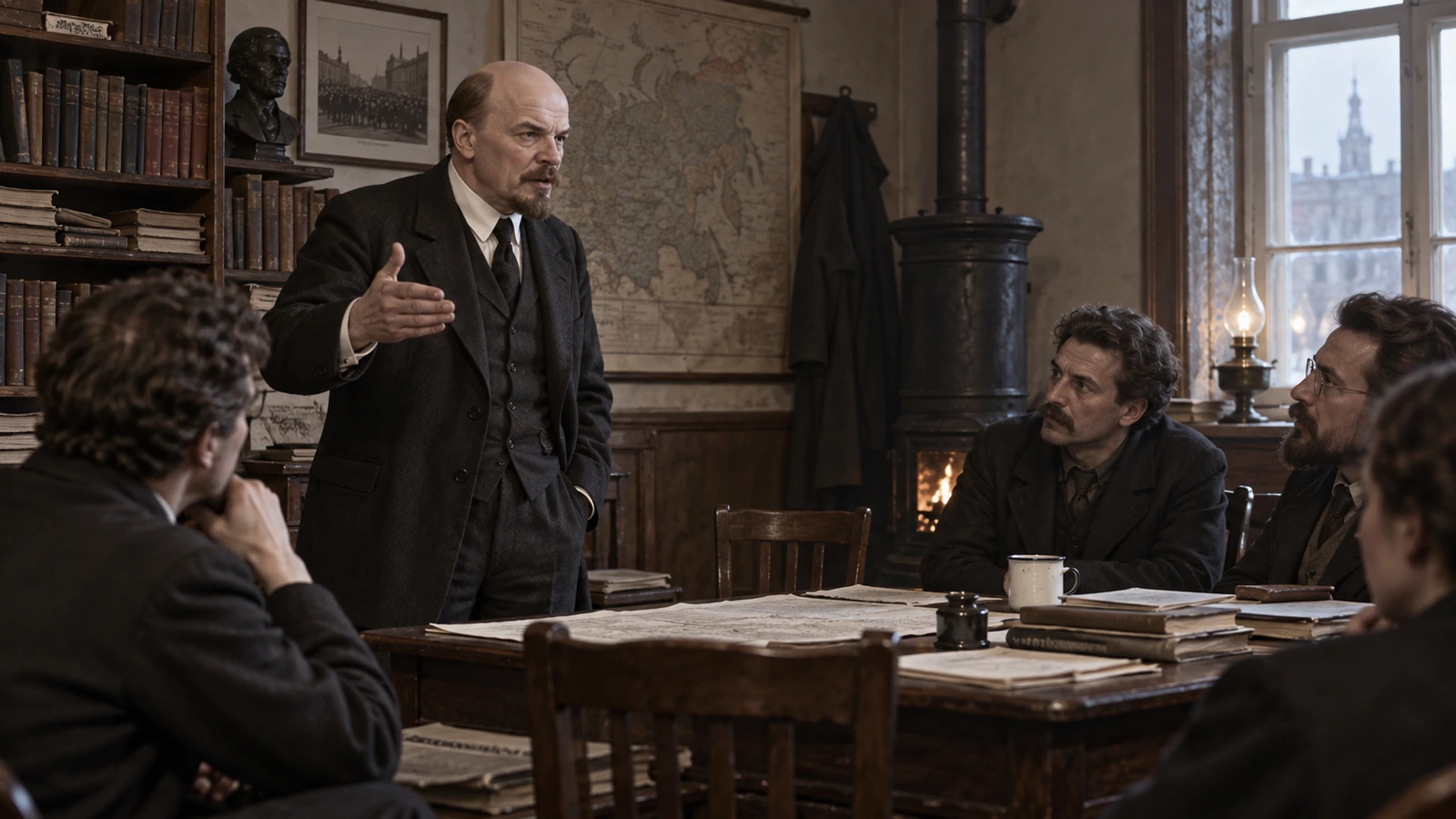
Vladimir Lenin remains one of the most transformative and controversial figures of the twentieth century. As the architect of the Bolshevik Revolution and the founding father of the Soviet Union, his legacy reshaped global politics forever. Yet behind the stern socialist propaganda lies a complex figure with a surprisingly bizarre life story. From speaking English with a Dublin accent to having his brain sliced into tens of thousands of pieces, here are 15 fascinating facts about Vladimir Lenin.
1. He Was Born into Imperial Nobility
Despite orchestrating the total destruction of the Russian aristocracy, Vladimir Ilyich Ulyanov was born into a privileged, noble household. His father, Ilya Nikolayevich Ulyanov, worked as a high-ranking public education official in the Tsarist administration, a role that earned him hereditary nobility status in 1882. This elevated social standing granted young Lenin access to top-tier schools and cultural opportunities that were entirely denied to the majority of Russian peasants. Historians note that Lenin grew up enjoying family poetry readings, classical musical recitals, and summers at a rural estate. The very social system he spent his adult life dismantling was the exact foundation that afforded him his elite education and legal training.
2. His Radicalization Stemmed from Family Tragedy
Lenin was not born a revolutionary extremist, but a personal tragedy in 1887 altered the entire trajectory of his life. His beloved older brother, Aleksandr Ulyanov, was arrested and hanged for his involvement in a plot to assassinate Tsar Alexander III using homemade bombs. The execution shattered the Ulyanov family socially and politically, transforming them into outcasts overnight in their hometown. Deeply traumatized by his brother's death, 17-year-old Vladimir immersed himself in radical political philosophy, specifically the revolutionary texts that Aleksandr had left behind. Rather than pursuing terrorist bombings like his brother, Lenin resolved to construct a disciplined, mass-based revolutionary movement capable of bringing down the entire autocratic regime.
3. He Was a Brilliant Law Student Who Briefly Practiced
Before establishing the Bolshevik Party, Lenin pursued a traditional professional path as a legal advocate. Expelled from Kazan Imperial University for participating in political protests, he was barred from attending full-time university classes. Undeterred, Lenin studied independently and earned permission to take the final law examinations at Saint Petersburg University as an external candidate in 1891. Out of hundreds of students, he achieved the highest marks across all subjects and earned a first-class law degree in record time. He subsequently worked as a public defender in Samara, mostly representing impoverished peasants and laborers in minor property dispute cases before abandoning law for revolutionary agitation.
4. He Spoke English with an Irish Brogue
When Lenin lived in exile in London during the early 1900s, he sought to improve his conversational English by taking language lessons. He hired an Irish tutor named Roddy, who lived in the city, to help refine his pronunciation and grammar. Consequently, Lenin picked up the distinct cadence, idioms, and broad vocal inflections of a Dublin accent. Years later, when Western journalists and foreign diplomats conversed with the Soviet leader in English, they were astonished to hear the fierce leader of world communism speak with a noticeable Irish brogue. He reportedly found the language challenging but maintained his ability to speak and read English throughout his life.
5. His Famous Name Was a Covert Pseudonym
The Bolshevik leader was not born "Lenin," but rather Vladimir Ilyich Ulyanov. To evade the Tsar's imperial secret police, the Okhrana, he adopted dozens of aliases, pen names, and false identities on forged passports during his covert political career. In 1901, while publishing revolutionary pamphlets, he began using the pseudonym "N. Lenin," which eventually became his permanent public identifier. Most historians believe the name was derived from the Lena River in eastern Siberia, near the site of his three-year political exile in the late 1890s. The adoption of pseudonyms was a standard security measure among Russian revolutionaries, but few names became as globally famous as Lenin.
6. He Escaped Capture Using Wigs and Disguises
In the summer of 1917, following a failed Bolshevik uprising known as the July Days, the Russian Provisional Government issued a warrant for Lenin's immediate arrest on charges of high treason. To avoid execution or imprisonment, Lenin was forced to go into hiding across the rural wilderness and countryside. He dramatically altered his iconic appearance by completely shaving off his signature goatee and mustache and wearing a synthetic blond wig. Disguised as a humble Finnish railway worker named Konstantin Ivanov, he successfully slipped past government border patrols and escaped across the border into Finland. From this secret sanctuary, he continued to draft revolutionary theory and plot the eventual October Coup.
7. He Lived with a Bullet in His Body for Years
In August 1918, political dissident and Socialist Revolutionary party member Fanny Kaplan approached Lenin after he delivered a speech at a Moscow factory and fired three shots at him. Two bullets struck Lenin, one lodging near his shoulder and another embedding deeply in his neck near his spine. Fearing that surgery in a local hospital might expose him to further danger, Soviet doctors opted to treat him on site and leave the neck bullet intact. Remarkably, Lenin survived the severe injury and returned to work within weeks, though he suffered from persistent headaches and fatigue. The bullet remained embedded in his neck for nearly four years until German surgeons finally removed it in 1922.
8. He Was Nominated for the Nobel Peace Prize
In the winter of 1917, Vladimir Lenin was officially nominated for the Nobel Peace Prize by a prominent Norwegian politician and social reformer named Kristian Hinkov. The nomination praised Lenin for pulling Russia out of World War I by signing the Treaty of Brest-Litovsk, which effectively ended bloodshed along the Eastern Front. However, the Norwegian Nobel Committee was unable to award the prize to Lenin because the official submission deadline had already passed for that calendar year. Furthermore, as civil war erupted across Russia and the new Bolshevik regime launched the Red Terror, any remaining international support for honoring Lenin with a global peace award swiftly evaporated.
9. He Had an Intense Affection for Cats
Behind his stern, ruthless political demeanor, Lenin harbored a lifelong passion for domestic animals, particularly cats. Historical accounts and reminiscences from his contemporaries describe how Lenin frequently welcomed stray cats into his working quarters and petted them while reading theoretical texts. During intense political committee meetings, he would often sit holding a cat in his lap, stroking its fur while debating policies that reshaped world history. Rare photographs preserved in Soviet archives depict the revolutionary leader relaxing in private gardens with kittens tucked in his arms. Supporters and allies observed that interacting with felines was one of the few activities that consistently brought out his gentler side.
10. He Suffered from a Distinct Speech Defect
Despite being widely recognized as one of the most compelling public speakers of the twentieth century, Lenin suffered from a prominent speech impairment known as rhotacism. This condition made it exceptionally difficult for him to pronounce the guttural "r" sound correctly in Russian, producing a distinct rolling burr or lisp instead. Rather than hindering his political career, this unique speech quirk made his delivery instantly recognizable to Russian crowds and political followers. Lenin compensated for the impediment through dynamic hand gestures, rapid cadence, and intense ocular focus, holding massive outdoor rallies spellbound across Saint Petersburg and Moscow.
11. His Jewish Heritage Was Suppressed by the State
Lenin possessed a diverse lineage that included Russian, German, Swedish, and Jewish ancestry, though the Soviet government actively hid his Jewish background for decades. His maternal grandfather, Moshko Blank, was born into a Jewish merchant family in Ukraine before converting to Christianity to attend medical school. Following Lenin's death in 1924, his sister Anna Ulyanova discovered these archival records and urged Soviet authorities to publicize them to combat rising antisemitism within the nation. However, Premier Joseph Stalin strictly forbade any public mention of Lenin's Jewish roots, fearing it would undermine the regime's political image among nationalist groups. The historical truth about Lenin's lineage was officially kept classified until the collapse of the Soviet Union.
12. Scientists Cut His Brain into 30,000 Slices
Immediately following Lenin's death in 1924, top Soviet officials sought scientific validation of his intellectual genius to legitimize Bolshevik ideology. The government invited prominent German neuroscientist Oskar Vogt to Moscow to establish the Brain Institute and analyze Lenin's organ under microscopic scrutiny. Vogt meticulously cut Lenin's brain into 30,963 paper-thin histological slices, mounting them onto glass slides for detailed anatomical examination. Soviet researchers claimed to discover unusually large and densely packed pyramidal neurons in the third layer of his cerebral cortex, which they asserted was direct biological evidence of extraordinary mental capacity. Modern neuroscientists, however, dismiss these conclusions as ideologically motivated junk science.
13. A Bust of Lenin Stands at the Coldest Point on Earth
Deep within the frozen interior of Antarctica sits a plastic bust of Vladimir Lenin, marking one of the most remote places on the planet. In December 1958, Soviet polar explorers established the temporary "Pole of Inaccessibility" research station at the point furthest from any Antarctic coastline. To commemorate their extraordinary trek across the ice sheet, the scientists installed a life-sized chimney-top bust of Lenin facing toward Moscow. Although the surrounding research structures have long since been buried under dozens of feet of accumulated snow and ice, the top of the cabin and Lenin's durable plastic head remain visible, silently surveying the vast icy wilderness.
14. A Televised Hoax Convinced Soviet Viewers He Was a Mushroom
In May 1991, during the final months of the Soviet Union, a famous televised prank convinced millions of unsuspecting viewers that Lenin was actually a fungus. Musician Sergey Kuryokhin appeared on a popular Leningrad television program alongside interviewer Sergey Sholokhov, presenting a pseudoscientific "investigation" complete with fake academic references and fabricated historical documents. Kuryokhin convincingly argued that Lenin consumed so many psychedelic mushrooms during the 1917 revolution that his physical body and consciousness were gradually replaced by fungal mycelium. Because the state media had spent decades presenting Lenin as an infallible figure, thousands of gullible viewers called television stations in panic to verify whether their founding leader was indeed a mushroom.
15. His Body Has Been Preserved in a Moscow Tomb for Over a Century
Although Lenin explicitly requested to be buried alongside his mother in Saint Petersburg, the Soviet government decided to embalm his corpse permanently for public veneration. A specialized team of biochemists and anatomists, known informally as the "Lenin Lab," was formed to maintain his corpse inside a grand marble mausoleum in Red Square. Every week, technicians meticulously monitor the temperature, lighting, and humidity levels of the glass sarcophagus to prevent biological degradation. Furthermore, every eighteen months, Lenin's body is removed from public display and submerged in a special chemical bath of glycerol, potassium acetate, and formaldehyde for several weeks. Thanks to this continuous biochemical preservation effort, Lenin's physical remains appear virtually unchanged more than one hundred years after his death.
Sources & References
This AI-assisted post was rigorously curated and fact-checked for accuracy by:
 Martin Roháček
How fun was this article? 🤔
Tap a star to rate it
🧠 Quiz: How closely were you paying attention?
10 questions — all answers are in the article above!
Enjoyed these facts? There's more! 💌
Fresh fun facts in your inbox. No spam, ever.