The Atomic Titan: 15 Fascinating Facts About Godzilla
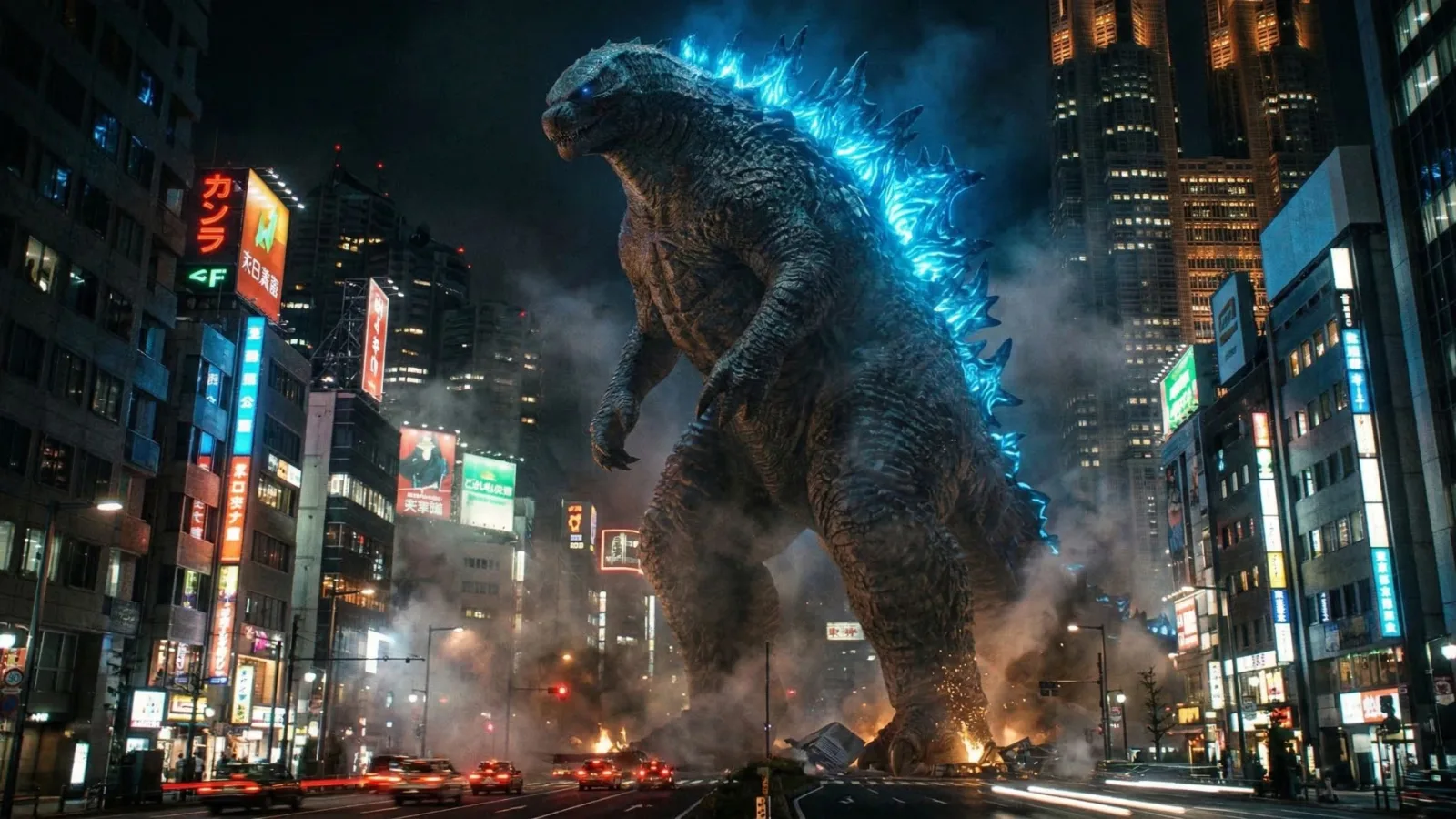
First unleashing his radioactive roar in 1954, Godzilla has grown from a haunting allegory for nuclear destruction into a global pop culture titan. Across seven decades, the King of the Monsters has racked up Guinness World Records, fought NBA superstars, and even earned an Academy Award. Beyond the crumbling cityscapes lies a surprisingly rich history of practical filmmaking, bizarre commercial crossovers, and cultural diplomacy. Here are 15 fascinating facts about cinema's longest-running movie franchise monster.
1. The Name Is a Clever Portmanteau of Gorilla and Whale
The original Japanese name for the creature, Gojira, was conceived by studio producer Tomoyuki Tanaka as a blend of two distinct Japanese words. It combines gorira, meaning gorilla, with kujira, which translates to whale. The mashup was intended to evoke both the terrestrial raw power of a giant primate and the immense marine scale of the ocean's largest creature. When localized for Western audiences, the name morphed into the now-immortal Godzilla, preserving the monstrous aura for international filmgoers.
2. The Iconic Roar Was Created with a Leather Glove and Double Bass
Godzilla's unmistakable metallic screech is one of the most famous sound effects in cinema history, but it was not created using animal vocalizations. Sound designer and film composer Akira Ifukube struggled to find an animal sound that felt appropriately colossal and alien. He solved the problem by taking a coarse leather glove coated in pine tar resin and rubbing it forcefully along the loosened strings of a double bass instrument. The recorded output was then manipulated, reverberated, and slowed down to produce the terrifying, earth-shaking howl.
3. The Original 1954 Film Was a Somber Anti-Nuclear Allegory
While modern audiences often associate Godzilla with campy monster brawls or high-budget blockbusters, Ishirō Honda’s original 1954 film was a deeply serious nuclear tragedy. Created less than a decade after the atomic bombings of Hiroshima and Nagasaki, and inspired by the 1954 fallout incident involving the Japanese fishing vessel Lucky Dragon No. 5, Godzilla was a walking metaphor for nuclear devastation. His radioactive breath and scarred skin mirrored the horrors of radiation sickness, offering a cathartic cinematic reflection of real-world trauma for post-war Japan.
4. Wearing the Original 220-Pound Suit Was a Life-Threatening Task
Before computer-generated imagery dominated special effects, bringing Godzilla to life required suit actor Haruo Nakajima to wear a grueling physical rig. The original 1954 suit was crafted from stiff ready-mixed concrete, rubber, and heavy canvas, weighing an astonishing 220 pounds. Inside the airtight costume, temperatures exceeded 130 degrees Fahrenheit under intense studio lights, causing Nakajima to sweat off up to ten pounds per shoot and frequently faint from oxygen deprivation. Nakajima persevered, performing in the suit for twelve consecutive films over nearly two decades.
5. Early Concepts Included a Giant Octopus and Mushroom Cloud Head
Before settling on the familiar upright dinosaur silhouette with dorsal plates, Toho studio designers experimented with wildly different monster concepts. Early brainstorms pitched the sea creature as a giant mutated octopus terrorizing coastal villages. Another striking concept featured a creature with a head shaped literally like an atomic mushroom cloud. FX supervisor Eiji Tsuburaya eventually combined anatomical traits of the Tyrannosaurus Rex, Iguanodon, and Stegosaurus to create the legendary kaiju design that debuted on screen.
6. George Takei Got His Early Break Dubbing Godzilla Films
Before achieving international fame as Hikaru Sulu on the bridge of the Starship Enterprise in Star Trek, actor George Takei was a young college student looking for breaking roles in Hollywood. His first paid acting gig in the entertainment industry was providing voiceover dubbing for the 1955 sequel Godzilla Raids Again (released in America as Gigantis, the Fire Monster). Takei voiced multiple secondary characters and narrated scenes, kickstarting a legendary career in sci-fi and speculative entertainment.
7. Godzilla Fought NBA Star Charles Barkley in a Famous Commercial
In 1992, Nike launched one of the most surreal television ad campaigns in pop culture history by pitting Godzilla against NBA legend Charles Barkley. Directed by Will Vinton, the commercial featured a giant-sized Barkley wearing sneakers and sporting sunglasses while playing street basketball against a full-sized Godzilla in downtown Tokyo. Godzilla attempts to block Barkley, but the basketball star elbow-checks the monster into a skyscraper before dunking over him, ending the ad with a playful warning about buying Nike shoes.
8. Toho Officially Demoted the 1998 Hollywood Monster to "Zilla"
Director Roland Emmerich’s 1998 American adaptation redesign was widely panned by fans and purists for turning the invulnerable atomic leviathan into a nimble, fish-eating iguana killed by conventional missiles. Japanese studio Toho was so disappointed with the design that they retconned the creature out of the official Godzilla legacy. Toho trademarked the fast-moving American creature under the name Zilla, explaining that Emmerich’s film took the "God" out of Godzilla. Toho even featured Zilla in 2004's Godzilla: Final Wars, where the authentic Godzilla destroys him in a brutal 13-second battle.
9. Godzilla Is an Official Resident and Ambassador of Shinjuku, Tokyo
In April 2015, the municipal government of the Shinjuku ward in Tokyo granted Godzilla official honorary citizenship of Japan. To mark the occasion, city officials built a life-sized replica of Godzilla’s head atop the Toho Cinema building in Kabukichō, towering 52 meters above ground level. Godzilla was formally appointed as Shinjuku's official Tourism Ambassador, with municipal papers citing his duties as promoting tourism, protecting the neighborhood, and entertaining international fans.
10. Japanese Baseball Legend Hideki Matsui Cameoed in a Godzilla Film
Former New York Yankees slugger Hideki Matsui earned the nickname "Godzilla" during his high school baseball career in Japan due to his monstrous power hitting at the plate. Matsui embraced the moniker throughout his professional career in both Nippon Professional Baseball and Major League Baseball. His association with the character culminated in a cameo appearance in the 2002 movie Godzilla vs. Mechagodzilla, where Matsui played himself hitting a home run in a stadium shortly before kaiju chaos erupts.
11. Godzilla Starred in a Series of Cheesy 1980s Dr Pepper Ads
During the mid-1980s, Godzilla experienced a major promotional resurgence in the United States, culminating in a commercial deal with soft drink giant Dr Pepper. The brand launched a lavish television advertising campaign to tie in with the American release of The Return of Godzilla (1984). The humorous ads featured Godzilla wearing giant oversized soda cans as boots, sipping soft drinks through giant straws, and hanging out at lounge parties, cementing the monster’s transition into a beloved pop culture icon.
12. He Once Invaded the Marvel Universe and Fought The Avengers
From 1977 to 1979, Marvel Comics published an official 24-issue licensed comic series titled Godzilla, King of the Monsters. Set firmly within the mainstream Marvel Universe, the story featured Godzilla stomping across the United States while battling iconic superheroes. Throughout the run, Godzilla fought S.H.I.E.L.D., pitched battles against the Fantastic Four, and even traded blows with Thor and the Avengers in downtown Manhattan before returning peacefully to the Pacific Ocean.
13. Godzilla Received a Star on the Hollywood Walk of Fame in 2004
To celebrate the 50th anniversary of the franchise in November 2004, Godzilla was officially inducted into Hollywood royalty. The King of the Monsters received his own star on the world-famous Hollywood Walk of Fame, situated right outside the historic Grauman's Chinese Theatre. Godzilla became one of only a handful of fictional characters—alongside Mickey Mouse, Bugs Bunny, and Kermit the Frog—to be honored with a permanent star on Hollywood Boulevard.
14. The Franchise Holds the Record for Longest-Running in Film History
With over thirty-eight official feature films produced between Toho Studios and Hollywood partners since 1954, Godzilla holds a certified Guinness World Record. The franchise earned the official record for the longest continuously running film franchise in cinematic history. Spanning over seven decades without ever remaining dormant for long, Godzilla has outlasted long-running movie series such as James Bond, Batman, and Star Wars.
15. Godzilla Minus One Made History by Winning an Academy Award
Seventy years after the character was created, director Takashi Yamazaki’s critically acclaimed masterpiece Godzilla Minus One (2023) achieved an unprecedented milestone for the franchise. At the 96th Academy Awards in 2024, the film won the Oscar for **Best Visual Effects**, defeating massive Hollywood blockbusters despite operating on a modest budget under $15 million. Yamazaki and his visual effects crew accepted the award while carrying golden Godzilla figurines onto the stage, securing the monster's legacy in cinema history.
Sources & References
This AI-assisted post was rigorously curated and fact-checked for accuracy by:
 Martin Roháček
How fun was this article? 🤔
Tap a star to rate it
🧠 Quiz: How closely were you paying attention?
10 questions — all answers are in the article above!
Enjoyed these facts? There's more! 💌
Fresh fun facts in your inbox. No spam, ever.