The Terrifying Organism: 15 Fascinating Facts About Alien
When Ridley Scott released Alien in 1979, he forever transformed science fiction and horror by introducing cinema to H.R. Giger's nightmare-inducing biomechanical universe. Beyond the iconic tagline that in space no one can hear you scream lies a production history packed with improvised terror, hazardous set conditions, and astounding artistic breakthroughs. From real animal organs rotting on set to secret boardroom pitches and surprising casting choices, the creation of the franchise is as intense as the film itself. Here are 15 fascinating facts about the legendary film series that redefined cinematic horror.
1. The Original Script Was Titled 'Star Beast'
Screenwriter Dan O’Bannon initially began drafting his groundbreaking sci-fi horror project under the working title Star Beast. As he reworked the draft alongside co-writer Ronald Shusett, O’Bannon noticed how frequently the word "alien" appeared across the script pages. Realizing the noun possessed a far more stark, ominous, and haunting simplicity, he scrapped the B-movie-sounding title in favor of Alien. The simple retitling fundamentally shifted the tone of the pitch from a generic monster movie to a dark masterpiece. Ultimately, this brief title swap helped secure the greenlight from 20th Century Fox.
2. The Xenomorph's Eyeless Face Was Inspired by Night Terrors and Real Human Bones
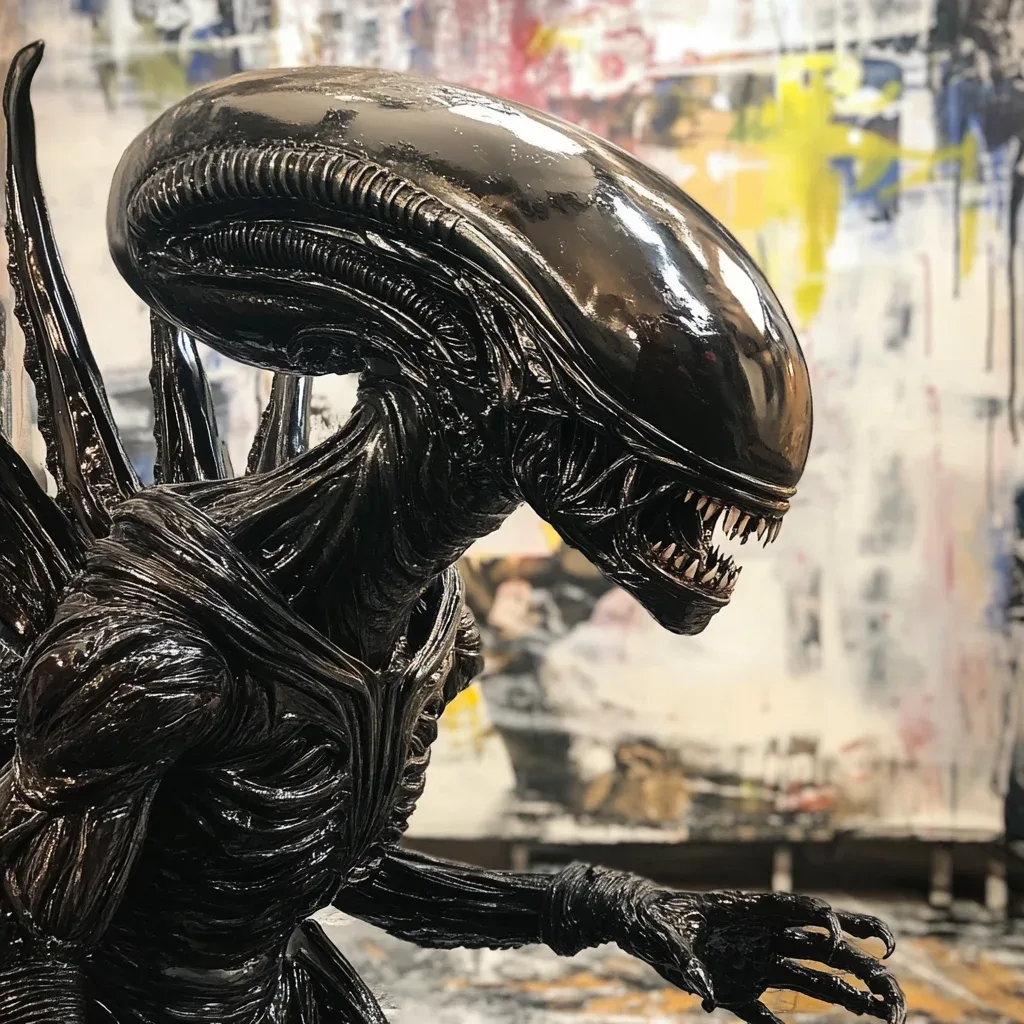
Swiss surrealist artist H.R. Giger designed the film's iconic monster based on his 1976 lithograph painting titled Necronom IV. Giger suffered from severe, recurrent night terrors and frequently used his biomechanical artwork as a therapeutic avenue to exorcise his disturbing visions. When crafting the physical suit, Giger deliberately omitted the creature's eyes, reasoning that an adversary is infinitely more terrifying if victims cannot determine where it is looking. Furthermore, the front section of the original translucent head canopy actually encased a real human skull purchased from a medical supply house. To complete the creature's glistening, unsettling mouth, Giger incorporated cut-up condoms into the biomechanical lips.
3. The Unsuspecting Cast Was Genuinely Terrified by the Chestburster Scene
To capture visceral, unscripted terror, director Ridley Scott deliberately kept the full mechanical details of the infamous chestburster scene hidden from the cast. While the actors knew a creature would emerge from actor John Hurt's chest, they were completely unprepared for the sheer volume of fake blood and biological material packed into the rig. Multiple cameras were positioned to capture their live reactions as a high-pressure pump detonated the explosive gore burst. Actress Veronica Cartwright was caught so off-guard when a stream of warm blood sprayed directly into her face that she fell backward over a piece of scenery in genuine shock. The horrifying, authentic reactions recorded during that single chaotic take survived directly into the final cut.
4. The Crew Used Real Butchered Offal that Rotted Under Hot Studio Lights
In an era long before digital visual effects, the production team relied on raw, physical materials to create the wet, alien biology inside the Nostromo. To construct the chestburster prop and its disgusting birth environment, the crew purchased real animal guts, shellfish, and pig blood from a local London butcher shop. These perishable ingredients were packed tightly inside a mechanical torso rig to give the alien emergence an authentic, glistening texture. However, the intense heat generated by the massive studio lights quickly caused the organic material to spoil on set. The resulting unbearable stench added an extra layer of genuine discomfort for the actors performing in the tight soundstage.
5. A 6-Foot-10 Design Student Was Cast After Being Spotted in a Pub
Finding an actor tall and slender enough to fit into H.R. Giger's form-fitting Xenomorph suit proved a major challenge for the casting department. Casting director Peter Ardelson eventually spotted Bolaji Badejo, a 6-foot-10 Nigerian design student with exceptionally long limbs, sitting in a London pub. Realizing Badejo possessed the unique physical proportions necessary to look inhuman, the production team hired him on the spot. To give the creature a slow, graceful, and unnatural style of movement, Badejo took intensive Tai Chi and mime classes prior to shooting. His silent, imposing physical presence gave the original Alien its iconic, predatory rhythm.
6. Dangerous Space Suit Designs Caused Ridley Scott's Own Children to Faint
The bulky space suits worn by the crew of the Nostromo were visually striking, but they were remarkably hazardous for the actors inside. Constructed from heavy materials and lined with thick nylon, the suits featured virtually no active internal ventilation to flush out carbon dioxide. During early test shoots, the temperature inside the suits skyrocketed rapidly, placing the performers at risk of severe heat exhaustion. To demonstrate how small the characters looked against massive alien set pieces, Ridley Scott placed his two young sons inside scaled-down versions of the suits. When both children passed out from heat and carbon dioxide buildup, the production immediately halted to install functional oxygen supplies.
7. James Cameron Pitched 'Aliens' with a Brilliant Single-Character Boardroom Trick
When director James Cameron met with 20th Century Fox executives to pitch his concept for a sequel, he chose an extraordinarily confident visual approach. Cameron walked into the corporate boardroom, turned to a whiteboard, and wrote the original movie's title in large capital letters: ALIEN. He then paused, looked at the studio heads, and appended the letter "S" to the end to signify the plural threat. Finally, Cameron drew two quick vertical strokes directly through the new letter, transforming it into a greenback dollar sign ($ALIENS$). The witty demonstration instantly communicated both his creative premise and its immense box-office potential, securing his director's chair.
8. Sigourney Weaver Made an 'Impossible' Behind-the-Back Basketball Shot for Real
During the filming of 1997's Alien: Resurrection, director Jean-Pierre Jeunet included a scene where Ripley 8 casually sinks a full-court, behind-the-back basketball shot. Although Jeunet planned to use camera tricks or CGI to complete the trick shot, Sigourney Weaver insisted on executing it legitimately. She spent weeks practicing under the guidance of a professional basketball coach to master the difficult maneuver on set. On the day of shooting, Weaver miraculously swished the ball cleanly through the hoop on her sixth take without looking back. Actor Ron Perlman was so stunned by her incredible shot that he broke character in excitement, forcing editors to make a precise cut to preserve the take.
9. The Glowing Blue Egg Chamber Light Was Borrowed from The Who
The eerie visual effects that illuminate the subterranean egg chamber on planetoid LV-426 came from an unexpected rock-and-roll source. While Ridley Scott was filming at Shepperton Studios, the iconic British rock band The Who was rehearsing on the adjacent soundstage for an upcoming concert tour. The band had brought along massive, high-powered blue laser equipment to test their stage lighting configuration. Captivated by the futuristic, dense blue fog created by the band's lasers, Scott asked to borrow the setup for his film. The production team aimed the musicians' lasers across a sea of real smoke to create the iconic, glowing membrane hovering over the alien eggs.
10. Ridley Scott Secretly Narrowed the Set Walls to Build Psychological Tension
To ensure the actors displayed authentic feelings of anxiety and entrapment, Ridley Scott resorted to subtle psychological manipulation on set. As production progressed inside the Nostromo spacecraft, Scott instructed the art department to gradually push the corridor walls closer together each evening. The cast members were never informed of these deliberate spatial modifications, causing them to feel increasingly uncomfortable as their working space shrank daily. The shrinking corridors produced genuine feelings of claustrophobia and irritability among the actors over weeks of shooting. This environmental pressure bled directly into their performances, giving the crew's escalating panic an unmistakable edge of realism.
11. Ripley Was Originally Written as a Unisex Role Before Weaver Was Cast
In Dan O’Bannon and Ronald Shusett's initial draft of the screenplay, the character of Ellen Ripley was not specifically defined as female. The writers included an explicit note on the script's cover page stating that all seven crew members were gender-neutral and could be played by either men or women. Studio executives and casting director Mary Selway eventually realized that turning the lead character into a woman would subvert traditional horror tropes of the era. Casting the then-unknown Sigourney Weaver transformed the dynamic of the sci-fi action genre, creating one of cinema's first iconic female action heroes. Her portrayal broke established Hollywood conventions and established a timeless template for future cinematic protagonists.
12. A Deleted Scene Reveals Weyland-Yutani Was Eventually Bought Out by Walmart
The mega-corporation Weyland-Yutani serves as the primary corporate antagonist throughout the Alien franchise, driven by an insatiable desire to weaponize the Xenomorph. However, an extended cut of Alien: Resurrection reveals an amusingly mundane fate for the ruthless interstellar conglomerate. In a scene restored for the film's Special Edition, the character Dr. Wren reveals that Weyland-Yutani was eventually purchased in a corporate takeover by retail giant Walmart. The satirical line suggests that far into the grim future, earth-bound consumer capitalism ultimately proved more powerful than even a planet-owning military corporation. While cut from the theatrical release, the humorous detail remains a beloved piece of franchise trivia.
13. Ash's Android Internal Organs Were Made of Pasta, Caviar, and Milk
When the treacherous science officer Ash is revealed to be an android in Alien, his gruesome decapitation scene required a distinctly non-human internal anatomy. Special effects supervisor Nick Allder wanted the synthetic human's internal fluid to look distinctly biological yet distinctly unnatural. The crew created a bizarre mixture consisting of warm milk, broken pasta, white caviar, and crushed glass marbles to serve as the android's white mechanical blood and gore. Actor Ian Holm had to rest his head on a rigged table amidst this pungent, edible concoction while delivering lines for the severed head sequence. The unsettling visual of milky fluid spewing from his synthetic neck became one of the film's most memorable visual achievements.
14. The Alien Franchise Popularized the Biomechanical Sci-Fi Aesthetic in Cinema
Before 1979, most cinematic depictions of extraterrestrial life and deep space technology favored either polished, shiny metallic surfaces or monstrous reptilian creatures. H.R. Giger’s contribution to Alien revolutionized film design by blending industrial hardware with organic, skeletal forms to pioneer the "biomechanical" aesthetic. The Nostromo's dark, dripping corridors and the derelict alien spacecraft appeared living and mechanical simultaneously, blurring the boundary between creature and architecture. This bold aesthetic choice fundamentally altered how future filmmakers, video game developers, and artists envisioned science fiction worlds. Giger's groundbreaking visual language earned the film an Academy Award for Best Visual Effects and permanently reshaped pop culture.
15. Expanded Lore Reveals Xenomorphs Have Natural Predators on Their Homeworld
Throughout the film series, the Xenomorph is repeatedly described by characters as "the perfect organism," possessing lethal physical traits and aggressive adaptability. However, expanded franchise literature and comic universe lore reveal that even these formidable apex predators are not at the top of the food chain everywhere. On Xenomorph Prime, their alleged original homeworld, massive native creatures known in expanded lore as "Unnamed Predatory Species" routinely hunt and consume Xenomorphs. These colossal organisms possess tough hides immune to acid blood and possess specialized biological mechanisms designed to neutralize the parasitic monsters. This fascinating lore detail proves that within the deep cosmos, even cinema's most terrifying organism can become prey.
Sources & References
This AI-assisted post was rigorously curated and fact-checked for accuracy by:
 Martin Roháček
How fun was this article? 🤔
Tap a star to rate it
🧠 Quiz: How closely were you paying attention?
10 questions — all answers are in the article above!
Enjoyed these facts? There's more! 💌
Fresh fun facts in your inbox. No spam, ever.