The Mirrorball Uprising: 15 Fascinating Facts About Disco Music
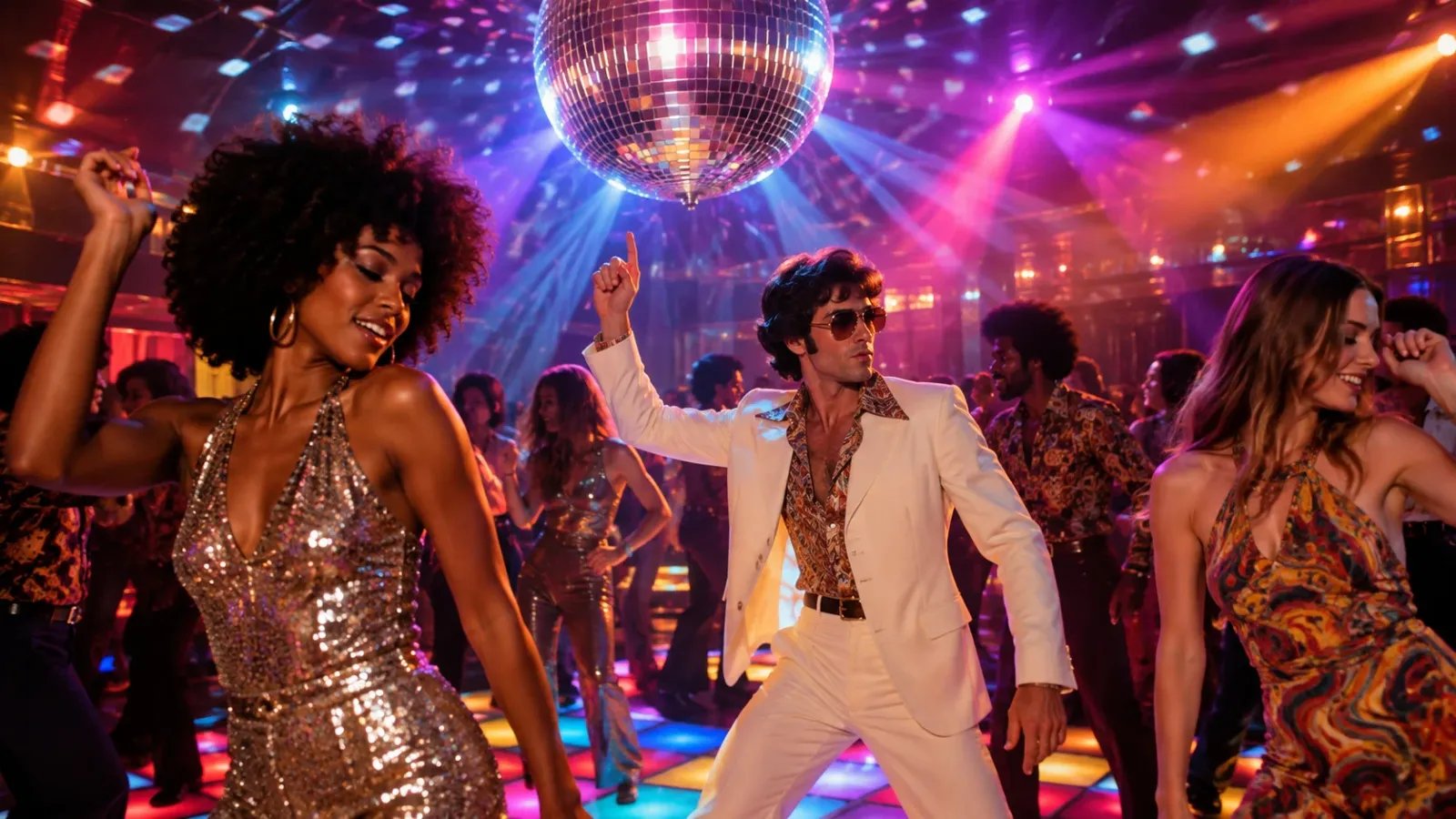
Disco was actually a radical underground movement built by Black, Latino, and LGBTQ communities long before it hit the mainstream charts. Far from mindless dance filler, this glittering genre engineered modern club culture, reshaped recording technology, and survived a coordinated backlash meant to destroy it. Step onto the dance floor and discover the surprising truths behind the beat.
1. Disco began as an underground refuge for Black, Latino, and LGBTQ communities years before it reached mainstream radio.
In the early 1970s, marginalized New York City communities who felt unwelcome in mainstream rock-dominated clubs began gathering at private, unlicensed venues to dance freely to soul, funk, and Latin-infused records. These early spaces, such as David Mancuso's legendary loft parties, operated as members-only sanctuaries built on inclusivity rather than profit. DJs experimented with extended, continuous mixes designed purely to keep dancers moving for hours without interruption. This grassroots scene developed its own culture, slang, and etiquette entirely separate from the commercial music industry. By the time major labels noticed the movement years later, its core identity had already been firmly established by the communities that created it.
2. The word "disco" is simply a shortened form of "discotheque," a term originally borrowed from occupied France.
During the German occupation of France in World War II, Parisians who wanted to dance secretly gathered in clubs that played records instead of live jazz, since jazz was associated with resistance culture and was often restricted. These clubs became known as discotheques, combining the French word for record library with the suffix for a venue. The term crossed the Atlantic decades later to describe clubs that centered entirely on recorded music rather than live bands. American nightlife eventually shortened the word to the catchy "disco," which became attached to the specific dance genre that dominated these venues. A term born from wartime restriction and secrecy ultimately became synonymous with unrestrained celebration.
3. Disco's driving four-on-the-floor beat was specifically engineered to synchronize with the human heart rate during dancing.
Producers and musicians discovered that a steady, insistent bass drum hit on every single beat created an almost hypnotic physical pull on dancers. This tempo, typically falling between 110 and 130 beats per minute, closely mirrors the elevated heart rate of a person engaged in sustained physical exercise. The unrelenting, predictable pulse allowed dancers to lose themselves in continuous movement without needing to consciously track complex rhythmic shifts. Unlike the syncopated unpredictability of funk, disco's rhythm section prioritized steady momentum above all else. This deliberate rhythmic engineering helped transform nightclubs into spaces of near-meditative, trance-like collective movement.
4. The extended twelve-inch single was invented specifically to accommodate disco's need for longer, dance-floor-friendly mixes.
Standard seven-inch vinyl singles simply could not hold the longer track lengths that club DJs wanted for seamless, extended dancing sessions. Engineer Tom Moulton is widely credited with pioneering the twelve-inch format after experimenting with cutting dance mixes onto larger acetate discs for wider grooves and improved sound quality. The larger format allowed for significantly louder playback and much longer run times without sacrificing audio fidelity. Record labels quickly adopted the twelve-inch single as a standard commercial product specifically marketed to club DJs and dedicated dance music fans. This technical innovation, born entirely out of disco's practical needs, remains the industry standard format for dance and electronic music remixes today.
5. The modern remix as a distinct art form was essentially invented by disco-era studio engineers and club DJs.
Before disco, records were typically played exactly as originally recorded, with little consideration for how they might be reworked for a different listening environment. Innovators like Tom Moulton and Walter Gibbons began deconstructing multitrack studio recordings, isolating drum breaks, and building entirely new extended arrangements optimized purely for dancing. This process transformed the mixing engineer from a purely technical role into a genuinely creative one, capable of reshaping a song's entire emotional arc. These reworked versions were often released commercially as distinct alternate mixes, separate from the original radio edit. The entire modern concept of the dance remix, now standard across nearly every genre of popular music, traces its direct lineage back to these disco-era studio experiments.
6. Donna Summer's hit "Love to Love You Baby" was extended to a seventeen-minute epic almost by accident.
Producer Giorgio Moroder originally created a much shorter demo version of the sensual track for Casablanca Records executive Neil Bogart. After hearing the short version at a party, Bogart reportedly requested a much longer cut specifically so he could keep the mood going for his guests throughout the entire evening. Moroder and his collaborators returned to the studio and dramatically extended the arrangement into a sprawling, atmospheric seventeen-minute odyssey. The elongated version became a massive club hit and helped establish the extended dance mix as a commercially viable format in its own right. A song stretched out purely to suit one executive's party ended up reshaping the structural expectations of an entire genre.
7. Studio 54 enforced a notoriously strict and unpredictable door policy that had almost nothing to do with fame or wealth.
Owners Steve Rubell and Ian Schrager famously curated their nightly guest list by handpicking an eclectic, visually striking mix of people directly from the crowd gathered outside the entrance. Wealthy patrons and celebrities were regularly turned away if their look or energy did not fit the desired atmosphere for that particular evening. Meanwhile, unknown individuals with sufficiently daring outfits or magnetic personalities could be waved in ahead of long lines of hopeful guests. This deliberately theatrical and unpredictable selection process was designed to create a constantly shifting, electric social mixture inside the club. The strategy generated intense public fascination and made securing entry itself feel like a genuine nightly performance.
8. A promotional baseball stadium event called Disco Demolition Night ended in a literal riot fueled by anti-disco backlash.
In July 1979, a Chicago radio DJ organized a promotion at a White Sox baseball game where fans who brought disco records for a mass on-field explosion received discounted tickets. The event drew a massive crowd far exceeding stadium capacity, reflecting a broader cultural backlash against the genre that carried undertones of racism and homophobia toward its core audiences. After the pyrotechnic detonation of thousands of records, thousands of rowdy attendees stormed the field, causing significant damage and forcing the cancellation of the second scheduled game. The chaotic spectacle became a symbolic flashpoint, often cited as the dramatic, if exaggerated, moment that supposedly killed mainstream disco's commercial dominance. The genre's biggest backlash event ironically became one of its most widely remembered cultural moments.
9. Disco never actually disappeared after its supposed death, but instead evolved directly into house and techno music.
Despite the aggressive media narrative declaring disco dead by the early 1980s, its underlying rhythmic foundation and production techniques simply migrated to new underground scenes. Chicago DJs like Frankie Knuckles took disco's four-on-the-floor beat and layered it with drum machines and synthesizers, effectively inventing the genre now known as house music. Around the same time, Detroit producers built on similar foundations to develop the more mechanical, futuristic sound of techno. Both new genres retained disco's core mission of sustained, communal dance-floor euphoria while updating its sonic palette for a new generation. The genre did not die so much as it quietly transformed into the entire foundation of modern electronic dance music.
10. Nile Rodgers and Chic's guitar and bass techniques became some of the most sampled sounds in music history.
Guitarist Nile Rodgers developed a distinctively percussive, muted guitar chucking style that became instantly recognizable across countless disco-era productions. His band Chic's bassline from their hit "Good Times" proved so infectious that it was directly repurposed as the musical foundation for the groundbreaking early hip-hop track "Rapper's Delight." That single interpolation helped establish sampling and interpolation as a core creative technique in the emerging hip-hop genre. Rodgers went on to produce landmark albums for major artists across multiple decades, extending disco's stylistic influence far beyond its original commercial peak. A guitar riff born on the dance floor ultimately helped shape the entire trajectory of hip-hop production.
11. Many disco records deliberately obscured the race and gender of their performers to maximize crossover commercial appeal.
Record labels sometimes used stylized, ambiguous album art or minimal artist information to prevent radio programmers and retailers from immediately categorizing an act by race before hearing the music. This strategy occasionally allowed Black and Latino artists to achieve broader mainstream radio airplay that might otherwise have been restricted to narrower urban radio formats. Similarly, some acts intentionally kept their visual identity mysterious to build anticipation and avoid premature stereotyping based on appearance. This calculated ambiguity reflected the genre's complicated relationship with an music industry still deeply segregated by genre marketing categories. The approach reveals how disco artists strategically navigated systemic barriers to reach the widest possible audience.
12. The Bee Gees drastically altered their vocal style specifically to fit the emerging disco sound, permanently changing their career trajectory.
Before becoming synonymous with the genre, the Gibb brothers had built their earlier career on softer pop and orchestral ballads with a fundamentally different vocal approach. Seeking a fresh commercial direction, the group began experimenting with a higher, falsetto-driven vocal style heavily influenced by the soul and funk records dominating dance clubs at the time. This dramatic vocal shift, combined with tightly arranged rhythm sections, produced the soundtrack to the era-defining film "Saturday Night Fever." The album became one of the best-selling soundtracks in music history, permanently cementing the group's association with the genre for the remainder of their career. A relatively small stylistic experiment in vocal register ended up reshaping their entire artistic identity.
13. Disco fashion was heavily engineered around the specific physical demands of dancing under hot stage lighting for hours.
Clubs like Studio 54 used elaborate, heat-generating lighting rigs and effects that made stamina-friendly clothing an absolute practical necessity rather than a purely aesthetic choice. Stretchy fabrics like spandex and jersey allowed for unrestricted movement during hours of continuous dancing, while shimmering sequins and metallics were specifically chosen to catch and reflect the era's mirrorballs and strobe lights. Platform shoes, despite looking impractical, were often surprisingly functional for helping shorter dancers gain visibility in crowded rooms. This combination of practicality and spectacle created one of the most visually distinctive fashion movements in modern nightlife history. The glittering aesthetic people remember today was function dressed deliberately as flamboyant fashion.
14. Arthur Russell, one of the genre's most influential cellist-producers, was virtually unknown to the mainstream during his own lifetime.
A classically trained cellist, Russell became a fixture of New York's underground dance scene, releasing a string of experimental disco records under numerous different pseudonyms throughout the late 1970s and early 1980s. His unconventional fusion of avant-garde composition with dance-floor rhythm made his work too strange for mainstream radio but deeply influential among fellow producers and DJs. He died in 1992 with much of his vast recorded catalog left unreleased and largely forgotten outside of dedicated underground circles. Decades later, archival reissues finally introduced his innovative work to a much wider international audience, cementing his posthumous reputation as a visionary. His story illustrates how much of disco's most groundbreaking material was created far outside the mainstream spotlight it is now remembered for.
15. Disco's influence resurfaces in mainstream pop roughly every decade, proving its supposed death was never truly permanent.
Throughout the 1990s, artists incorporated disco samples and grooves into house-influenced pop hits, while the 2000s saw a wave of nu-disco and funk-inspired dance productions dominate club playlists. More recently, major pop stars have openly embraced disco's shimmering strings, four-on-the-floor beats, and orchestral flourishes on chart-topping albums explicitly marketed as disco revivals. Fashion runways and film soundtracks regularly recycle the genre's glittering visual and sonic identity for new generations of listeners. Each resurgence reintroduces disco's foundational innovations in remix culture, dance production, and inclusive club spaces to audiences who may never realize its true underground origins. Far from a dead fad, disco has proven to be one of the most quietly persistent and influential genres in modern popular music.
Sources & References
This AI-assisted post was rigorously curated and fact-checked for accuracy by:
 Martin Roháček
How fun was this article? 🤔
Tap a star to rate it
🧠 Quiz: How closely were you paying attention?
10 questions — all answers are in the article above!
Enjoyed these facts? There's more! 💌
Fresh fun facts in your inbox. No spam, ever.