The Glitzy Spectacle: 15 Fascinating Facts About the Eurovision Song Contest
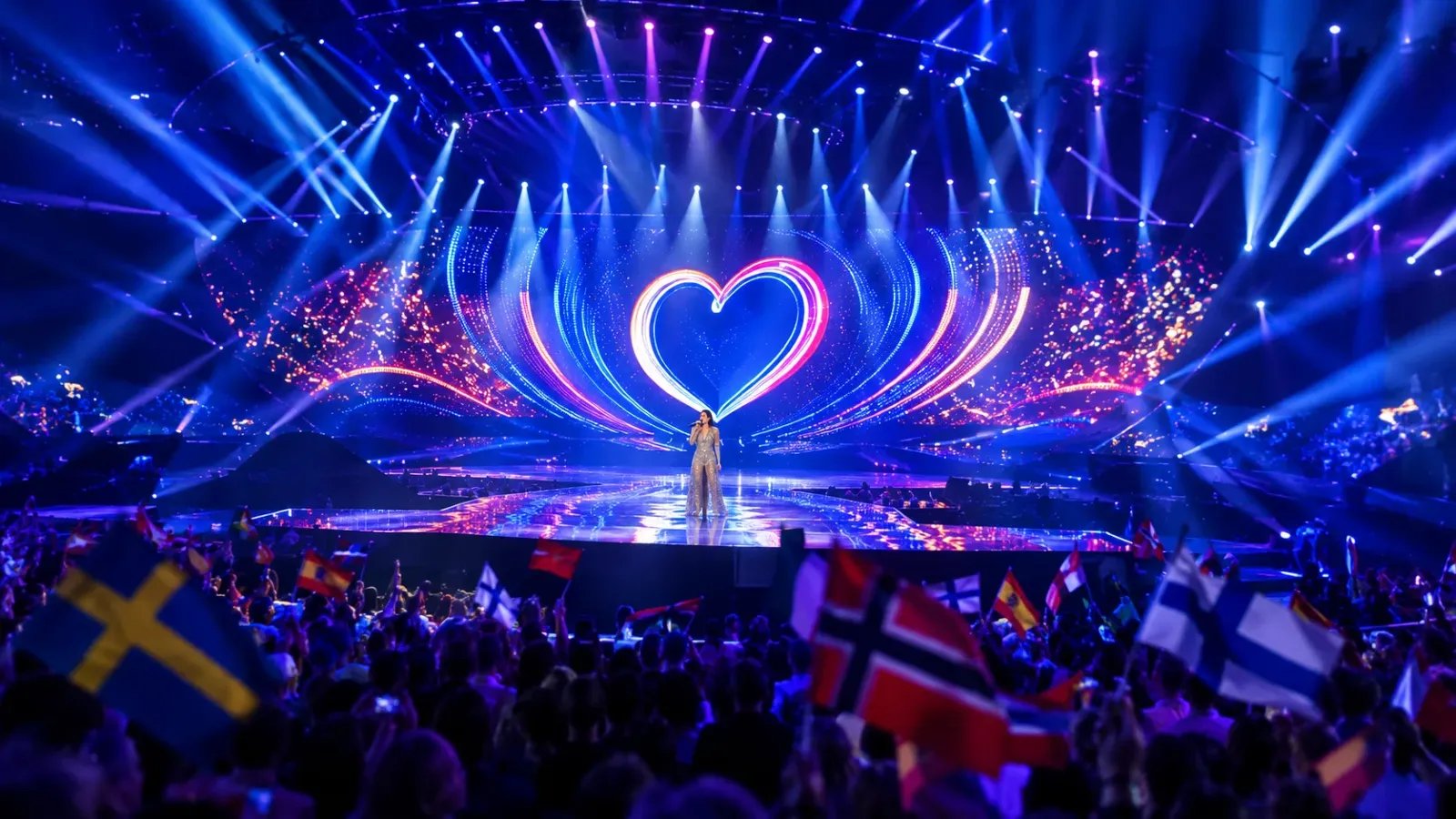
Eurovision is often dismissed as a parade of kitsch, but the world's biggest song contest has a surprisingly wild history. It once crowned four winners at once, lost almost all the footage of its very first show, and lets a country on the other side of the planet compete. Here are the stories behind Europe's favourite musical spectacle.
1. It is the longest-running international TV music competition.
The first Eurovision Song Contest was held in 1956, and Guinness World Records recognises it as the longest-running annual international televised music competition. It was born partly as a technical experiment by the European Broadcasting Union to see whether live television could be shared across borders. The contest has been held every year since, with the single exception of 2020, when it was cancelled because of the COVID-19 pandemic.
2. In the first contest, each country sang two songs.
Only seven countries took part in the first Eurovision, held in Lugano, Switzerland: Belgium, France, West Germany, Italy, Luxembourg, the Netherlands and Switzerland. Each country entered two songs, the only time multiple entries per country have been allowed. Voting took place in secret, and because Luxembourg could not send its jurors, Swiss jurors voted on its behalf. The host country, Switzerland, won with Lys Assia's "Refrain".
3. Almost none of the first broadcast survives.
Television recordings were rarely kept in the 1950s, and the first Eurovision was no exception. The only footage known to survive from 1956 is a recording of Lys Assia singing her winning song again at the end of the show. A full recording of the 1964 contest is also missing. Audio recordings of both shows still exist, but the European Broadcasting Union holds video of every other edition.
4. In 1969, four countries won at the same time.
When the voting ended in Madrid in 1969, France, the Netherlands, Spain and the United Kingdom were all tied on 18 points. There was no rule to break a tie, so all four were declared joint winners. Angry at the result, Finland, Norway, Portugal, Sweden and Austria boycotted the next contest, and a tie-break rule was quickly introduced.
5. Australia competes, even though it is on the other side of the world.
Eurovision has been hugely popular in Australia since the broadcaster SBS started showing it in 1983. To celebrate the contest's 60th edition in 2015, Australia was invited to take part as a one-off guest, but it has competed every year since. It was the first country without an active member of the European Broadcasting Union to participate. If Australia ever wins, it would co-host the next contest with a European broadcaster.
6. Winning countries do not always host the next contest.
The winner traditionally hosts the following year's contest, but not every country has been willing or able to. The United Kingdom has stepped in several times, hosting on behalf of other winners in the 1960s and 1970s. Most recently, Liverpool hosted the 2023 contest on behalf of Ukraine, which had won in 2022 but could not hold the event safely because of the Russian invasion.
7. Céline Dion won Eurovision for Switzerland.
There is no rule that singers must come from the country they represent. In 1988, the 20-year-old Canadian singer Céline Dion represented Switzerland in Dublin with the song "Ne partez pas sans moi". She won by just one point after a nail-biting final round of voting, and the victory helped launch her international career.
8. The rules on language have changed several times.
At first, countries could sing in any language. After Sweden's 1965 entry was performed in English, a rule was introduced in 1966 requiring songs to be sung in a national language. The rule was dropped in 1973, which allowed ABBA to win in English, reinstated in 1977 and finally abolished in 1999. Since then, the vast majority of winning songs have been sung in English.
9. ABBA's "Waterloo" was voted the best Eurovision song ever.
ABBA won the 1974 contest in Brighton with "Waterloo", a burst of energetic pop that stood out from the more traditional ballads of the time. The song became an international hit and launched one of the most successful pop groups in history. In 2005, at a special event celebrating the contest's 50th anniversary, viewers voted "Waterloo" the best song in Eurovision history.
10. Only two people have won it twice as performers.
Irish singer Johnny Logan won in 1980 with "What's Another Year" and again in 1987 with "Hold Me Now". He also wrote "Why Me?", which won for Ireland in 1992, giving him three victories in total. In 2023, Swedish singer Loreen joined him as only the second artist to win twice as a performer, after first winning in 2012 with "Euphoria".
11. Ireland and Sweden share the record for most wins.
Ireland and Sweden have each won Eurovision seven times. Ireland's victories included an extraordinary run of three wins in a row from 1992 to 1994 and another in 1996. Sweden drew level with Ireland when Loreen won in 2023 with "Tattoo".
12. Norway has finished last more often than anyone.
Norway has come last a record 12 times and has scored the dreaded "nul points" four times, a record it shares with Austria. Despite that, Norway has also won the contest three times, most recently in 2009, when Alexander Rybak won with "Fairytale" and a then-record points total.
13. Live orchestras disappeared in 1999.
From 1956 to 1998, a live orchestra accompanied the performers, and each country could bring its own conductor. Pre-recorded backing tracks were gradually allowed from 1973, and the orchestra was dropped completely from 1999. Today, all instrumental music is pre-recorded, but the lead vocals must still be sung live.
14. A monster rock band once won.
In 2006, the Finnish hard rock band Lordi won Eurovision with "Hard Rock Hallelujah", performing in elaborate monster costumes and masks. Before the contest, some people in Finland had campaigned against sending them. Their victory gave Finland its first-ever Eurovision win, after more than 40 years of trying.
15. Strict rules control what happens on stage.
Every song must be no longer than three minutes, and no more than six people are allowed on stage during a performance. Live animals are banned. Performers must currently be at least 16 years old, and from 2027 the minimum age will rise to 18.
Sources & References
This AI-assisted post was rigorously curated and fact-checked for accuracy by:
 Martin Roháček
How fun was this article? 🤔
Tap a star to rate it
🧠 Quiz: How closely were you paying attention?
10 questions — all answers are in the article above!
Enjoyed these facts? There's more! 💌
Fresh fun facts in your inbox. No spam, ever.